Bedfordshire
Bed Bug Heat Treatment in Bedfordshire for Hotels, Guest Rooms and Holiday Lets
A practical guide to assessing, preparing and treating bed bugs in Bedfordshire hotels, guest rooms and holiday lets while managing guest disruption.
26 October 20269 min read
40 years
In the trade
Four decades of hands-on bed bug experience
Fully insured
Every treatment
Comprehensive liability cover on all work
RSPH Level 2
Certificated
Royal Society for Public Health qualified
Key points
- Assess room use and movement before agreeing the treatment area.
- Controlled industrial heat treats the whole agreed area at 60–65°C.
- Active live thermal imaging cameras support treatment monitoring.
- Qualifying treatments include a six-month guarantee.
1. A practical approach for Bedfordshire accommodation
A suspected bed bug problem needs a measured response, particularly where guests are arriving, leaving or moving between bedrooms. For hotels, guest houses and holiday lets in Bedfordshire, the first priority is to understand the evidence and limit unnecessary movement of potentially affected belongings. Treatment planning should follow an assessment rather than assumptions about a single bed.
Bedfordshire accommodation includes modern developments, traditional houses and busy shared properties. Each presents different practical considerations, from room layouts and storage arrangements to access for equipment. A recently furnished guest room can still need attention, while an older property is not automatically affected. Building age alone does not establish the presence or extent of bed bugs.
Bed Bug Heat Solutions UK provides professional heat treatment across England and Wales, including Bedfordshire. Our approach uses controlled industrial heat, with no harmful chemicals as the primary treatment. The company brings over 40 years of hands-on pest-control experience, is fully insured and holds RSPH Level 2 certification.
For accommodation operators, a clear plan helps connect pest control with housekeeping, maintenance and guest management. That plan should identify the agreed treatment area, preparation responsibilities and arrangements for access afterwards. It should also make clear that the heating period is only one part of the work involved, rather than a promise about total room downtime.
2. Recognising a concern without jumping to conclusions
Guests may first raise a concern because of skin marks, disturbed sleep or an insect found near the bed. These reports deserve prompt attention, but bites alone cannot confirm bed bugs. Similar skin reactions can have other causes, and different people react differently. Physical evidence and a professional assessment provide a more reliable basis for deciding what happens next.
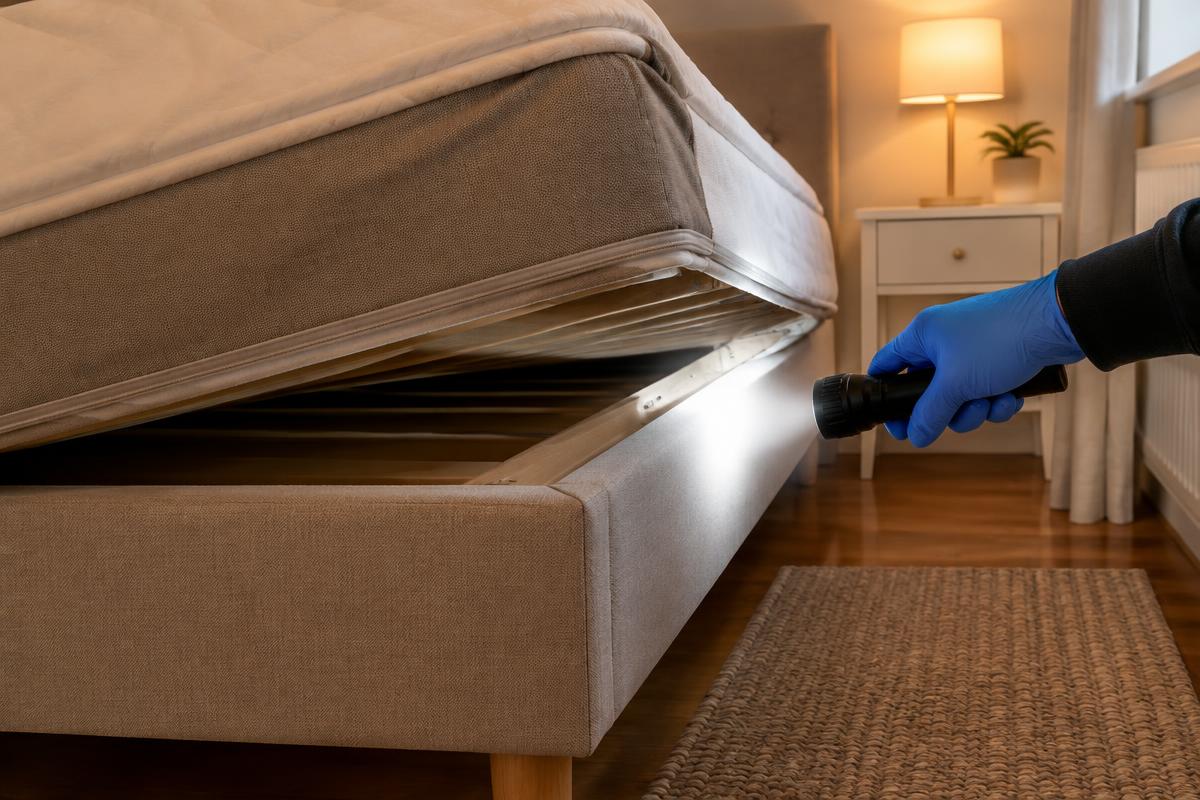
Useful signs can include live insects, shed skins and small dark marks around mattress seams, bed frames or nearby furniture. None should be judged casually from a distance. Ask staff to record where the evidence was found and, where practical, obtain clear photographs without carrying bedding or furniture into another room.
Keep the guest conversation factual and considerate. Record the room, the date of the report and any relevant movements of luggage or bedding. Avoid assigning blame to the current guest or a previous booking. Bed bugs can travel with belongings, and their presence is not proof of poor housekeeping.
An improvised response can make assessment harder. Moving a mattress into a corridor, transferring furnishings between rooms or applying assorted shop-bought products may disturb the situation without resolving it. Seek advice before making substantial changes, and explain any action already taken so that the treatment assessment starts with an accurate history.
3. Mapping rooms, occupancy and movement
The initial assessment should look at how the accommodation is actually used, not simply how it appears on a floor plan. Connecting bedrooms, occasional sofa beds, shared linen storage and staff handling routines can all be relevant. A room used only at weekends may have a different occupancy history from one with frequent overnight turnover.
For hotels, provide a clear record of affected or suspected rooms and any recent room changes connected with the concern. Adjacent accommodation may need further consideration, but this does not mean every neighbouring room automatically requires treatment. The scope should follow the evidence, the layout and the history of movement within the property.
For holiday lets, explain whether guests have access to the entire property or only selected bedrooms. Include spare bedding cupboards and rooms that are sometimes locked between bookings. If the building also operates as an HMO or shared home, provide a clear room list and any history of occupants moving rooms.
These details help identify spaces that might otherwise be overlooked. They also help prevent an incomplete plan based solely on the room where someone first reported a problem. Keep records relevant to the assessment and handle guest information discreetly, sharing only the personal details genuinely needed to coordinate the work.
- Prepare a room list showing bedrooms and other sleeping spaces.
- Identify connecting rooms and shared storage areas.
- Record where suspected evidence was found.
- Note recent guest or occupant room changes.
- Explain how bedding and furniture have moved.
- Highlight previous treatments and any products already used.
4. How professional heat treatment works
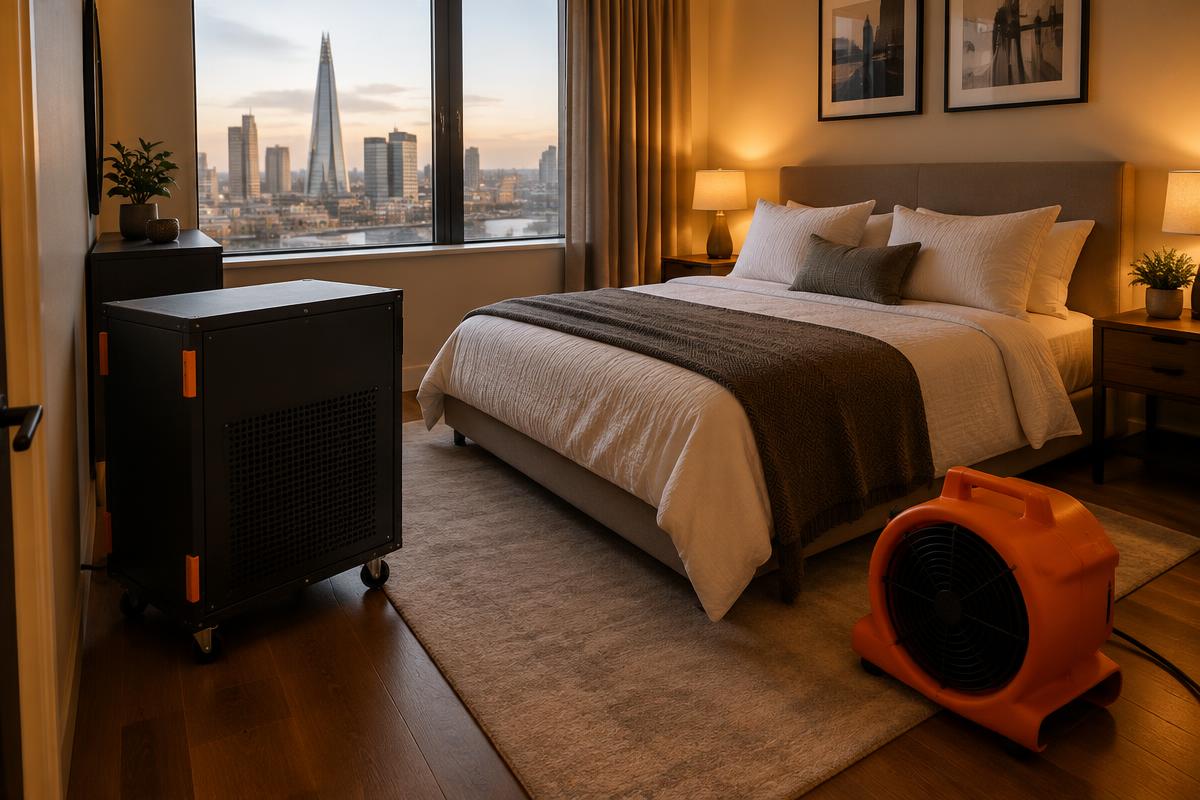
Professional heat treatment uses specialist equipment to raise and manage heat within a defined treatment area. Bed Bug Heat Solutions UK uses controlled industrial heat of 60–65°C across the whole treatment area. The aim is to reach bed bugs and their eggs within that agreed space, rather than addressing only visible insects on exposed surfaces.
The heating period is usually three to six hours. This is not an exact appointment length or a guaranteed time for returning a room to service. Assessment, equipment setup, the characteristics of the property and the arrangements for cooling and handover all affect how the visit is organised.
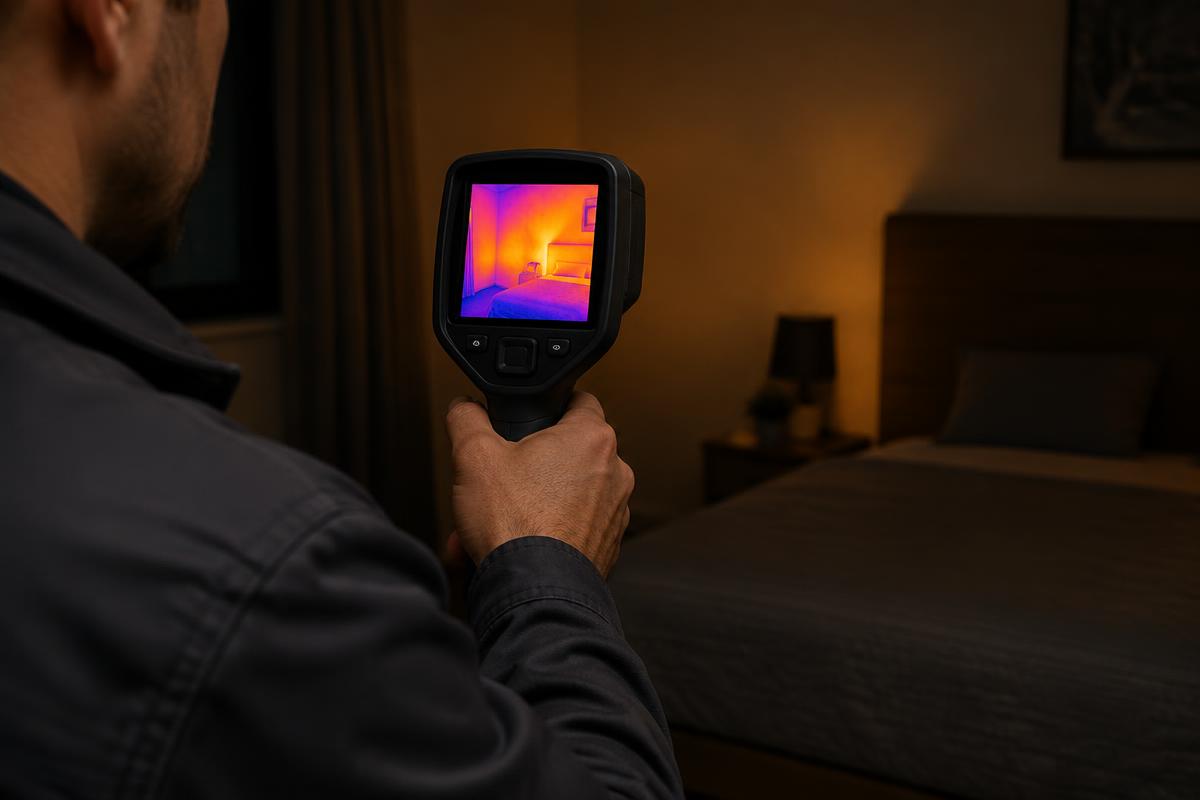
Monitoring uses active live thermal imaging cameras only. These allow the treatment team to observe thermal patterns as the work progresses and identify areas needing attention. The team considers those images alongside the room layout and contents when managing the heating process. Heat treatment is controlled professional work, not simply a matter of making a bedroom feel hot.
Household heaters, electric blankets and improvised heating arrangements are not substitutes for this process. They can create fire risks and may leave concealed areas inadequately treated. Accommodation staff should not attempt to reproduce industrial heat treatment themselves or alter the agreed equipment arrangements during a professional treatment.
5. Preparing bedrooms and protecting belongings
Preparation should follow the instructions issued for the particular property. A standard bedroom, a furnished apartment and a family holiday cottage can contain very different materials and belongings. The treatment team needs to know about sensitive items before work begins so that suitable arrangements can be agreed without creating unnecessary movement through the building.
Flag medicines, aerosols, batteries, delicate electronics, artwork and other belongings that may be affected by heat. Do not assume that everything must be removed, or that everything can safely remain. Guests' possessions need particular care, and any handling should be coordinated with the owner or accommodation manager.
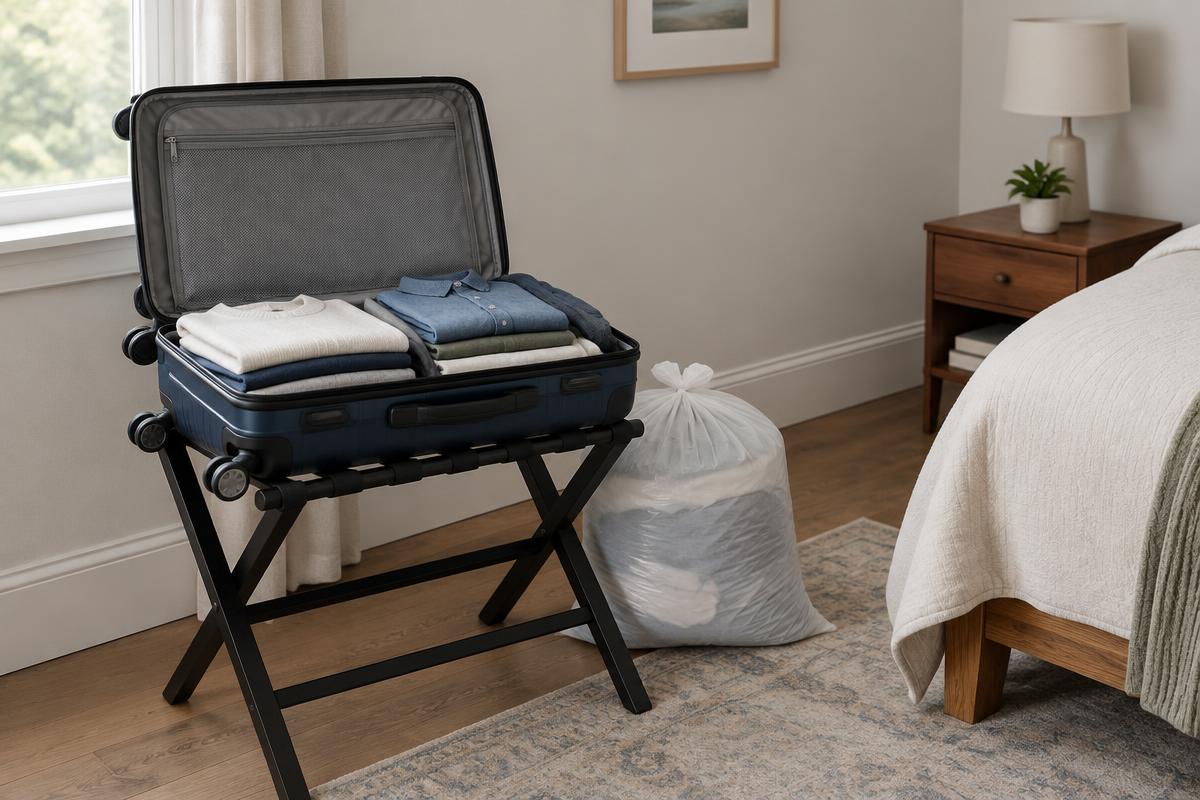
Removing an item without advice can carry bed bugs outside the intended treatment area. Where items need to leave, ask how they should be contained and managed. The same principle applies to laundry: carrying loose bedding down a corridor or mixing suspect linen with clean stock can complicate the response.
Give housekeeping staff one agreed preparation plan and a named point of contact. Conflicting instructions can result in rooms being emptied unnecessarily or furniture being returned before the team is ready. Confirm that access arrangements, utilities and any building restrictions have been discussed, rather than leaving these questions until equipment arrives.
- Obtain property-specific preparation instructions.
- Identify heat-sensitive items before treatment.
- Agree how guest belongings will be managed.
- Keep suspect laundry separate from clean stock.
- Avoid moving furniture between bedrooms without advice.
- Confirm access and relevant building restrictions.
- Brief housekeeping and maintenance staff on the same plan.
6. Managing hotel operations and guest communication
A hotel needs to manage both the affected accommodation and the wider guest experience. Decide who will receive reports, speak with guests and liaise with the treatment team. A consistent point of contact reduces repeated explanations and helps ensure that new evidence or changes in room use reach the people planning the work.
Where a room move is being considered, discuss how luggage and belongings should be handled before transferring them. Moving a guest may be necessary for operational reasons, but moving potentially affected items without precautions can extend the problem. The room itself is only one part of the assessment; the route taken by belongings also matters.
Keep communication calm and specific. Explain that a concern is being assessed, what practical steps are being arranged and when further information will be available from the operator. Avoid making claims about the source of the insects, the condition of other rooms or treatment outcomes before those points have been properly considered.
Room availability should be planned around the agreed work and handover, not a fixed assumption based on the usual heating period. Reception, housekeeping and booking teams need the same information about restrictions. Do not release a room for occupancy merely because the heaters have been switched off; follow the treatment team's instructions.
7. Planning treatment for holiday lets and smaller guest properties
Holiday lets often have a different management structure from hotels. The owner may live elsewhere, while a cleaner, letting agent or keyholder manages access. Establish who can authorise the work and who will carry out preparation. Clear responsibility matters when a booking change leaves only a limited opportunity to inspect or treat the property.
A whole-property booking does not necessarily mean every bedroom has been used in the same way. Guests may switch rooms, use a sofa bed or take spare bedding from storage. Ask for the available occupancy history and describe all sleeping areas, including occasional ones, so that the assessment reflects real use.
Smaller guest houses can also contain private accommodation alongside guest rooms. Explain these boundaries during the assessment, particularly where laundry, storage or corridors are shared. The treatment area should be clearly agreed, with any spaces requiring further consideration identified rather than ignored simply because guests do not normally enter them.
When coordinating future bookings, allow for preparation and the eventual handover as well as heating. Avoid promising an incoming guest that a property will be ready at a particular hour before the arrangements are confirmed. A realistic operational plan is more useful than a rushed commitment that staff or contractors cannot safely meet.
8. Handover, aftercare and returning rooms to use
Treatment does not end with an informal decision to reopen the door. Follow the team's instructions on cooling, access and when people and animals may return. The handover should explain any remaining actions and how the accommodation can be put back into normal use without undoing the precautions taken during preparation.
Housekeeping should know which items can be returned and whether anything remains outside the completed treatment arrangements. Bringing untreated belongings back into a treated space can create a further risk. If there is uncertainty about stored bedding, luggage or furniture, ask before returning it rather than assuming that its appearance establishes it is clear.
Keep a straightforward record of the treatment area, instructions received and any subsequent reports. New concerns should be documented with dates, locations and photographs where available. Skin marks alone still do not confirm ongoing activity, so avoid drawing conclusions without further assessment or starting an unrelated treatment programme independently.
Bed Bug Heat Solutions UK offers a six-month guarantee on qualifying treatments. Ask which treatments qualify and review the applicable terms before booking. A guarantee should not be interpreted as protection against every possible future introduction, particularly in accommodation where new guests and belongings continue to arrive.
- Wait for the agreed handover before restoring access.
- Follow cooling and re-entry instructions.
- Check before returning items held outside the treatment area.
- Brief staff on the aftercare arrangements.
- Record and report any further suspected evidence.
- Retain the treatment details and applicable guarantee terms.
9. Reducing the risk of future disruption
No accommodation operator can control every item that enters a property, but clear routines can support earlier recognition of a problem. Give housekeeping staff basic guidance on what to look for around beds and nearby furniture. The aim is to encourage accurate reporting, not to ask cleaners to diagnose an infestation or carry out pest treatment.
Build reporting into existing room checks rather than relying on memory. A dated note identifying a particular bed frame or bedside unit is more useful than a general message that a room looked suspicious. Staff should know who to contact and why moving items to another room is not the default response.
Maintain sensible separation between clean linen and items awaiting laundering or assessment. Review how trolleys, storage areas and temporary furniture moves are managed during busy changeovers. These practices do not guarantee prevention, but they reduce avoidable handling problems and make it easier to reconstruct events if a concern is raised.
Used furnishings and belongings returned from storage deserve consideration before entering guest rooms. Equally, a spotless room should not lead staff to dismiss a credible report. Bed bug management depends on evidence, room use and prompt professional advice, rather than judgements about cleanliness or the standard of the accommodation.
10. Arranging bed bug heat treatment in Bedfordshire
When enquiring about treatment, provide the property location, accommodation type and a brief account of what has been found. Include the number of bedrooms or sleeping spaces under consideration and explain whether guests are currently in residence. This gives the initial conversation a useful starting point without presuming the final treatment scope.
Mention access constraints, shared areas and any recent changes in room use. For hotels, a simple room plan can help explain connecting accommodation. For holiday lets, identify the owner, agent or keyholder responsible for access. For shared homes or HMOs, include the room list and history of occupants moving rooms.
Bed Bug Heat Solutions UK serves Bedfordshire as part of its England and Wales coverage. Our professional approach combines controlled industrial heat with monitoring through active live thermal imaging cameras only. With over 40 years of hands-on pest-control experience, full insurance and RSPH Level 2 certification, we focus on clear preparation and practical treatment planning.
Contact the team to discuss the evidence, the layout and the needs of your accommodation. Treatment arrangements and costs should be based on the property and agreed scope, rather than a universal room price. Ask about preparation, expected disruption, aftercare and eligibility for the six-month guarantee so that you can make an informed decision.
Useful next steps
Frequently asked questions
Six-month guarantee
Qualifying treatments are covered for six months. Send your details for a free assessment.
More from the blog
How Long Does Bed Bug Heat Treatment Take?
Read the full guide: How Long Does Bed Bug Heat Treatment Take?