Treatment timing
How Long Does Bed Bug Heat Treatment Take?
The heating period usually takes 3–6 hours, but preparation, equipment setup, cooling and safe re-entry also shape your bed bug treatment day.
15 September 202610 min read
40 years
In the trade
Four decades of hands-on bed bug experience
Fully insured
Every treatment
Comprehensive liability cover on all work
RSPH Level 2
Certificated
Royal Society for Public Health qualified
Key points
- The heating period usually takes 3–6 hours; timings are confirmed on the day.
- Setup, preparation checks and cooling add to the overall appointment.
- Live thermal imaging supports monitoring throughout the heating process.
- Return only when the treatment team confirms that re-entry is safe.
How long does bed bug heat treatment take overall?
The heating period for a professional bed bug heat treatment usually takes 3–6 hours. However, this is not the same as the total time the treatment team will be at your property, or the full period you will need to remain outside. Preparation checks, equipment setup, controlled heating and cooling all contribute to the overall schedule.
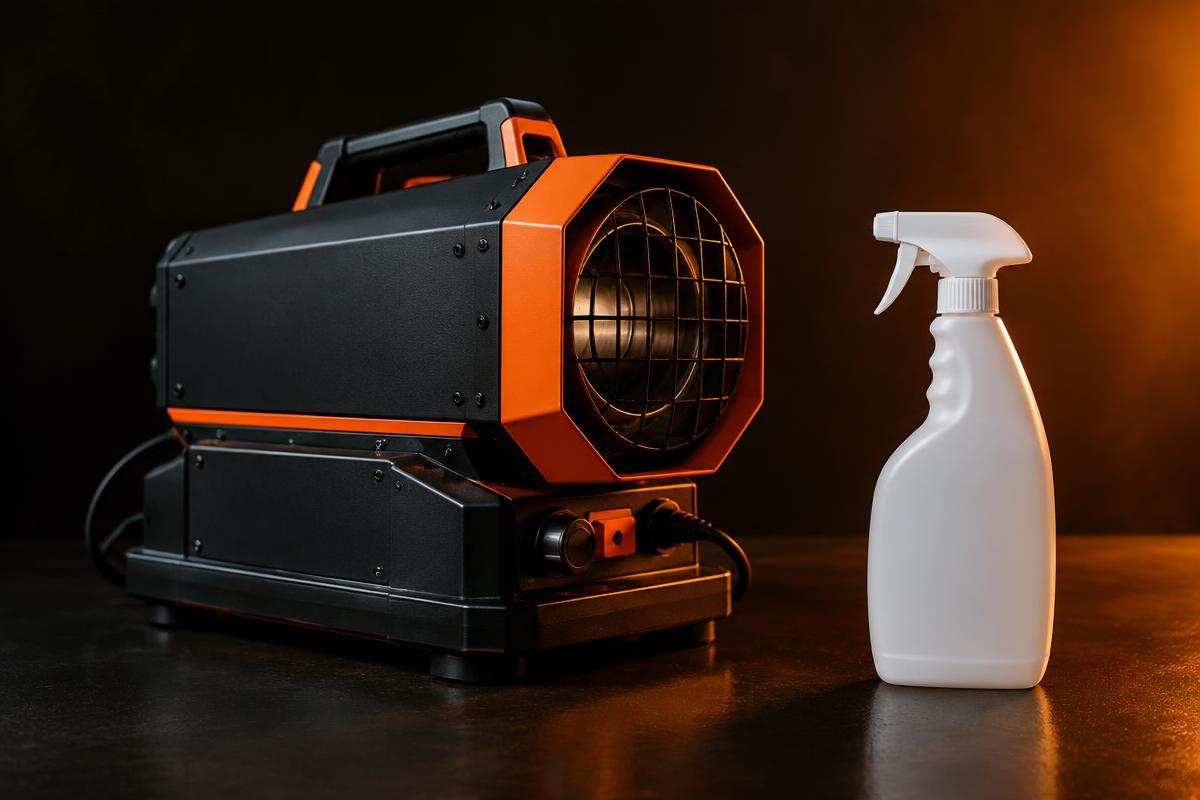
Bed Bug Heat Solutions UK uses controlled industrial heat of 60–65°C across the whole treatment area. Achieving an appropriate treatment environment takes more than warming the room air. Furniture, room layout and the belongings within the agreed area all affect how heat moves through the space and how the team manages the process.
Treat the appointment as a substantial part of your day rather than a short visit between other commitments. Avoid booking something that depends on returning home at a precise hour. A flexible arrangement for work, children and pets is more practical than assuming the earliest possible finish will apply to your property.
An initial discussion can help you understand the likely scope of the visit, but timings are confirmed on the day. The team needs to assess the actual conditions before setting expectations. If you are arranging treatment for a rented home, hotel or managed property, make sure the person coordinating access understands the difference between heating time and total downtime.
What happens before the heating period starts?
The appointment begins with access and preparation checks, not immediately with full heating. The team needs to confirm the treatment boundaries, understand any access restrictions and check that the agreed preparation has been completed. This stage also gives you an opportunity to point out delicate possessions, unusual room features or areas where bed bugs have been noticed.
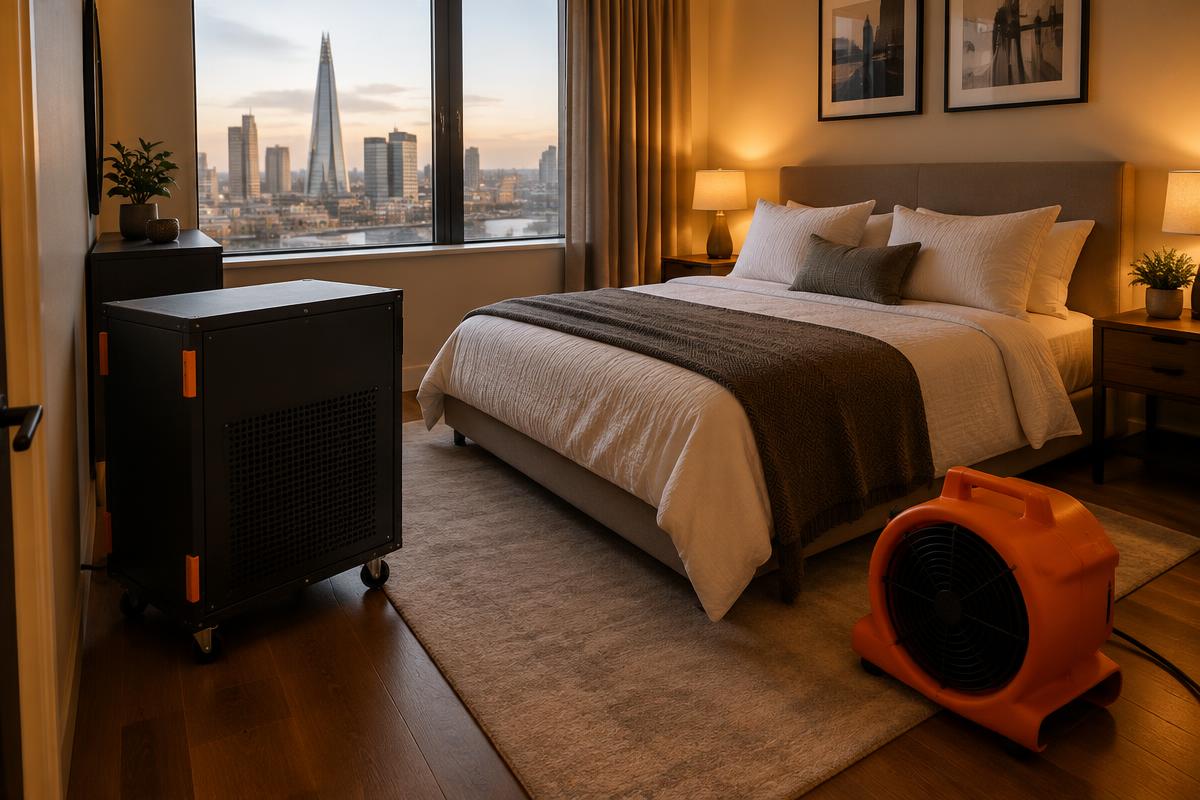
Equipment must then be brought into the property and positioned to support controlled heat distribution. A ground-floor bedroom with direct access presents different practical conditions from an upper-floor flat reached by stairs. Clear routes through the property help the team work safely, but equipment placement must follow the treatment plan rather than convenience alone.
Furniture and belongings may need attention before heating starts so that air can circulate appropriately. Do not assume that packing everything tightly into cupboards or piling possessions onto beds will help. Follow the preparation instructions supplied for your property, and ask before changing the arrangement of heavily affected rooms or moving contents elsewhere.
Any unresolved preparation issue can affect when heating begins. For example, a heat-sensitive item that has not been discussed may need a suitable handling plan before the team proceeds. Sending relevant information through the quote request form or contact page beforehand helps identify these issues, although the final checks still take place at the property.
- Confirm who will provide access and remain contactable.
- Keep agreed access routes clear for equipment.
- Complete the supplied preparation instructions.
- Identify delicate or heat-sensitive belongings beforehand.
- Tell the team about stairs, parking restrictions and building access rules.
Understanding the usual 3–6 hour heating period
The usual 3–6 hour heating period is a working guide, not a countdown that begins when the vehicle arrives. It refers to the heating stage of treatment, while the visit includes additional tasks around it. The team will explain the expected sequence once the property has been checked and the treatment arrangements are confirmed.
Heat needs time to move into the places where bed bugs can hide, including furniture joints, bed structures and other sheltered spaces. A room may feel extremely hot before all parts of the treatment area have responded in the same way. This is one reason professional treatment cannot be judged by how warm the air feels.
The process involves controlled industrial heat of 60–65°C across the whole treatment area, with the heating approach managed to suit the property. There is no useful shortcut based simply on turning up the heat as quickly as possible. The aim is an appropriately controlled treatment, not the fastest possible rise in room temperature.
Do not use a general online timing estimate as permission to switch equipment off or enter the area. The professional team controls the heating stage and decides when it is complete. If your diary has a firm deadline, raise it before booking so that practical constraints can be discussed rather than becoming a problem during treatment.
Why treatment duration varies between properties
The size of the agreed treatment area influences planning, but floor area alone does not determine the duration. Two rooms of similar dimensions can behave differently if one contains substantial furniture and tightly stored belongings while the other is relatively open. The team considers the space as it actually exists, rather than relying only on room measurements.
Layout matters because heat must circulate through the whole treatment area. Alcoves, connected rooms and restricted spaces can make distribution more complicated than in a straightforward open room. Furniture placement may also affect access and airflow. These details are relevant to the treatment plan even when they seem minor during an initial enquiry.
Starting conditions and the building itself can also influence how the heating stage develops. A cool property, substantial building materials and areas that lose heat readily can present different demands. These factors do not translate into a simple formula for homeowners, so it is better to provide clear property information than to calculate a finish time yourself.
The agreed scope of treatment is another important consideration. Report evidence of bed bugs in every affected or suspected area instead of focusing only on the bed where bites were first noticed. An incomplete description can complicate planning. Treatment boundaries should follow professional assessment, not a wish to reduce the visit to the shortest possible slot.
How preparation helps keep the treatment day on track
Good preparation reduces avoidable interruptions, but it must follow the instructions for your particular treatment. Start by reading the guidance in full rather than relying on general advice found online. If a task is unclear or physically difficult, explain this in advance so the team can discuss what is needed before the appointment proceeds.
Make a note of medicines, aerosols, candles, batteries, valuable artwork and other belongings that may need special consideration. The correct approach depends on the item and the treatment arrangements. Do not assume that every electrical item must leave the property, or that every possession can safely remain; obtain specific advice where there is uncertainty.
Avoid moving bedding, clothing or furniture into untreated rooms simply to make the treatment area look tidy. Bed bugs can travel with possessions, so unplanned movement risks spreading the problem. Where removal or separate handling is necessary, ask how items should be contained and managed rather than carrying them loose through the home.
Your own arrangements are part of preparation too. Decide where everyone will stay while the treatment area is unavailable, including pets, and keep essential items accessible outside it. Work equipment, necessary medicines and suitable clothing should be planned for in advance, with care taken not to transport potentially infested belongings into another property.
- Read and complete the property-specific preparation guidance.
- Ask about medicines, aerosols and other heat-sensitive items.
- Avoid relocating potentially infested possessions without advice.
- Arrange somewhere suitable for occupants and pets to wait.
- Discuss aquariums, specialist pet housing or medical equipment early.
- Plan access to essentials without returning during heating.
How live thermal imaging supports controlled treatment
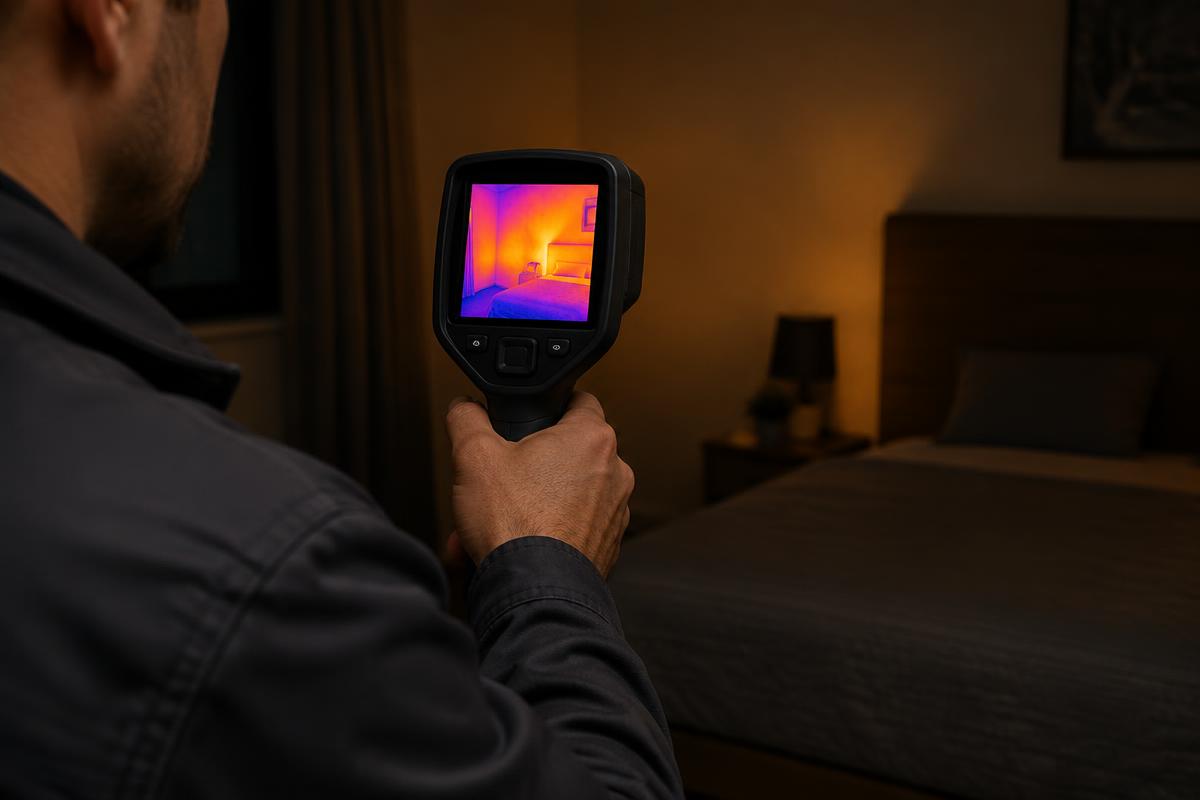
Bed Bug Heat Solutions UK monitors treatment using active live thermal imaging cameras only. Live thermal imaging allows the team to observe visible surface heat patterns within the treatment area while heating is underway. This provides useful information about how exposed surfaces are responding and supports decisions about heat distribution as conditions develop.
Those images need professional interpretation. A warm-looking surface does not, by itself, establish the temperature inside a thick item or behind an obstruction. The team combines its understanding of the property, the treatment process and the visible thermal patterns rather than treating a single image as proof that every hiding place has been addressed.
Monitoring is one reason the heating period needs to remain flexible within the day’s treatment plan. If distribution needs attention, the team can manage equipment and airflow accordingly. The process should not be rushed to fit an assumed finish time, particularly where the layout or contents create more challenging conditions than initially expected.
Homeowners do not need to enter the treatment area to check progress themselves. Keep the agreed contact method available and let the team manage access and equipment. Bed Bug Heat Solutions UK brings over 40 years of hands-on pest-control experience to its work, is fully insured and holds RSPH Level 2 certification.
How long does cooling take after bed bug heat treatment?
Cooling is a separate stage from the usual 3–6 hour heating period. Once heating has finished, the property does not instantly return to comfortable conditions. Furniture, bedding and building surfaces can retain warmth, so the point at which heating ends should not be treated as an automatic invitation to return inside.
There is no single cooling duration that suits every property. The amount of retained heat, the room contents, conditions outside and the safe ventilation options all affect how cooling progresses. The team will explain the arrangements on the day rather than promising a universal interval that may not suit your home.
Ventilation needs to be coordinated with the treatment team. Opening doors or windows too early could interfere with the heating process, while some properties have practical restrictions on how they can be aired afterwards. Do not ask a neighbour or building caretaker to open the treatment area unless the team has expressly agreed to it.
For planning purposes, leave space in your day for both cooling and the final handover. This is particularly important if your alternative accommodation is available only until a set time or if children need to return for an evening routine. Discuss those constraints beforehand and have a flexible backup rather than relying on the heating estimate alone.
When is it safe to re-enter and use the rooms?
Return to the treatment area only when the team confirms that re-entry is safe. Permission to enter depends on the conditions after treatment, not simply on the number of hours that have passed. A message that heating is complete is not necessarily the same as confirmation that the property is ready for normal occupation.
No harmful chemicals are used as the primary treatment, but that does not remove the need for re-entry precautions. Residual heat and hot surfaces still require care. Follow the handover instructions, avoid handling equipment and do not allow children or pets to explore the area before the team has released it for use.
Tell the company beforehand if anyone in the household is particularly sensitive to heat or has health needs that could affect their return. The question is not only whether someone can step through the door, but whether the indoor conditions are suitable for them to remain comfortably. Individual medical concerns should be discussed with an appropriate healthcare professional.
Before the team leaves, ask any practical questions about sleeping arrangements, ventilation and the use of treated furniture. Do not assume that a room which is safe to enter will immediately feel comfortable for bedtime. Keep your plans flexible until the treatment and cooling stages are complete and you have received clear instructions for the evening.
- Wait for explicit confirmation that re-entry is safe.
- Follow the team’s cooling and ventilation instructions.
- Keep children and pets away until access is approved.
- Ask about warm furniture and any surfaces requiring caution.
- Confirm when the rooms can be used for sleeping.
- Raise any household health or heat-sensitivity concerns beforehand.
What to expect during the first evening and afterwards
The first evening should follow the advice given at handover rather than a generic deep-cleaning routine. Ask whether any particular tasks should wait and how to manage items that were handled separately. Returning belongings without a clear plan can undermine careful preparation, especially if potentially infested possessions were taken out before treatment.
It is useful to keep a record of any subsequent signs that concern you, including where and when they appear. Skin reactions alone are not a reliable way to judge the treatment outcome because they can have different causes and may not appear immediately. Report suspected activity through the contact page and ask what evidence would be helpful.
Avoid responding to uncertainty by spraying household insecticides or moving to another room with potentially affected bedding. Either action can complicate the situation and make follow-up advice harder to apply. If something seems wrong, contact the company for guidance before making significant changes to sleeping arrangements or moving possessions between treated and untreated spaces.
Bed Bug Heat Solutions UK offers a six-month guarantee on qualifying treatments. Ask about eligibility, the applicable terms and what to do if you suspect further activity. A guarantee is not a reason to ignore aftercare instructions, and it should not be interpreted as protection against every possible future introduction of bed bugs.
Planning your appointment across England and Wales
Bed Bug Heat Solutions UK serves England and Wales. When requesting a quote, provide the property location, type of accommodation, number of potentially affected rooms and any important access limitations. Photographs or a clear description of the signs you have noticed can help the initial discussion, although treatment timings are confirmed on the day.
For flats and managed buildings, establish who can authorise access and whether there are restrictions on equipment movement or working in shared areas. Tenants may also need to coordinate with a landlord or managing agent. Resolving these arrangements before the appointment helps prevent administrative issues from delaying the practical stages of treatment.
For guest accommodation or other occupied premises, allow for the entire treatment process when planning room availability. The heating estimate should not be used as a guaranteed turnaround time for a new arrival. Preparation, access, cooling and handover all need consideration before a treated room is placed back into normal use.
The most useful planning rule is straightforward: expect a usual heating period of 3–6 hours, then allow additional time around it without setting your own return deadline. Use the quote request form or contact page to discuss your property and household needs. The team can explain the proposed approach, while confirming the day’s timings after assessment.
- Provide the property location and accommodation type.
- Describe all affected or suspected rooms.
- Explain access restrictions and management requirements.
- Mention household needs that could affect cooling or return.
- Ask about preparation, aftercare and guarantee eligibility.
- Keep the day’s return arrangements flexible.
Useful next steps
Frequently asked questions
Six-month guarantee
Qualifying treatments are covered for six months. Send your details for a free assessment.
More from the blog
Signs Of Bed Bugs In A Rented Property: An Essex Guide
Read the full guide: Signs Of Bed Bugs In A Rented Property: An Essex Guide