London
Bed Bug Heat Treatment In London Flats: What Actually Happens
A practical guide to bed bug heat treatment in London flats, converted houses and apartment blocks, covering preparation, access, treatment day and aftercare.
18 September 202610 min read
40 years
In the trade
Four decades of hands-on bed bug experience
Fully insured
Every treatment
Comprehensive liability cover on all work
RSPH Level 2
Certificated
Royal Society for Public Health qualified
Key points
- Treatment uses controlled industrial heat of 60–65°C across the whole treatment area.
- The heating period usually lasts 3–6 hours, with timings confirmed on the day.
- Monitoring uses active live thermal imaging cameras only.
- Shared-building access, neighbouring flats and careful preparation all matter.
Why London Flats Need a Carefully Planned Approach
Bed bug heat treatment in a London flat involves more than bringing heaters into a bedroom. The layout, contents and position of the property all affect how the visit is planned. A studio above a shop presents different access and preparation questions from a fifth-floor apartment or a Victorian house divided into separate homes.
Bed bugs usually hide close to places where people sleep or rest, but activity is not always confined to the bed. Upholstered seating, furniture joints, skirting edges and belongings beside a sleeping area may also need attention. In a compact flat, living, sleeping and storage spaces can overlap, making a whole-area approach particularly important.
Shared walls do not automatically mean every home in a block has bed bugs. However, adjoining properties and connected building features need consideration where there is evidence of wider activity. Treating one flat cannot establish that an inaccessible neighbouring home is clear, so the assessment should distinguish the known infestation from any concerns that require separate investigation.
The purpose of planning is to establish a suitable treatment area, safe access and clear responsibilities before work starts. Residents should understand what they need to prepare, when they must leave and how re-entry will be agreed. Landlords or managing agents may also need to resolve access permissions and building requirements ahead of the appointment.
What Happens When You First Request a Quote
The quote request form or contact page is the starting point for describing the property and the suspected infestation. Useful information includes the number of bedrooms, which rooms have signs of activity and whether anyone regularly sleeps on a sofa. Explain whether the property is a purpose-built flat, a conversion or a maisonette with its own entrance.
Describe the evidence rather than relying on bites alone. Clear photographs of suspected insects, dark spotting around mattress seams or shed skins can help the team decide what needs checking. Skin reactions vary and can have other causes, so a rash by itself cannot reliably confirm bed bugs or show how extensive an infestation has become.
The access arrangements deserve equal attention. A narrow staircase, unreliable lift, restricted loading bay or long route from the entrance to the flat can affect the practical plan. Mention parking restrictions and any building rules about contractor attendance so that equipment movement is considered before the team arrives.
Previous treatments and recent changes also matter. Tell the team about insecticide use, furniture disposal, room moves and any similar reports from nearby flats. Providing an accurate history is more useful than trying to tidy away every sign, and it helps avoid assumptions about where the insects may be hiding or how they arrived.
- Give the property type, floor level and number of rooms.
- Identify every room used for sleeping or extended resting.
- Describe sightings and provide clear photographs where possible.
- Explain lift access, stairs, parking and loading restrictions.
- Mention previous treatments and any known neighbouring activity.
- Flag pets, mobility needs and belongings that may be heat-sensitive.
Coordinating With Landlords and Building Management
In a rented flat, inform the landlord or letting agent promptly and keep a written record of the report. Responsibility for arranging or paying for treatment depends on the circumstances and relevant obligations; it should not be assumed from the presence of bed bugs alone. Early communication is useful even while those questions are being resolved.
A managing agent or concierge may need advance notice of equipment deliveries and contractor access. Some apartment buildings require lift protection, booked loading slots or confirmation of insurance. Establishing these requirements early reduces the risk of a treatment visit being delayed by an administrative issue at the communal entrance.
Fire safety arrangements must remain under authorised control. If the proposed work raises questions about communal alarms, sprinklers or other building systems, the treatment team and responsible building representative should address them before treatment proceeds. Residents should never cover detectors, disconnect alarms or interfere with shared safety equipment themselves.
Where several households have reported signs, coordinated inspection may be more appropriate than treating each report as an unrelated incident. That does not mean every flat automatically needs treatment. It means the building owner or manager may need to arrange access and communication so that any connected problem can be investigated without overlooking occupied neighbouring spaces.
Preparing the Flat Without Spreading Bed Bugs
Follow the preparation instructions supplied for your property rather than a generic internet checklist. The aim is to make the agreed treatment area accessible while avoiding unnecessary movement of potentially infested items. Over-preparation can cause difficulties if residents empty cupboards into piles, dismantle furniture unnecessarily or move bedding into communal areas.
Do not take untreated bedding, clothing or upholstered furniture to another flat simply to clear space. Carrying possessions into a neighbour's home, a storage unit or a friend's spare room can create another location that needs investigation. Ask how belongings should be contained and managed if anything genuinely needs to leave the treatment area.
Heat-sensitive possessions require individual advice. Medicines, aerosols, candles, certain adhesives and delicate personal items are examples of things to flag, but they should not all be handled in the same way. The team should explain what needs removal or protection and how to avoid returning untreated items that could still harbour bed bugs.
Keep access routes clear without turning the flat upside down. Dense piles and tightly packed storage can complicate the movement of heated air, while blocked exits create an immediate safety issue. If limited mobility, heavy furniture or lack of storage makes preparation difficult, explain this in advance so that the plan reflects what is realistically achievable.
- Use the property-specific preparation instructions provided by the team.
- Keep doorways, working routes and emergency exits clear.
- Ask before moving bedding or furniture outside the flat.
- Identify medicines, pressurised containers and delicate belongings.
- Explain any densely packed storage or inaccessible furniture.
- Agree arrangements for all occupants, pets and animal habitats.
Arrival, Inspection and the Treatment-Day Briefing
On arrival, the team checks the property against the information provided and reviews the agreed scope. Room layout, furniture placement and the condition of access routes can all influence the final arrangements. This is also the point to mention anything that has changed, such as a new sighting in another room or belongings moved since the initial enquiry.
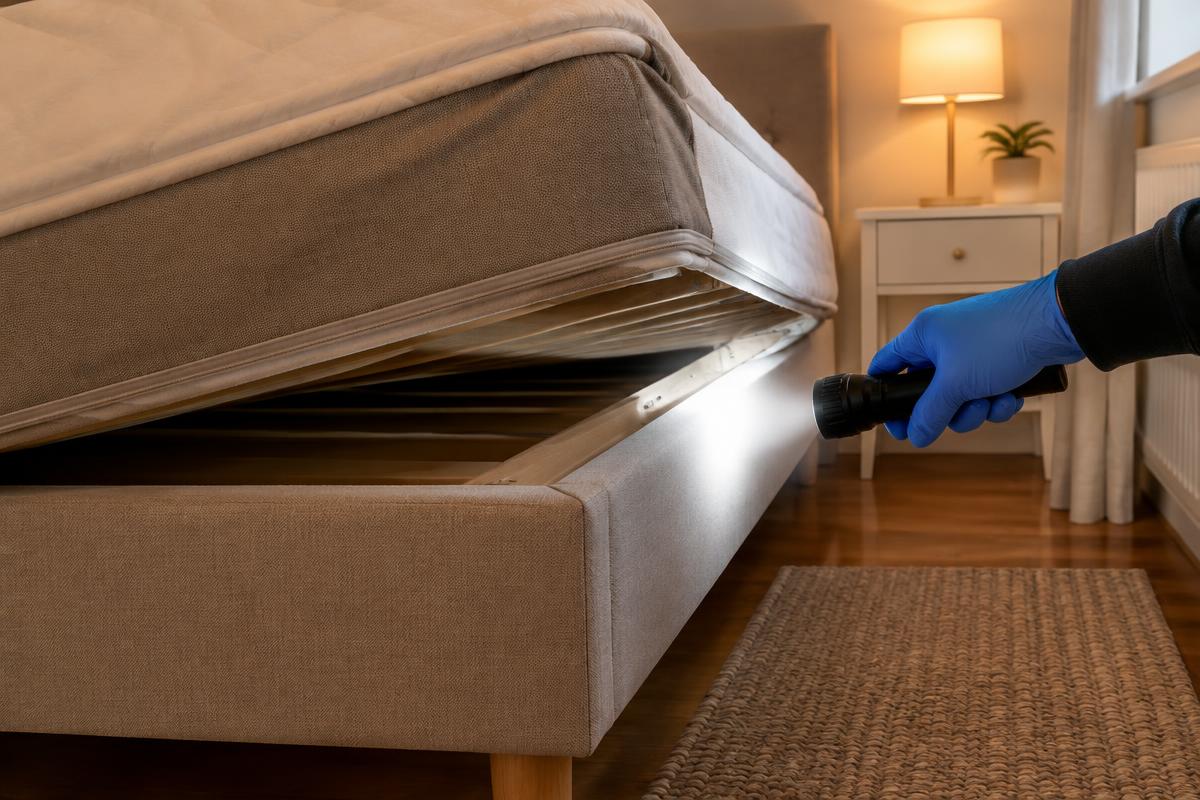
The inspection helps relate visible evidence to likely hiding places and the areas that need attention. Bed frames, bedside furniture, upholstered seating and surrounding edges may be relevant, depending on the infestation. An inspection cannot make every concealed space visible, so the team should explain any access limitations rather than present assumptions as certainty.
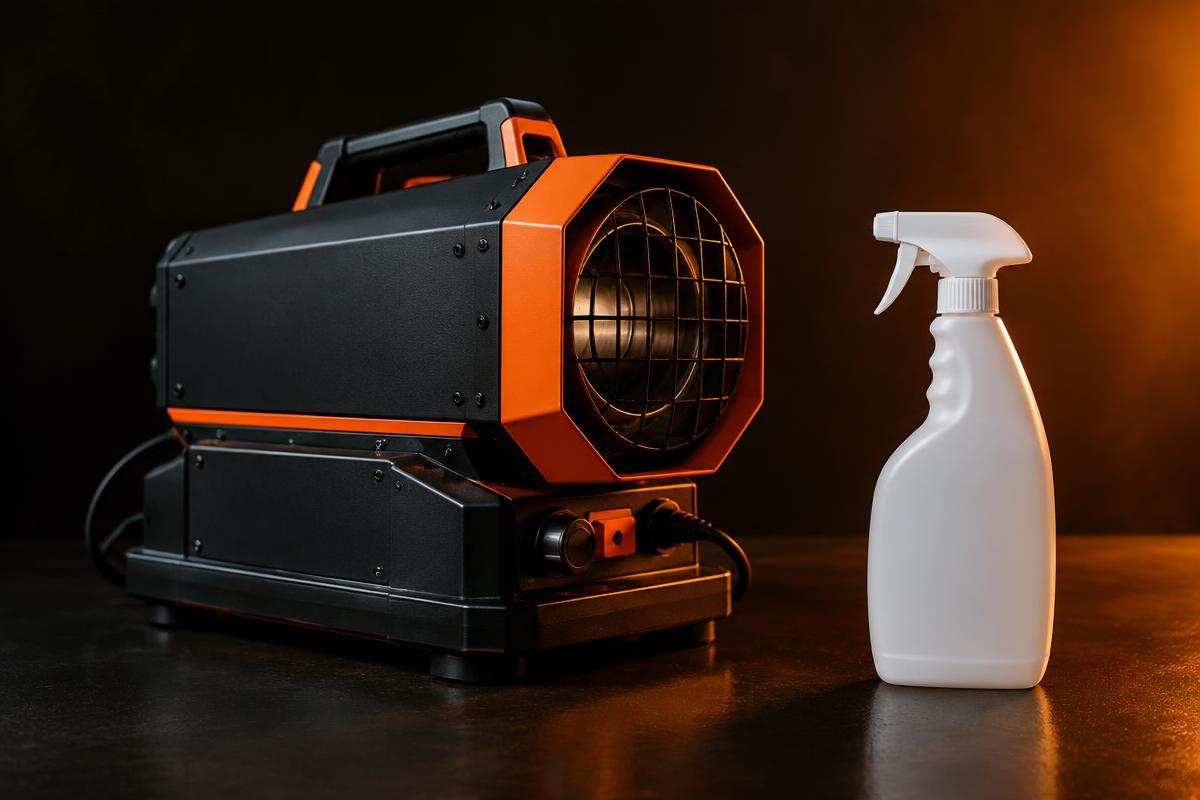
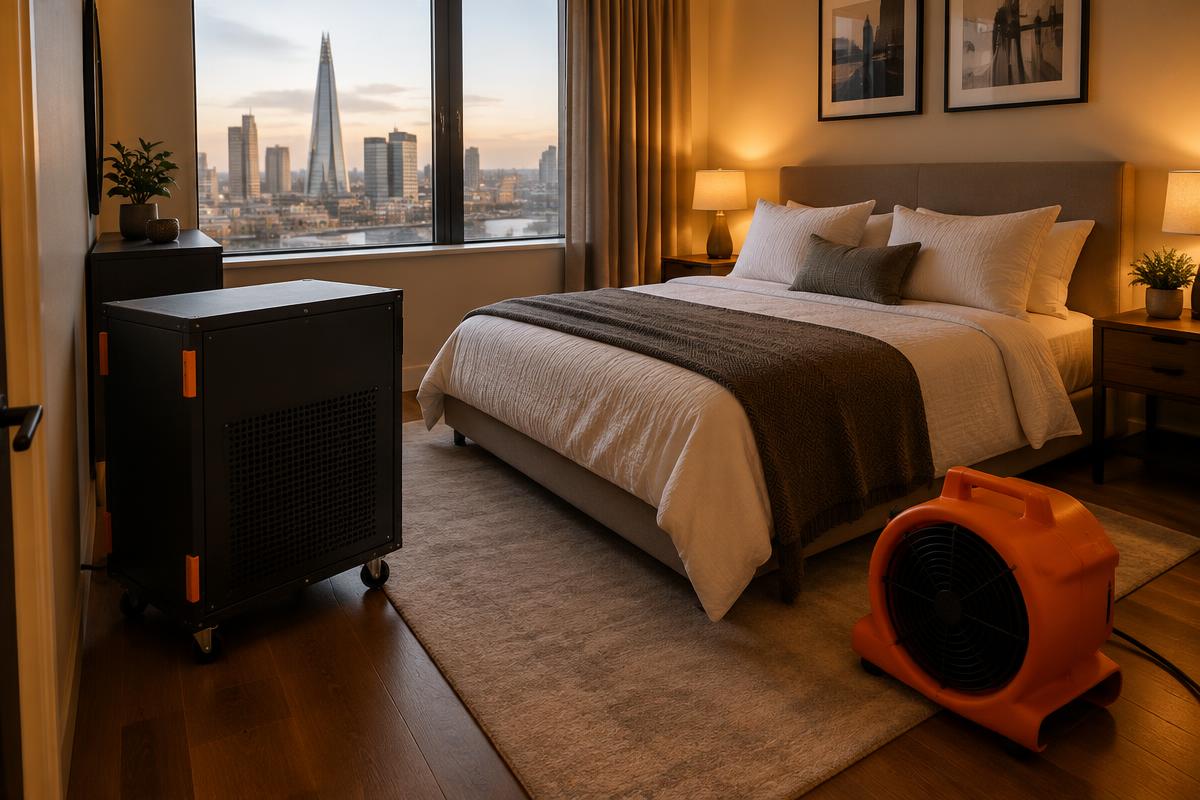
Equipment is positioned with the property layout and safe working space in mind. Industrial heat treatment is a controlled professional process, not an attempt to warm the flat using domestic heaters. Residents should not try to supplement the treatment with household appliances or make their own changes to equipment placement.
Before occupants leave, the practical briefing should cover the heating period, contact arrangements and the conditions for returning. The heating period usually lasts 3–6 hours, with timings confirmed on the day. That is not necessarily the full time away from home, because setup, checks and cooling also need to be allowed for.
How Controlled Heat and Live Thermal Imaging Are Used
Bed Bug Heat Solutions UK uses controlled industrial heat of 60–65°C across the whole treatment area. The objective is to expose bed bugs and their eggs to lethal heat, including within accessible harbourages around furniture and belongings. Effective treatment depends on managing heat throughout the agreed area, not simply making the middle of one room feel hot.
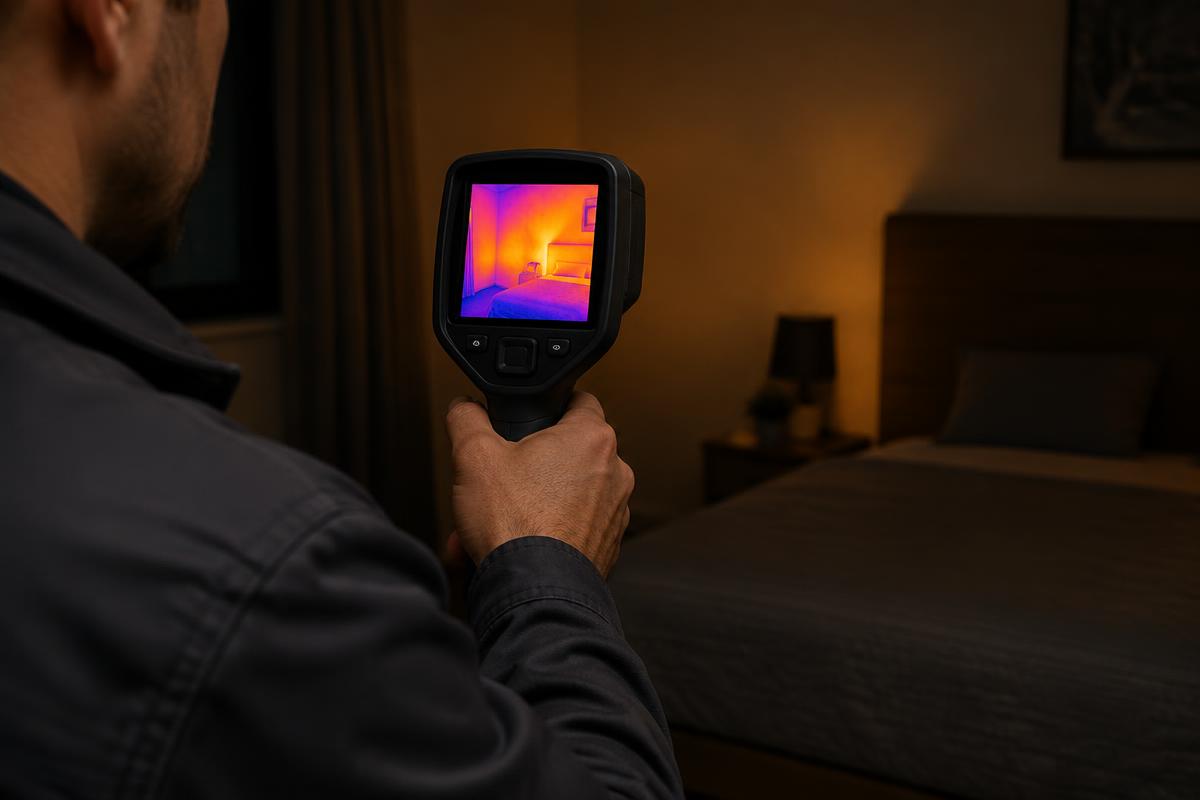
Monitoring is carried out using active live thermal imaging cameras only. Live thermal imaging allows the team to observe visible surface heat patterns as treatment progresses and identify areas that need closer attention. These cameras do not see through walls or directly prove the temperature inside every enclosed object, which is why interpretation and practical treatment planning matter.
Furniture arrangement, heavy materials and tightly packed contents can affect how heat reaches different parts of a room. The team manages equipment and airflow according to the property and what live thermal imaging shows. Residents should leave that process to the technicians rather than entering to open windows, reposition belongings or check progress themselves.
No harmful chemicals are used as the primary treatment. The main process is controlled heat, delivered within a defined professional plan rather than through routine chemical application. Any limitations affecting particular objects, inaccessible areas or the agreed scope should be explained clearly, because responsible treatment advice includes what the visit can and cannot address.
Shared Walls, Floor Voids and Neighbouring Flats
London conversions often contain features that are less straightforward than their floor plans suggest. Old chimney breasts, boxed-in services, altered partitions and concealed voids can complicate an assessment. Purpose-built apartments may have shared service routes too, although the existence of a route does not by itself establish that bed bugs have used it.
The treatment area needs to be clearly defined in relation to these features. Heating a flat is not the same as treating an entire building, and residents should not assume communal spaces or neighbouring homes are included. Questions about inaccessible voids or adjoining properties should be raised directly so that any limitations are understood before work begins.
If bed bugs are being found repeatedly near a particular boundary or more than one household has confirmed activity, further investigation may be warranted. The appropriate response depends on the evidence and the building layout. Speculating about which neighbour introduced the infestation rarely helps and can make the communication needed for effective control more difficult.
Avoid moving into another bedroom or sleeping on a communal sofa as an improvised solution while awaiting advice. Changing sleeping locations can redistribute activity and make the picture harder to interpret. Likewise, sealing gaps or carrying out minor building work is not a substitute for treatment and should be coordinated with the responsible property representative.
Planning Your Time Away and Returning Safely
Arrange somewhere suitable to spend the treatment period before the appointment. For households with children, older residents or people with health conditions, a flexible plan is more useful than an activity booked around an assumed finishing time. Pets also need appropriate arrangements, and tanks or other specialist animal habitats must be discussed in advance.
Take only the belongings you need, following the team's advice about checking and containing them. A work bag left beside an infested bed deserves more thought than an item stored well away from known activity. The goal is not to leave the flat unprepared, but to avoid carrying potentially infested possessions into another home or workplace.
Do not return just because the usual heating window has elapsed. Wait for the team's confirmation that the property is ready for re-entry and follow the instructions given about cooling and ventilation. Surfaces and possessions may retain warmth, and opening the property prematurely can interfere with the controlled process.
When you return, take time to understand the handover rather than immediately restoring every item to its original position. Ask what was found, whether any areas were excluded and what to do with possessions kept outside the treatment area. Keep any written instructions where everyone in the household can refer to them.
- Arrange a flexible place to stay during treatment and cooling.
- Confirm suitable arrangements for children, pets and vulnerable occupants.
- Follow advice about clothing and bags taken out of the flat.
- Remain available through the agreed contact method.
- Wait for explicit confirmation before re-entering.
- Review the handover and any restrictions on returning belongings.
Aftercare, Further Sightings and the Six-Month Guarantee
Aftercare begins with following the instructions specific to the treatment, including any guidance on cleaning and managing belongings. Do not immediately introduce untreated furniture or return bags that were stored elsewhere without discussing them. A treated flat can still be exposed again, so the handling of possessions outside the treatment area remains important.
Skin marks are not a reliable standalone measure of treatment outcome. Reactions can be delayed, and itching may have causes unrelated to bed bugs. If there is a concern, record what was actually seen, where it was found and when, rather than assuming every mark represents a new bite after treatment.
Photograph any suspected live insect clearly and contact the team for advice. Avoid applying shop-bought products or arranging additional treatment before discussing the finding, as this can complicate assessment and may conflict with aftercare instructions. A useful report identifies the room and item involved and explains whether anything has recently been brought back into the flat.
Bed Bug Heat Solutions UK offers a six-month guarantee on qualifying treatments. Ask for the applicable terms, including eligibility, reporting requirements and exclusions, before booking. The guarantee should be understood alongside the agreed treatment scope; it is not a promise that neighbouring flats are clear or that future introductions cannot happen.
Choosing a Treatment Plan That Fits Your London Home
A useful quotation should explain the proposed treatment area, the preparation required and the practical arrangements for your building. It should also make clear any issues that still need assessment. A studio with straightforward access and a heavily furnished upper-floor conversion may need different planning, even when both residents describe the problem as bed bugs in the bedroom.
Ask how the team will address the layout and contents rather than focusing only on the heating duration. The usual 3–6-hour heating period is one part of the visit, with timings confirmed on the day. Building access, preparation, safe operation and a clear handover are equally important to understanding what the service involves.
Bed Bug Heat Solutions UK serves England and Wales, including London, and brings over 40 years of hands-on pest-control experience. The company is fully insured and RSPH Level 2 certificated. Those credentials sit alongside a practical approach centred on controlled industrial heat, active live thermal imaging cameras and property-specific advice.
To discuss a London flat, converted house or apartment-block property, use the quote request form or contact page. Include the layout, evidence of activity and any building restrictions so the team can assess the enquiry properly. The next step should be an informed treatment plan, with the scope, preparation and qualifying guarantee terms understood before work begins.
Useful next steps
Frequently asked questions
Six-month guarantee
Qualifying treatments are covered for six months. Send your details for a free assessment.
More from the blog
Signs Of Bed Bugs In A Rented Property: An Essex Guide
Read the full guide: Signs Of Bed Bugs In A Rented Property: An Essex Guide