Essex
Signs Of Bed Bugs In A Rented Property: An Essex Guide
A practical Essex guide to recognising bed bugs, reporting concerns in rented homes and arranging a coordinated response without spreading the problem.
12 September 202610 min read
40 years
In the trade
Four decades of hands-on bed bug experience
Fully insured
Every treatment
Comprehensive liability cover on all work
RSPH Level 2
Certificated
Royal Society for Public Health qualified
Key points
- Bites alone cannot confirm bed bugs; look for physical evidence.
- Report suspected activity promptly and keep a dated written record.
- Treatment responsibility depends on the circumstances, not assumptions.
- Coordinated preparation matters, especially in shared homes and flats.
Why Early Recognition Matters In Essex Rental Homes
Finding possible signs of bed bugs in a rented property can leave tenants worried about both their belongings and their tenancy. For landlords and letting agents across Essex, the immediate priority should be establishing what is present and limiting further spread. A calm, evidence-led response is more useful than an early argument about blame.
Bed bugs feed on blood and usually hide close to places where people sleep or rest for long periods. They can occur in furnished flats, family houses, student accommodation and shared homes. Their presence does not establish poor housekeeping, and a clean, well-maintained property can still be affected.
In places such as Chelmsford, Colchester, Basildon and Southend-on-Sea, the practical response depends more on the building and its occupancy than the postcode. A room in a shared house needs a different coordination plan from a self-contained home. Adjoining rooms, frequent furniture movement and shared access routes may all influence the assessment.
Early recognition gives everyone a better chance of organising inspection before belongings are moved or evidence disappears. It also helps distinguish a current problem from historic marks or an unrelated insect. Tenants should not feel they must prove the full extent of an infestation before telling the landlord or managing agent about credible concerns.
The Physical Signs Of Bed Bugs To Look For
Adult bed bugs are small, wingless insects, typically around the size of an apple pip, with a flattened, oval body before feeding. Their colour is usually brown to reddish-brown. Younger stages are smaller and paler, making them harder to notice against light fabric, unfinished wood or the backing of bedroom furniture.
Dark spotting is another useful clue, particularly when it appears in clusters around mattress seams, bed-frame joints or nearby hiding places. These marks can be bed bug faecal deposits, but marks alone are not definitive identification. Photograph their location before cleaning and look for supporting evidence rather than judging a single stain in isolation.
You may also find pale shed skins, tiny whitish eggs or live insects tucked into narrow gaps. Eggs are about a millimetre long and can be difficult to distinguish without close examination. Small blood marks on bedding can occur, although there are other explanations, so they should be treated as a prompt to investigate.
A characteristic smell is sometimes associated with substantial infestations, but it is not a reliable early warning method. Many affected rooms have no obvious odour. The strongest practical evidence is an insect that can be identified, supported by characteristic signs in locations where bed bugs would reasonably shelter.
- Live insects in mattress seams, bed joints or upholstered furniture.
- Clusters of dark spots around likely hiding places.
- Pale, empty skins left behind as young bed bugs grow.
- Tiny whitish eggs attached within protected crevices.
- Unexplained blood marks on sheets alongside other evidence.
- Similar signs around a sofa or chair used for sleeping.
Why Bite Marks Cannot Confirm An Infestation
Itchy marks noticed after sleeping often trigger the first concern, but skin reactions cannot reliably identify bed bugs. Fleas, mosquitoes, irritation and some skin conditions may produce similar symptoms. Even a line or cluster of marks is not proof, so treatment decisions should not rest entirely on how bites look in a photograph.
People respond differently to bed bug bites, and some show little or no visible reaction. Marks can also appear after a delay rather than immediately after feeding. This means one tenant may report itching while a partner or housemate has no symptoms, without either account ruling an infestation in or out.
Keep a brief record of when marks were first noticed and which rooms were used for sleeping. This information can support an inspection, but it should remain separate from confirmed pest evidence. Avoid assuming that the room where a reaction became visible is necessarily the place where exposure happened.
For troublesome itching, a pharmacist can advise on suitable symptom relief, and a GP should assess persistent or concerning symptoms. Seek urgent medical help for signs of a severe allergic reaction. Skin care and pest identification are separate tasks: treating irritation does not remove insects, while pest treatment does not replace medical advice.
How To Check A Bedroom Without Spreading Bed Bugs
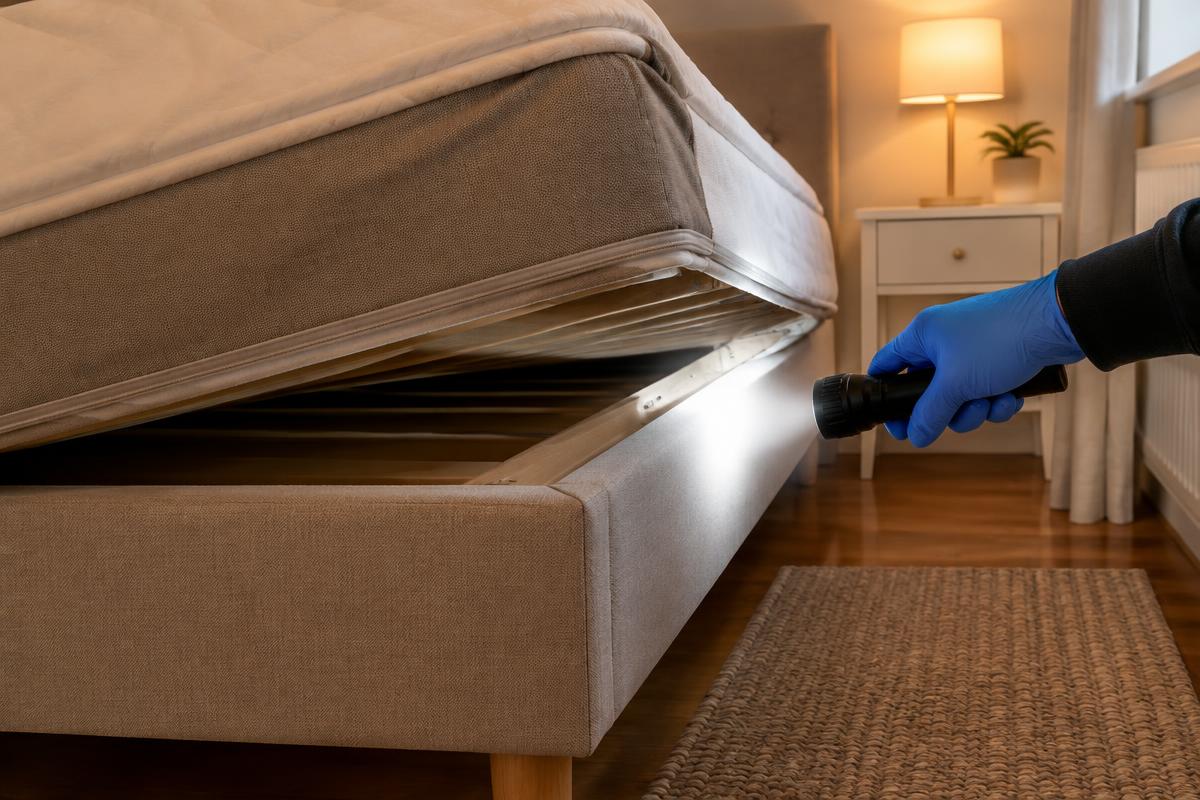
Start with a careful visual check of the bed and the furniture immediately beside it, using a torch if needed. Examine accessible mattress piping, labels, the headboard and visible frame joints. Do not begin by carrying the mattress into a hallway, as this can move insects away from the original room and expose shared areas.
Look at accessible seams beneath cushions and around any sofa regularly used for sleeping. Bed bugs do not remain exclusively in beds, and their hiding places can extend into nearby furniture or gaps around the room. Avoid dismantling large items or pulling fixtures apart before receiving professional advice, especially where damage or injury could result.
Do not open electrical sockets or interfere with wiring during a search. If evidence appears close to electrical fittings, photograph the surrounding area and flag it to the professional inspecting the property. An occupied rental home should not become a hazardous investigation site simply because someone is trying to locate every possible hiding place.
Keep the inspection focused and leave furniture in position wherever practical. If you find an insect, retain it in a securely closed clear container if this can be done safely, and photograph it. Avoid moving to another bedroom or sleeping on the sofa without advice, because changing sleeping locations can encourage activity elsewhere.
- Check accessible mattress seams and bed-frame joints first.
- Photograph suspicious signs before cleaning or moving anything.
- Keep bedding and furniture within the affected room.
- Leave electrical fittings and fixed structures undisturbed.
- Retain a possible specimen in a secure clear container.
- Stop unnecessary dismantling and arrange an informed assessment.
What Essex Tenants Should Record And Report
Notify the landlord or letting agent promptly in writing, following any repair or pest-reporting process provided with the tenancy. Describe what you have actually seen, the room involved and the date it was noticed. A factual report is more useful than declaring that the entire property is infested when the evidence is still limited.
Attach clear photographs showing both a close view and the wider location, where possible. Keep original files and save copies of emails, portal submissions and replies. If an insect was found shortly after moving in, record the move-in date and refer to any relevant inventory photographs without assuming that timing alone proves responsibility.
Explain whether other bedrooms are occupied, whether supplied furniture appears affected and whether anyone has already used a pest product. Information about children, pets, mobility restrictions or other relevant needs can help plan access safely. Share necessary health information privately with those arranging the work rather than in a group message to every resident.
Ask who will arrange identification, how access will be organised and what to do with bedding while waiting for advice. Request written preparation instructions before undertaking extensive laundry or packing. Tenants should also retain receipts for reasonable expenses, while understanding that reimbursement depends on the circumstances and should not be assumed.
- Date and time the first physical evidence was noticed.
- Rooms and specific items where signs were found.
- Clear photographs and details of any retained specimen.
- Relevant move-in inventory records or earlier reports.
- Any sprays, powders or other measures already used.
- Access needs and a written record of agreed next steps.
How Landlords And Letting Agents Should Respond
Acknowledge the report and establish a clear contact for coordinating the response. The first objective is to confirm the pest and understand the likely treatment area, not to settle responsibility from a photograph. Asking neutral questions helps tenants share useful information that might otherwise be withheld through embarrassment or fear of being charged.
Review the tenancy arrangements, supplied furnishings, inventory and any previous reports concerning the property. For a recently re-let home, the chronology of inspections, vacancy periods and occupancy may be relevant. However, a tidy checkout report or the absence of earlier complaints does not conclusively show that bed bugs were absent.
Arrange access with the occupier through the proper notice and consent process rather than assuming that a pest report permits unrestricted entry. Provide residents with a clear explanation of the proposed inspection and preparation requirements. Where a managing agent is involved, identify who can authorise work so that decisions do not become trapped between separate inboxes.
If more than one tenancy may be affected, consider whether the building owner, freeholder or block manager needs to be involved. Share only the information necessary to organise a sensible response. Record inspection findings and agreed actions in writing, including any unresolved questions about adjacent rooms, access or the suitability of particular belongings for treatment.
Who Is Responsible For Bed Bug Treatment In A Rental?
There is no reliable blanket rule that every bed bug problem is automatically the tenant's fault or always the landlord's bill. Responsibility can depend on the tenancy, the property's condition, when the issue arose and the available evidence. Essex rented homes fall within the English housing framework, but an individual dispute may still require specialist advice.
A landlord may have obligations where an infestation was present at the start of the tenancy or is connected with relevant defects or housing conditions. Tenant actions may also be relevant in some cases. These possibilities need careful assessment, and neither the presence of luggage nor ownership of second-hand furniture proves how an infestation began.
A tenancy clause about pests should not be treated as the whole legal answer. Contract wording does not necessarily remove statutory duties, and claims for payment should have a proper basis. It is often sensible to separate urgent practical coordination from a disputed allocation of costs, with the arrangement documented clearly before work is authorised.
Tenants facing an unresolved problem can seek guidance from Citizens Advice, Shelter or their local council's private sector housing or environmental health team. The council's role and available pest services vary locally. Do not withhold rent, deduct treatment costs or dispose of landlord-owned furniture without obtaining appropriate advice about the possible consequences.
Containing The Problem In Flats And Shared Houses
In shared accommodation, reporting only to a housemate may leave the person responsible for the building unaware of the issue. Tell the landlord or managing agent and explain whether signs have appeared in more than one room. Each resident can provide useful observations, but one person's lack of bite marks should not be treated as an all-clear.
Bed bugs can be transported with belongings and may move through gaps between connected spaces. This does not mean every neighbouring flat requires treatment, but adjoining areas may need consideration during assessment. A professional should advise on inspection scope rather than residents independently applying products along every doorway or communal corridor.
Keep potentially affected textiles contained when moving them for agreed laundering, and follow instructions for handling both untreated and cleaned items. Use securely closed bags or suitable containers, avoiding overfilling or tearing them. The aim is controlled movement, not simply packing everything together and transferring the uncertainty to another part of the building.
Avoid putting suspected furniture in shared storage, communal bin rooms or outside with an invitation for someone else to take it. Disposal is not always necessary and does not address insects elsewhere in the property. If an item genuinely needs removal, agree a containment and disposal plan with the treatment provider and property manager first.
- Identify one person to coordinate communication and access.
- Report evidence in each room rather than relying on bite reports.
- Keep suspect belongings out of communal storage areas.
- Contain textiles before moving them for instructed laundering.
- Ask whether adjoining rooms or properties need assessment.
- Agree furniture disposal arrangements before moving bulky items.
Professional Heat Treatment And Preparation
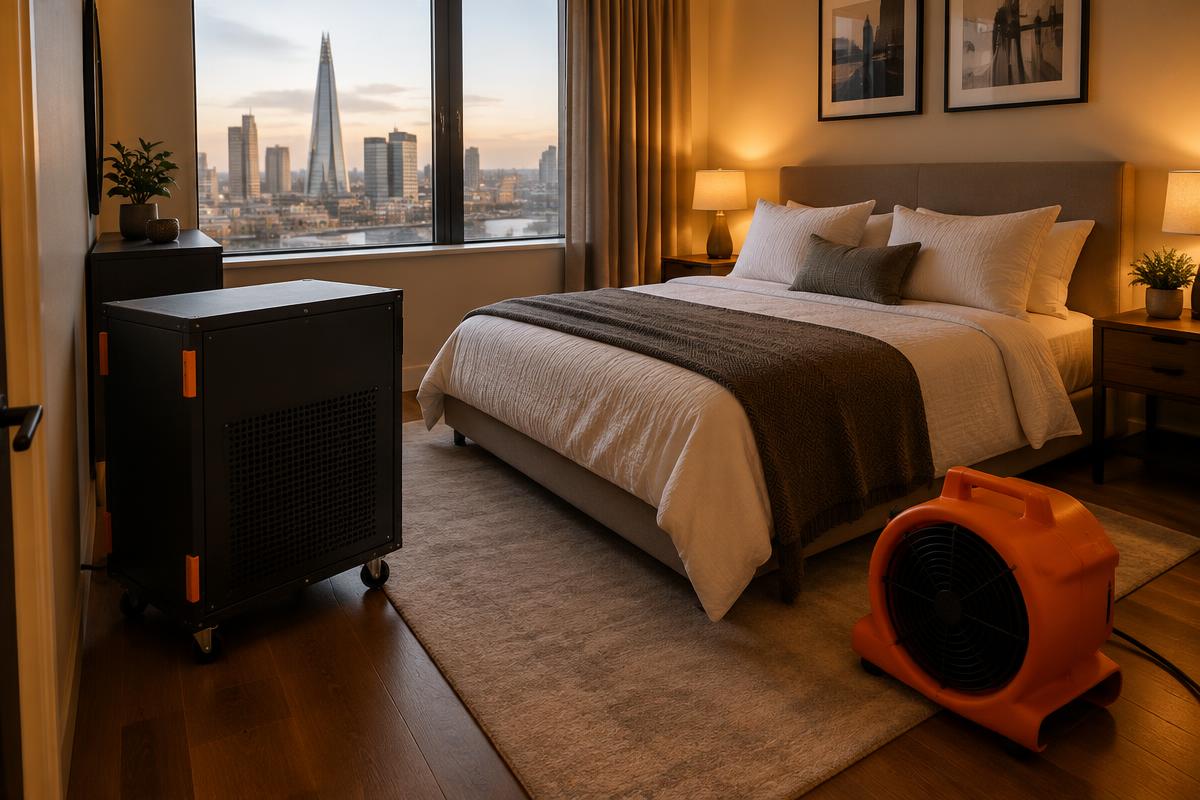
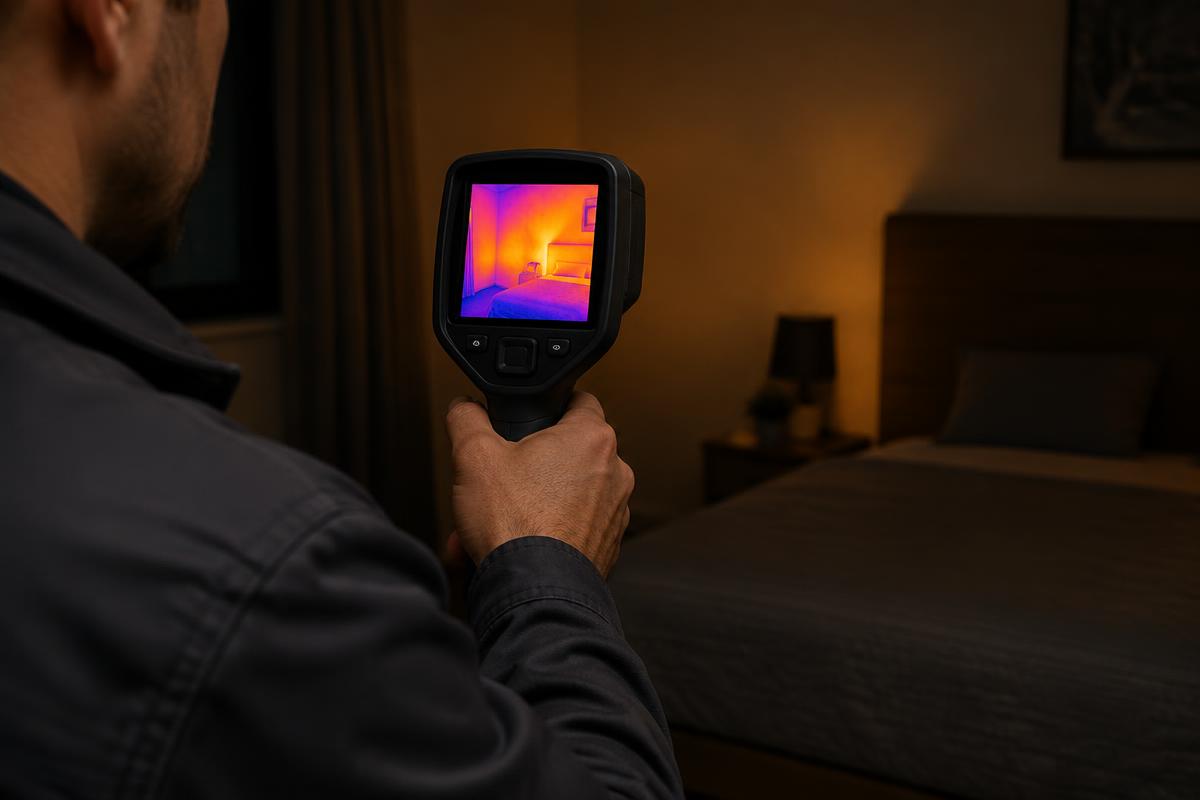
Once bed bugs are confirmed, the treatment plan should reflect the layout, affected rooms and practical constraints of the property. Bed Bug Heat Solutions UK uses controlled industrial heat of 60-65 degrees C across the whole treatment area. No harmful chemicals are used as the primary treatment, and monitoring is carried out with active live thermal imaging cameras only.
The heating period is usually 3-6 hours, with timings confirmed on the day. This is the heating period rather than a guaranteed total appointment length or a promised re-entry time. Access, preparation, treatment setup and safe return arrangements need to be discussed for the individual property, particularly where several households share a building.
Residents should receive property-specific preparation instructions rather than improvise their own removal plan. Flag medicines, aerosols, batteries, electronics, delicate possessions and anything else that might be heat-sensitive so the provider can advise. People, pets and plants require suitable arrangements, and potentially affected items should not simply be relocated untreated to another home.
Live thermal imaging supports the management of heat across the agreed treatment area. Bed Bug Heat Solutions UK brings over 40 years of hands-on pest-control experience, is fully insured and holds RSPH Level 2 certification. A six-month guarantee is available on qualifying treatments, so ask for the applicable conditions and preparation requirements before confirming the booking.
After Treatment: Follow-Up And Reducing Reintroduction
Follow the provider's instructions for returning to the property, unpacking and cleaning rather than relying on a generic timetable. Keep the treatment record and any aftercare advice with the tenancy correspondence. This gives tenants, landlords and agents a shared reference if questions arise about what was treated or what further action was recommended.
Old marks and shed skins can remain after treatment, so their presence does not necessarily indicate continuing activity. Equally, fresh physical evidence should not be dismissed without review. Photograph any live insects or new suspicious signs and contact the provider, noting the date and precise location rather than immediately applying another product.
Reducing reintroduction involves sensible handling of incoming belongings, not blaming residents for normal travel or everyday life. Inspect second-hand bed frames and upholstered furniture before bringing them inside, and check luggage when there has been a known exposure concern. Routine visual checks around the bed can help identify changes without turning the home into a constant search area.
For an Essex rental property, a useful quote enquiry includes the postcode, property type, number of bedrooms, rooms showing evidence and whether the home is shared. Bed Bug Heat Solutions UK serves England and Wales. Use the quote request form or contact page to discuss identification, access and a treatment plan suited to the property.
Useful next steps
Frequently asked questions
Six-month guarantee
Qualifying treatments are covered for six months. Send your details for a free assessment.
More from the blog
How Long Does Bed Bug Heat Treatment Take?
Read the full guide: How Long Does Bed Bug Heat Treatment Take?