Berkshire
Spotting Bed Bugs Early in Berkshire: Signs, Checks and Heat Treatment
Learn how to recognise early bed bug activity in Berkshire properties, avoid spreading it and prepare for professional assessment and heat treatment.
15 October 20269 min read
40 years
In the trade
Four decades of hands-on bed bug experience
Fully insured
Every treatment
Comprehensive liability cover on all work
RSPH Level 2
Certificated
Royal Society for Public Health qualified
Key points
- Look for physical evidence rather than relying on bites alone.
- Keep suspect belongings in place and avoid moving between bedrooms.
- Arrange access and identify the responsible property contact early.
- Professional heat treatment needs careful preparation and monitoring.
Why early recognition matters in Berkshire properties
Bed bugs can be difficult to notice when activity first begins. They spend much of their time hidden close to places where people sleep or rest, and early clues may be small or inconsistent. Recognising those clues gives you an opportunity to seek advice before belongings are moved or more rooms become involved.
Berkshire includes major business centres, hotels, commuter apartments and family housing. Frequent travel and changes in occupancy can create opportunities for bed bugs to arrive in luggage or other belongings. Their presence is not evidence of poor cleanliness, and a well-kept bedroom can still provide suitable hiding places.
Early action does not mean emptying a room or throwing away the bed as soon as you notice a mark. It means checking carefully, preserving useful evidence and limiting unnecessary movement. A calm response helps a pest-control professional assess what is happening without avoidable disruption or confusion.
For managed properties, coordination matters as much as recognition. A guest, tenant or cleaner may notice the first sign, while someone else controls access or authorises work. Knowing who should receive a report can prevent a small concern from being lost between reception, housekeeping, maintenance and property management.
The early signs worth checking
A live insect is particularly useful evidence, but bed bugs are not always easy to find. Adults are small, flattened and broadly oval, usually brown before feeding. Younger stages are smaller and can appear paler. Appearance changes after feeding, so a single description should not replace identification by someone experienced.
Look for dark spotting around mattress seams, bed-frame joints and nearby hiding places. Bed bug faecal marks can resemble small ink spots, although other marks may look similar. Their position and the presence of other evidence are important. A random dark mark on bedding does not establish an infestation.
Pale shed skins and small whitish eggs may also be present in protected crevices. These can be difficult to distinguish from fibres, debris or other insect material without suitable experience. Avoid scraping everything away before seeking advice, especially if the signs are limited to one small area.
Small blood marks on sheets can prompt a closer look, but they also have other explanations. The strongest concern comes from several compatible signs found together near a sleeping or resting place. Record where you found them and when, rather than trying to judge the size of an infestation from one clue.
- Check mattress piping, seams and labels for insects or clustered marks.
- Inspect accessible bed-frame joints and screw recesses.
- Look along reachable headboard edges without removing fixed fittings.
- Note any shed skins or suspected eggs before disturbing them.
- Photograph evidence clearly and record its exact location.
- Keep observations from different rooms separate.
Why bites alone cannot confirm bed bugs
Itchy marks noticed after sleeping often raise the first concern, but skin reactions are not a reliable identification method. Other insects, irritation and medical conditions can cause similar symptoms. Even a line or cluster of marks cannot confirm that bed bugs are responsible without supporting evidence from the surroundings.
People can react differently to bed bug bites. One person may notice irritation while another sharing the room reports nothing. Reactions may also become apparent after a delay, making it difficult to connect a particular mark with a particular night or location. This is especially relevant after travel.
If you notice unexplained marks, inspect the sleeping area methodically rather than repeatedly checking your skin. Write down when the marks became noticeable and whether there has been recent travel, a guest stay or a furniture delivery. These details provide context, but none proves how an infestation began.
Seek advice from a pharmacist or healthcare professional for troublesome skin symptoms, and obtain urgent medical help for a severe reaction. Pest-control assessment addresses the property, not a medical diagnosis. Keeping those two questions separate helps you get appropriate support without treating every rash as proof of bed bugs.
How to carry out a careful first inspection
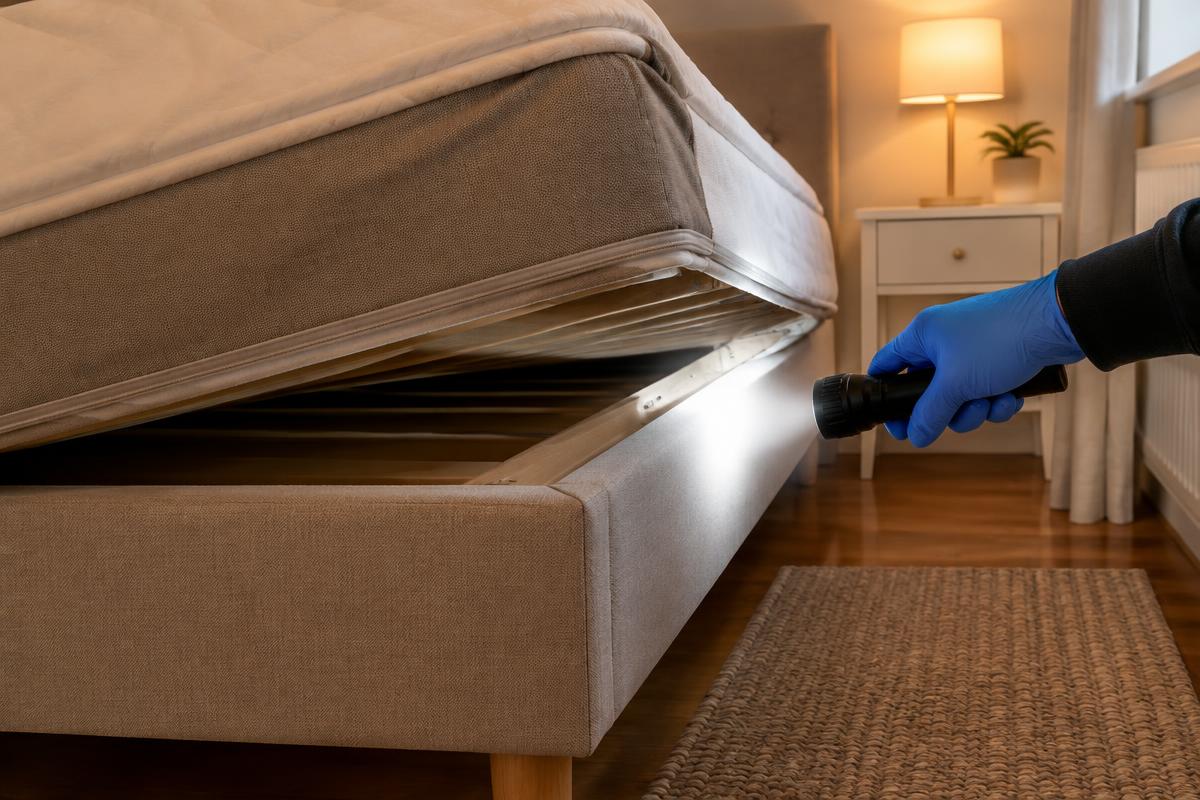
Start with the bed and the immediate surrounding area, using good lighting and a torch where needed. Examine accessible seams and joints slowly. You are looking for evidence, not attempting a complete technical survey. Avoid dismantling heavy furniture, opening electrical fittings or reaching into places that cannot be checked safely.
Inspect the mattress edges, accessible parts of the base and the headboard. Bedside furniture and upholstered seating used for regular resting may also be relevant. Keep items close to their original positions, and do not carry bedding or cushions into another room simply to make the inspection easier.
If you find a suspected insect, take a clear photograph with an indication of scale if practical. Where it can be done safely, retain the specimen in a secure, closed container for identification. A blurred image can be inconclusive, so be prepared for a professional to request further evidence or an inspection.
Stop once you have enough information to report the concern. Repeatedly stripping the room or disturbing every crevice may move insects and remove useful clues. A brief written record of what you checked, what you found and what remains inaccessible is more useful than an extensive but poorly documented search.
What to do while arranging professional advice
Avoid moving to another bedroom or sleeping on a sofa as an improvised solution. Moving sleeping places can complicate the pattern of activity, particularly if bedding and personal belongings move with you. Ask the treatment provider for advice suited to your circumstances rather than making changes that may involve additional rooms.
Do not immediately discard mattresses, beds or upholstered furniture. Moving them through corridors, lifts or shared entrances can create further problems, and replacement furniture does not address insects left elsewhere. Professional assessment can help establish whether items can remain for treatment and how any necessary disposal should be managed.
Keep suspect textiles contained if they must be moved, and seek instructions before laundering or taking items elsewhere. Suitable laundering or tumble-drying can form part of a plan, but fabric care limits and handling procedures matter. There is no benefit in treating bedding only to return it to an unresolved area.
Avoid improvised heating and unplanned use of insecticides, foggers or household remedies. Domestic heaters cannot reproduce a controlled professional treatment, and unsuitable methods may create fire, exposure or dispersal risks. Tell the provider about anything already applied so the proposed work can take account of it.
- Leave suspect furniture in place unless instructed otherwise.
- Avoid carrying loose bedding through the property.
- Record any sprays or other products already used.
- Keep photographs and inspection notes available.
- Report relevant activity in other sleeping or resting areas.
- Ask for property-specific instructions before clearing or laundering.
Sharing the right information at the first assessment
Useful early information includes the rooms involved, the evidence found and the dates of your observations. Explain whether the room is occupied regularly, occasionally or by changing guests. Describe physical signs separately from suspected bites, so the assessment is not based on symptoms alone or assumptions about where insects originated.
Mention recent travel, second-hand furniture and movement of belongings between rooms where relevant. These details may help guide inspection, but they should not be used to assign blame. It is often difficult to establish the original source, and identifying current activity is more important than proving who introduced it.
The provider also needs to understand the property layout. Adjoining bedrooms, shared walls, connected accommodation and frequently used sitting areas can influence what needs checking. Finding evidence in one room does not automatically establish the full treatment boundary, nor does it automatically mean an entire building requires treatment.
Discuss access restrictions, electrical arrangements, heat-sensitive contents and any occupants who may need additional support during preparation. Being clear about these matters helps the provider develop a practical plan. An early conversation is an opportunity to clarify the scope and requirements, not a reason to promise a result before assessment.
Coordinating hotels, apartments and managed access
In Berkshire hotels and serviced accommodation, an early report should reach the person responsible for pest-control decisions. Reception and housekeeping need a clear route for raising concerns without moving suspect contents between rooms. Management can then coordinate assessment, room access and communication while keeping records of the evidence reported.
For apartment blocks, identify whether the relevant contact is the resident, landlord, managing agent or another authorised representative. Responsibility for arranging and paying for work depends on the circumstances and applicable arrangements. Do not assume that a neighbour or building employee has authority to approve access or treatment.
Before the proposed treatment date, establish loading arrangements and access to adjoining rooms where assessment indicates this is needed. Check parking restrictions, entrances, lifts and any booking requirements for shared facilities. These details can affect equipment movement and preparation, so they should be resolved rather than left until arrival.
Busy occupancy makes accurate communication particularly important. Agree who will receive preparation instructions and who will confirm they have been followed. Where guests or residents need to leave the treatment area, management should coordinate this with the provider's requirements and avoid relocating suspect belongings into unaffected accommodation.
- Name one responsible contact with authority to coordinate the work.
- Confirm which rooms and shared areas require access.
- Arrange access to adjoining rooms where requested.
- Check loading space, parking restrictions and equipment routes.
- Confirm lift bookings, keys and entry permissions.
- Ensure preparation instructions reach every relevant occupant.
- Agree how completion and re-entry instructions will be communicated.
How professional bed bug heat treatment works
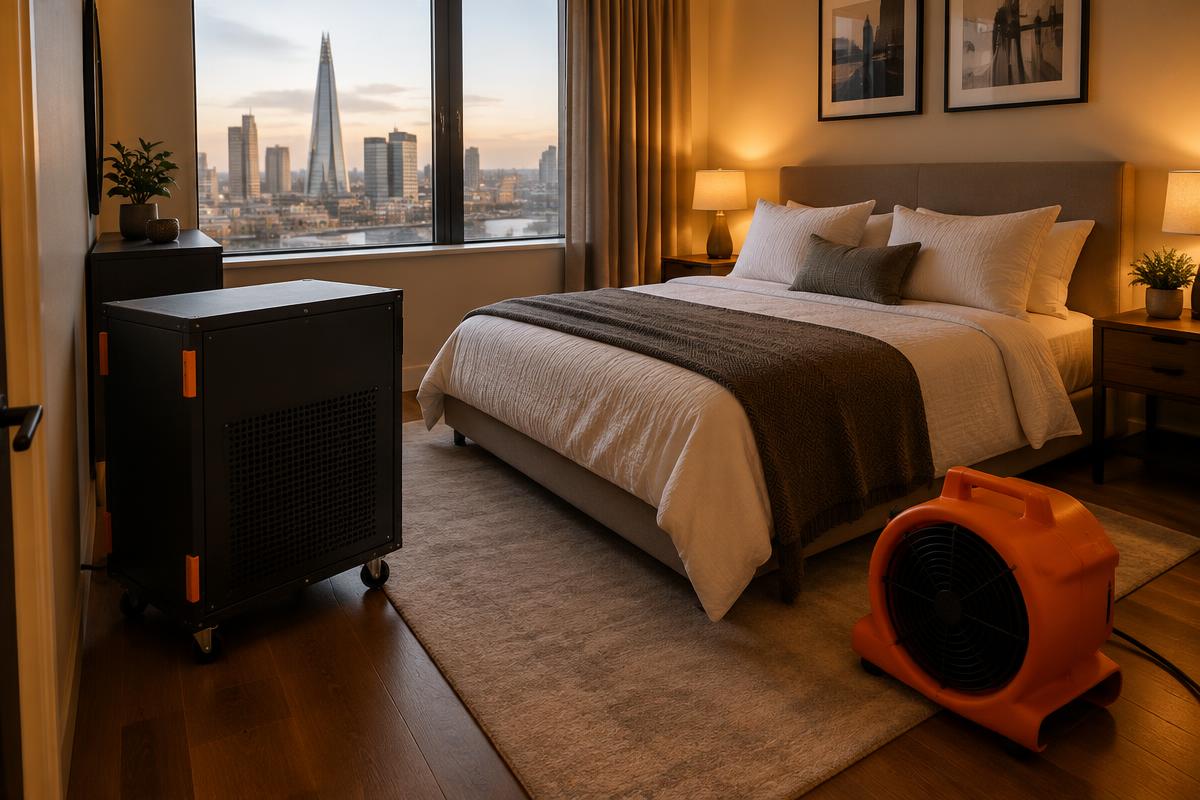
Bed Bug Heat Solutions UK uses controlled industrial heat of 60–65°C across the whole treatment area. The heating period is usually three to six hours. The purpose is to address bed bugs and their eggs within the agreed treatment scope, rather than relying only on action against visible insects.
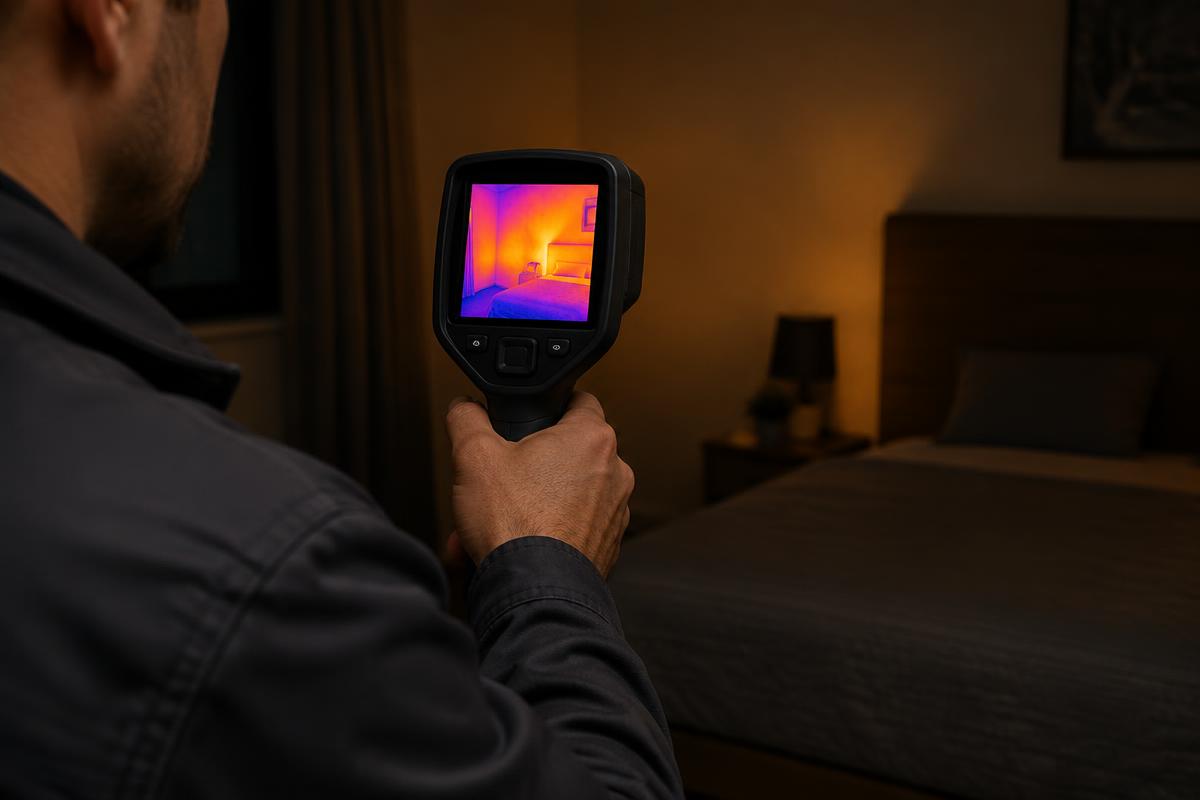
Monitoring uses active live thermal imaging cameras only. This allows the team to observe surface heat patterns during treatment and inform adjustments to the heating process. Treatment depends on professional planning, preparation and management of the whole area, rather than simply warming the air or placing a heater beside a bed.
Heat penetration is affected by the arrangement of furniture, the contents of the room and the property itself. Dense storage and inaccessible spaces need consideration when planning the work. This is why the preparation instructions and agreed treatment boundary matter, even when the first visible signs appear confined to one mattress.
No harmful chemicals are used as the primary treatment. This does not mean that industrial heat is suitable for every item or safe for people and pets to remain around during treatment. The team must establish appropriate precautions, manage the process and confirm when re-entry is permitted.
Preparing without spreading the problem
Follow the preparation instructions supplied for your property rather than a generic online clearance guide. Different rooms contain different materials, and removing everything can undermine the intended treatment scope. Ask which items should stay, which need special handling and how anything leaving the area should be managed.
Heat-sensitive belongings need particular attention. Medicines, aerosols, certain valuables and other temperature-sensitive contents should be discussed with the provider before work begins. Do not make assumptions about an item's suitability based on its appearance. Where there is uncertainty, raise it early so handling instructions can be agreed.
Plan for people and pets to remain outside the treatment area for the period specified by the team. The usual three-to-six-hour heating period is not a promise about the total time away from the property. Setup, checks, cooling and the provider's re-entry decision also need to be considered.
Preparation should also account for daily needs. Arrange access to essential medication, clothing and necessary documents without transferring suspect items casually into another location. Tell the provider if mobility, health, childcare or other practical circumstances make an instruction difficult to follow, so the issue can be discussed before treatment.
After treatment and reducing future uncertainty
Follow the team's aftercare instructions and keep a record of any subsequent concerns. If you find a suspected live insect, photograph it and contact the provider for advice. Old marks and shed material can remain after treatment, so distinguish fresh evidence from signs that were already present where possible.
Skin symptoms alone cannot establish whether treatment has succeeded or failed. Reactions may be delayed, and unrelated irritation can continue. Report concerns calmly and provide dates, locations and physical evidence when available. This gives the provider a clearer basis for deciding whether further assessment is appropriate.
Bed Bug Heat Solutions UK offers a six-month guarantee on qualifying treatments. Ask whether your proposed treatment qualifies and request the applicable terms, including any preparation, reporting or aftercare requirements. A guarantee should be understood alongside the agreed treatment scope, rather than assumed to cover every future circumstance.
Serving Berkshire and the rest of England and Wales, Bed Bug Heat Solutions UK brings over 40 years of hands-on pest-control experience, is fully insured and holds RSPH Level 2 certification. If you have noticed early signs, request an assessment and explain what you have found. Clear evidence and early coordination are the most useful starting points.
Useful next steps
Frequently asked questions
Six-month guarantee
Qualifying treatments are covered for six months. Send your details for a free assessment.
More from the blog
How Long Does Bed Bug Heat Treatment Take?
Read the full guide: How Long Does Bed Bug Heat Treatment Take?