Buckinghamshire
Bed Bug Heat Treatment in Buckinghamshire: How the Six-Month Guarantee Works
Understand the six-month guarantee on qualifying bed bug heat treatments in Buckinghamshire, from agreeing the treatment scope to reporting later concerns.
11 November 20269 min read
40 years
In the trade
Four decades of hands-on bed bug experience
Fully insured
Every treatment
Comprehensive liability cover on all work
RSPH Level 2
Certificated
Royal Society for Public Health qualified
Key points
- A six-month guarantee is available on qualifying treatments.
- Confirm eligibility, scope and conditions before booking.
- Preparation and property access need careful planning.
- Report suspected activity promptly for assessment.
What the six-month guarantee means
When you arrange bed bug heat treatment in Buckinghamshire, the guarantee deserves as much attention as the treatment itself. Bed Bug Heat Solutions UK offers a six-month guarantee on qualifying treatments. The important word is qualifying: you should understand whether your proposed treatment qualifies and what its cover includes before deciding to proceed.
A guarantee provides a framework for dealing with concerns after treatment. It should not be read as a promise that bed bugs can never enter your home again. They can be carried into a property on luggage, furniture or other belongings, even after an existing infestation has been successfully treated.
The headline duration does not, by itself, explain every condition. Your treatment agreement needs to establish the covered area, the applicable dates, your responsibilities and the process for reporting suspected activity. Ask for these details in writing so that you have something clear to refer to during the following months.
This article explains how to approach that agreement and use the guarantee sensibly. It does not replace the terms supplied for your particular treatment. Where an issue such as return visits, exclusions or additional costs is not stated, ask for clarification rather than assuming that the six-month wording answers it.
Confirming eligibility before you book
Start by asking whether the proposed work qualifies for the six-month guarantee. Eligibility should be confirmed for the actual treatment being offered, rather than inferred from a general description of the service. A written quotation and treatment scope help you understand what is planned and how the guarantee relates to it.
Explain where you have seen suspected bed bugs and which rooms people use for sleeping or resting. Mention previous treatments, recent furniture movements and any areas that cannot easily be accessed. These details support a more informed assessment; they do not mean that every reported mark or bite confirms an infestation.
Ask when the guarantee begins and how its end date will be recorded. Also establish who should raise a concern if the person booking is a landlord, letting agent or family member rather than the occupant. Clear communication arrangements can prevent important information from being delayed or passed between several people.
Do not assume that a guarantee automatically includes unlimited visits, a refund or treatment of additional rooms. Those are separate questions that need explicit answers. Understanding the available remedy and any applicable conditions before booking is more useful than trying to interpret a short guarantee statement after a concern develops.
- Confirm that your proposed treatment qualifies.
- Request the guarantee terms in writing.
- Check the start date and end date.
- Identify the rooms and areas included.
- Ask what happens if bed bugs are confirmed later.
- Clarify any exclusions or potential additional charges.
Why the treatment area matters in Buckinghamshire homes
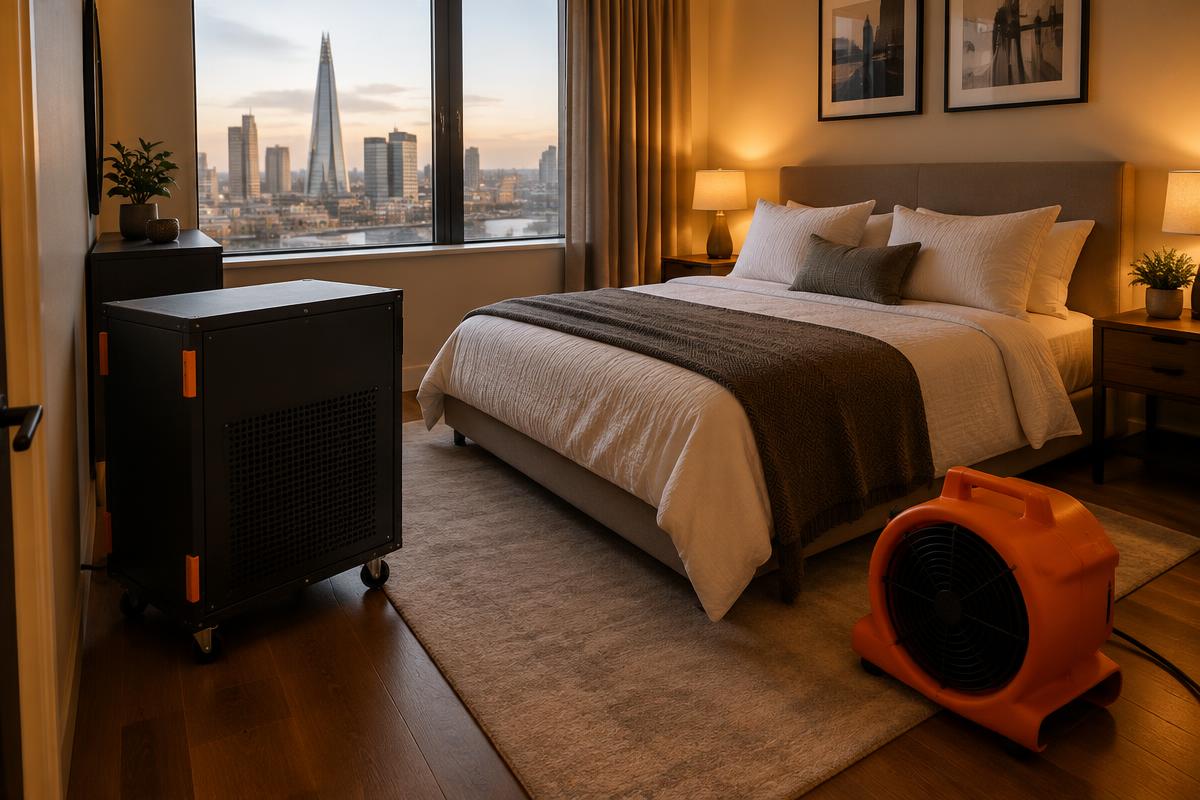
Buckinghamshire properties vary considerably in layout and access. A modern apartment, a commuter home and a larger detached property can need different heat and airflow arrangements. We assess the volume of the treatment area, its contents and equipment access rather than preparing a quotation from bedroom count alone.
This assessment also matters when discussing the guarantee. You need to know which spaces form part of the agreed treatment and whether any areas or belongings are outside it. An unclear boundary can create confusion later, particularly where sleeping areas connect to dressing rooms, studies or heavily furnished adjoining spaces.
In apartments, explain whether there are shared corridors, communal facilities or concerns about neighbouring homes. Treatment within one dwelling does not automatically mean that adjoining properties or communal areas are included. Where wider activity is suspected, coordination with the landlord, managing agent or other responsible party may be needed.
For larger homes, identify occasional bedrooms, guest accommodation and rooms used for sleeping at different times. The aim is not to make assumptions about the entire property, but to agree a scope based on the information available. Ask how any proposed exclusions affect eligibility and the practical extent of guarantee cover.
What the heat treatment involves
Our primary treatment uses controlled industrial heat of 60–65 degrees C across the whole treatment area. The heating period is usually three to six hours. These figures describe the treatment approach, but they should not be interpreted as a fixed appointment length or a promise that every property follows an identical schedule.
Heat and airflow arrangements are planned around the space and its contents. Furniture, stored belongings and room layout influence how the area is approached. This is why accurate information about the home is valuable before attendance, and why a simple bedroom total cannot capture all the practical demands of treatment.
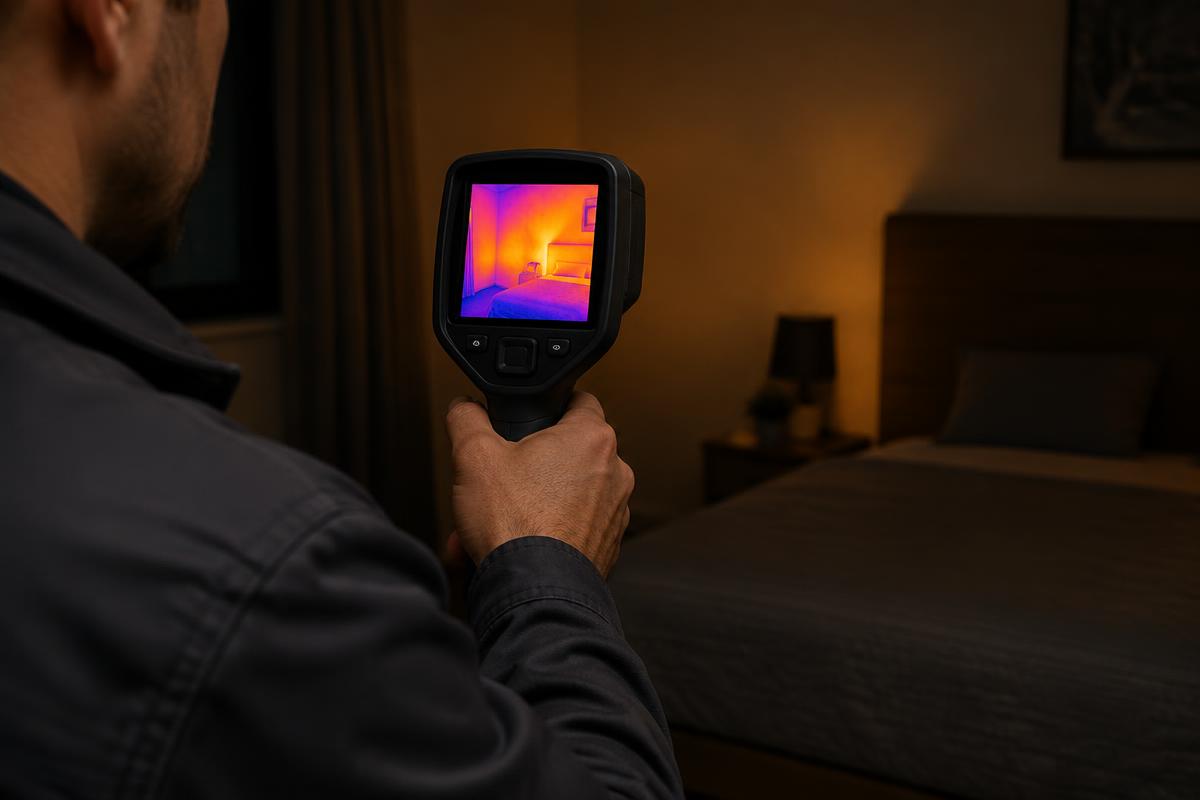
Monitoring uses active live thermal imaging cameras only. These cameras help the team observe surface heat patterns during treatment and inform adjustments to the heat and airflow arrangements. Thermal imaging does not see through furniture or certify the condition of every concealed space, so assessment and preparation remain important.
No harmful chemicals are used as the primary treatment. However, industrial heat still requires professional controls, suitable preparation and clear instructions about leaving and returning to the property. The six-month guarantee should sit alongside this planned process, rather than being treated as a substitute for careful work or sensible safety arrangements.
Preparation and your guarantee responsibilities
Preparation helps the team carry out the agreed work safely and effectively. Follow the instructions provided for your property rather than relying on a generic internet checklist. If an instruction is unclear, or you cannot complete it, raise the issue before treatment so that the situation can be discussed.
Some belongings may need special consideration because of their sensitivity to heat or their manufacturer's storage limits. Tell the team about medicines, specialist equipment and other items you are concerned about. Do not decide independently to leave potentially infested belongings untreated and then return them to the treated rooms without advice.
Moving bedding, clothing or furniture between rooms can also complicate the picture. Ask how items should be handled and where they should remain during preparation. Moving to another bedroom or transferring belongings to a relative's home may spread the problem rather than resolve it, so seek guidance before changing sleeping arrangements.
Ask which preparation requirements form part of the guarantee conditions and how any agreed exceptions will be recorded. It is better to explain a practical difficulty openly than to say the property is ready when it is not. Keep the preparation instructions with your quotation and guarantee documents for later reference.
- Read the property-specific preparation instructions.
- Flag heat-sensitive belongings before treatment.
- Ask before moving potentially infested items elsewhere.
- Explain any preparation steps you cannot complete.
- Confirm arrangements for occupants and pets.
- Keep a copy of any agreed preparation changes.
Access arrangements that should be agreed early
Access is an important part of planning bed bug heat treatment in Buckinghamshire. When requesting availability, provide details of gated developments, long driveways, parking controls and rooms above ground level. These are practical considerations for moving equipment and setting up the work, not minor details to leave until arrival.
For a modern apartment, explain the floor level, available access routes and any building management requirements. If a lift is available, mention any restrictions on its use. Permission to enter shared areas or move equipment through the building may need to be arranged with someone other than the occupant.
At a detached property, describe the route from the parking position to the treatment area. Long approaches, narrow entrances and separate accommodation can affect planning. Photographs or a clear description may help explain the layout, although the team will advise what information is needed for your particular enquiry.
These arrangements do not establish guarantee eligibility on their own. They help ensure that the proposed scope can be planned realistically. If an access restriction could prevent an agreed area from being treated, ask for the implications to be explained before work begins, including any change to the scope or cover.
What to do immediately after treatment
After treatment, follow the team's instructions on re-entry, handling belongings and any recommended household measures. Do not return simply because the usual heating period has elapsed. The information supplied for your appointment should guide you, including when occupants and pets can safely use the treated spaces again.
Keep your treatment record, agreed scope and guarantee terms together. Make sure you know how to contact Bed Bug Heat Solutions UK if a concern arises. If you manage the property on someone else's behalf, give the occupant the relevant aftercare instructions and explain how they should report suspected activity.
Avoid judging the outcome from skin reactions alone. Bite-like marks can have other causes, and skin reactions do not provide a reliable timetable for when exposure occurred. New or continuing marks deserve attention, but they do not automatically establish that live bed bugs remain or that a guarantee claim has been confirmed.
Physical evidence is more useful when assessing a concern. If you find a suspected insect, take a clear photograph and note the location and date. Where practical, retain it in a sealed container for identification. Ask for advice before adding insecticides or arranging another treatment that could complicate the assessment.
How to report suspected activity during the six months
If you suspect bed bug activity within the guarantee period, contact us promptly and explain what you have found. You do not need to identify the insect with certainty before asking for help. A clear description allows the concern to be considered against the treatment record and the applicable guarantee terms.
Include the treatment address, treatment date if available, and the room where the evidence was found. Explain whether you saw a live insect, found old-looking signs or noticed skin reactions only. Photographs can help, but an unclear image may not be enough to establish identification or determine the next step.
Also mention relevant changes since treatment, such as travel, visitors, second-hand furniture or items brought back from storage. These details do not automatically prove a new introduction or remove cover. They provide context for assessing what may have happened and whether the circumstances fall within the agreed terms.
The next step should be explained after the information has been reviewed. Do not assume that every report automatically triggers a free repeat treatment or a particular attendance time. Ask what assessment is proposed, what evidence is needed and whether any action or charge falls outside your guarantee before authorising further work.
- Provide the treatment address and available booking details.
- Record when and where suspected activity occurred.
- Send clear photographs where possible.
- Keep a suspected insect securely contained if practical.
- Describe relevant changes since treatment.
- Ask for confirmation of the proposed next step.
Understanding persistence, reintroduction and exclusions
One important distinction is between bed bugs associated with the original infestation and a later introduction from elsewhere. In practice, establishing that distinction may require careful assessment. A sighting alone does not necessarily explain where the insect came from, and the timing of a report cannot settle every question.
A six-month guarantee is not a physical barrier against future introductions. Luggage, used furniture and other belongings can carry bed bugs into a treated property. Equally, a household should not assume that every later sighting must be a new introduction. The evidence and the actual guarantee wording both matter.
Ask before booking how the terms address suspected reintroduction, untreated belongings, excluded rooms and activity in adjoining properties. These are points to clarify, not a list of exclusions being imposed by this article. Only the conditions applicable to your agreed treatment establish how such circumstances affect cover.
If there is uncertainty about a later concern, ask for a plain-language explanation of the assessment and the relevant guarantee condition. Separating the evidence, the treatment scope and the contractual terms helps keep the discussion clear. It also makes it easier to understand which further steps are recommended and why.
Booking with a clear understanding of the cover
A useful guarantee is one you understand before you need it. For a Buckinghamshire enquiry, provide an accurate account of the suspected infestation, the property layout and any access restrictions. Ask for a proposal that makes the treatment area, preparation requirements and qualifying guarantee arrangements clear.
Bed Bug Heat Solutions UK serves England and Wales and brings over 40 years of hands-on pest-control experience. We are fully insured and RSPH Level 2 certificated. These credentials support an informed professional approach, while the written treatment details explain what is being offered for your particular home.
Take time to check any point that could affect your decision, including what happens after a report and whether a proposed follow-up would be covered. There is no need to rely on assumptions about fixed prices, attendance times or unlimited return visits. Your quotation and guarantee terms should answer the relevant questions.
The practical approach is straightforward: agree the scope, confirm qualification, follow the preparation and aftercare advice, and report concerns with useful evidence. With those steps in place, the six-month guarantee on a qualifying treatment becomes a clearer part of your arrangements rather than just a reassuring phrase.
Useful next steps
Frequently asked questions
Six-month guarantee
Qualifying treatments are covered for six months. Send your details for a free assessment.
More from the blog
How Long Does Bed Bug Heat Treatment Take?
Read the full guide: How Long Does Bed Bug Heat Treatment Take?