Essex
Bed Bug Heat Treatment in Essex: Why DIY Treatments Usually Fail
Discover why home remedies often leave bed bugs behind and how professional heat treatment is planned for Essex homes and accommodation.
23 September 202610 min read
40 years
In the trade
Four decades of hands-on bed bug experience
Fully insured
Every treatment
Comprehensive liability cover on all work
RSPH Level 2
Certificated
Royal Society for Public Health qualified
Key points
- DIY methods often miss hidden bed bugs and eggs.
- Treating only the bed can leave activity elsewhere.
- Professional heat needs careful planning and monitoring.
- A full room history helps establish the treatment scope.
1. Why a DIY approach can struggle in Essex properties
Finding possible bed bugs at home often leads to an understandable first response: wash the bedding, vacuum the mattress and buy a treatment from a shop. These steps feel immediate and manageable. The difficulty is that visible insects and marks on bedding may represent only part of the problem, leaving other hiding places untouched.
Essex includes busy commuter towns, coastal accommodation, modern apartments and larger family homes. These settings present different practical challenges, but none is protected from bed bugs by being clean or well maintained. Bed bugs can arrive in luggage, furniture or belongings, then settle into small spaces close to where people rest.
DIY efforts commonly focus on the place where someone first notices bites or spots an insect. That location is useful evidence, but it does not establish the full extent of activity. Bed frames, nearby furniture, upholstery and gaps around the room may also need consideration before a suitable treatment plan can be agreed.
Professional bed bug heat treatment starts with assessing that wider picture rather than simply heating a mattress. For an Essex property, the room layout, suspected hiding places, reported activity and access arrangements all influence planning. Understanding why home treatments fall short helps explain why treatment scope matters as much as the method itself.
2. Hidden bed bugs and eggs are easy to overlook
Bed bugs spend much of their time concealed. They can occupy mattress seams, bed-frame joints, upholstered furniture and other narrow spaces that are difficult to inspect thoroughly. Finding and removing a few insects therefore does not show that every hiding place has been reached, particularly when furniture has several layers or enclosed sections.
Eggs add another challenge because they are small and can be difficult to recognise during an ordinary household inspection. A treatment that removes some exposed insects may still leave eggs behind. If viable eggs remain and hatch, renewed activity can make a seemingly successful DIY effort appear to have failed unexpectedly.
Vacuuming can help remove accessible insects and debris, but the suction only reaches the areas where the attachment is applied effectively. It cannot be assumed to clear every crack or internal furniture space. Vacuum contents also need careful handling so that material removed from one area is not inadvertently released somewhere else.
This is why a short period without sightings is not reliable proof that the problem has ended. Bed bugs are not always visible, and bites alone are not a dependable measure of activity. A professional assessment considers the evidence together, including where insects have been found and how the situation has changed over time.
3. Shop-bought sprays can leave gaps in treatment
A shop-bought spray may seem like a straightforward answer, particularly when insects are visible around a bed. However, a product can only work within its approved uses and the conditions described on its label. Spraying an accessible surface is not the same as successfully treating insects concealed deeper within furniture or room features.
Some bed bug populations have resistance to certain insecticides, which can reduce the effectiveness of products containing those active ingredients. Resistance is not the explanation for every unsuccessful treatment, though. Missed hiding places, unsuitable application and incomplete coverage can also leave enough activity behind for the infestation to continue.
Repeated spraying can create a false sense that greater effort must eventually produce a better result. Applying more than the label allows, combining products or using them on unsuitable surfaces can instead create unnecessary risks. Never apply a pesticide to bedding, electrical fittings or other locations unless the label specifically permits that use.
If you have already used sprays or other pest-control products, tell the treatment team what you used, where you applied it and approximately when. Keep the packaging or product details if available. That history supports safe planning and gives a clearer account of the previous attempts, rather than leaving the team to make assumptions.
4. Laundry and cleaning help, but do not treat the room
Laundering suitable bedding and clothing can be useful as part of a wider bed bug management plan. The limitation is that it deals with the items processed, not everything around them. Clean sheets placed back onto an untreated bed frame do not prevent surviving bed bugs in nearby hiding places from reaching the sleeping area.
Household steamers have similar limits. They may affect insects on surfaces that receive adequate heat, but results depend on the equipment, application and material being treated. A quick pass over a mattress does not demonstrate that heat has reached every relevant hiding place. Steam can also damage unsuitable finishes and introduce moisture.
Cleaning is not wasted effort, but repeated deep cleaning should not become a substitute for assessing the infestation. Bed bugs are not evidence of poor hygiene. Excessive cleaning can be exhausting, and dismantling or moving items without a plan may make it harder to keep potentially affected belongings contained.
Before undertaking extensive laundry or rearranging furniture, ask for preparation guidance specific to the proposed treatment. Keep a clear distinction between processed items and belongings that have not been dealt with. Avoid moving loose bedding through unaffected rooms or taking potentially infested possessions to another address in the hope of protecting them.
- Ask for treatment-specific laundry and preparation advice.
- Follow fabric care labels when washing or drying items.
- Contain potentially affected textiles before moving them.
- Keep processed belongings separate from untreated items.
- Avoid moving furniture between rooms without advice.
- Record cleaning and treatment steps already attempted.
5. Improvised heating is not professional heat treatment
Turning up the central heating or running domestic heaters is not equivalent to a controlled bed bug heat treatment. Warm air in a room does not establish that all relevant parts of the treatment area have reached suitable conditions. Dense furniture, enclosed spaces and the layout of a property affect how heat moves and penetrates.
Trying to force household equipment to produce extreme indoor heat can also create fire, electrical and property-damage risks. Domestic heaters and appliances should not be repurposed to attempt a whole-room bed bug treatment. The fact that heat is effective when professionally controlled does not make an improvised setup safe or dependable.
Bed Bug Heat Solutions UK uses controlled industrial heat of 60–65°C across the whole treatment area. The heating period is usually 3–6 hours. This is a planned process rather than a brief blast of hot air, and the heating period should not be confused with the complete time needed for the visit.
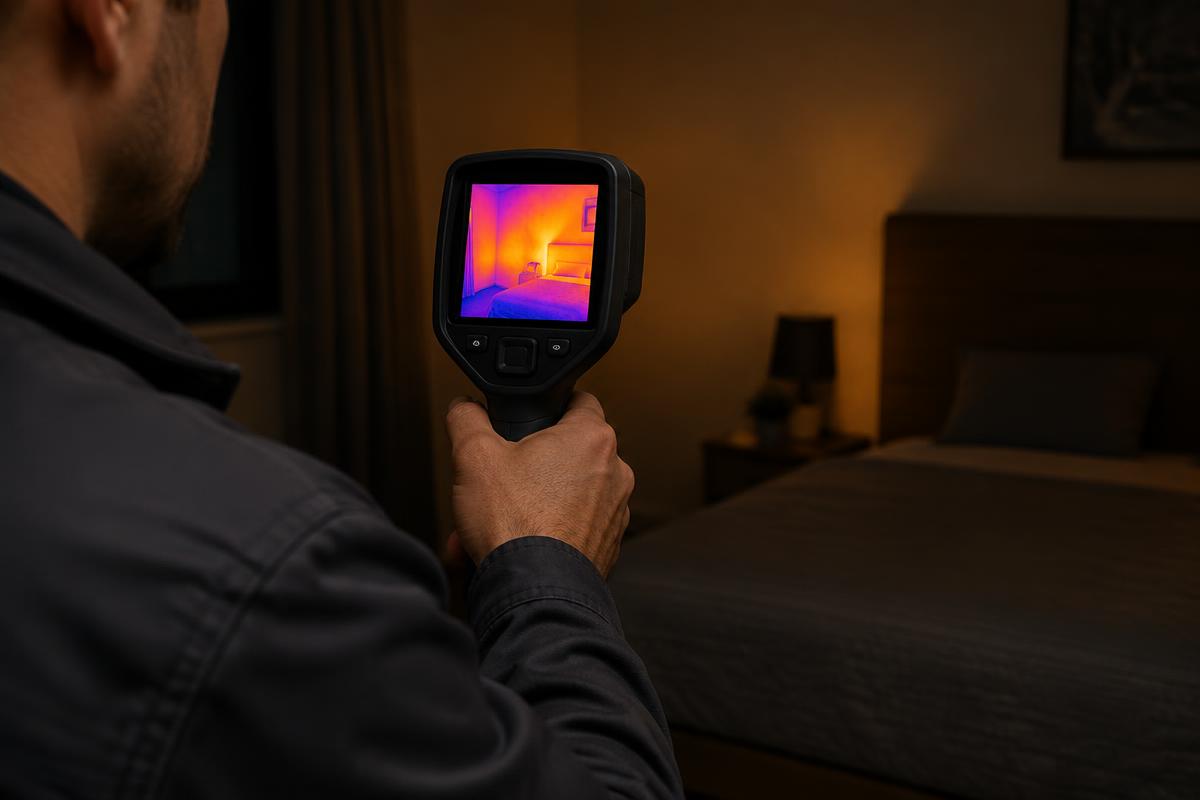
Monitoring uses active live thermal imaging cameras only. These allow the team to observe heat patterns during treatment and guide the management of the heating process. Equipment selection, placement and timings depend on the assessed property, so a professional plan cannot be replaced by copying a temperature or duration from an online description.
6. Treating one bed can miss activity in other rooms
A common DIY mistake is assuming that the infestation begins and ends with one mattress. Bed bugs may be present around other resting places, including sofas or beds used occasionally. Where activity has been reported in several rooms, treating only the most obvious location may leave other areas capable of sustaining the problem.
Changing bedrooms can complicate the picture. Moving bedding, clothing or furniture may transfer insects between areas, while using a different sleeping space can make the activity history harder to interpret. Before changing sleeping arrangements or relocating belongings, seek advice on how to limit unnecessary movement within the property.
For larger Essex homes, room history is especially important at quotation stage. Explain every room where insects, suspicious marks or possible bites have been reported, including rooms where signs have stopped. Mention spare bedrooms, sofas used for sleeping and any furniture moved since the first concern, even if those details seem minor.
Modern apartments and other connected buildings may need additional consideration if there are reports of activity in neighbouring accommodation. This does not mean an entire building automatically requires treatment. It means the provider needs enough information to assess the situation and advise whether communication with a landlord, managing agent or other occupier is appropriate.
- Identify every room with current or previous suspected activity.
- Give approximate dates for the first signs in each room.
- Mention sofas or spare beds used for sleeping.
- Describe furniture or belongings moved between rooms.
- Report previous treatments and any return of activity.
- Share relevant information about adjoining accommodation.
7. Online remedies often confuse deterrence with control
Online advice can blur the difference between making a space less appealing and eliminating an established infestation. Scented oils, household mixtures and other improvised remedies may be promoted without a clear explanation of their limitations. A strong smell or a visible reaction from one insect does not demonstrate control of hidden bed bugs and eggs.
Products described as natural are not automatically harmless. Concentrated substances can irritate skin or airways, damage materials or be unsuitable around pets. Flammable liquids must never be used as bed bug remedies. Adding an unapproved substance to a mattress or soft furnishing can create a new problem without resolving the existing one.
Mattress encasements and monitoring devices can have a useful supporting role when chosen and used appropriately. They are not, on their own, a treatment for insects elsewhere in a room. The same applies to discarding a mattress: replacing it does not remove activity from the bed frame, furniture or surrounding property.
The practical question to ask of any proposed remedy is what it actually reaches. Does it affect only an exposed insect, one item or the whole assessed treatment area? If its reach is narrow, relying on it alone can allow the infestation to continue while time and money are spent repeating the same approach.
8. Essex property details shape a professional treatment plan
An effective quotation needs more than a postcode and a count of the beds. Property type, room volume and travel access are considered before equipment and timings are confirmed. A compact apartment, a coastal guest property and a larger family home can require different arrangements even when the reported signs initially sound similar.
Access information matters because industrial heating equipment needs to be brought into the treatment area safely and practically. Tell the team about stairs, lifts, parking restrictions and any building-management requirements. These details help establish how the work can be organised without relying on assumptions that only become apparent on arrival.
Room volume and layout also matter. Large rooms, multiple affected spaces and substantial furniture can influence the equipment required and how the treatment is managed. Be clear about the areas where activity has been reported rather than requesting a narrowly defined treatment simply because it appears likely to cost less.
Preparation guidance should be agreed before treatment, including how to handle heat-sensitive possessions and when people and pets need to be away from the treatment area. Do not remove potentially infested items without discussing them first. The aim is to protect belongings while avoiding an untreated route for bed bugs to return.
- Describe the property type, layout and affected rooms.
- Provide room dimensions or other requested size information.
- Explain parking, stairs, lift access and entry restrictions.
- Give the complete room history before the quotation is finalised.
- Flag heat-sensitive items and follow the preparation guidance.
- Confirm arrangements for occupants and pets.
- Ask what the proposed treatment area includes.
9. What professional heat treatment offers instead
The main difference between professional heat treatment and a series of DIY attempts is coordinated coverage. Rather than working through isolated items with unrelated remedies, the team plans a defined treatment area and manages heat across it. The objective is to address hidden bed bugs and eggs, not just insects visible during an inspection.
Bed Bug Heat Solutions UK uses controlled industrial heat as its primary treatment, without harmful chemicals as the primary method. Treatment planning includes the property's practical requirements, preparation and the agreed scope. No treatment should be described as suitable for every possession, so following the team's guidance on sensitive items remains important.
The company brings over 40 years of hands-on pest-control experience, is fully insured and holds RSPH Level 2 certification. It serves England and Wales, including Essex. Those credentials support an informed approach, but the property history and preparation still matter: professional experience cannot compensate for affected rooms or moved belongings that have not been disclosed.
A six-month guarantee is available on qualifying treatments. Ask which treatments qualify and request the applicable terms before booking. A guarantee should be understood alongside the agreed treatment scope and aftercare guidance, not interpreted as a promise that bed bugs can never be brought into the property again through a later introduction.
10. When to stop repeating DIY treatments
If live insects continue to appear after home treatment, or signs recur after an apparent improvement, repeating the same steps may not address the reason for failure. The missing factor could be an overlooked room, hidden eggs, incomplete application or a mistaken identification. A professional assessment can help distinguish these possibilities.
Try to gather clear evidence without spreading belongings around the property. Photographs of suspected insects and a simple record of dates and locations can be useful. If possible, retain a specimen in a securely closed container for identification. Bites alone cannot confirm bed bugs because skin reactions can have several other causes.
When enquiring about bed bug heat treatment in Essex, explain what has happened rather than only asking for a treatment of the bed. Include previous remedies, affected rooms, sleeping arrangements and access details. For larger homes or activity across several rooms, provide the full room history at quotation stage so the scope can be assessed accurately.
The next step is a considered treatment discussion, not another round of increasingly aggressive home remedies. Bed Bug Heat Solutions UK can assess the information supplied and explain the proposed scope, preparation requirements and qualifying guarantee terms. A clear plan gives you a more useful basis for action than judging progress from occasional sightings alone.
Useful next steps
Frequently asked questions
Six-month guarantee
Qualifying treatments are covered for six months. Send your details for a free assessment.
More from the blog
How Long Does Bed Bug Heat Treatment Take?
Read the full guide: How Long Does Bed Bug Heat Treatment Take?