Hampshire
Bed Bug Heat Treatment in Hampshire for Landlords, Tenants and Shared Housing
How landlords, tenants and shared households in Hampshire can coordinate bed bug heat treatment, from the first report to preparation and follow-up.
18 October 20269 min read

40 years
In the trade
Four decades of hands-on bed bug experience
Fully insured
Every treatment
Comprehensive liability cover on all work
RSPH Level 2
Certificated
Royal Society for Public Health qualified
Key points
- Report suspected bed bugs promptly and avoid moving belongings between rooms.
- Agree access, responsibilities and preparation across the household.
- Whole-area heat treatment needs a property-specific assessment.
- Ask whether your treatment qualifies for the six-month guarantee.
1. Why Hampshire rented homes need a coordinated approach
Bed bugs in rented accommodation create practical questions as well as concern about bites. A tenant may be unsure whom to tell, while a landlord needs enough information to arrange an assessment. In shared housing, several people may need to prepare bedrooms and agree access before treatment can take place.
Hampshire has varied housing, from city flats and shared houses to coastal accommodation and rural rented homes. Military communities can also involve accommodation managed through an employer or accommodation office. These differences affect how an appointment is organised, but they do not replace the need to assess the actual property.
Property access, occupant movement and room use all inform the initial assessment. A room described as a spare bedroom may regularly host visitors, while a living room may double as a sleeping space. Explaining how the home is used helps the treatment team consider relevant areas rather than relying only on room labels.
Bed Bug Heat Solutions UK provides professional bed bug heat treatment across England and Wales, including Hampshire. For rented and shared homes, the starting point is a clear account of the problem and a workable access plan. Good coordination helps avoid overlooked rooms, incomplete preparation and unnecessary movement of potentially affected belongings.
2. What tenants should report when bed bugs are suspected
Bites alone cannot reliably confirm a bed bug infestation. People react differently, and other causes can produce similar skin irritation. More useful information includes sightings of insects, shed skins or dark spotting around sleeping areas. An assessment can help establish whether the signs are consistent with bed bugs before treatment is planned.
Tenants should notify the landlord or managing agent promptly, preferably in writing so there is a clear record. Give the date the signs were first noticed, the rooms involved and any relevant photographs. Keep the description factual rather than trying to determine who brought bed bugs into the property.
Avoid moving bedding, furniture or bags into other bedrooms while waiting for advice. Sleeping elsewhere within the property may also change where bed bugs seek a host. If someone needs to move for health or welfare reasons, explain this to the treatment provider so that the plan reflects the circumstances.
In a shared house, other occupants should be told enough to check their rooms and follow preparation guidance. This can be done without circulating personal medical details or blaming a particular tenant. A calm, consistent message makes it easier to obtain information and reduces the risk of people quietly moving belongings.
- Record when and where signs were first noticed.
- Photograph visible insects or marks if this can be done safely.
- Notify the landlord, agent or accommodation contact in writing.
- Identify all rooms currently used for sleeping.
- Explain any recent movement of furniture or belongings.
- Ask for advice before discarding items or changing sleeping arrangements.
3. Agreeing responsibilities without delaying the assessment
Responsibility for arranging and paying for bed bug treatment is not identical in every tenancy. Relevant factors can include the tenancy terms, the condition of the property, the history of the problem and the applicable legal duties. It is unwise to assume that either the landlord or the tenant must always pay.
Landlords and tenants should separate the immediate need to investigate from any disagreement about costs. An initial assessment provides a clearer basis for discussing the treatment scope and next steps. Leaving a report unanswered while responsibility is disputed can allow the situation to become harder to coordinate, especially in shared housing.
A written plan should identify who can authorise work, who receives preparation instructions and who will communicate with occupants. Where a letting agent is involved, confirm whether the agent has authority to approve treatment or must refer the decision to the owner. This avoids confusion after arrangements have been discussed.
Access should be arranged through the proper tenancy or accommodation procedures, with the required notice and agreement where applicable. A treatment booking is not permission to enter any room without lawful authority. If responsibility or access remains disputed, independent housing advice, Citizens Advice or the relevant council team may help clarify the position.
4. Assessing shared rooms, adjoining areas and occupant movement
A report from one bedroom does not automatically establish the full extent of an infestation. In shared housing, the assessment should consider nearby rooms, communal seating and other places used for resting or sleeping. The aim is to define a sensible treatment area based on evidence and property use, not assumptions.
Occupants can help by explaining where they spend time and whether bedding or furniture has been shared. For example, someone may have moved from a bedroom to a sofa after noticing bites. That information is relevant to planning and should be treated as a practical detail rather than a reason for criticism.
In a house in multiple occupation or a divided building, separately controlled rooms can complicate access. The treatment provider needs to know which spaces are available for assessment and which are outside the proposed scope. An inaccessible room should not simply disappear from the discussion because arranging entry is inconvenient.
Where there is concern about neighbouring accommodation, the landlord or building manager may need to coordinate further assessment. This does not mean every adjacent home automatically requires treatment. It means that the boundaries of the work, any remaining uncertainties and the potential need for wider action should be explained before decisions are made.
5. Planning access in Hampshire accommodation
Access planning is especially important where a building manager, employer or accommodation office controls entry. Nominate a person who can confirm room entry and equipment arrangements. That person should be able to resolve practical questions about keys, permitted routes and building rules before the treatment team arrives.
City flats may involve communal entrances, stairs or lifts, while rural housing may have different parking and approach arrangements. Coastal accommodation can have changing occupancy and rooms prepared for incoming guests. These are examples of details to discuss, rather than reasons to assume that a particular property can or cannot be treated.
Military-linked accommodation may require liaison with the relevant accommodation contact before work is authorised. Explain any entry restrictions or approval requirements at the enquiry stage. The same principle applies to employer-managed housing: the person living in a room may not be the person able to approve equipment access.
Every occupant also needs to understand when the treatment area must be vacated and how re-entry will be managed. The heating period is only one part of the appointment. Arrangements should allow for assessment, equipment setup and the provider's clearance process rather than assuming the home will be available as soon as heating finishes.
- Nominate a contact who can confirm entry to all agreed rooms.
- Check who has authority to approve the work.
- Explain parking, stairs, lifts and communal access arrangements.
- Confirm any employer or accommodation-office requirements.
- Tell occupants how departure and authorised re-entry will be coordinated.
- Arrange a suitable place for occupants and pets during treatment.
6. How professional bed bug heat treatment works
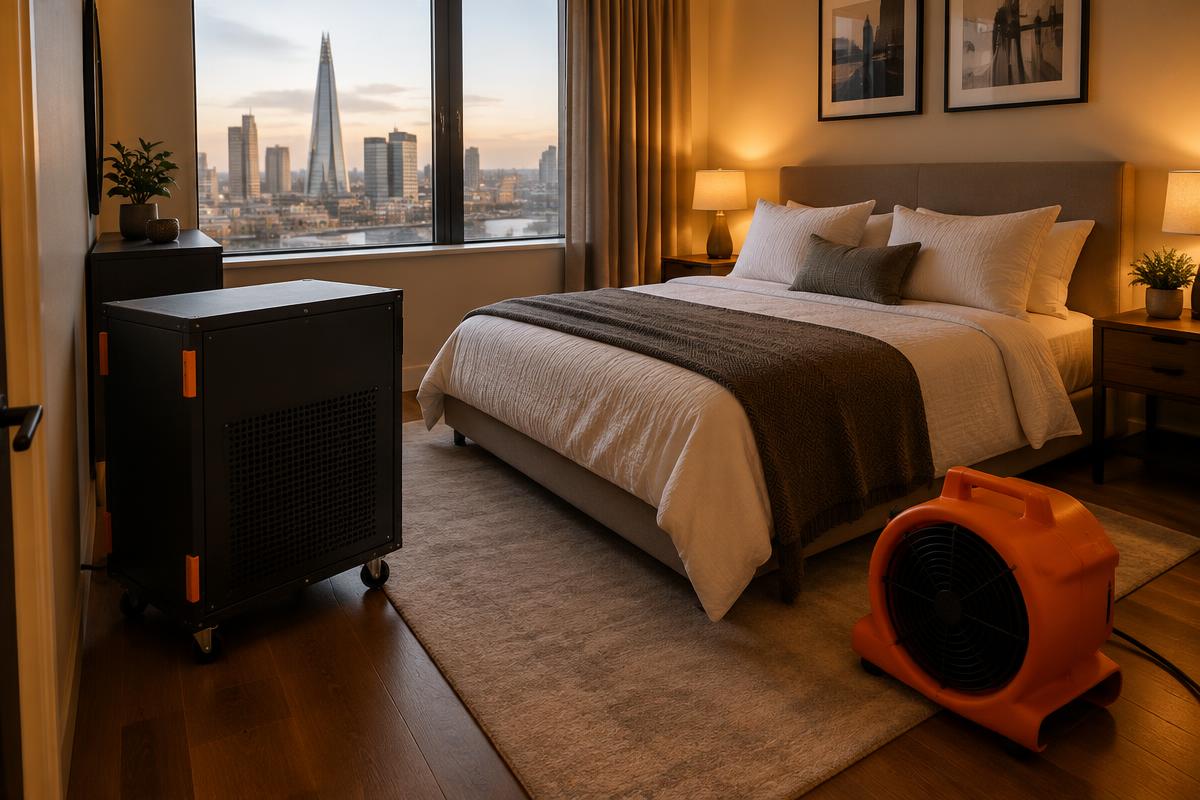
Bed Bug Heat Solutions UK uses controlled industrial heat of 60–65 degrees C across the whole treatment area. The objective is to expose bed bugs and their eggs to effective heat conditions throughout the agreed space. This is a professional process, not simply an attempt to make occupied rooms feel unusually warm.
The heating period usually lasts 3–6 hours. That range is not a promise of the total time needed at the property, because setup and other site requirements also take time. The treatment plan should reflect the layout, contents and access conditions rather than treating every rented room as an identical job.
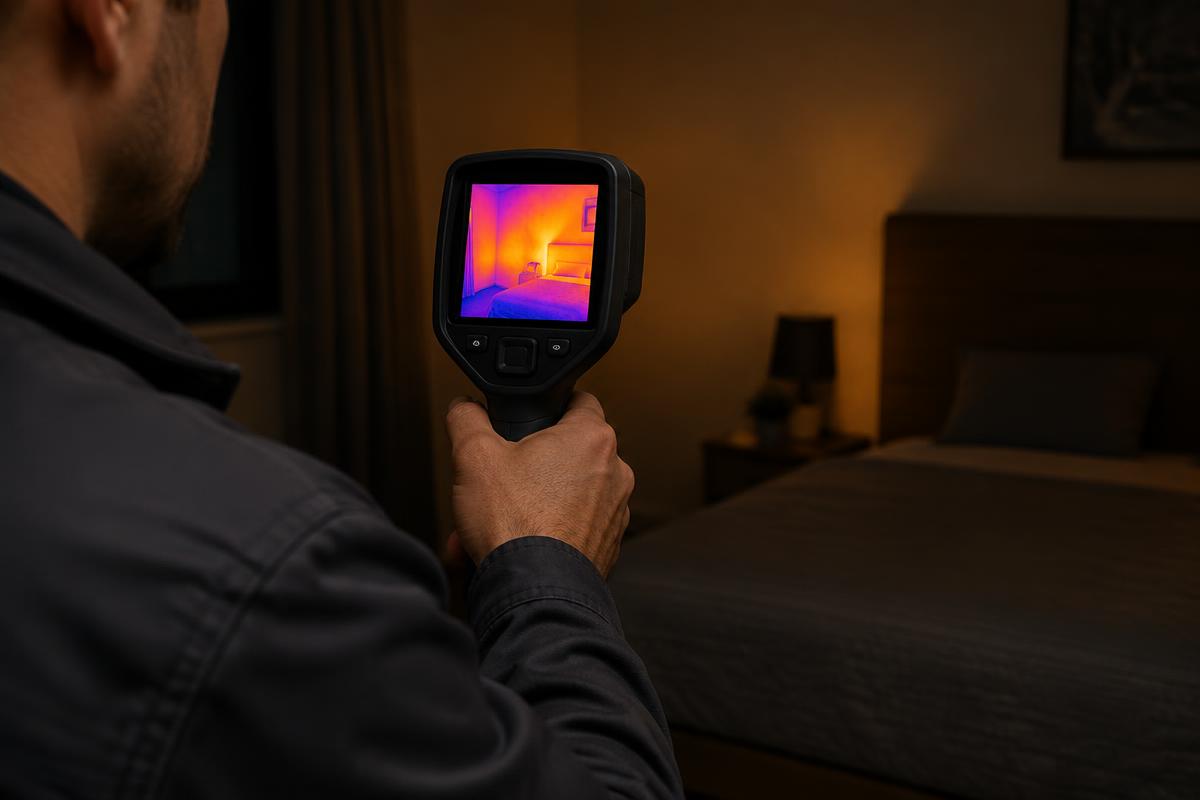
Monitoring uses active live thermal imaging cameras only. These cameras help the team observe visible surface heat patterns during treatment and identify areas requiring attention. A thermal image does not see through solid objects, so careful preparation, equipment positioning and professional judgement remain important parts of the overall process.
No harmful chemicals are used as the primary treatment. However, heat treatment still requires safety precautions and an unoccupied treatment area. Domestic heaters are not a substitute for controlled industrial equipment, and tenants should not try to recreate the process themselves. Ask the team to explain the proposed method and any property-specific limitations.
7. Preparing a shared home without spreading bed bugs
Preparation should follow the instructions supplied for the particular property. Generic advice from different sources can conflict, especially over what to remove, bag or leave in place. Landlords should ensure every affected occupant receives the same current instructions, with enough opportunity to raise questions about belongings or room access.
Moving untreated items out of the agreed treatment area can undermine the plan if those items carry bed bugs. At the same time, some possessions may need protection from heat or removal under specific guidance. Tell the provider about medicines, heat-sensitive equipment and other items of concern rather than making assumptions.
Do not automatically discard mattresses, beds or sofas before the assessment. Removing bulky furniture through communal spaces may create additional handling issues, and replacement alone does not address bed bugs elsewhere in the property. If an item does need disposal, obtain instructions on containment and a suitable route before moving it.
Shared-house preparation works best when duties are assigned clearly. Each occupant can be responsible for their own room, while a nominated person checks communal areas against the provider's guidance. Where disability, illness, language barriers or limited mobility make preparation difficult, raise this early so that suitable support can be discussed.
- Share the provider's preparation instructions with every affected occupant.
- Ask before removing belongings from the treatment area.
- Identify medicines and heat-sensitive items for specific advice.
- Agree who will prepare communal rooms and access routes.
- Explain any support needs that may affect preparation.
- Confirm arrangements for pets and other living things.
- Check that all agreed rooms will be accessible.
8. Managing treatment day and household communication
On treatment day, the nominated contact should be available to answer practical questions and confirm the agreed access arrangements. This does not mean remaining inside the treatment area. It means the team has a reliable way to clarify room use, preparation concerns or any changes since the assessment.
Occupants should not return to collect forgotten belongings or enter through a separate doorway while work is underway. In a shared property, make sure people who work different shifts receive the same message. Visitors, cleaners and maintenance contractors may also need to be told that access is restricted during the work.
Last-minute changes should be reported rather than quietly worked around. These might include an inaccessible bedroom, a new occupant, recently moved furniture or belongings that have been placed in another room. The provider can then decide whether the original plan remains suitable or whether the scope needs further discussion.
Re-entry should take place only when the team confirms it is appropriate. Landlords should avoid promising tenants a precise return time based solely on the usual heating period. A clear communication arrangement helps occupants plan their day while allowing the treatment team to manage the property according to the actual conditions.
9. Aftercare, further sightings and the six-month guarantee
After treatment, follow the advice given about belongings, room use and reporting concerns. Do not immediately bring untreated furniture or stored items back into the home without checking whether they were considered in the plan. In shared housing, aftercare needs to reach every occupant, not only the person who booked the work.
If there are further suspected signs, record where and when they occurred and contact the provider. Photographs of visible insects can help with identification. Skin irritation alone is not a reliable measure of treatment outcome, so describe the evidence rather than assuming that every new mark confirms continuing bed bug activity.
Bed Bug Heat Solutions UK offers a six-month guarantee on qualifying treatments. Ask whether the proposed work qualifies and request the applicable terms before authorising it. The treatment scope, responsibilities and any exclusions should be understood clearly, particularly where only part of a shared property is included in the agreed work.
A guarantee should not be understood as protection against every future introduction of bed bugs. People and belongings continue to move through homes after treatment. Landlords can support sensible follow-up by retaining treatment information and keeping communication open, while tenants can report concerns promptly without fear of automatic blame.
10. Arranging bed bug heat treatment in Hampshire
When making an enquiry, describe the property type, the rooms affected and the number of separately occupied spaces. Explain whether the home is managed by a landlord, agent, employer or accommodation office. These details help establish who needs to be involved in the assessment and how preparation instructions should be distributed.
Also mention any known access restrictions and uncertainty about nearby rooms. An accurate description is more useful than trying to provide a complete diagnosis yourself. The purpose of the initial discussion is to identify what needs checking and to develop a realistic plan for the property and the people using it.
Bed Bug Heat Solutions UK brings over 40 years of hands-on pest-control experience, is fully insured and is RSPH Level 2 certificated. The company serves England and Wales, including Hampshire, using professional heat treatment with active live thermal imaging cameras for monitoring. Treatment arrangements are based on the circumstances of each property.
For landlords, tenants and shared households, the most useful first step is a coordinated enquiry. Agree a contact person, gather the available evidence and explain how access will be authorised. This gives the team a practical starting point for discussing assessment, preparation, treatment scope and eligibility for the six-month guarantee.
Useful next steps
Frequently asked questions
Six-month guarantee
Qualifying treatments are covered for six months. Send your details for a free assessment.
More from the blog
How Long Does Bed Bug Heat Treatment Take?
Read the full guide: How Long Does Bed Bug Heat Treatment Take?