Hampshire
Bed Bug Heat Treatment in Hampshire: Understanding the Six-Month Guarantee
A practical guide to the six-month guarantee on qualifying bed bug heat treatments in Hampshire, from initial assessment to reporting concerns after treatment.
18 November 20269 min read
40 years
In the trade
Four decades of hands-on bed bug experience
Fully insured
Every treatment
Comprehensive liability cover on all work
RSPH Level 2
Certificated
Royal Society for Public Health qualified
Key points
- A six-month guarantee applies to qualifying treatments.
- Confirm your treatment’s written guarantee terms before booking.
- Access, room use and occupant movement inform the assessment.
- Report suspected activity promptly rather than assuming the cause.
What the six-month guarantee means for Hampshire customers
A guarantee is an important part of choosing bed bug treatment, but its value depends on understanding what it covers. Bed Bug Heat Solutions UK offers a six-month guarantee on qualifying treatments. For a Hampshire household or accommodation provider, the first step is to establish whether the proposed treatment qualifies and obtain the relevant terms before booking.
The phrase six-month guarantee should not be read as a promise that bed bugs can never enter a property again. Treatment addresses an infestation within an agreed treatment area. Later movement of people, luggage, furniture or other belongings can introduce a separate problem, so the distinction between continuing activity and a new introduction matters.
The headline guarantee does not, by itself, explain every detail of eligibility, reporting or follow-up. Ask what starts the six-month period, which rooms are covered and what happens if you report suspected activity. These points should be clear in your treatment documents rather than left to assumptions made during a telephone conversation.
This guide explains how to approach those questions without guessing at conditions that may not apply to your booking. The aim is to help you understand the proposed work, keep useful records and know how to raise a concern. The written terms supplied for your qualifying treatment remain the reference for its guarantee.
Start with an assessment of the property and its use
Hampshire has a varied mix of major cities, coastal accommodation, military communities and rural housing. A family home in Winchester may have different access arrangements from managed accommodation near Portsmouth or a holiday property on the coast. The initial assessment needs to reflect the actual building and how its rooms are used.
Property access, occupant movement and room use all inform that assessment. Explain where people sleep, whether they have recently changed bedrooms and which areas contain suspected signs. Mention shared living spaces and any rooms that cannot currently be entered. This gives the company a clearer basis for discussing the appropriate treatment area.
In accommodation with changing occupants, the person making the booking may not know the full history. Gather what information is available from residents, housekeeping staff or the property manager without presenting uncertain details as facts. Dates of sightings, affected rooms and recent furniture movements can be more useful than a broad description of the problem.
A careful assessment also provides the opportunity to discuss guarantee eligibility before arrangements become difficult to change. Ask whether anything about the proposed scope, access restrictions or occupancy needs clarification. Do not assume that a guarantee automatically extends to rooms, neighbouring units or separate buildings that have not been included in the agreed work.
Get the guarantee details clear before booking
Before accepting a treatment proposal, ask for confirmation that it qualifies for the six-month guarantee. Keep that confirmation with the description of the work. A clear record should make it possible to identify the property and agreed treatment area without relying on memory, particularly where several rooms or accommodation units are involved.
Ask how the guarantee period is calculated and how to report concerns during it. The available headline information does not establish the start date or the reporting procedure for your particular booking. Getting these details in writing helps avoid uncertainty if a suspected sighting happens close to the end of the period.
You should also ask what the company will do when a concern is reported. Do not assume that the word guarantee automatically means a particular number of visits, an immediate repeat treatment or a refund. Confirm the assessment process and any remedy provided under the terms, including whether any circumstances could involve an additional charge.
If a condition is unclear, ask for a plain-language explanation before proceeding. This is especially important when the customer, resident and person controlling access are different people. Each needs enough information to carry out their part, while the booking contact should retain the complete treatment proposal and guarantee documents.
- Confirm that the proposed treatment qualifies for the guarantee.
- Check the property and rooms included in the treatment scope.
- Ask when the six-month period starts.
- Confirm how suspected activity should be reported.
- Ask what assessment and remedy the terms provide.
- Clarify exclusions and any circumstances involving extra charges.
Understand the heat treatment behind the guarantee
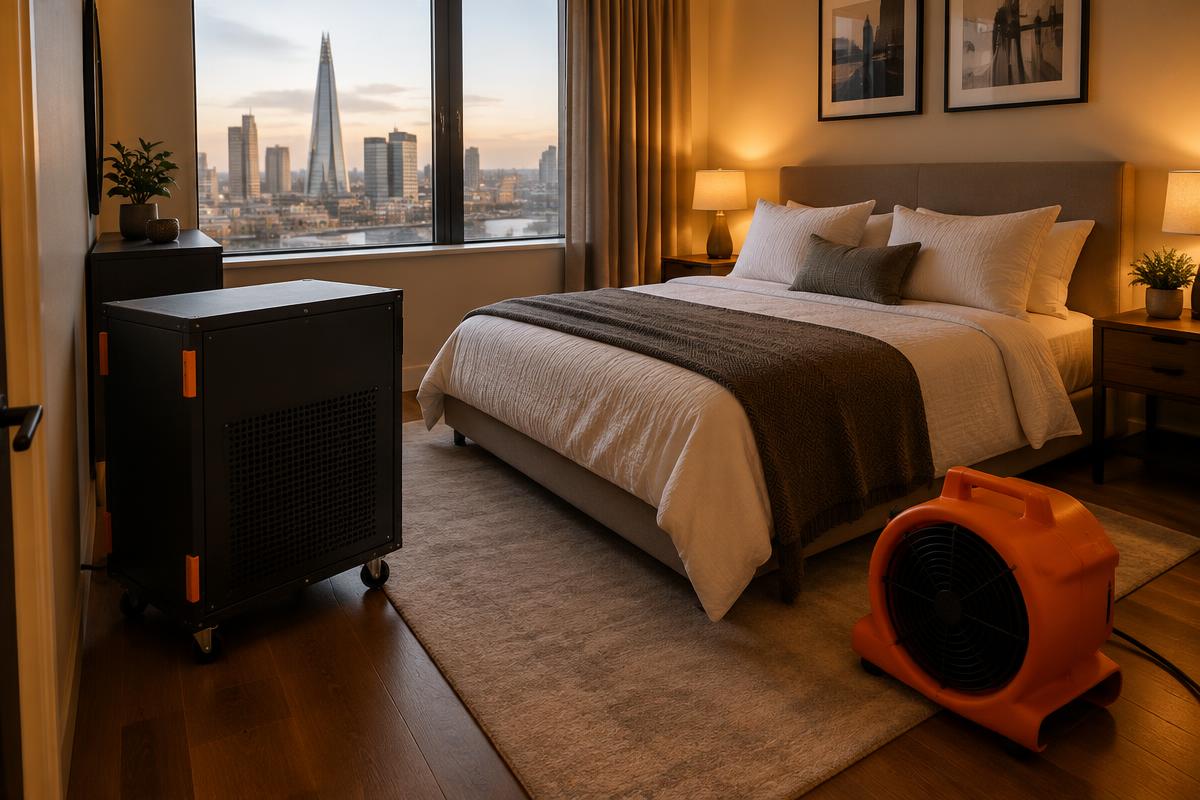
Bed Bug Heat Solutions UK uses controlled industrial heat of 60–65 degrees C across the whole treatment area. The heating period is usually three to six hours. These figures describe the treatment approach, not a promise that every booking takes the same amount of time or that the full visit lasts only that long.
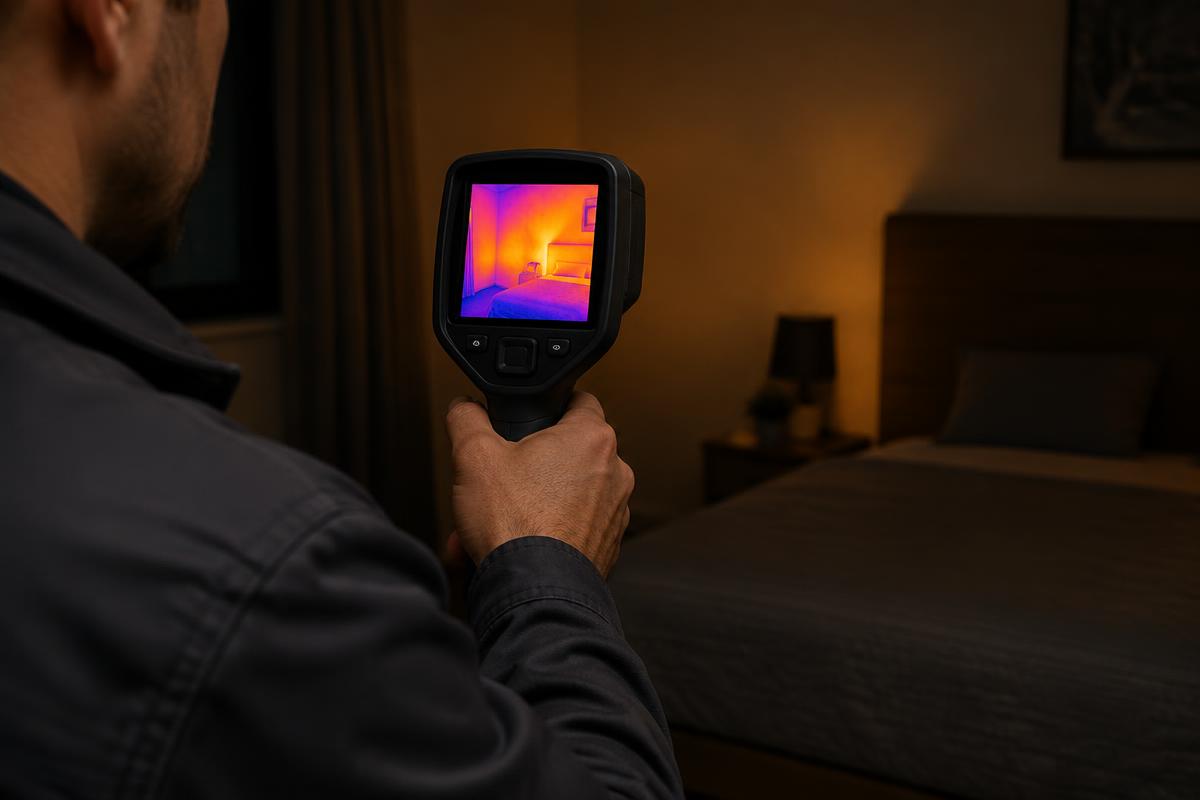
Monitoring uses active live thermal imaging cameras only. This allows the treatment team to observe thermal conditions during the work. The heating process needs professional management, and customers should follow the team’s instructions rather than attempting to reproduce the treatment with domestic heaters or by raising the property’s normal heating settings.
No harmful chemicals are used as the primary treatment. That does not remove the need for preparation, controlled access or clear instructions about heat-sensitive belongings. Ask what must be done before the visit and how the team will confirm when the treated area can be used again.
The company serves England and Wales and brings over 40 years of hands-on pest-control experience. It is fully insured and RSPH Level 2 certificated. These credentials help explain the professional background of the service, but the precise guarantee cover still needs to be confirmed in the documents for your booking.
Agree access and preparation responsibilities
Treatment arrangements work best when someone can answer practical questions about the building. In a private home, that may be the householder. In a Hampshire apartment block, staff accommodation or military community, access may instead be controlled by a building manager, employer or accommodation office. Identify that distinction early.
Where access is controlled, nominate the person who can confirm room entry and equipment arrangements. They should understand which areas need to be available and be able to resolve permission questions before the visit. Do not assume that a resident’s agreement also authorises access through every shared or restricted part of a building.
Follow the preparation instructions supplied for your property rather than relying on a generic online checklist. Explain any difficulty with those instructions before treatment, including belongings that cannot readily be moved or rooms that remain occupied. Ask how any unresolved issue affects the planned work and, where relevant, qualification for the guarantee.
Avoid transferring potentially affected belongings into untreated rooms simply to clear space. That can complicate the picture and may spread bed bugs beyond the original area. Ask the treatment team how items should be handled, and make sure residents, cleaners or maintenance staff are not working from conflicting instructions.
- Nominate a contact who can authorise room entry.
- Confirm equipment access with the responsible person.
- Share the property-specific preparation instructions with occupants.
- Raise access restrictions before the treatment visit.
- Ask how to handle potentially affected belongings.
- Clarify any unresolved preparation issue and its effect on eligibility.
Keep a useful record of the agreed treatment
A simple treatment file helps you use the guarantee confidently. Keep the booking confirmation, treatment scope, preparation guidance, guarantee terms and any completion information supplied. These records are particularly useful if another household member or a different property manager needs to contact the company later in the six-month period.
Record any changes to the planned work and ask for confirmation of their effect on coverage. For example, if a room becomes inaccessible, the important question is not whether someone mentioned it informally. It is whether the revised treatment scope and any guarantee implications have been clearly explained and agreed.
For managed accommodation, maintain a factual timeline without collecting unnecessary personal information. Note relevant room use, dates of suspected sightings and significant movements of furniture or belongings. The purpose is to help explain what happened before and after treatment, not to attribute blame to a particular resident or guest.
If you are a tenant, establish who holds the booking documents and who should report a concern. If you are a landlord or accommodation manager, make that route clear to occupants. A guarantee is easier to use when a suspected sighting reaches the right contact rather than being passed between several people.
What to do if you suspect bed bugs after treatment
A suspected sighting after treatment can be unsettling, but it is best approached with clear information rather than assumptions. Contact Bed Bug Heat Solutions UK using the reporting route supplied with your booking. Explain when the concern arose, where it occurred and what you actually observed, distinguishing visible evidence from symptoms alone.
Skin marks are not enough on their own to establish that bed bugs remain active. Reactions vary, and other causes can produce similar irritation. If you see an insect or another suspected sign, take a clear photograph where practical. Ask the company whether any further evidence would help its assessment.
Do not move beds or belongings between rooms, discard furniture or apply additional pest-control products without first seeking advice. Such changes may spread a problem or make the situation harder to assess. Tell the company about anything already done since treatment so that the next recommendation is based on an accurate account.
Report concerns promptly rather than waiting to see whether the guarantee period expires. Prompt reporting is sensible, but the exact notification requirements must come from your written terms. The company can explain the next step and how the concern will be considered; a suspected sighting does not by itself establish the outcome.
- Note the date and exact location of the suspected activity.
- Describe what you saw separately from any skin symptoms.
- Take a clear photograph if practical.
- Use the reporting route provided for your booking.
- Explain any changes or pest-control actions since treatment.
- Ask what to do with the room and belongings while awaiting advice.
Distinguish continuing activity from a new introduction
One of the most important guarantee questions is how continuing infestation is distinguished from a fresh introduction. Bed bugs can travel with belongings, so a treated property is not sealed against future entry. The guarantee terms should explain how suspected recurrence is assessed and how any relevant exclusions apply.
In Hampshire’s coastal accommodation, guest turnover and luggage movement may be relevant to that assessment. In military or employer-managed accommodation, residents may move between locations or rooms. These circumstances do not prove the source of an infestation, and they should not be used to make unsupported assumptions about an individual.
Rural housing and settled family homes also have movement of visitors, possessions and furniture. Location alone does not establish whether a later problem is linked to the earlier infestation. A factual account of activity, affected areas and changes since treatment gives the company a better basis for considering the concern.
Ask how the company will explain its findings if it considers a reported problem outside the guarantee. Equally, do not assume that all activity after treatment must be a new introduction. The appropriate approach is to consider the evidence and apply the agreed terms, rather than deciding the cause from timing alone.
Manage shared buildings and changing occupants carefully
A room within a larger building needs to be considered in its wider setting. Shared access, neighbouring accommodation and movements between rooms can affect the assessment and treatment planning. Make these arrangements known at the outset, even if the booking concerns only one household or one part of the property.
If residents change during the guarantee period, keep the treatment information available to the person managing the accommodation. Ask whether a change of occupant or booking contact has any effect under the terms. Do not assume that the guarantee transfers automatically, or that a change necessarily ends it, without checking.
For holiday accommodation, establish a consistent way for housekeeping staff and guests to report suspected signs to management. For residential or military accommodation, give occupants a clear reporting contact. This is an organisational step, not a substitute for the company’s own guarantee reporting procedure or any applicable notification requirements.
Where another room develops suspected activity, contact the company rather than assuming it falls within the original cover. Refer back to the agreed treatment area and explain the new location. A wider assessment may be appropriate, but the original guarantee should not be presented as whole-building cover unless that is expressly confirmed.
Make an informed booking for your Hampshire property
The most useful guarantee is one you understand before treatment begins. Confirm eligibility, the covered area, the start of the six-month period and the reporting process. Ask what happens if concerns arise, and make sure any conditions that matter to your property have been explained in terms you can follow.
When enquiring about a Hampshire property, describe its use as well as its location. Mention whether it is a private home, managed accommodation, a coastal guest property or another setting. Explain access controls and nominate the person who can confirm room entry and equipment arrangements where someone else holds that authority.
Bed Bug Heat Solutions UK can discuss professional heat treatment using controlled industrial heat and active live thermal imaging cameras. The service covers England and Wales, including Hampshire. Arrangements should be based on the assessment and agreed scope, rather than assumptions about attendance dates, visit length or a standard price for every property.
A six-month guarantee on qualifying treatments provides a defined period of cover under the agreed terms. It works best alongside careful preparation, clear documentation and prompt communication about suspected activity. Before booking, request the guarantee details and resolve any uncertainty so that you know both what is being treated and what support the terms provide.
Useful next steps
Frequently asked questions
Six-month guarantee
Qualifying treatments are covered for six months. Send your details for a free assessment.
More from the blog
How Long Does Bed Bug Heat Treatment Take?
Read the full guide: How Long Does Bed Bug Heat Treatment Take?