Hertfordshire
Bed Bug Heat Treatment in Hertfordshire: Understanding the Six-Month Guarantee
A practical guide to the six-month guarantee on qualifying bed bug heat treatments in Hertfordshire, with clear advice on preparation and aftercare.
24 September 20269 min read
40 years
In the trade
Four decades of hands-on bed bug experience
Fully insured
Every treatment
Comprehensive liability cover on all work
RSPH Level 2
Certificated
Royal Society for Public Health qualified
Key points
- A six-month guarantee applies to qualifying treatments.
- Confirm eligibility, dates and remedies in writing.
- Preparation and the agreed treatment scope matter.
- Report suspected activity promptly for assessment.
What the six-month guarantee means
When arranging bed bug heat treatment in Hertfordshire, it is reasonable to ask what happens if you notice something concerning afterwards. Bed Bug Heat Solutions UK offers a six-month guarantee on qualifying treatments. Understanding the word qualifying is important, because a guarantee should be read alongside the agreed treatment scope and written conditions.
The guarantee is not a promise that bed bugs can never enter your property again. Treatment addresses an infestation within an agreed area, while later exposure through travel, belongings or other routes remains possible. Your written terms should explain how concerns arising during the guarantee period are assessed and what support applies.
Before accepting a quote, ask whether your proposed treatment qualifies and request the relevant guarantee wording. Check the start date, the covered rooms or areas, any responsibilities placed on you and the process for reporting suspected activity. Do not assume that every service or property arrangement receives identical cover.
This article explains the practical questions to ask rather than replacing your individual agreement. In particular, the phrase six-month guarantee does not, by itself, establish an automatic refund or an unrestricted right to repeat treatments. Any remedy should be confirmed in the written terms supplied for your qualifying treatment.
How the Hertfordshire property assessment supports clear cover
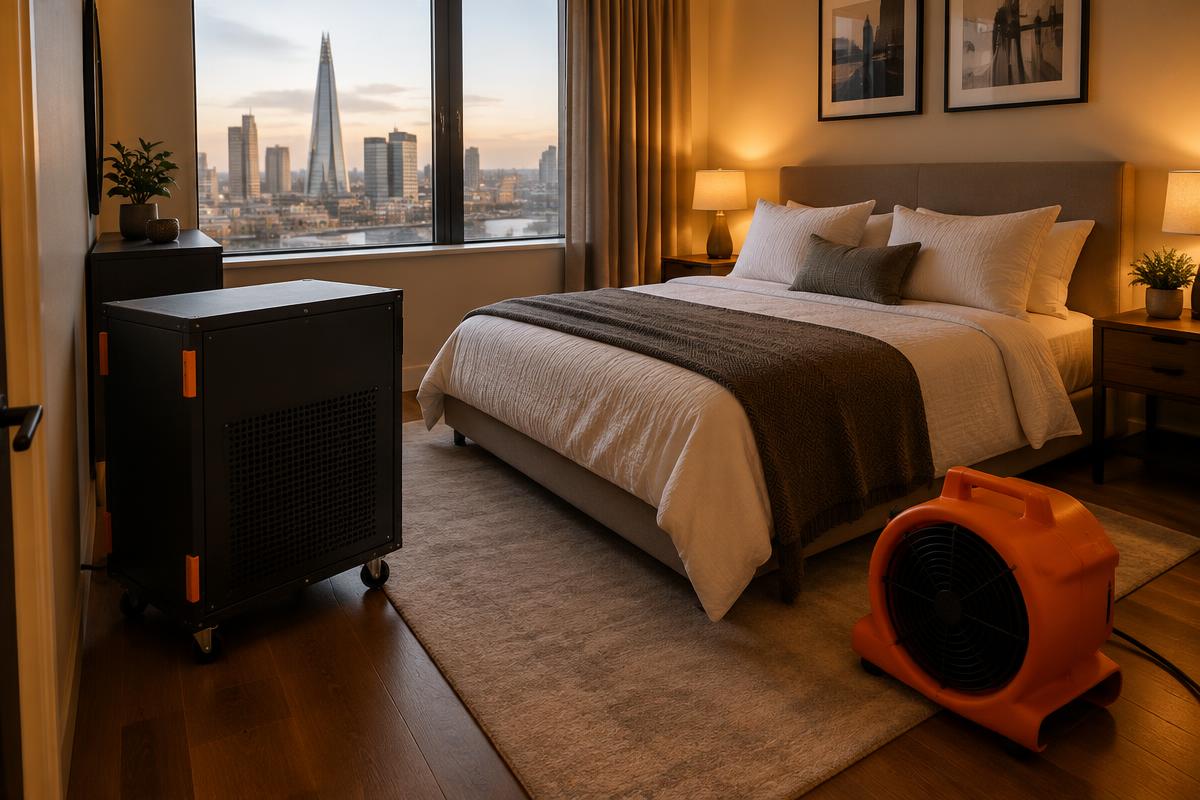
From commuter apartments to family houses and hospitality properties, Hertfordshire buildings vary considerably. An initial assessment considers the property layout, electrical arrangements and equipment access. These details help establish a workable treatment plan and a clear description of the area being treated, both of which matter when discussing guarantee eligibility.
Explain where you have found suspected bed bugs and whether signs have appeared in more than one room. Include rooms used occasionally, such as guest bedrooms, and any recent movement of furniture or bedding. A complete account helps the team assess the situation without relying only on the most obvious sleeping area.
For flats and properties with shared spaces, explain which areas are under your control and whether there have been concerns elsewhere in the building. Neighbouring accommodation and communal routes can affect the wider infestation picture. The quote should make clear what is included rather than suggesting that treatment of one home covers an entire block.
Practical access information is equally useful. Tell us about gated access, parking restrictions or upper-floor rooms when requesting a quote. This helps us plan a practical equipment route and realistic attendance window. It also allows access questions to be addressed before treatment arrangements and the associated guarantee are agreed.
- Describe the property type and number of affected rooms.
- Identify upper-floor rooms and available equipment routes.
- Explain gated access and parking restrictions.
- Provide information about electrical arrangements.
- Mention shared areas or suspected activity in adjoining accommodation.
- Explain where furniture or bedding has recently been moved.
What the heat treatment involves
Bed Bug Heat Solutions UK uses controlled industrial heat of 60–65°C across the whole treatment area. The heating period is usually three to six hours. These are treatment parameters, not a promise that every property requires the same schedule or that the full visit will fit within that heating period.
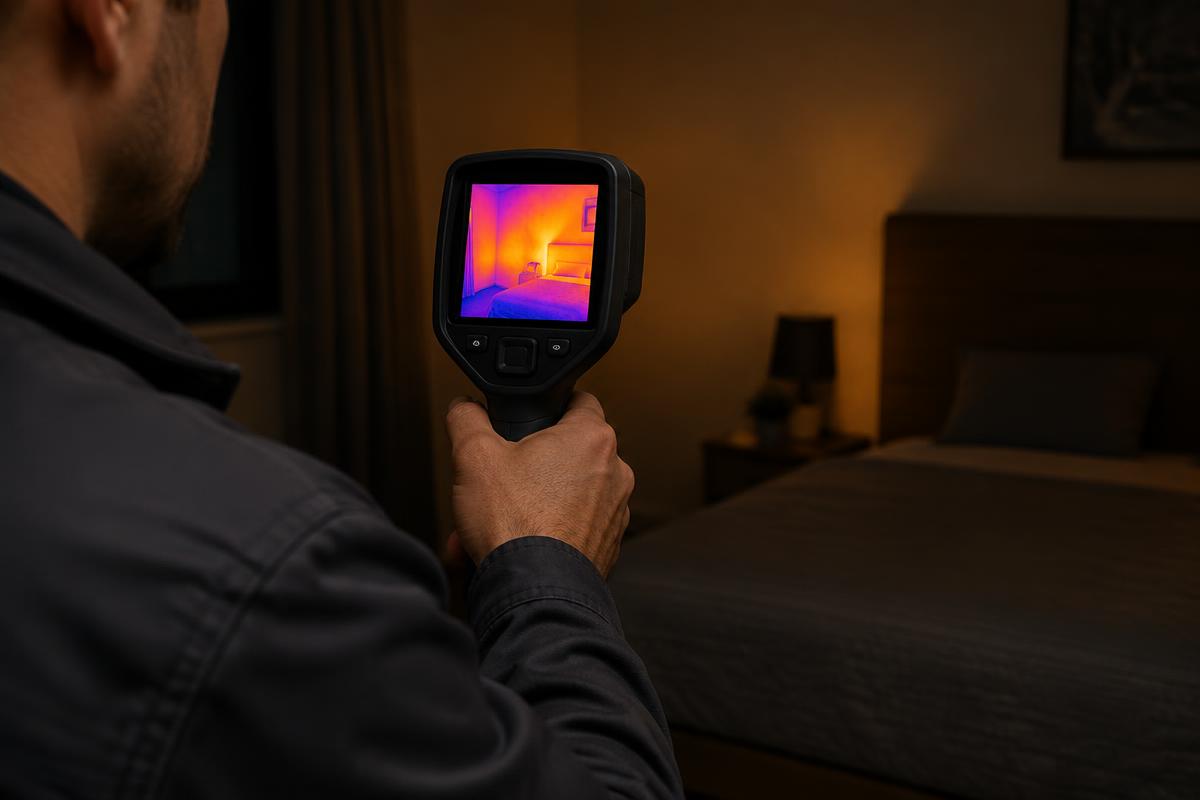
Monitoring uses active live thermal imaging cameras only. This allows the team to observe heat distribution during the process and manage the treatment in relation to the agreed area. Property layout, contents and access all need to be considered when planning how the equipment will be positioned and operated.
Heat is the primary treatment, with no harmful chemicals used as the primary treatment method. However, a heat-based service still requires professional planning, preparation and controlled access. Follow the instructions given for occupants, pets and belongings, and do not re-enter the treatment area until the team has confirmed that you may do so.
The relationship between the treatment and guarantee should be straightforward: the paperwork needs to identify the service delivered and the area to which the guarantee applies. Ask for clarification if a quote describes individual rooms but your understanding is that the whole property will be treated. Resolve that difference before giving approval.
Questions to settle before accepting the guarantee
A useful guarantee is one you can understand before treatment, not just after a problem arises. Ask for the conditions in a form you can keep and read them with the quotation. If a phrase such as qualifying treatment is not explained for your booking, request a clear answer about your eligibility.
Check when the six-month period begins and how the end date will be recorded. It is better to have an explicit date than to work it out later from an appointment reminder or payment record. Also ask how to raise a concern and what information the company will need to assess it.
The remedy is another important point. Ask what happens if reported activity is accepted as covered under the guarantee, including whether further assessment or treatment is provided and whether any charges could apply. Do not interpret a general guarantee statement as confirmation of free work in every possible circumstance.
Finally, review any exclusions or conditions involving preparation, access, untreated areas or newly introduced bed bugs. These are questions to clarify, not assumptions about your particular agreement. If something discussed during the quotation process matters to your decision, ask for it to be reflected in the written information.
- Confirm that your proposed treatment qualifies.
- Request the guarantee start and end dates.
- Check the rooms and areas included in the cover.
- Read the preparation and access requirements.
- Ask how suspected activity should be reported.
- Clarify the available remedy and any possible charges.
- Ask for explanations of any exclusions you do not understand.
Preparation and your responsibilities
Preparation helps the treatment proceed as planned and may be relevant to guarantee conditions where those conditions are stated in your agreement. Follow the property-specific instructions supplied by the team rather than a generic online checklist. Different belongings and room arrangements can require different handling, particularly where items may be affected by heat.
Do not move potentially infested possessions into an untreated room simply to make space. That can move bed bugs away from the planned treatment area. Ask how bedding, clothing, bags and movable furniture should be handled, including anything that needs to be removed because it is unsuitable for the heat process.
Tell the team in advance about belongings requiring special consideration and any preparation tasks you cannot complete. Examples might include heavy furniture you cannot move or rooms you cannot make accessible. Raising difficulties early allows the treatment plan to be discussed rather than leaving an unresolved issue until equipment arrives.
If you are a landlord, managing agent or hospitality operator, make sure the person responsible for preparation receives the instructions directly. A booking contact may not be the person with access to each room. Clear communication helps avoid gaps between what was agreed, what occupants understood and what is ready on the day.
What to expect after treatment
After treatment, follow the team's advice about re-entry, handling belongings and returning rooms to normal use. Keep the treatment record and guarantee information together so they are easy to find. This gives you a reliable reference if you later need to check the covered area, dates or reporting process.
It is understandable to remain alert after dealing with bed bugs, but skin marks alone do not confirm ongoing activity. Reactions can vary, and several other causes can produce similar marks. Report concerns calmly, describing what you have actually observed rather than treating every itch as proof that the treatment has failed.
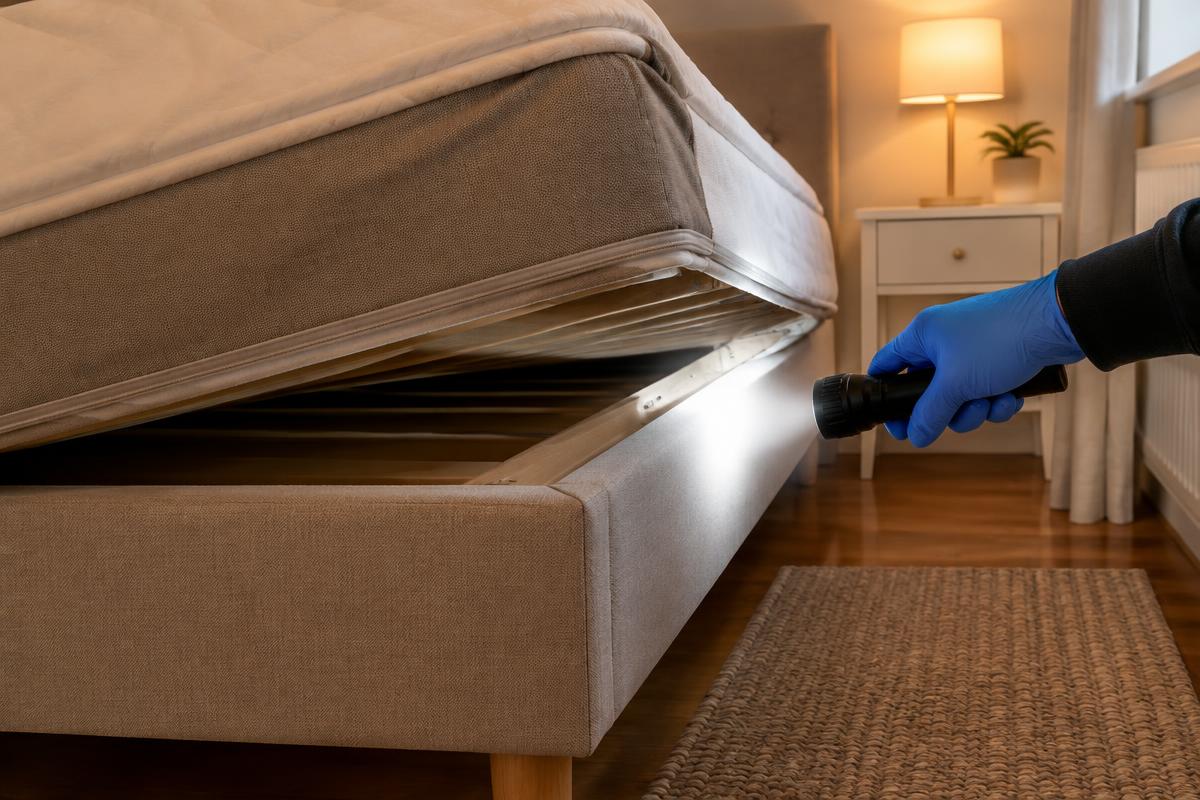
Physical findings also need context. An old mark on a bed frame or a dead insect found during cleaning does not, on its own, establish a continuing infestation. If you discover a suspected live bed bug, a clear photograph and a note of the exact location can help the team assess the report.
Avoid applying your own insecticides or arranging another treatment before discussing the concern with the team. Additional actions can complicate the assessment, and your written guarantee may set out relevant requirements. Ask what to do next rather than assuming that a precautionary product will help or that it cannot affect the follow-up process.
How to report suspected activity during the six months
If you suspect bed bug activity during the guarantee period, use the reporting route provided with your treatment paperwork. Explain that you are contacting the company about a qualifying treatment and include the property address and treatment date. Reporting promptly gives the team a clearer account of what you have noticed.
Describe the evidence as precisely as possible. Say whether you saw a moving insect, found a suspected insect during cleaning or noticed marks without seeing anything live. Include the room, the position within it and the date of each observation. Photographs are useful when they are clear, but identification may still need further assessment.
Also mention relevant changes since treatment, such as travel, second-hand furniture, moved possessions or suspected activity in adjoining accommodation. Sharing this information does not establish the cause of the problem. It helps the team consider possible explanations and assess the report against the actual guarantee conditions.
Ask what the next step will be and whether you should leave the affected area undisturbed while advice is being arranged. The appropriate follow-up depends on the evidence, property circumstances and written agreement. Do not assume a particular attendance time or a repeat treatment before the concern has been assessed.
- Provide the treatment date and property address.
- Identify the room and exact location of the finding.
- Record when each suspected sighting occurred.
- Send clear photographs where available.
- Mention relevant travel, new furniture or moved belongings.
- Ask for instructions before applying products or moving items.
Distinguishing continuing activity from a new introduction
One of the most important guarantee questions is how continuing activity is distinguished from a new introduction. Bed bugs can travel with luggage, furniture and other belongings. A treated property is not protected by a permanent barrier, so a later sighting needs assessment rather than an immediate assumption about its origin.
Equally, it would be inappropriate to label every later report as a fresh introduction without considering the facts. The timing, location, available evidence and history of the property can all inform an assessment. Ask how the company will explain its findings and how those findings relate to the guarantee wording.
In Hertfordshire apartments or other connected premises, the boundaries of the treatment area deserve particular attention. Suspected activity outside your home may require discussion with a landlord, managing agent or neighbouring occupier. A guarantee for an agreed treatment area should not be mistaken for confirmation that surrounding premises have also been inspected or treated.
You can reduce avoidable risks by taking care with luggage and checking second-hand furniture before bringing it indoors, but no sensible advice should become a promise of permanent prevention. The practical aim is to limit exposure, recognise credible signs and keep communication clear if anything concerning appears during the six-month period.
Guarantee planning for rented homes and hospitality properties
For rented homes, decide who will receive the quotation, authorise the treatment and retain the guarantee documents. The occupier may notice activity first, while a landlord or agent may arrange access and payment. Everyone involved should know how a concern will be reported without having to reconstruct the booking history.
Do not assume that a change of tenant or property management automatically transfers the guarantee. Ask whether changes in occupancy or responsibility affect the agreement and how any ongoing cover should be documented. These details are especially worth settling where a treatment is arranged shortly before a tenancy change.
Hospitality properties need an equally clear treatment scope. Discuss the affected accommodation, adjoining spaces and any movement of linen, luggage or furniture relevant to the assessment. The guarantee documentation should identify the covered areas so that a later report from another room is not automatically confused with activity in the original treatment area.
Agree an internal process for staff or residents to pass on observations promptly. A simple factual record is more useful than several conflicting messages. Where a wider building issue is suspected, coordinated communication can support a more complete assessment, while the written guarantee remains the reference for the particular qualifying treatment.
Arranging a Hertfordshire treatment with clear expectations
Bed Bug Heat Solutions UK serves Hertfordshire as part of its coverage across England and Wales. The company has over 40 years of hands-on pest-control experience, is fully insured and holds RSPH Level 2 certification. Those credentials support an informed discussion, while the written quotation and guarantee define the service being offered.
When requesting a quote, provide a realistic picture of the property and the evidence you have found. Include access restrictions, upper-floor rooms and anything affecting equipment movement. The assessment can then consider the layout, electrical arrangements and practical route into the treatment area without relying on incomplete information.
Ask directly whether the proposed treatment carries the six-month guarantee and request the conditions before confirming your booking. A clear explanation should help you understand what is covered, what you need to do and how concerns will be assessed. If anything remains uncertain, seek clarification rather than relying on an informal assumption.
The value of a guarantee lies in understandable terms and a practical process for dealing with concerns. Combined with careful preparation, controlled heat treatment and sensible aftercare, that clarity helps you make an informed decision. For your Hertfordshire property, start with an assessment and a written explanation of the cover available.
Useful next steps
Frequently asked questions
Six-month guarantee
Qualifying treatments are covered for six months. Send your details for a free assessment.
More from the blog
How Long Does Bed Bug Heat Treatment Take?
Read the full guide: How Long Does Bed Bug Heat Treatment Take?