Hertfordshire
Bed Bug Heat Treatment in Hertfordshire: What to Expect on Treatment Day
A practical guide to bed bug heat treatment day in Hertfordshire, covering preparation, equipment access, controlled heating, safe return and aftercare.
23 October 20269 min read
40 years
In the trade
Four decades of hands-on bed bug experience
Fully insured
Every treatment
Comprehensive liability cover on all work
RSPH Level 2
Certificated
Royal Society for Public Health qualified
Key points
- The heating period usually lasts 3–6 hours, with additional time for setup and cooling.
- Active live thermal imaging cameras support monitoring during treatment.
- Property layout, electrical arrangements and access affect planning.
- Qualifying treatments include a six-month guarantee.
1. Treatment day begins with a plan for your property
Knowing what will happen on treatment day can make a difficult situation feel more manageable. Bed bug heat treatment involves more than bringing heaters into a room. The team needs a clear working area, suitable equipment access and an agreed treatment plan before controlled heating can begin in your Hertfordshire property.
Hertfordshire buildings vary considerably, from commuter apartments and family houses to guest accommodation and other hospitality properties. A compact upper-floor flat presents different access questions from a detached home. The initial assessment considers the property layout, electrical arrangements and equipment access so that the proposed work suits the building rather than following a generic routine.
When requesting a quote, tell us about gated entrances, parking restrictions, stairs and upper-floor rooms. Mention any restrictions on communal areas or lift use as well. These details help us plan a practical equipment route and a realistic attendance window, without relying on assumptions that could cause avoidable difficulties on arrival.
Bed Bug Heat Solutions UK serves England and Wales, including Hertfordshire. We bring over 40 years of hands-on pest-control experience, are fully insured and hold RSPH Level 2 certification. Our approach is to explain the work clearly, identify practical constraints early and help you understand what your particular treatment will involve.
2. Complete the agreed preparation before the team arrives
Preparation should follow the instructions provided for your treatment, rather than general advice found online. The right approach depends on the rooms, contents and extent of the problem. Ask about anything you do not understand before treatment day, particularly if you need help moving items or making space around furniture.
Avoid moving bedding, clothing or furniture into unaffected rooms simply to clear the treatment area. Bed bugs can travel with belongings, so unplanned movement can make the problem harder to manage. If anything needs to leave the area, agree how it should be checked, contained or handled before moving it.
Tell the team about items that may be sensitive to heat, including medicines, aerosols, wax products and specialist equipment. Do not assume that every item must be removed or that every item can safely stay. Follow the specific preparation guidance, and raise concerns about valuable, delicate or unusual belongings in advance.
Clear the agreed access routes without undertaking unnecessary disturbance of suspected hiding places. The aim is to let the team work safely and position equipment appropriately, not to empty the property indiscriminately. If preparation cannot be completed as requested, let us know before arrival so the next steps can be discussed.
- Read the preparation instructions supplied for your treatment.
- Ask how to handle heat-sensitive or unusual belongings.
- Keep the agreed equipment route clear.
- Avoid transferring untreated belongings into other rooms.
- Report any preparation difficulties before attendance.
- Confirm arrangements for everyone who normally uses the property.
3. Arrival includes a walk-through and final checks
On arrival, the team will review the agreed treatment area and check that the practical arrangements match the information supplied. This is your opportunity to point out where signs have been found, explain any recent changes and flag rooms or belongings that were not discussed during the initial assessment.
Be open about any previous attempts to control the infestation, including products applied by you or another contractor. Explain where and when they were used, as accurately as you can. This information helps the team understand the situation and identify any relevant precautions before equipment is put into operation.
The walk-through also provides a chance to clarify the boundaries of the work. Do not assume that a room, cupboard or adjoining area is included unless it forms part of the agreed treatment scope. Where new information affects the plan, it should be discussed before the team proceeds with heating.
In a rented flat, managed building or hospitality property, access arrangements may involve someone other than the person booking the work. Make sure the relevant keys and permissions are available. Any necessary coordination with a landlord, managing agent or accommodation manager should ideally be settled before the treatment team arrives.
4. Equipment access and setup take time
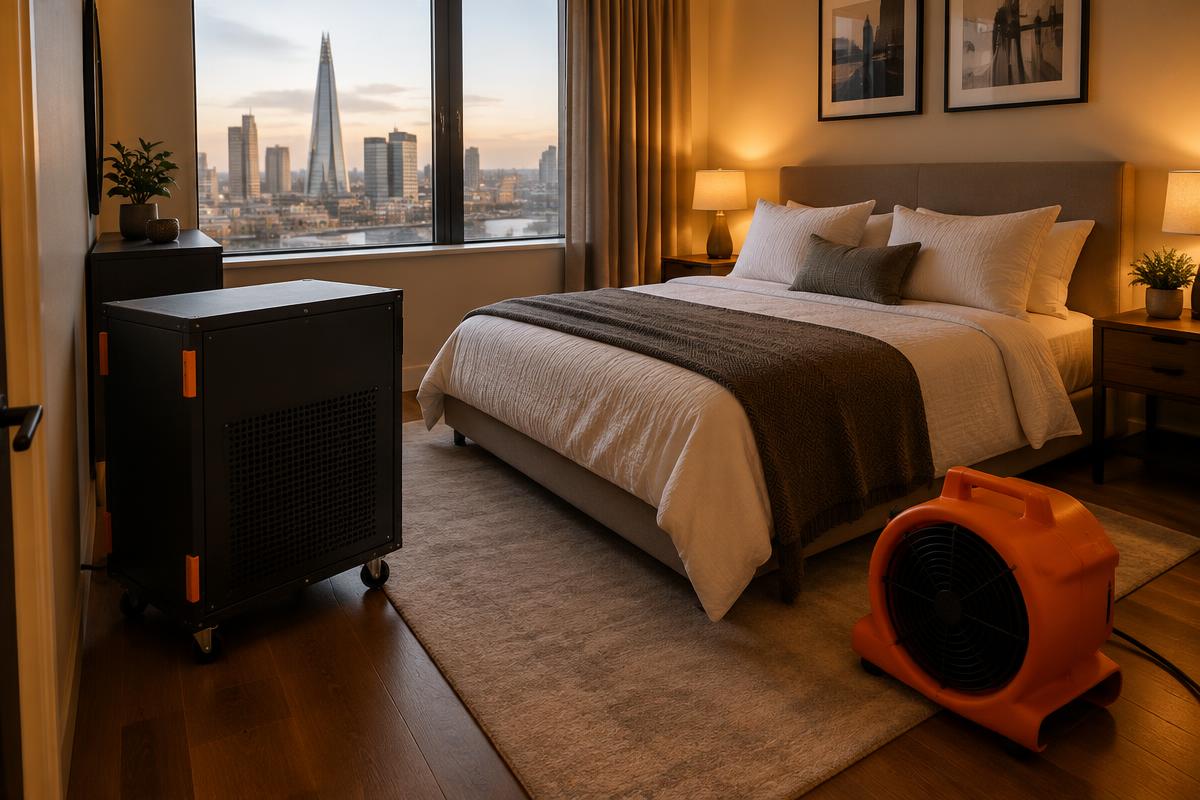
Professional heat treatment uses controlled industrial heating equipment, and bringing it into position is a planned part of the visit. Equipment needs to reach the treatment area safely, without obstructing essential access or creating avoidable hazards. Setup time is separate from the heating period and should be allowed for when arranging your day.
Parking and unloading can be particularly important at Hertfordshire apartments, town-centre properties and sites with shared entrances. Tell us whether a parking permit, gate code or booking for a loading area is needed. A short route on a map may still involve several doors, stairs or restrictions that affect equipment movement.
Electrical arrangements are considered as part of the assessment and checked against the requirements of the planned work. Do not make electrical alterations or improvise power arrangements yourself. If you know of supply issues, restricted access to relevant areas or building-management requirements, explain them before treatment day so they can be considered.
Once equipment is positioned, the team prepares the area for controlled heating and confirms the departure arrangements with you. Changes to furniture positions or room contents should be left to the agreed plan. Moving things at the last moment without discussion can affect access, preparation and the way heat moves through the space.
5. Plan to be away during treatment
You should arrange to be away from the treatment area while heating is taking place and until the team confirms that return is appropriate. This applies to household members, visitors and pets. Do not plan to stay in another part of the property unless that arrangement has been specifically assessed and agreed.
Think ahead about what you will need while you are out, such as essential medication, keys and arrangements for children or dependent relatives. Discuss how essential belongings should be handled before taking them away. Packing a bag directly from an affected bedroom without guidance could carry bed bugs into another location.
Pets need their own practical arrangements, particularly where tanks, enclosures or specialist care are involved. Tell the team about all animals at the property during planning, not just on the morning of treatment. Their safe removal or other agreed arrangements must be resolved before heating starts, rather than improvised while equipment is being set up.
Keep an agreed contact method available while you are away, and avoid making plans that depend on returning at an exact time. The team may need to discuss a practical issue or update you about progress. If you need access to anything during the visit, contact the team rather than entering the treatment area yourself.
- Arrange a suitable place for occupants to spend the treatment period.
- Confirm safe arrangements for pets and their equipment.
- Discuss essential belongings before taking them out.
- Keep keys and any necessary access permissions available.
- Remain contactable through the agreed method.
- Wait for permission before returning to the treatment area.
6. Controlled heating targets the whole treatment area
Our primary treatment uses controlled industrial heat of 60–65 degrees C across the whole treatment area. It is not simply a matter of warming the room until it feels hot. The work is planned around the space and its contents, with the aim of treating bed bugs and their eggs where they may be hiding.
The heating period usually lasts 3–6 hours. That is a guide to the heating stage, not a promise about the total length of the visit or the time you can return. Arrival checks, equipment setup, the property's characteristics and the cooling process all need to be considered when planning the day.
Beds, furniture, stored belongings and the layout of adjoining spaces can influence how heat moves through a property. This is one reason why preparation and accurate information matter. Dense clutter or unexpected contents may require further discussion, rather than an assumption that every property can be treated in exactly the same way.
No harmful chemicals are used as the primary treatment. However, that does not make the working area safe to enter while industrial heating is under way. Professional control, agreed preparation and clear re-entry instructions remain essential. Household heaters or other improvised heating methods are not a safe substitute for a professionally planned treatment.
7. Active live thermal imaging supports monitoring
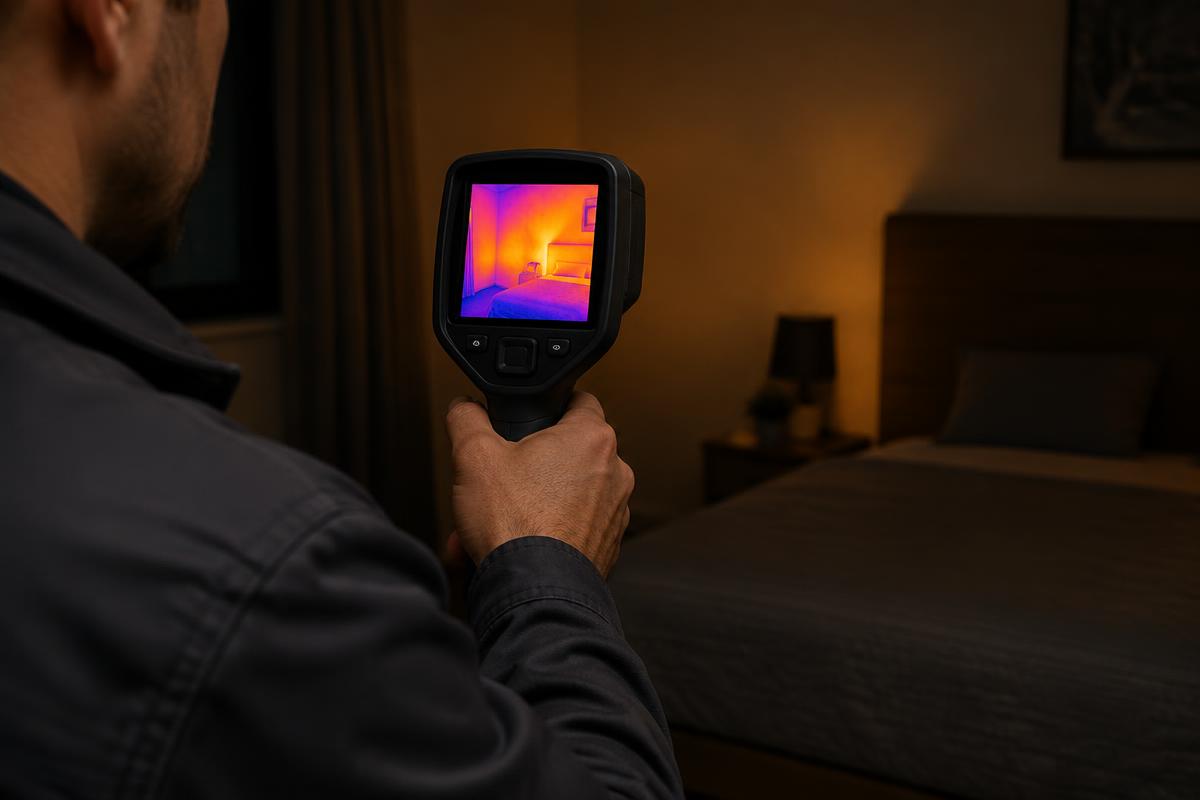
During treatment, monitoring uses active live thermal imaging cameras only. These cameras allow the team to view surface temperature patterns in the treatment area as the work progresses. This supports active supervision of the heating process rather than treating the visit as a fixed period with no attention to changing conditions.
Thermal imaging has an important role, but it should be described accurately. A thermal image shows information about visible surfaces; it is not a view through walls, mattresses or furniture. The team considers the images alongside the property layout, contents and planned treatment method when managing the work.
If the images show differences in surface heating, the team can assess whether adjustments to the setup or heat circulation are needed. This is part of managing a real property, where rooms and furnishings are rarely uniform. Occupants should not enter to move equipment or alter the arrangement themselves.
You do not need to interpret thermal images or supervise the treatment personally. The useful information for you is how the work is progressing, whether any issue affects the agreed plan and when further instructions will be available. Questions about the process are welcome, but they should be raised without entering the working area.
8. Cooling and handover come before normal use
The end of the heating period does not automatically mean the property is ready for normal occupation. Rooms and contents can retain warmth, and the team needs to manage the transition out of treatment. Wait for clear instructions rather than using the elapsed time as your own guide to whether it is safe to return.
Follow the team's directions about re-entry, ventilation and handling belongings. Do not open doors or windows during the treatment or cooling process unless asked to do so. Unplanned changes can interfere with the work, and the appropriate approach depends on the conditions in your property at that stage.
Before the visit is concluded, make sure you understand what was treated and whether any matters require further attention. This is especially important if an access problem or newly discovered issue affected the original plan. Ask for clarification while the details are fresh, rather than leaving with uncertainty about a particular room or item.
Once return has been authorised, resume use of the property in line with the aftercare instructions. Take particular care with any item the team has identified as needing attention. If something appears damaged, unusually hot or otherwise concerning, avoid handling it unnecessarily and contact the company for guidance rather than attempting a repair yourself.
9. Aftercare helps you assess what happens next
Aftercare should be based on the instructions for your treatment, including any advice about cleaning, laundering and returning belongings. Do not immediately add insecticide sprays or other pest-control products without discussion. Extra actions are not automatically helpful, and they can make it harder to understand what has happened if you later report a concern.
Skin marks alone are not a reliable way to confirm whether bed bugs remain. Reactions vary, and other causes can produce similar marks. If you are worried after treatment, look for clearer evidence and report what you have actually seen, including the room, location and date, rather than relying only on how a mark looks.
If you find a suspected live bed bug, photograph it if you can do so safely and contact us for advice. Avoid moving furniture between rooms or discarding a mattress in response to an uncertain sighting. A calm, specific report is more useful than making major changes before the concern has been assessed.
Qualifying treatments include a six-month guarantee. Ask which conditions apply to your booking and how to report a possible issue within that period. The guarantee should be understood alongside the treatment scope and any relevant preparation or aftercare requirements, rather than taken as an unconditional promise covering every future circumstance.
- Follow the cleaning and laundering guidance provided.
- Return belongings only in line with the agreed advice.
- Record the location and date of any suspected activity.
- Photograph a suspected bed bug where practical.
- Contact us before adding further pest-control products.
- Keep your treatment details and applicable guarantee terms.
10. Make your Hertfordshire booking easier to plan
A useful enquiry starts with a straightforward description of the property and the signs you have noticed. Tell us which rooms are involved, whether identification has been confirmed and whether neighbouring or shared spaces may be relevant. You do not need to diagnose the full extent of the problem before asking for an assessment.
Include the practical details that affect attendance, such as gated access, parking restrictions and upper-floor rooms. For hospitality properties, explain room availability and any restrictions on moving equipment through guest areas. For managed apartments, mention building rules and who can authorise access so that arrangements can be considered before a visit is agreed.
The assessment helps establish the proposed treatment scope, preparation needs and a realistic attendance window. It also gives you an opportunity to discuss the quote, expected disruption and whether the six-month guarantee applies. Avoid comparing options only by the stated heating time, since preparation, access, monitoring and aftercare are also important parts of the service.
For bed bug heat treatment in Hertfordshire, contact Bed Bug Heat Solutions UK to discuss your property and request a quote. With the right information shared early, treatment day can follow a clear plan: final checks, safe setup, controlled heating, active live thermal imaging monitoring and an explained handover before you return.
Useful next steps
Frequently asked questions
Six-month guarantee
Qualifying treatments are covered for six months. Send your details for a free assessment.
More from the blog
How Long Does Bed Bug Heat Treatment Take?
Read the full guide: How Long Does Bed Bug Heat Treatment Take?