Hertfordshire
Bed Bug Heat Treatment in Hertfordshire for Hotels, Guest Rooms and Holiday Lets
A practical guide to planning bed bug heat treatment for Hertfordshire hotels, guest rooms and holiday lets while managing guest care and room availability.
2 November 20269 min read
40 years
In the trade
Four decades of hands-on bed bug experience
Fully insured
Every treatment
Comprehensive liability cover on all work
RSPH Level 2
Certificated
Royal Society for Public Health qualified
Key points
- Treatment planning considers guest rooms, adjoining spaces and equipment access.
- Controlled industrial heat reaches 60–65°C across the whole treatment area.
- Active live thermal imaging cameras monitor the heat treatment.
- Qualifying treatments include a six-month guarantee.
Why Hertfordshire hospitality properties need a considered approach
A suspected bed bug problem in a Hertfordshire hotel, guest room or holiday let needs a calm, organised response. Accommodation businesses must consider the affected room, the people staying there and the practical demands of taking space out of use. Prompt assessment helps establish what is happening before staff move furniture, change bookings or arrange work that may not address the source of the problem.
Hertfordshire buildings vary considerably, from commuter apartments and family houses to larger hospitality properties. A converted house with guest accommodation presents different access and layout questions from a purpose-built hotel. Holiday lets may also have sofa beds, shared entrances or storage cupboards close to sleeping areas. These details matter because treatment planning should reflect the actual property rather than assume every bedroom can be managed in the same way.
Bed Bug Heat Solutions UK provides professional heat treatment throughout England and Wales, including Hertfordshire. Our approach combines an initial assessment, property-specific preparation and controlled industrial heat. For accommodation operators, the aim is to establish a practical treatment plan while keeping communication clear. This includes discussing which spaces need attention, how equipment will reach them and what the business needs to arrange before attendance.
Recognising a possible problem before moving guests or belongings
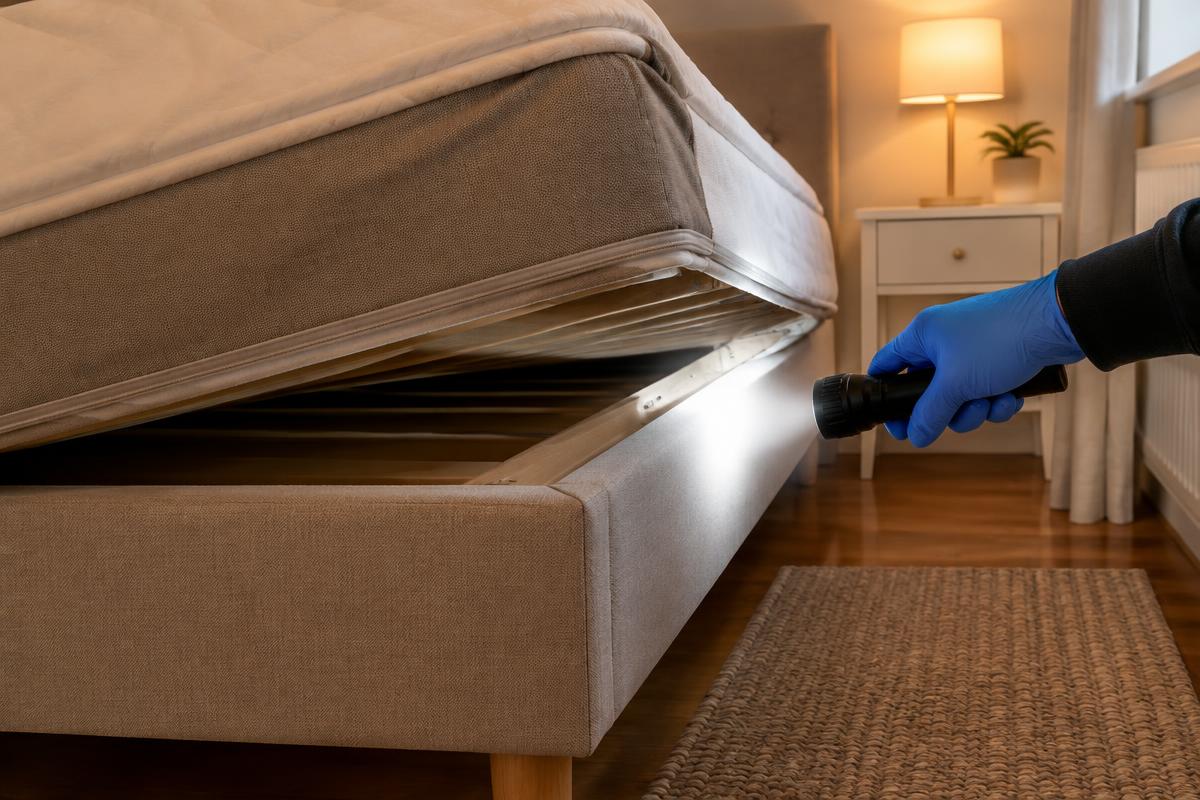
Bed bugs are small insects that hide near places where people rest. In hospitality settings, possible signs include live insects, shed skins, eggs and dark spotting around mattress seams, bed frames or headboards. Small blood marks on bedding can also prompt closer inspection. None of these should be assessed casually in isolation, and marks on a guest’s skin cannot reliably confirm that bed bugs are present.
If a guest reports a concern, record the room, the date and the details they provide without questioning their hygiene or assigning blame. Bed bugs can travel with luggage and belongings, and their presence is not a reliable indication of poor housekeeping. Where practical, retain clear photographs or a safely contained specimen for identification. Avoid disturbing suspected hiding places unnecessarily while professional advice is being arranged.
Moving a guest may be appropriate, but moving their luggage, bedding or upholstered items without a plan can carry insects into another space. Take the affected room out of use while seeking advice, and ask staff not to redistribute its contents. A measured response protects the guest’s dignity and gives the assessment a clearer starting point than extensive cleaning or furniture removal carried out before the situation is understood.
- Record the affected room and the reported signs.
- Photograph visible evidence without spreading room contents.
- Keep the room out of use pending assessment.
- Avoid moving bedding or furniture into unaffected rooms.
- Brief relevant staff using factual, confidential information.
- Seek advice before deciding how to handle guest belongings.
Assessing guest rooms and deciding the treatment area
The initial assessment considers more than the mattress. Bed bugs can hide in bed joints, behind headboards, along furniture seams and in other sheltered locations near sleeping areas. Guest rooms may contain upholstered chairs, luggage stands and spare bedding, while holiday accommodation often has several sleeping arrangements. Information about where guests sleep and where belongings are stored helps identify the spaces that need closer consideration.
A report from one bedroom does not automatically mean that an entire hotel requires treatment. Equally, treating only the most obvious bed may leave relevant areas unaddressed. The assessment considers the evidence, room layout and any history of reports or previous treatments. Connecting rooms, adjoining accommodation and shared routes may need consideration, with the eventual treatment scope based on the circumstances rather than an assumption about the extent of the infestation.
Tell us about recent furniture moves, linen handling and any rooms that have already been taken out of service. For a holiday let, include details of sofa beds, spare bedrooms and locked owner storage where relevant. Accurate information makes planning more useful, even when the full picture is not yet clear. It is better to explain uncertainty than to present an unconfirmed room boundary as a settled fact.
How controlled industrial heat treatment works
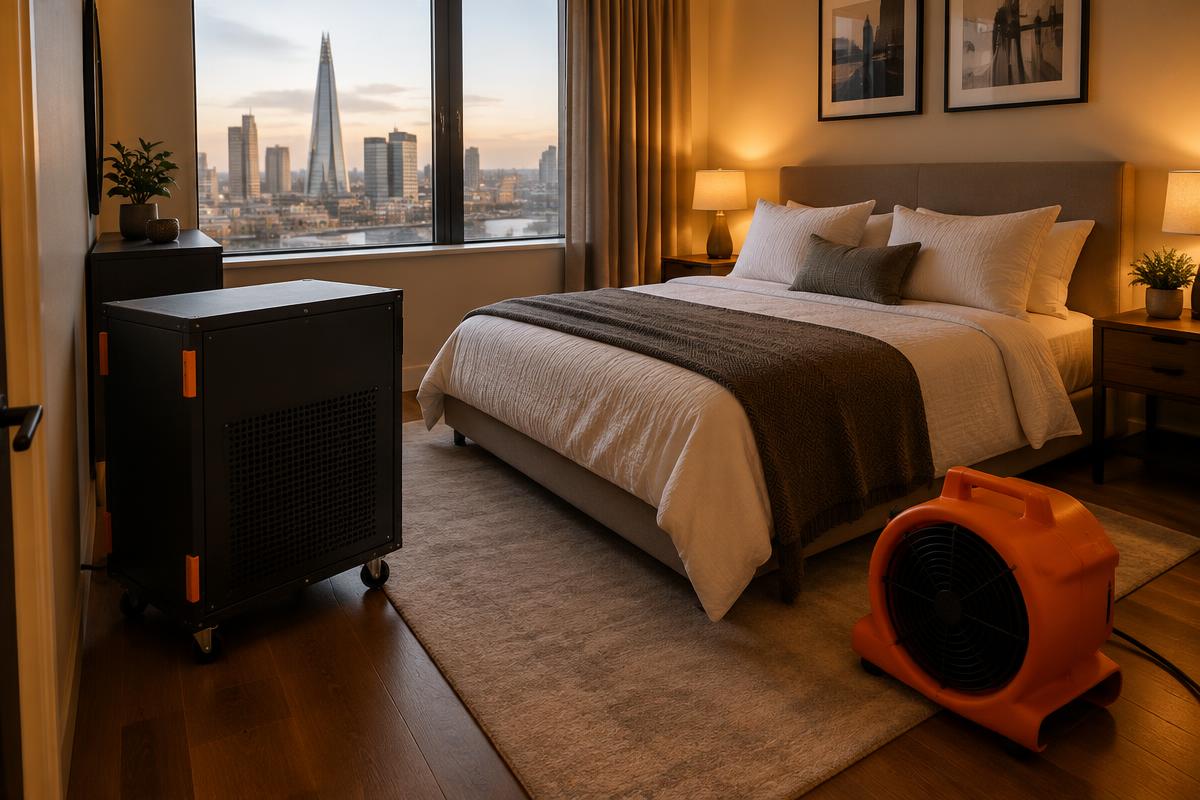
Bed Bug Heat Solutions UK uses controlled industrial heat of 60–65°C across the whole treatment area. The heating period is usually 3–6 hours, although this is not the same as the total time needed for the visit or the period a room remains unavailable. Equipment setup, property checks, treatment preparation and cooling must also be considered when an accommodation manager plans around existing or forthcoming bookings.
Heat treatment targets bed bugs and their eggs through managed exposure to elevated temperatures. Success depends on suitable preparation, an appropriate treatment scope and how heat reaches the relevant spaces and contents. Furniture arrangements, dense belongings and the characteristics of the building all influence planning. For that reason, professional heat treatment is not simply a matter of bringing a guest room to a warm setting and leaving it unattended.
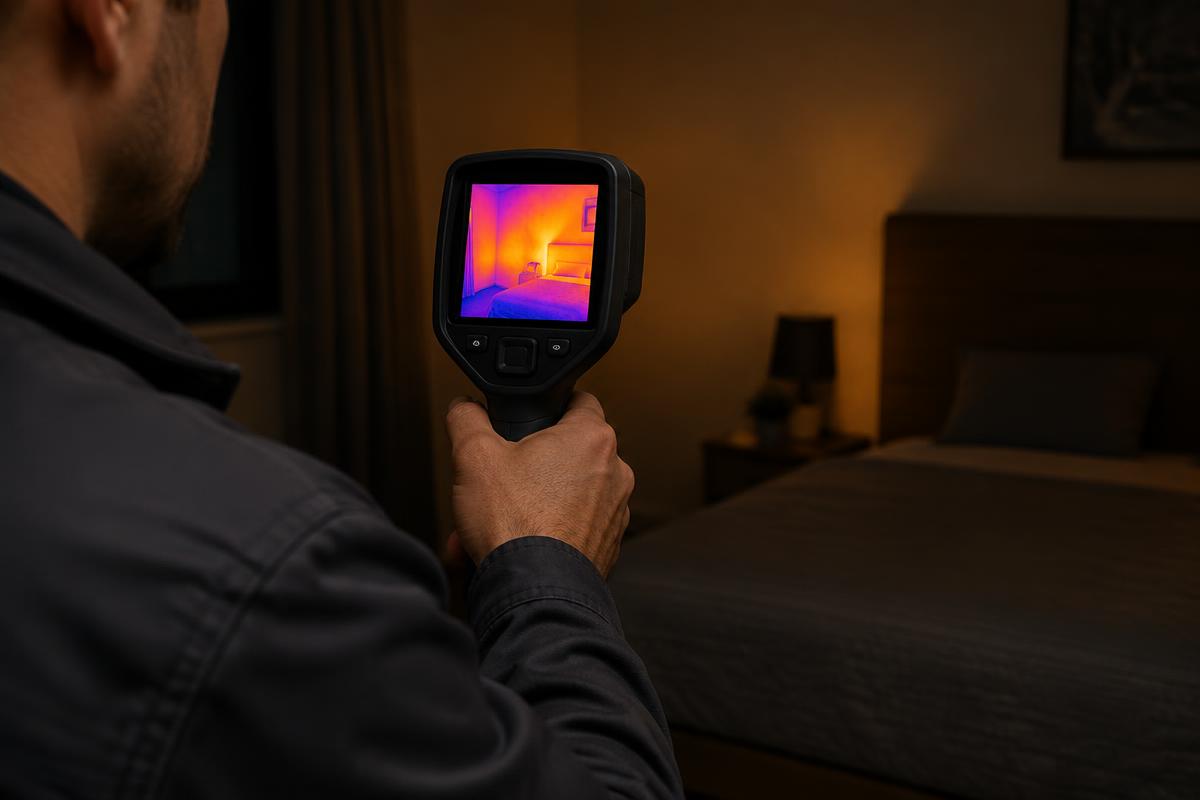
Monitoring uses active live thermal imaging cameras only. These allow the team to observe visible surface heat patterns during the process and support treatment management. Thermal imaging does not see through walls or directly prove the temperature inside every concealed space, so assessment and preparation remain important. No harmful chemicals are used as the primary treatment, but the area must still be managed as a professional work site with clear access restrictions.
Preparing hotel rooms and holiday lets for treatment
Preparation instructions should be agreed before the appointment and followed by everyone responsible for the property. Guests, pets and other occupants must be out of the treatment area, and the team needs suitable access to carry out the work. Do not assume that a routine housekeeping turnaround is enough. Treatment preparation has a different purpose: allowing the work to proceed safely while limiting the chance of moving bed bugs elsewhere.
Discuss heat-sensitive items, medicines, aerosols, batteries, food and personal possessions with the team before deciding what to remove or leave in place. Different items may need different handling, and belongings should not simply be placed in another guest room. Where removal is required, follow the agreed containment and handling instructions. This is particularly important in holiday lets, where guests’ belongings and the owner’s stored supplies can occupy the same cupboards or drawers.
Staff should avoid stripping rooms, dismantling fittings or disposing of mattresses unless those steps form part of the agreed plan. Unnecessary handling can complicate access and spread potentially affected material. Make one person responsible for checking that preparation is complete and reporting anything that could not be done. A clear handover is more useful than several staff members making separate assumptions about what the treatment team will need.
- Obtain and share the property-specific preparation instructions.
- Arrange for guests, pets and occupants to leave the treatment area.
- Identify heat-sensitive contents for discussion with the team.
- Agree how any removed belongings will be contained and handled.
- Keep access routes clear without relocating suspected items casually.
- Confirm keys and access permissions are available.
- Report incomplete preparation before the team attends.
Planning access, electrical arrangements and equipment routes
The initial assessment considers property layout, electrical arrangements and equipment access. These practical details can be especially important in Hertfordshire hospitality properties with converted bedrooms, restricted corridors or accommodation spread across several floors. Providing an accurate description early helps the team assess what is workable. It also allows the business to identify any building-management permissions or operational arrangements that need attention before treatment can be scheduled.
Tell us about gated access, parking restrictions and upper-floor rooms when requesting a quote. Include information about stairs, lifts, narrow entrances and routes that cross public areas. A room may be straightforward for a guest carrying a suitcase to reach but present different considerations for treatment equipment. Early discussion helps us plan a practical equipment route and a realistic attendance window without making assumptions about access on the day.
Hotels should also explain how reception, housekeeping and building management will coordinate access. For a holiday let, establish who will meet the team or provide authorised entry, particularly if the owner lives elsewhere. Do not alter electrical arrangements or arrange temporary supplies without discussing the requirements first. The safest and most practical plan comes from sharing the available information and letting the treatment team assess what the property needs.
Managing guests, housekeeping and room availability
Guest communication should be courteous, factual and limited to what is known. Acknowledge the concern, explain the immediate arrangements and avoid promising an outcome before assessment. Staff should not speculate about who introduced bed bugs or discuss an affected guest with unrelated visitors. Clear internal responsibilities help reception and housekeeping give consistent information while preserving privacy and allowing the responsible manager to make decisions about accommodation and bookings.
The usual 3–6 hour heating period should not be used as a guaranteed room turnaround time. Preparation, setup, cooling and the team’s re-entry instructions all affect when a space can be used again. Avoid scheduling an incoming guest on the assumption that the room will be ready at the end of heating. Discuss the operational window during planning and keep booking decisions flexible enough to accommodate the agreed process.
Housekeeping needs a defined approach to linen, cleaning equipment and any contents associated with affected rooms. Staff should know what can be handled, what must stay in place and where to obtain further instructions. For operators managing several holiday lets, ensure that routine changeover work does not inadvertently move suspected items between properties. A single written plan helps reduce confusion when cleaners, maintenance staff and booking managers work different shifts.
After treatment: re-entry, records and routine checks
Re-enter the treatment area only when the team confirms that it is appropriate to do so. Do not use the end of the heating period as permission for guests or staff to return. Follow the handover instructions for room use and any further handling of contents. If there are questions about belongings removed before treatment, resolve them before those items are brought back into the accommodation.
Keep a concise record of the affected spaces, the treatment date, the instructions provided and any subsequent reports. For hotels, this record should be accessible to the manager responsible for pest-control arrangements without becoming general guest information. Holiday-let owners may need to share the relevant operational points with their cleaning company. Good records help distinguish a previous concern from new evidence and support a more useful discussion if another report arises.
Continue routine visual checks during housekeeping, especially around sleeping areas and furniture seams. Ask staff to report suspected signs rather than dismissing them or attempting an improvised treatment. If fresh evidence appears, contact Bed Bug Heat Solutions UK promptly and provide the relevant room details and photographs where available. Avoid treating skin marks alone as confirmation, and do not move room contents elsewhere while waiting for advice.
- Wait for confirmation before allowing re-entry.
- Follow the treatment handover instructions.
- Check the agreed handling arrangements before returning removed items.
- Keep treatment and subsequent inspection records together.
- Include sleeping-area checks in routine housekeeping.
- Report new evidence without redistributing room contents.
Understanding the guarantee and professional credentials
Bed Bug Heat Solutions UK offers a six-month guarantee on qualifying treatments. Qualification and the applicable terms should be confirmed for the proposed work before booking. Do not assume that every treatment arrangement has identical cover or that a guarantee removes the need to follow preparation and aftercare instructions. Accommodation managers should understand how the guarantee applies to their agreed treatment area and how to raise a concern afterwards.
A guarantee is not a promise that bed bugs can never be introduced again. Hotels and holiday lets receive changing guests and belongings, so future introductions remain possible even after a successful treatment. This makes ongoing staff awareness and a clear reporting process worthwhile. If there is a later concern, the circumstances need to be reviewed rather than automatically assuming either that treatment failed or that a new guest caused the problem.
Our service is backed by over 40 years of hands-on pest-control experience. Bed Bug Heat Solutions UK is fully insured and RSPH Level 2 certificated. These credentials sit alongside practical assessment, clear instructions and professional treatment management. When comparing providers, ask how they define the treatment area, what preparation they require and what their guarantee covers, rather than choosing solely on the shortest advertised heating period.
Requesting a Hertfordshire hospitality treatment quote
To request a quote, start with the property’s Hertfordshire location, the type of accommodation and the number of rooms where concerns have been reported. Describe the evidence and explain whether identification has been confirmed. Include any previous treatment attempts and relevant movements of furniture or bedding. This gives the team a useful starting point without requiring you to decide the full extent of the problem yourself.
Explain the booking pressures affecting the property, but separate preferred dates from firm commitments already made to guests. Mention gated access, parking restrictions, upper-floor rooms and any limits on when equipment can pass through shared spaces. These details help shape a practical plan and realistic attendance window. The proposed scope and quotation depend on the property and circumstances, so an assessment is more useful than assuming a standard price for every room.
Bed Bug Heat Solutions UK works with accommodation operators across England and Wales, including hotels, guest rooms and holiday lets in Hertfordshire. Contact us to discuss suspected activity, preparation and treatment planning. With accurate property information and a coordinated approach, managers can make informed decisions about guest care, access and room availability while arranging professional heat treatment with clear expectations from the outset.
Useful next steps
Frequently asked questions
Six-month guarantee
Qualifying treatments are covered for six months. Send your details for a free assessment.
More from the blog
How Long Does Bed Bug Heat Treatment Take?
Read the full guide: How Long Does Bed Bug Heat Treatment Take?