Kent
Spotting Bed Bugs Early in Kent: A Guide to Heat Treatment
Recognise the early signs of bed bugs in Kent and learn what to do before a small problem becomes harder to manage.
25 September 202610 min read
40 years
In the trade
Four decades of hands-on bed bug experience
Fully insured
Every treatment
Comprehensive liability cover on all work
RSPH Level 2
Certificated
Royal Society for Public Health qualified
Key points
- Look for physical evidence rather than relying on bites alone.
- Check sleeping areas carefully without moving belongings between rooms.
- Report affected rooms, adjoining spaces and recent changes early.
- Professional heat treatment needs property-specific planning.
Why early detection matters in Kent properties
Bed bugs can be difficult to notice when an infestation is still small. They spend much of their time hidden close to places where people sleep or rest, and the first signs may be easy to dismiss. Recognising a pattern early gives you a better chance of arranging an assessment before belongings and sleeping arrangements become more complicated.
Kent has a varied mix of commuter housing, coastal guest accommodation, university lets and rural properties. Each setting offers different opportunities for bed bugs to arrive unnoticed in luggage, clothing or used furniture. An infestation is not a reliable sign of poor cleanliness, and a tidy property can still provide plenty of narrow hiding places.
In a family home, the first clue might appear while changing bedding. In guest accommodation, it could be a report from a visitor or a mark noticed during room cleaning. In a shared let, different occupants may notice separate signs without realising they are connected. Bringing those observations together helps establish what needs checking.
Early action does not mean emptying the property or throwing away a mattress. It means checking carefully, keeping useful evidence and seeking advice before moving items. For bed bug heat treatment in Kent, a clear account of the earliest signs helps the treatment team understand the likely affected areas and plan the next steps.
Know which early signs deserve attention
An adult bed bug is a small, wingless insect with a flattened, oval body that is usually brownish before feeding. Younger bed bugs are smaller and often much paler, making them harder to see against light fabrics or unfinished timber. Their appearance changes after feeding, so identification should not depend on colour alone.
Small dark spots around mattress seams, bed joints or nearby furniture can be another clue. Bed bug droppings may leave ink-like marks on fabric, although other stains can look similar. Concentrations of marks in sheltered places are more useful evidence than an isolated spot with no other signs nearby.
Shed skins and tiny pale eggs may be present in cracks or along protected edges. These are easy to miss without a close look, and household debris can be mistaken for insect material. If you find something suspicious, take a clear photograph and, where practical, keep a specimen in a securely closed transparent container.
Blood marks on sheets can prompt a closer inspection, but they do not confirm bed bugs by themselves. The strongest case usually comes from several signs found together or identification of an actual insect. Avoid making a diagnosis from an online photograph alone, particularly when the image of your own finding is blurred or incomplete.
- Look for live insects around mattress seams and bed-frame joints.
- Check for clusters of dark spotting in sheltered edges.
- Notice shed skins or tiny pale material in cracks.
- Photograph findings clearly before cleaning the area.
- Keep a suspected insect securely contained for identification.
- Record the room and exact location of each finding.
Why bites alone cannot confirm an infestation
Itchy marks noticed after sleep often trigger concern about bed bugs. However, skin reactions vary between people, and similar marks can have several causes. Some occupants may show little visible reaction while another person in the same room develops noticeable irritation. The absence of marks on one person does not rule out a problem.
The arrangement of marks is not a dependable identification method. A line or cluster may look suggestive, but it cannot tell you which insect was responsible or whether an insect was involved at all. There can also be a delay between exposure and a visible reaction, which makes linking marks to one particular night difficult.
Use skin symptoms as a reason to inspect the sleeping environment, not as proof that treatment is necessary. Note when you first noticed the irritation and whether there are any physical signs around the bed. This information is useful background, but a professional assessment should consider the property evidence as well.
If a skin reaction is severe, worsening or showing signs of infection, seek advice from a pharmacist or an appropriate healthcare professional. Pest-control advice cannot diagnose a medical condition. While arranging that support, keep any property findings documented so that a separate assessment of possible bed bug activity can proceed on evidence.
Carry out a careful first inspection
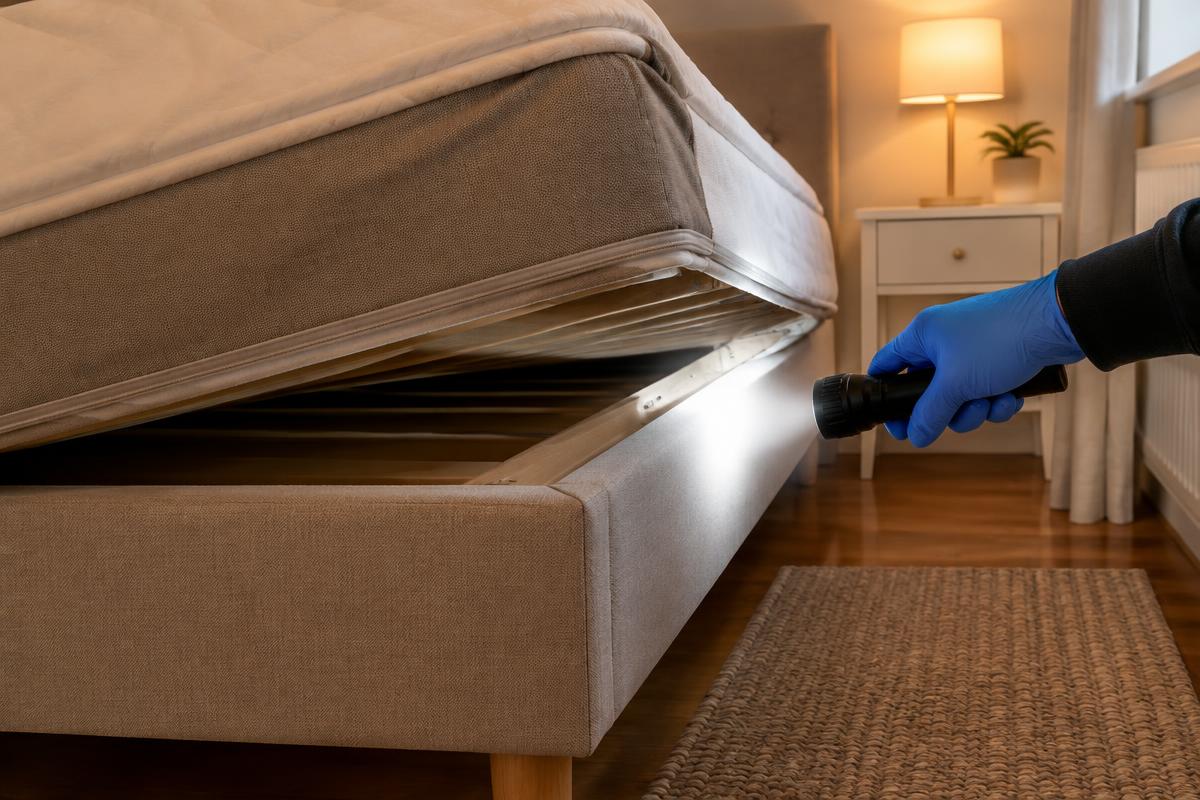
Begin with the bed where signs have been reported. Use a torch to examine accessible mattress seams, piping and labels without tearing covers or cutting fabric. Look at the edges of the bed base and any visible joints. A slow, methodical inspection is more useful than quickly searching every cupboard in the room.
Next, check the headboard and nearby furniture, particularly joins, screw recesses and protected underside edges that can be viewed safely. Bedside tables, skirting gaps and upholstered furniture close to the bed may also deserve attention. Do not remove electrical fittings or dismantle heavy furniture to investigate a suspicion; leave inaccessible areas for professional assessment.
Keep the inspection contained. Avoid carrying bedding into another bedroom or placing potentially affected objects on a communal sofa while you search. If an item needs to be moved for a closer look, keep it within the same immediate area where possible and ask for advice before transferring it elsewhere.
A first inspection can find useful evidence, but finding nothing does not conclusively exclude bed bugs. Small infestations can remain hidden in inaccessible gaps. If signs recur, retain your notes and arrange an assessment rather than repeatedly stripping the room. Repeated disturbance can make it harder to understand where the original activity was concentrated.
- Start with the bed associated with the reported signs.
- Use a torch to inspect accessible seams and joints.
- Check the headboard and nearby furniture without unsafe dismantling.
- Keep bedding and belongings within the affected area.
- Photograph suspicious marks and insects in place.
- Note any areas that could not be inspected safely.
Consider recent travel, furniture and room changes
Bed bugs can travel with belongings, so recent movements may provide useful context. Think about overnight stays, visiting guests, luggage brought home and second-hand furniture introduced to sleeping areas. These details do not prove where an infestation began, but they can help identify which rooms and items deserve closer attention.
For Kent commuters and frequent travellers, luggage may move between transport, accommodation and the home regularly. Coastal guest properties may have a changing pattern of occupancy, while university lets can experience concentrated periods of moving in and out. These are practical considerations for inspection rather than reasons to assume any particular property has bed bugs.
Recent room changes are especially important. A bed moved upstairs, a sofa used temporarily for sleeping or stored furniture returned to use may alter the places that need consideration. Explain these changes even if the visible signs appear limited to one bedroom. The current arrangement may not reflect where people were sleeping when activity first developed.
Try not to focus on assigning blame to a visitor, tenant or previous accommodation provider. It is often impossible to establish the exact source. A factual timeline of room use, belongings and findings is more helpful, allowing the assessment to focus on managing the present problem rather than making unsupported assumptions about its origin.
Avoid actions that can complicate an early infestation
A common reaction is to move into another bedroom immediately. However, changing sleeping locations can complicate the pattern of activity, particularly if bedding and possessions move with you. Before changing arrangements, seek advice based on your property and personal circumstances. Do not move potentially affected items into an otherwise unaffected room simply to clear space.
Throwing away furniture is not automatically necessary. Moving an uncontained mattress through halls or shared areas can create avoidable problems, and replacing it does not address insects hidden elsewhere. If disposal is advised, ask how the item should be contained and handled, and follow the relevant local waste arrangements.
Avoid using household heating appliances to attempt a bed bug heat treatment. Portable heaters, ovens or improvised arrangements cannot provide the controlled whole-area process required and can introduce serious fire or injury risks. Professional equipment planning includes the room layout, contents and safe management of the treatment environment.
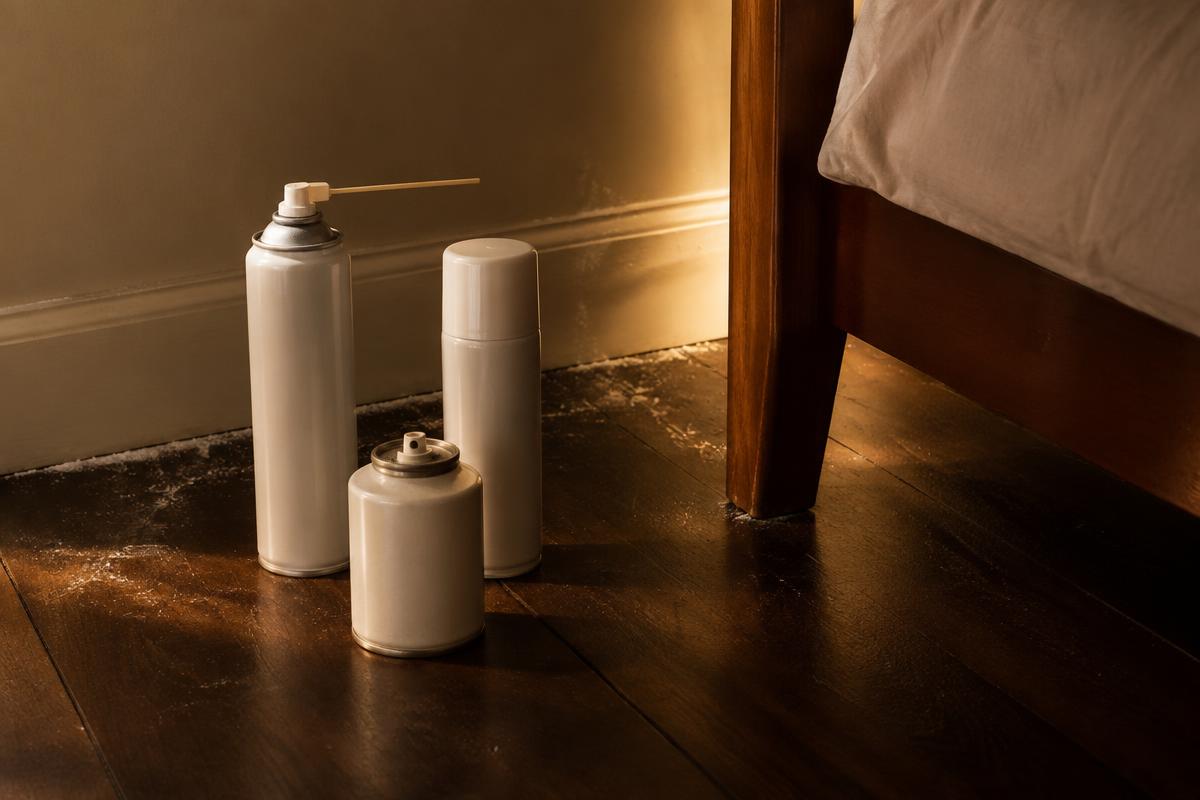
Unplanned use of sprays or other products can also interfere with assessment and may create exposure risks if used incorrectly. Tell the treatment company about anything already applied, including the product and location. Until you receive preparation instructions, concentrate on documenting evidence and limiting unnecessary movement rather than combining several do-it-yourself methods.
Share the right details when arranging help in Kent
When making an enquiry, describe what you have actually found and where you found it. Explain whether there was a live insect, dark spotting, shed material or only unexplained skin marks. Photographs can support the initial discussion, although they may not provide enough detail for a definite identification or a complete treatment plan.
Give an accurate picture of the property. The number of floors, arrangement of bedrooms and relationship between affected and adjoining spaces all matter. If an outbuilding is used for sleeping, include it in the discussion. A converted garage, garden room or separate guest annexe should not be overlooked simply because it sits apart from the main house.
Travel distance, room layout and the volume of contents influence equipment planning for Kent appointments. Access routes and available working space can also affect how equipment is brought in and positioned. Mention difficult parking, narrow stairs or restricted access in advance so that practical requirements can be considered rather than discovered on arrival.
Landlords, tenants and accommodation managers may need to coordinate access and share observations across more than one room. Explain any recent room changes and whether signs have been reported elsewhere in the building. This allows affected and adjoining spaces to be considered without assuming that every room requires the same response.
- Provide the Kent location and property type.
- Describe the evidence and when it was first noticed.
- State how many floors and sleeping rooms the property has.
- Mention outbuildings or annexes used for sleeping.
- Explain recent changes to beds, furniture or room use.
- Describe contents, access restrictions and shared areas.
- Disclose any pest-control products or treatments already used.
How professional bed bug heat treatment works
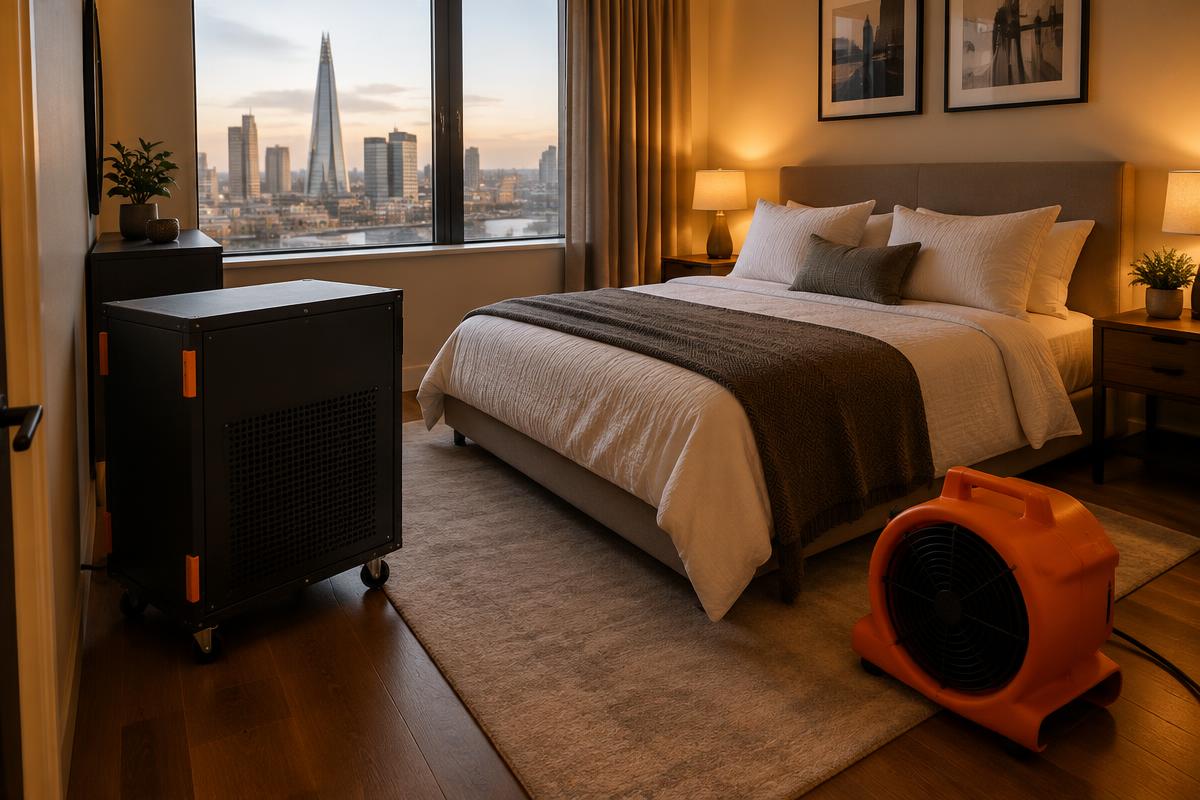
Professional heat treatment uses controlled industrial heat rather than relying on harmful chemicals as the primary treatment. Bed Bug Heat Solutions UK uses 60–65 degrees C across the whole treatment area. The scope of that area needs to be agreed through assessment, taking account of the evidence, the building and the relationship between rooms.
The heating period is usually three to six hours. This is not a fixed total appointment length or a promise that every property follows an identical schedule. Preparation, equipment setup, treatment requirements and the safe return process also need consideration. The team should explain the arrangements that apply to your particular property.
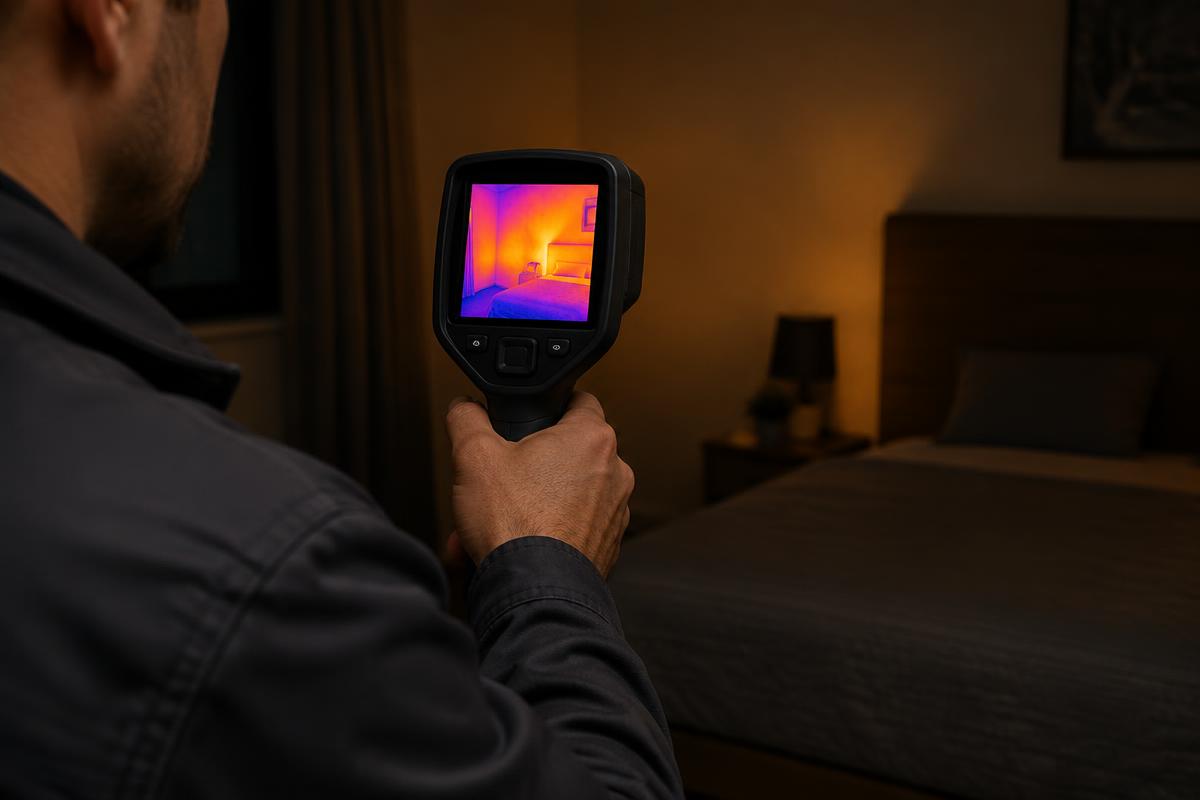
Monitoring uses active live thermal imaging cameras only. These allow the team to observe visible heat patterns during the process and support active management of the treatment. Thermal images do not themselves identify every hidden bed bug, so evidence gathering, preparation and careful planning remain important parts of the service.
Room layout and contents affect how heat moves through the agreed treatment area. Densely packed storage, furniture arrangements and multiple floors require planning rather than assumptions. This is why accurate information at the enquiry stage matters: the approach must suit the property, not just the room where someone first noticed a suspicious mark.
Prepare safely without spreading belongings
Once treatment is agreed, follow the specific preparation instructions supplied by the company. Do not rely on a generic internet checklist that may describe a different method. Heat-sensitive possessions and items needing special handling should be discussed in advance, with clear instructions on what can remain and what needs a separate plan.
Tell the team about medicines, aerosols, batteries, delicate materials and anything else you are unsure can tolerate the process. Do not remove potentially affected possessions to another home or storage unit without guidance. The aim is to manage heat safety while avoiding an untreated route by which bed bugs could later return.
People and pets need arrangements appropriate to the treatment, and the team should explain when the area can safely be re-entered. Mention aquariums, specialist equipment and any access or mobility needs early. Planning these details before the appointment is calmer and safer than trying to resolve them while equipment is being installed.
If you operate guest accommodation or manage a shared let, ensure everyone receives the same instructions. Conflicting messages can lead to rooms being cleared unnecessarily or belongings being moved between occupants. A designated contact can help coordinate access, preparation and questions while maintaining a clear record of which spaces are included.
Stay observant after treatment and understand your cover
After treatment, follow the aftercare guidance rather than assuming every remaining mark represents current activity. Old spotting and shed material may still be visible unless cleaned away as advised. Recording new findings with dates and photographs helps distinguish fresh concerns from evidence that was present before the work took place.
If you see a suspected live bed bug, contact the company and explain the location and circumstances. Keep a specimen if you can do so safely. Skin irritation alone may not show whether activity remains, so avoid making major changes to the property or applying further products before the concern has been discussed.
Bed Bug Heat Solutions UK provides a six-month guarantee on qualifying treatments. Ask which treatments qualify and read the applicable terms, including any preparation, aftercare and reporting requirements. A guarantee should be understood as part of the service agreement, not as a promise that a property cannot encounter bed bugs again through future introductions.
Serving England and Wales, Bed Bug Heat Solutions UK brings over 40 years of hands-on pest-control experience, is fully insured and holds RSPH Level 2 certification. If you suspect bed bugs in a Kent property, start with clear evidence and an accurate description of the space. Early, measured action supports a properly planned assessment and treatment.
Useful next steps
Frequently asked questions
Six-month guarantee
Qualifying treatments are covered for six months. Send your details for a free assessment.
More from the blog
How Long Does Bed Bug Heat Treatment Take?
Read the full guide: How Long Does Bed Bug Heat Treatment Take?