Leicestershire
Spotting Bed Bugs Early in Leicestershire: A Guide to Heat Treatment
Recognise early bed bug signs in Leicestershire and learn how careful assessment and professional heat treatment can help address an infestation.
8 October 20269 min read

40 years
In the trade
Four decades of hands-on bed bug experience
Fully insured
Every treatment
Comprehensive liability cover on all work
RSPH Level 2
Certificated
Royal Society for Public Health qualified
Key points
- Bites alone cannot confirm a bed bug infestation.
- Record signs before moving furniture or belongings.
- Room changes and occupancy history help guide assessment.
- Professional heat treatment needs careful planning and preparation.
Why early recognition matters in Leicestershire
An early bed bug infestation can be easy to overlook. A few marks on bedding, an unfamiliar insect or an unexplained skin reaction may not immediately suggest a pest problem. Recognising a combination of signs gives you a better basis for seeking advice than relying on a single clue.
In Leicestershire, the setting matters when assessing those clues. Leicester's student and shared housing, suburban family homes and county hotels have different patterns of occupancy and movement. A bedroom used by one person needs a different discussion from a property where people regularly change rooms or share living spaces.
Bed bugs are not evidence that a home is dirty. They can arrive with luggage, furniture and other belongings, then settle into small hiding places close to where people rest. Cleaning standards alone neither confirm nor rule out an infestation, so the focus should remain on physical evidence and movement history.
Spotting a problem early can make assessment more straightforward, but it does not prove that the insects are confined to one bed. Bed Bug Heat Solutions UK considers the evidence alongside how the property is used. This helps establish an appropriate treatment scope rather than assuming the first reported bedroom is the only affected space.
The physical signs worth checking first
An adult bed bug is a small, wingless insect with six legs and a broadly oval body. Unfed adults are usually flattened and brown, becoming more swollen and reddish after feeding. Young bed bugs are smaller and paler, which makes them harder to notice against light bedding or unfinished timber.
Look for dark spotting around mattress seams, bed-frame joints and nearby crevices. Bed bug droppings can leave small dark marks, although ordinary dirt and other marks can look similar. A cluster of suspicious spots close to a sleeping area is more informative than one isolated mark with no other evidence.
Shed skins and eggs can also support identification. As young bed bugs grow, they leave behind pale cast skins that resemble empty insects. Eggs are tiny, whitish and attached to surfaces in sheltered locations. These signs can be difficult to distinguish without experience, so avoid making a firm diagnosis from an unclear photograph.
Small blood marks on sheets sometimes prompt the first concern, but they have several possible causes. Treat them as a reason to inspect rather than proof of bed bugs. Clear photographs and a safely contained specimen, where available, give a professional more useful information than descriptions of stains alone.
- Check mattress piping, labels and accessible seams.
- Look along bed-frame joints and headboard edges.
- Inspect nearby furniture without moving it to another room.
- Photograph suspicious insects, skins and dark spotting.
- Note the date and exact location of each finding.
- Keep a specimen in a securely closed clear container if practical.
Why bites do not tell the whole story
Itchy marks often lead people to suspect bed bugs, particularly when they appear after sleep. However, bites cannot reliably identify the insect responsible. Fleas, other insects and skin conditions may produce similar reactions. The pattern of marks, including a line or cluster, is not enough on its own to confirm an infestation.
People also react differently to bed bug bites. Some develop noticeable irritation, while others show little or no visible reaction. Skin reactions may not appear immediately, so the day a mark is noticed does not necessarily reveal when or where exposure happened. This makes a timeline useful but not conclusive.
In a shared Leicester property, one occupant reporting bites while others report none does not establish that only one room is affected. Equally, several people with itching do not automatically prove bed bugs are present. Each report should be considered alongside inspection findings, room use and any recent travel or furniture movements.
If you have unexplained irritation, keep a brief record and look for physical evidence without repeatedly disturbing the room. Seek advice from a pharmacist or GP if symptoms are persistent, worsening or concerning. Identifying and treating a pest problem is separate from assessing a skin reaction, and neither should be guessed from photographs of bites alone.
Inspect calmly without spreading belongings
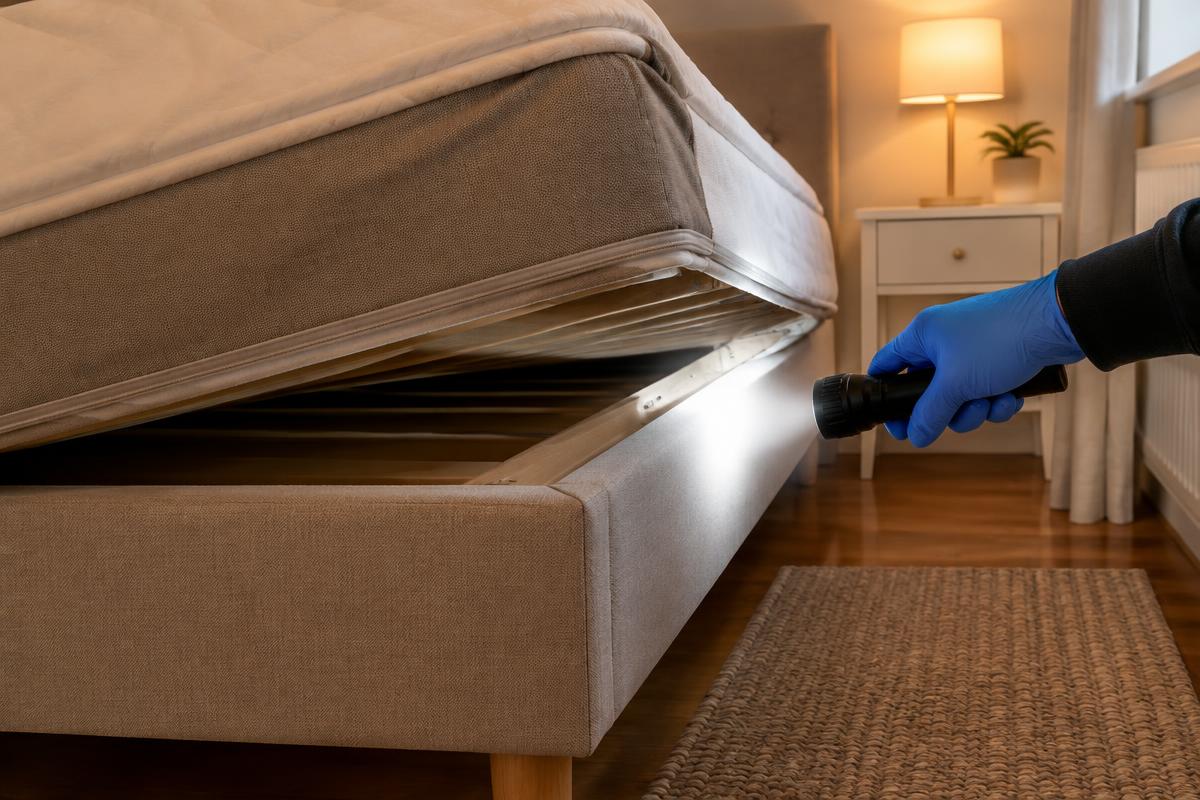
A focused visual check is more useful than emptying the whole bedroom in a hurry. Begin with the place where someone normally sleeps, using a torch to inspect accessible seams and joints. Move carefully and stop if reaching an area would mean unsafe lifting, damage or dismantling that you cannot manage safely.
Check the headboard and furniture immediately beside the bed, then consider other places where people regularly rest. Bed bugs may shelter in an upholstered chair or sofa if it is used for long periods. Do not assume that finding nothing on the mattress excludes the surrounding furniture or the wider room.
Avoid carrying bedding, drawers or small furniture into another room to inspect them. That can move insects or eggs away from the original location. If something needs to be contained, use a suitable bag that can be closed securely, and ask for advice before taking it through shared areas or removing it from the property.
You do not need to expose every hiding place before asking for help. A short record of credible signs is enough to begin a discussion about assessment. Excessive disturbance, repeated furniture rearrangement and unplanned disposal can complicate the picture, particularly where several bedrooms or neighbouring sleeping areas need to be considered.
Build a useful history of rooms and belongings
Physical evidence shows where bed bugs have been noticed, but a movement history helps explain where else attention may be needed. Make a simple timeline covering the first signs, recent travel, overnight visitors and incoming furniture. These details support assessment without proving that any particular person or item introduced the infestation.
In Leicester's student and shared housing, it is especially helpful to mention bedroom swaps, changes of tenancy and belongings stored in communal spaces. If someone moved from an affected bedroom to a sofa or another room, explain when that happened. The new sleeping location may need consideration even if no signs have been reported there.
For suburban family homes, useful details include visiting relatives, luggage unpacked in bedrooms and furniture moved between family members' rooms. A child's occasional use of another bed or an adult regularly sleeping downstairs can also affect the assessment. The aim is to understand actual sleeping patterns rather than relying only on room labels.
County hotels should provide relevant room-use and item-movement information, including guest room changes, housekeeping observations and any furniture transfers. If occupants have taken belongings elsewhere, provide that history too. It can help identify potential spread beyond the first reported bedroom and support sensible decisions about which spaces require further inspection.
- Record when and where the first signs appeared.
- Mention recent room swaps or changes in sleeping location.
- Describe luggage and furniture movements within the property.
- Identify shared storage, seating and sleeping areas.
- Explain whether belongings have been taken to another address.
- Share relevant occupancy changes without assigning blame.
What to do while arranging professional advice
Once you have credible signs, contact a professional rather than waiting for the evidence to become obvious. Share photographs, the rooms involved and a brief movement history. You do not need to be certain of the identification before asking for advice, but be clear about what you have actually seen and what remains a suspicion.
Avoid automatically switching bedrooms or taking bedding to a friend or relative's home. Moving people and possessions without a plan may widen the areas that need attention. If you cannot continue using the room, explain your circumstances when seeking advice so that any changes can be considered as part of a containment plan.
Do not rush to throw away the mattress or replace the bed. Bed bugs may be hiding elsewhere, so replacing one item can leave the underlying problem unresolved. Carrying uncontained furniture through the property can also spread insects. Ask whether treatment is appropriate before deciding that an affected item must be discarded.
Avoid improvised heating with portable heaters or other household equipment. It can create fire and damage risks without reliably treating concealed insects and eggs. Unplanned insecticide use may also complicate assessment or treatment preparation. Tell the treatment provider about any products already used, including where and when they were applied.
How assessment shapes a heat-treatment plan
A useful assessment begins with identification and an understanding of the property, not simply a request to heat one mattress. The treatment provider needs to consider where signs have appeared, where people sleep and how belongings have moved. Access, room layout and the contents of the proposed treatment area also affect planning.
The first reported bedroom is a starting point rather than an automatic boundary. Where evidence or movement history suggests other areas may be involved, those areas need consideration. In shared housing and hotels, this can include discussing nearby rooms and shared spaces without assuming that every room is necessarily infested.
Heat treatment must be planned around the building and its contents. Dense storage, furniture arrangements and heat-sensitive possessions all need to be discussed before work starts. Give an accurate description of the space and raise access difficulties early, rather than clearing rooms or transferring items elsewhere without instructions.
Ask for a clear explanation of the proposed treatment area, preparation requirements and any limitations. You should also understand the basis of any guarantee before booking. A carefully defined scope is more useful than a broad promise, particularly where only part of a larger property is being considered for treatment.
What professional bed bug heat treatment involves
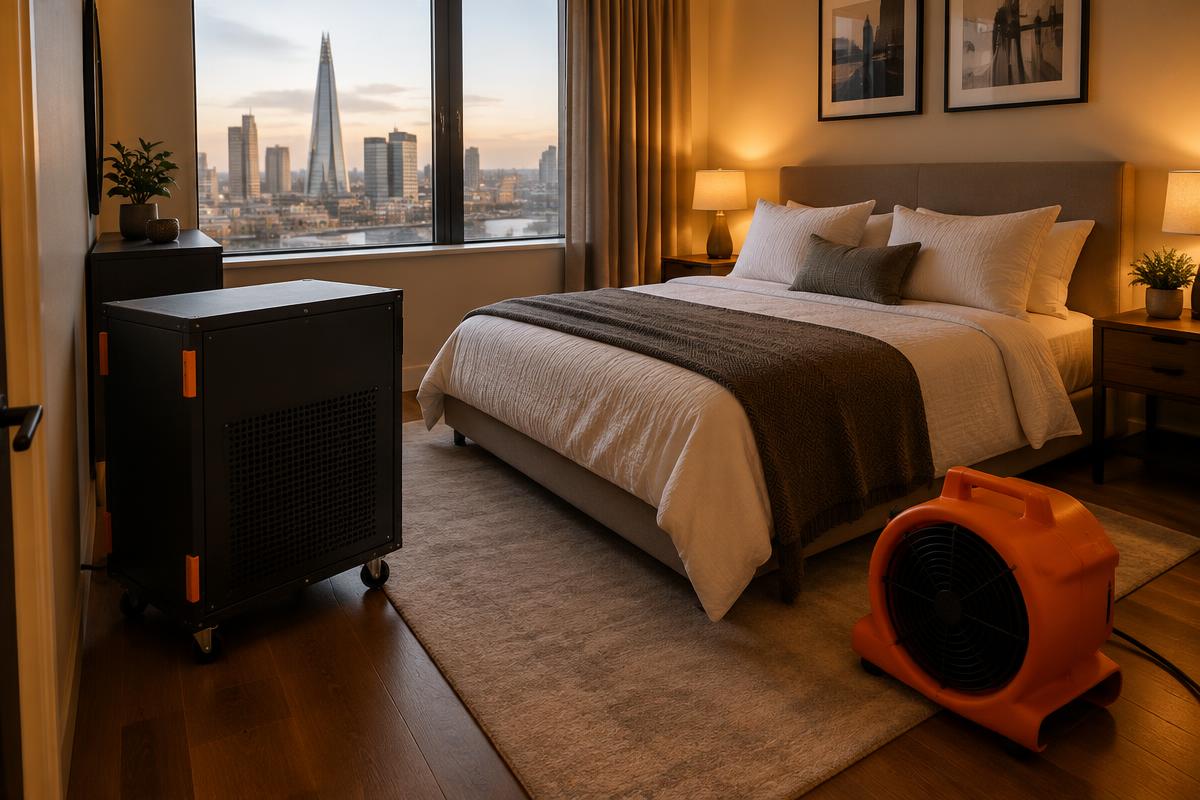
Bed Bug Heat Solutions UK uses controlled industrial heat of 60-65 degrees C across the whole treatment area. The approach is designed to treat bed bugs and their eggs within the agreed area, rather than focusing only on visible insects. No harmful chemicals are used as the primary treatment.
The heating period is usually 3-6 hours. This is not a promise of the total appointment length or a fixed completion time for every property. Assessment, preparation, equipment arrangements and the conditions needed for safe re-entry must also be taken into account when discussing how the visit will work.
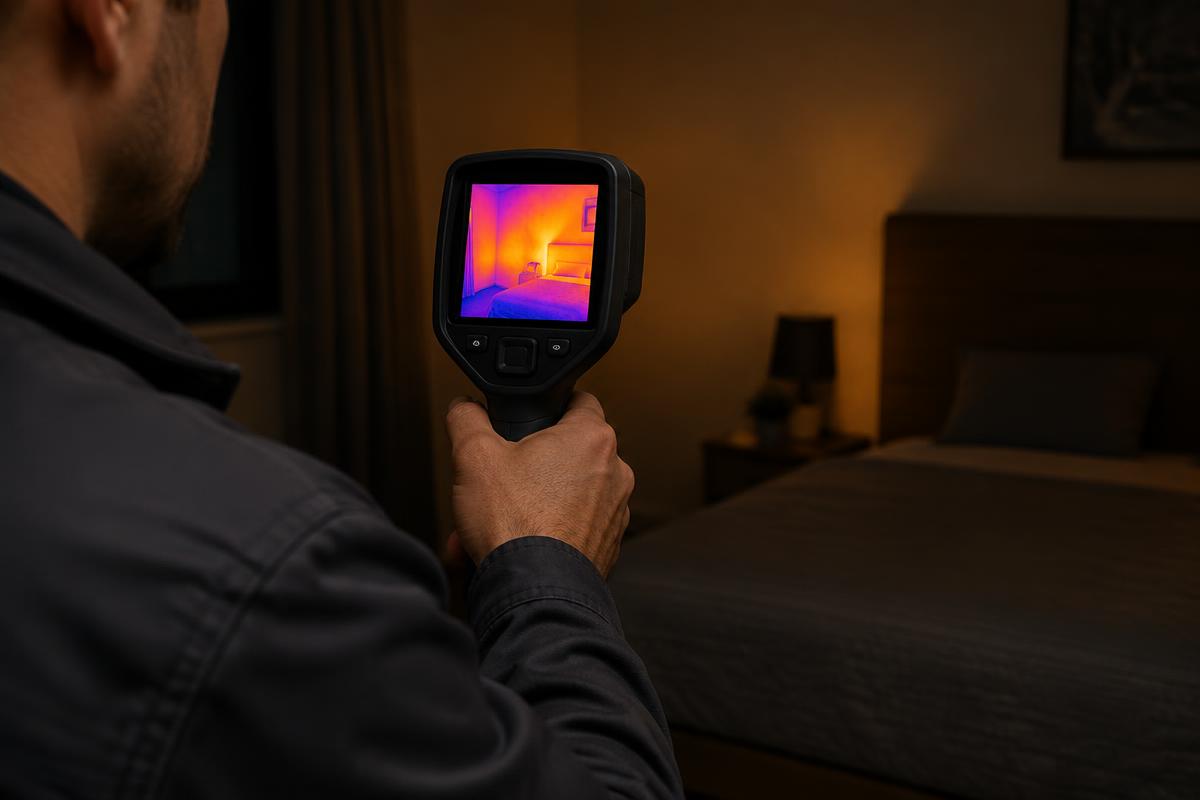
Monitoring uses active live thermal imaging cameras only. These cameras allow the team to observe surface heat patterns during treatment and support management of the heating process. They do not see through every material or reveal every concealed insect, so their use sits alongside appropriate planning, preparation and professional judgement.
Professional heat treatment is not the same as warming a room with domestic equipment. Reliable work requires a defined treatment area, controlled industrial equipment and attention to the contents of the space. Where there may be spread beyond the agreed area, that concern should be discussed rather than assuming heat in one bedroom addresses the whole property.
Prepare carefully and know what happens afterwards
Follow the preparation instructions provided for your treatment rather than a general checklist found online. The right actions depend on the property and its contents. Removing too much, packing items tightly or shifting belongings between rooms without guidance can interfere with the plan and create uncertainty about where potentially affected items have gone.
Tell the team about medicines, aerosols, batteries, valuable items and anything with a stated storage-temperature limit. Raise concerns about delicate materials or equipment before treatment day. Do not decide on your own that a suspect item should be placed in an untreated room, as its handling needs to be considered alongside the infestation.
People and pets must remain outside the treatment area during heating and until the team confirms that re-entry is safe. Discuss arrangements for children, pets and anyone who needs additional support in advance. Clear communication about access and return arrangements helps avoid last-minute disruption without relying on an exact finish time.
After treatment, follow the specific aftercare advice and report any credible new signs. Keep photographs and dates so that concerns can be assessed properly. Old spotting or retained cast skins do not by themselves establish ongoing activity, while a live insect needs identification and review rather than an assumption about whether the treatment has succeeded or failed.
- Read the property-specific preparation instructions in full.
- Declare heat-sensitive belongings and storage restrictions.
- Ask before removing or relocating potentially affected items.
- Arrange for people and pets to be outside the treatment area.
- Wait for confirmation that re-entry is safe.
- Keep the aftercare guidance and guarantee terms accessible.
Getting help with early bed bug signs in Leicestershire
The most useful early response is a measured one: look for physical evidence, record what you find and avoid unnecessary movement. You do not need a heavily affected room before requesting professional advice. Equally, one unexplained skin mark should not lead straight to treatment without a reasonable effort to establish what is causing the concern.
Bed Bug Heat Solutions UK serves Leicestershire as part of its coverage across England and Wales. The company brings over 40 years of hands-on pest-control experience, is fully insured and is RSPH Level 2 certificated. Assessment and preparation remain important whether the property is a family home, shared house or hotel.
A six-month guarantee is available on qualifying treatments. Ask which treatments qualify and request the relevant terms, including the agreed treatment scope and any conditions you need to follow. A guarantee should be understood in context, not treated as a promise that bed bugs can never be introduced to a property again.
When making an enquiry, describe the signs, the property type and any recent changes in rooms or belongings. Include whether insects have been seen in more than one location and whether anything has already been treated or removed. That information supports a practical conversation about identification, assessment and whether professional heat treatment is appropriate.
Useful next steps
Frequently asked questions
Six-month guarantee
Qualifying treatments are covered for six months. Send your details for a free assessment.
More from the blog
How Long Does Bed Bug Heat Treatment Take?
Read the full guide: How Long Does Bed Bug Heat Treatment Take?