Manchester
Bed Bug Heat Treatment in Manchester: A Guide for Landlords, Tenants and Shared Homes
How Manchester landlords and tenants can coordinate bed bug heat treatment, prepare shared homes and plan access without spreading the problem.
11 October 202612 min read
40 years
In the trade
Four decades of hands-on bed bug experience
Fully insured
Every treatment
Comprehensive liability cover on all work
RSPH Level 2
Certificated
Royal Society for Public Health qualified
Key points
- Assess connected rooms before deciding the treatment scope.
- Agree responsibilities and access arrangements early.
- Heat treatment uses active live thermal imaging cameras.
- Follow preparation and aftercare advice across the household.
Why Manchester shared homes need a coordinated approach
Bed bugs can be difficult to manage in any home, but rented and shared accommodation adds practical complications. One person may notice marks on bedding while another has seen nothing unusual. A landlord might only learn about the problem when a tenant is preparing to move. In Manchester, a clear plan helps everyone act on the same information instead of making separate decisions that leave parts of the property unassessed.
The city combines city-centre apartment blocks, converted mill buildings, terraced housing, student accommodation and busy hotels. These settings have different layouts and access arrangements. High occupancy turnover and shared building access make a careful room-by-room assessment especially important. They do not prove that bed bugs are present, but they make it sensible to ask about recent room changes, furniture movements and reports from other occupants.
A treatment plan should reflect how the home is actually used. A living room may also serve as a sleeping space, and a spare bedroom may have been occupied until recently. In a shared house, inspecting only the room of the person who first reported a problem can miss relevant evidence elsewhere. Landlords and tenants should provide an accurate account of sleeping areas without assuming that every room needs the same intervention.
Bed Bug Heat Solutions UK provides professional bed bug heat treatment across England and Wales, including Manchester. For rented properties, the aim is to combine an appropriate treatment scope with practical coordination between residents, landlords and managing agents. Clear communication matters from the first enquiry through to re-entry and aftercare, particularly when several households or separate tenancy agreements are involved.
Recognising the problem without assigning blame
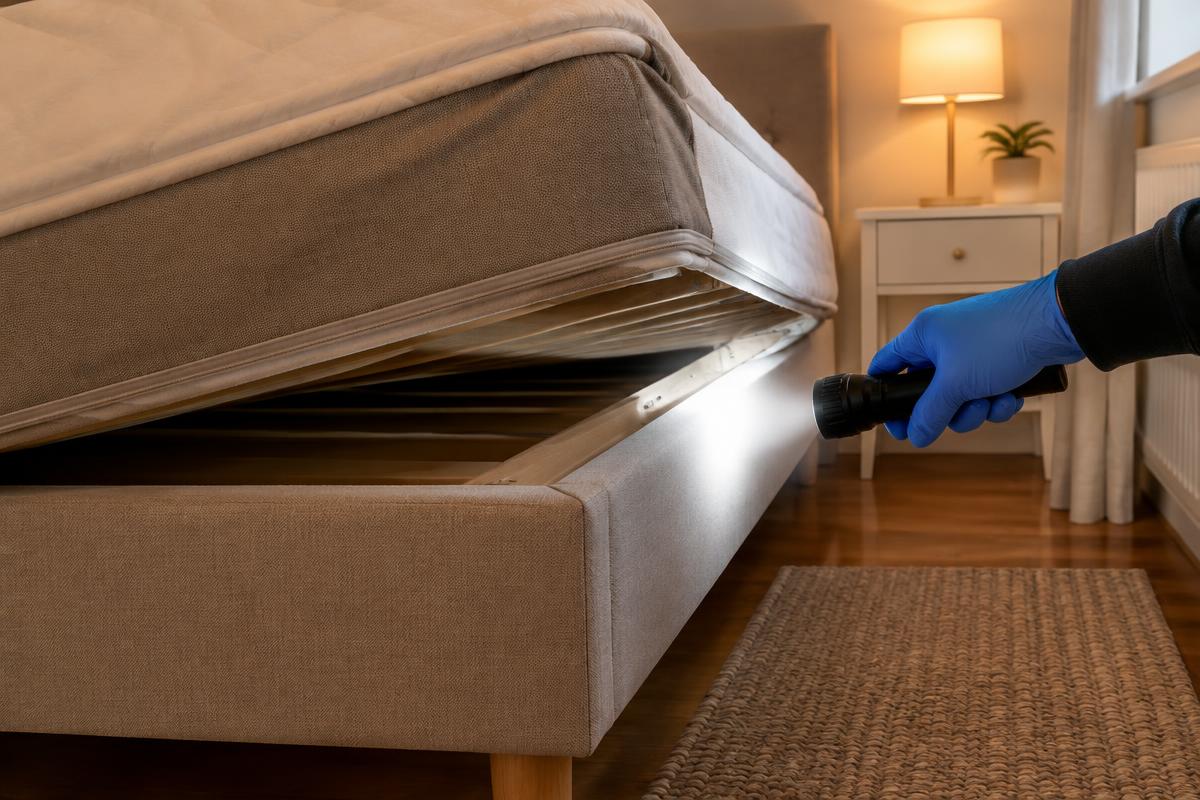
Possible signs include live insects, shed skins and dark spotting around mattress seams, bed frames or nearby furniture. Skin reactions alone cannot confirm bed bugs because other causes can look similar, and people react differently. If an insect is found, a clear photograph or a safely contained specimen can help with identification. Avoid moving bedding or furniture around the property simply to show someone the suspected evidence.
Bed bugs are not a reliable indicator of poor hygiene. They can be carried into a property on belongings, luggage or used furniture, and the point of introduction is often uncertain. In a shared home, accusing a particular occupant can delay reporting and make cooperation harder. A factual account of where evidence was seen and when it was noticed is more useful than speculation about who brought the insects in.
Tenants should report concerns promptly through the agreed repair or property-management channel, ideally in writing. Include the rooms involved, any photographs and whether people have recently changed sleeping locations. Landlords should acknowledge the report and arrange an appropriate assessment rather than expecting tenants to establish the full extent of the problem themselves. Keeping a shared record reduces confusion when different people speak to the treatment provider.
While awaiting advice, avoid carrying potentially affected items into other bedrooms or communal areas. Moving to another room to sleep can complicate the situation by changing where bed bugs seek a host. Ask for advice suited to the household, especially where someone has health concerns. Repeated spraying or disposing of possessions before assessment may also make the eventual treatment plan harder to organise.
Agreeing landlord and tenant responsibilities
Responsibility for arranging or paying for bed bug treatment is not settled by a single rule that applies to every tenancy. Relevant factors can include the circumstances of the infestation, the tenancy agreement and the landlord's legal duties. Neither the presence of bed bugs nor the date of the first report automatically establishes fault. Where there is a dispute, seek housing advice rather than relying on assumptions about responsibility.
Treatment planning and discussions about payment should be kept as separate as reasonably possible. Waiting for everyone to agree who introduced the problem can allow disruption to continue. A landlord or managing agent can obtain an assessment and clarify the proposed work while the parties discuss costs. Any agreement about authorisation, payment or reimbursement should be recorded clearly so residents are not left working from different expectations.
Access must be organised lawfully and with appropriate notice and consent where required. A tenant's report does not give unrestricted permission to enter every room in a shared property. Separate tenancies, locked bedrooms and residents working different shifts can all affect arrangements. The person coordinating the visit should establish which rooms require access and how that access will be agreed before confirming the treatment plan.
A single point of contact is particularly useful in houses in multiple occupation and managed apartment buildings. That person can circulate preparation instructions, confirm resident availability and collect building information. They should share only information needed to organise the work, respecting occupants' privacy. Residents still need an opportunity to raise their own questions about belongings, pets, health needs or returning to the property.
- Record the initial report and the rooms where evidence was found.
- Confirm who can authorise the assessment and treatment.
- Agree who will handle payment and document the arrangement.
- Arrange appropriate notice and consent for room access.
- Choose one contact to coordinate residents and the provider.
- Give every affected occupant the preparation instructions.
Assessing bedrooms, communal rooms and neighbouring spaces
A room-by-room assessment helps establish the appropriate treatment area. The assessment should consider reported activity, sleeping arrangements, furniture positions and any movement of belongings between rooms. In shared accommodation, these details may only become clear after speaking to more than one resident. An apparently unused room should not be excluded without checking whether it has recently housed someone or stored potentially affected items.
Communal spaces need attention where their use makes them relevant. Sofas used for sleeping, shared storage areas and furniture moved between bedrooms can all influence the assessment. This does not mean every communal room is necessarily infested. It means treatment boundaries should be based on evidence and the property layout, rather than simply following the boundaries of an individual tenancy agreement.
In apartment blocks or adjoining accommodation, reports from nearby units may justify a wider investigation. Shared access alone does not establish that bed bugs have spread throughout a building. Where there are concerns about connected or neighbouring spaces, the landlord or managing agent should help arrange appropriate checks. Treating one flat does not provide a guarantee about an unassessed flat elsewhere in the building.
The quotation should make the proposed treatment scope understandable. Ask which rooms and contents are included, what preparation is required and whether further assessment is recommended. Where access to a relevant room is refused or unavailable, that limitation needs to be discussed before work proceeds. A clear scope helps residents understand what the treatment can address and what remains outside the agreed area.
How controlled bed bug heat treatment works
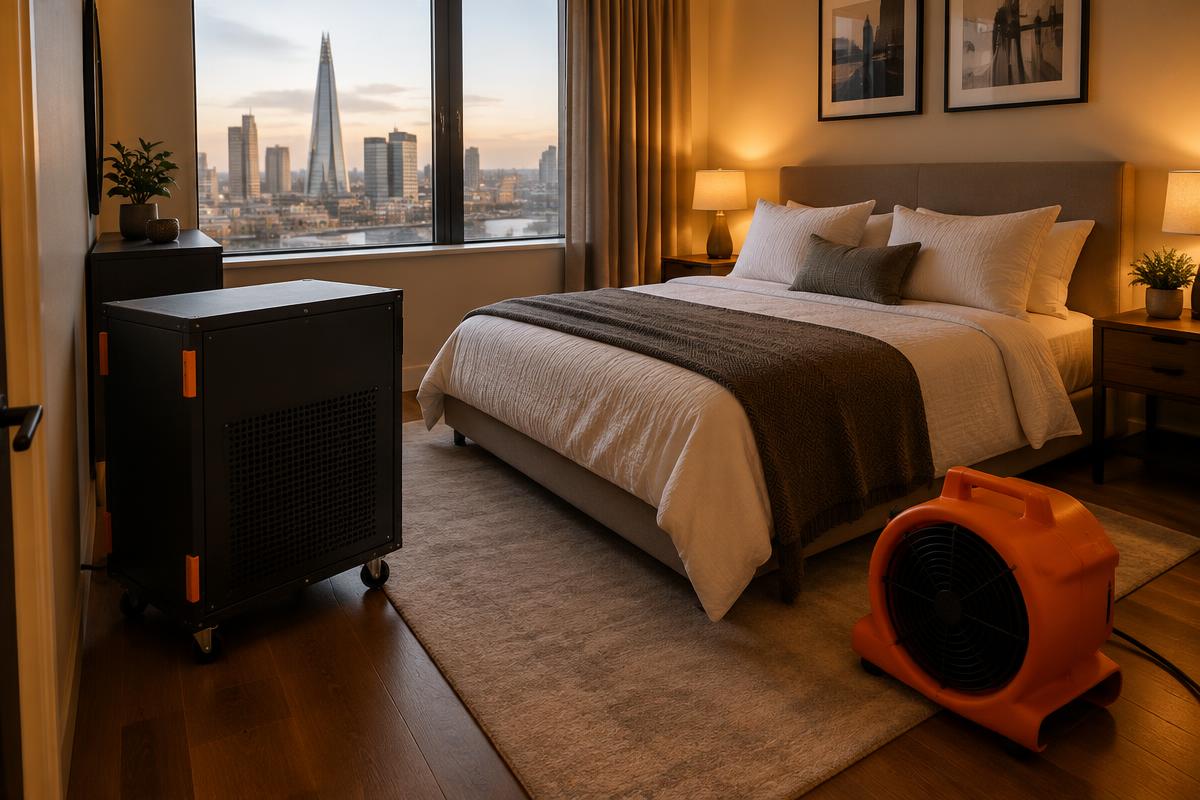
Bed Bug Heat Solutions UK uses controlled industrial heat of 60–65°C across the whole treatment area. The purpose is to tackle bed bugs and their eggs within the agreed scope of work. Heat treatment requires professional planning around the room layout, contents and building conditions. It should not be confused with turning up domestic heating or applying a household appliance to a few visible hiding places.
The heating period is usually 3–6 hours. This is a guide to the heating stage, not a promise about the entire visit or the time residents will be away. Equipment movement, preparation checks, setting up and arrangements for safe re-entry also need to be considered. A large shared house and an upper-floor apartment may present quite different practical demands even when both require bed bug treatment.
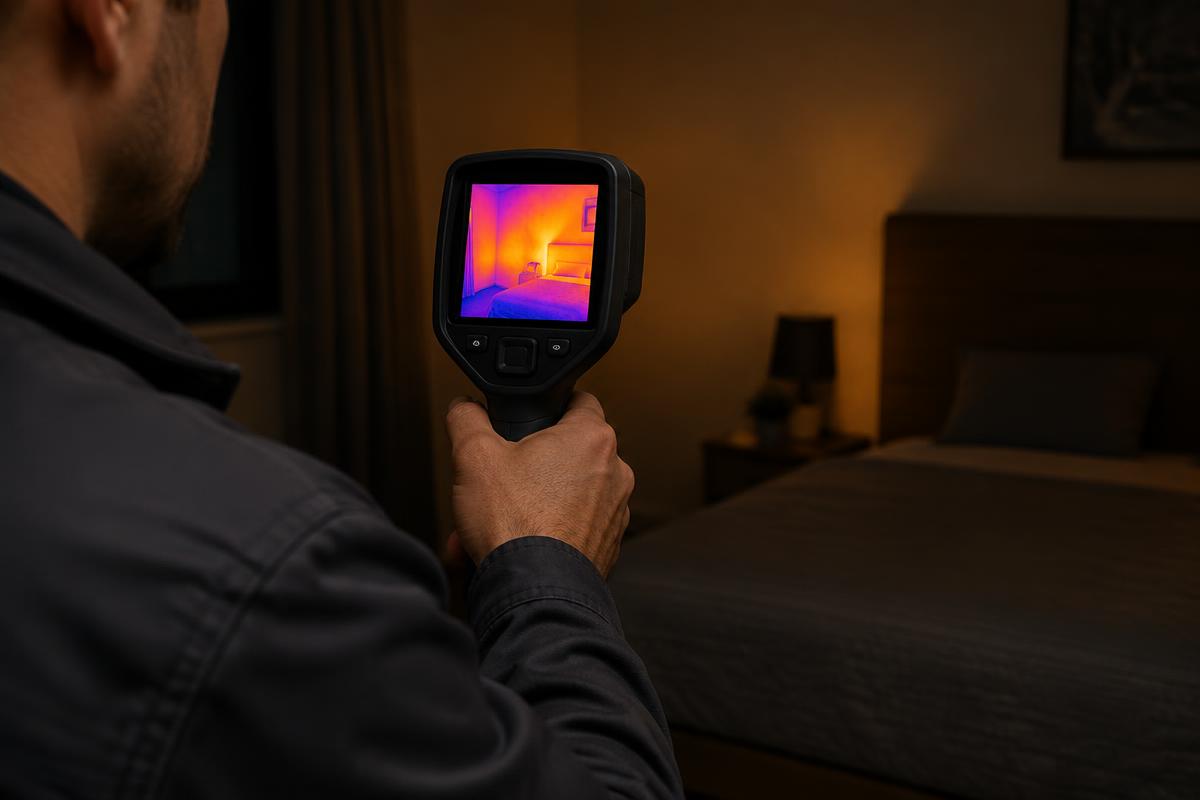
Monitoring uses active live thermal imaging cameras only. These allow the treatment team to observe surface heat patterns during the process and manage the work accordingly. Furniture placement, clutter and the way rooms connect all matter when planning the treatment. Residents should follow the agreed preparation instructions rather than rearranging everything according to general advice found online.
No harmful chemicals are used as the primary treatment. That does not remove the need for precautions or make it appropriate for occupants to remain in the treatment area. Residents, visitors and pets must follow the provider's instructions about leaving and returning. Any concern about sensitive possessions, medical equipment or household circumstances should be discussed in advance so the plan reflects the people and contents involved.
Preparing a shared home without moving the problem
Preparation works best when every resident receives the same property-specific instructions. A shared house can be difficult to treat efficiently if one bedroom is ready while another is locked or contains items that should have been discussed beforehand. The coordinator should check that residents understand what they need to do, rather than assuming that forwarding an email has resolved every question.
Do not automatically empty rooms, discard mattresses or take bags of clothing to another property. Moving untreated belongings can carry bed bugs away from the agreed treatment area. Some items may need to be removed or handled separately because of heat sensitivity, but this should follow professional advice. Ask how such items should be contained and managed instead of putting them in a shared hallway.
Tell the treatment provider about medicines, aerosols, batteries, delicate materials, valuables and any equipment with heat-related restrictions. This is not an instruction to remove every item in those categories without discussion. The aim is to identify anything that needs special handling before the appointment. Tenants should also flag possessions belonging to absent housemates so those belongings are not overlooked during preparation.
Where laundry is part of the instructions, follow the recommended handling process and the fabric care labels. Keep prepared items separate from potentially affected belongings using the method advised. Shared laundry facilities require particular care when moving bags through communal spaces. Agree what each resident will do and when, so one person's prepared clothing is not mixed back into untreated piles belonging to the household.
- Send the agreed preparation instructions to every resident.
- Confirm access to all rooms included in the treatment.
- Identify heat-sensitive belongings for discussion.
- Avoid moving untreated items to another room or address.
- Plan how residents and pets will leave the treatment area.
- Check that communal routes remain clear for equipment.
- Raise any preparation difficulties before the visit.
Planning Manchester building access at quotation stage
Manchester city-centre parking restrictions can affect where treatment equipment is unloaded and how far it must be moved. Tell the provider about loading bays, permit requirements and restrictions that apply outside the building. Do not assume that a nearby parking space will be available or suitable. Accurate information at quotation stage helps the visit be planned around the building rather than delayed on arrival.
Concierge arrangements and managed entrances need similar attention. Some buildings require contractors to sign in, use a designated entrance or obtain approval for access to service areas. The resident may not control these procedures, so a managing agent or building manager may need to help. Establish who will be available to admit the team and whether any necessary permissions must be arranged beforehand.
Lift access and upper-floor apartments can affect equipment movement. Provide the floor number, whether a lift is available and any restrictions on its use. If access involves stairs, long corridors or several secure doors, say so when requesting a quotation. Converted mill buildings and older properties can have distinctive layouts that are not obvious from a street address or a photograph of the front entrance.
The same principles apply outside the city centre. Terraced homes may have limited stopping space, while student accommodation can involve busy communal routes and controlled entrances. Share practical information early, including any planned building works that could obstruct access. Good planning is not simply about convenience for the treatment team; it also reduces avoidable disruption to residents and other people using the building.
- Provide the full address and the apartment or room number.
- Describe parking restrictions and available unloading arrangements.
- Confirm concierge sign-in and contractor access requirements.
- State the floor level and whether suitable lift access is available.
- Explain any stairs, narrow routes or secure internal doors.
- Arrange building-management permissions where needed.
What landlords and tenants should expect on treatment day
Before the treatment starts, the agreed rooms and preparation arrangements need to be checked. Make sure the nominated contact can answer questions about access, recent sightings or changes since the assessment. If someone has moved rooms, brought in furniture or taken belongings away, tell the team. Small changes can matter when the work has been planned around a particular set of rooms and contents.
Residents should have a practical plan for spending time away from the treatment area. This includes visitors, children and pets, not just the named tenants. Anyone who needs essential medicines or everyday items while away should discuss how to take them without unnecessarily moving potentially affected belongings. Do not leave these decisions until equipment is being brought into the property.
The usual 3–6-hour heating period should not be treated as a guaranteed return time. Residents must wait for the team's instructions on re-entry rather than returning because a certain number of hours has passed. In a shared house, that message needs to reach every occupant. One resident returning independently can disrupt arrangements even when the rest of the household has followed the plan.
Landlords and managing agents should remain reachable for issues within their control, such as access to a locked room or communication with building staff. They do not need to direct the technical treatment process. Their most useful role is ensuring that the agreed scope can be completed and that residents receive consistent information about the work, re-entry and any next steps.
Aftercare, reporting concerns and understanding the guarantee
Aftercare should be shared with everyone using the treated rooms. Follow the instructions given about cleaning, handling belongings and returning items that were managed separately. Bringing untreated possessions back from another address without advice can create a fresh problem. The same applies when a resident moves back into a room with stored bags or furniture that was outside the agreed treatment scope.
Agree a simple reporting process for any suspected activity after treatment. Record the date, room and evidence, and take a clear photograph where possible. Skin marks alone may not show whether there is continuing activity, so avoid drawing conclusions from bites without further assessment. Contact the treatment provider with the details rather than immediately applying additional products or moving residents between rooms.
Bed Bug Heat Solutions UK offers a six-month guarantee on qualifying treatments. Ask for the applicable terms when discussing the quotation, including what makes a treatment qualify and what to do if concerns arise. A guarantee should be understood alongside the agreed treatment area and preparation requirements. It is not a statement that every room in an entire building has been covered.
For landlords with changing occupancies, retaining the assessment, preparation instructions and treatment paperwork supports continuity. New tenants or incoming managing agents may otherwise receive only an incomplete account of what happened. Keep records factual and protect personal information. When a room becomes vacant, inspect it and discuss any concerns before introducing replacement furniture or allowing potentially affected belongings to circulate through the property.
Arranging professional heat treatment in Manchester
A useful enquiry begins with the property type, the number of rooms involved and a description of the evidence found. Explain whether the accommodation is a single tenancy, a shared house with separate agreements or a managed block. Include any reports from other rooms without assuming they are confirmed infestations. This gives the provider a clearer basis for discussing assessment and quotation requirements.
Be open about practical constraints. An absent tenant, inaccessible bedroom, resident with additional needs or building-management approval can affect how a visit is organised. These issues are easier to address before arrangements are confirmed. Ask questions about the proposed scope, preparation, expected heating period and re-entry process so everyone understands the plan rather than relying on a general description of heat treatment.
Bed Bug Heat Solutions UK brings over 40 years of hands-on pest-control experience and is fully insured and RSPH Level 2 certificated. The company serves England and Wales, using controlled industrial heat and active live thermal imaging cameras. For Manchester landlords and tenants, professional experience is most useful when paired with accurate property information and cooperation across the affected household.
If you are arranging bed bug heat treatment for a Manchester rental property, gather the room details and building-access information before requesting a quotation. Confirm who will authorise the work and who will coordinate residents. A calm, joined-up approach helps establish a suitable treatment scope, makes preparation more manageable and gives everyone a clear route for asking questions before and after the visit.
Useful next steps
Frequently asked questions
Six-month guarantee
Qualifying treatments are covered for six months. Send your details for a free assessment.
More from the blog
How Long Does Bed Bug Heat Treatment Take?
Read the full guide: How Long Does Bed Bug Heat Treatment Take?