Norfolk
Bed Bug Heat Treatment in Norfolk for Hotels, Guest Rooms and Holiday Lets
A practical guide to planning bed bug heat treatment in Norfolk hotels, guest rooms and holiday lets, from the first report to reopening.
29 September 20269 min read
40 years
In the trade
Four decades of hands-on bed bug experience
Fully insured
Every treatment
Comprehensive liability cover on all work
RSPH Level 2
Certificated
Royal Society for Public Health qualified
Key points
- Investigate guest reports promptly without relying on bites alone.
- Plan access, parking and power around each Norfolk property.
- Whole-area heat treatment uses active live thermal imaging cameras.
- Qualifying treatments include a six-month guarantee.
Managing bed bugs in Norfolk visitor accommodation
A report of bed bugs can disrupt a hotel, guest house or holiday let at an inconvenient moment. Managers need to protect guests, establish what has happened and arrange appropriate treatment without spreading the problem through routine housekeeping. A calm, documented response is more useful than rushing to replace furniture or applying an unplanned spray.
Norfolk accommodation ranges from city properties to coastal guest houses and isolated rural holiday homes. Those settings create different practical demands, even when the pest is the same. A room above a busy reception, a cottage reached by a narrow lane and a managed apartment all need an individual access and treatment plan.
Bed bugs can arrive with luggage, clothing or used furnishings, so their presence is not proof of poor cleanliness. They hide close to resting places and may remain unnoticed during early activity. Frequent guest changeovers make clear reporting procedures particularly valuable, because the person who first notices a sign may leave before an inspection is arranged.
Bed Bug Heat Solutions UK provides professional heat treatment across England and Wales, including Norfolk. For accommodation businesses, the starting point is an accurate account of the property, the suspected activity and the booking situation. This helps establish the likely treatment scope and the practical steps needed before equipment arrives.
Responding to a report in a guest room
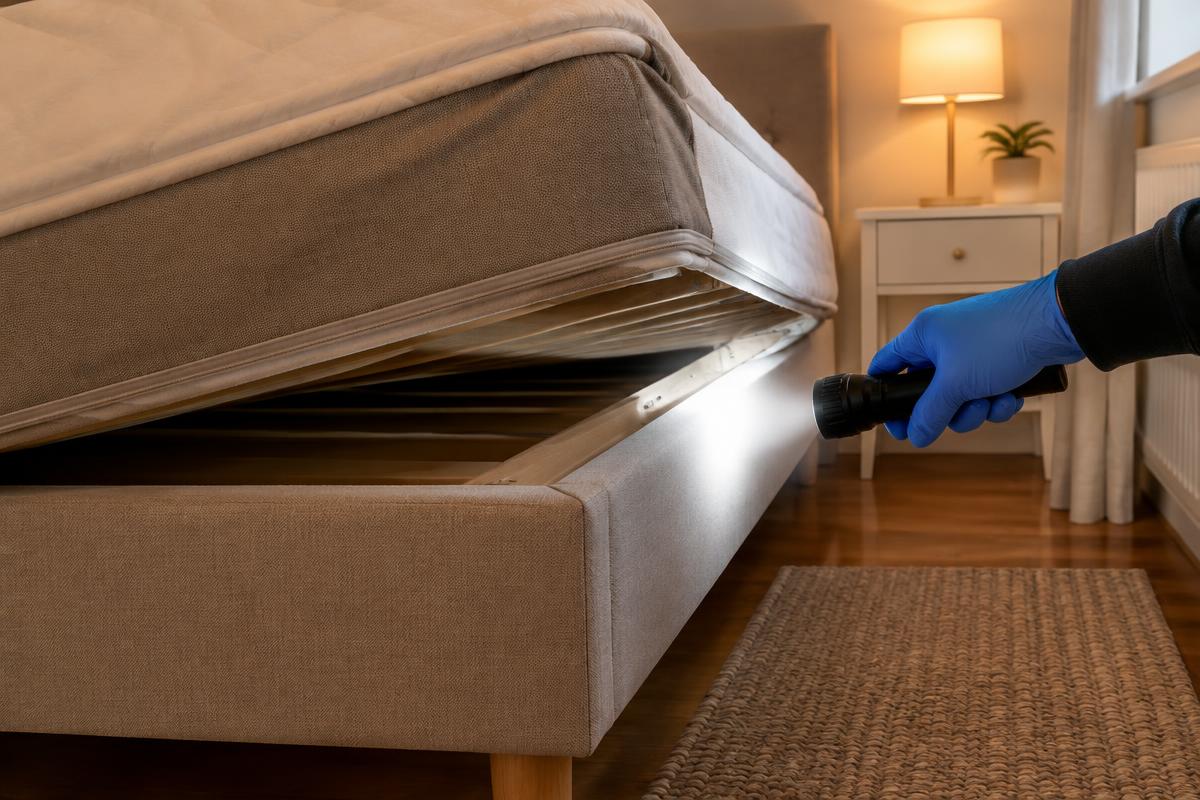
Take a guest report seriously, but avoid diagnosing bed bugs from skin marks alone. Bites and irritation have several possible causes. More useful evidence includes a captured insect, clear photographs, dark spotting around bed seams or shed skins in sheltered joints. Professional assessment can help distinguish bed bugs from other insects or unrelated marks.
While the report is being assessed, stop allocating the suspected room and limit unnecessary entry. Ask housekeeping not to move bedding, luggage or loose furnishings into other rooms. In a holiday let, the equivalent step is to pause the next changeover until the situation and any necessary intervention are understood.
Record when the concern was raised, where signs were found and which rooms or furnishings may be involved. Keep descriptions factual rather than speculative. If a guest has already moved rooms, record that movement too, because luggage and belongings may need consideration when deciding what should be inspected.
A useful initial discussion should include the room layout, occupancy history, visible evidence and any previous pest treatment. Mention adjoining bedrooms, shared storage and housekeeping routes where relevant. These details do not automatically mean a wider infestation, but they help avoid planning a treatment around an incomplete picture.
- Pause use of the suspected room while arranging assessment.
- Photograph visible signs without disturbing hiding places unnecessarily.
- Keep bedding and loose furnishings within the affected area.
- Record relevant room changes and movement of belongings.
- Tell the treatment team about any products already applied.
- Give one staff member responsibility for coordinating information.
How controlled heat treatment works
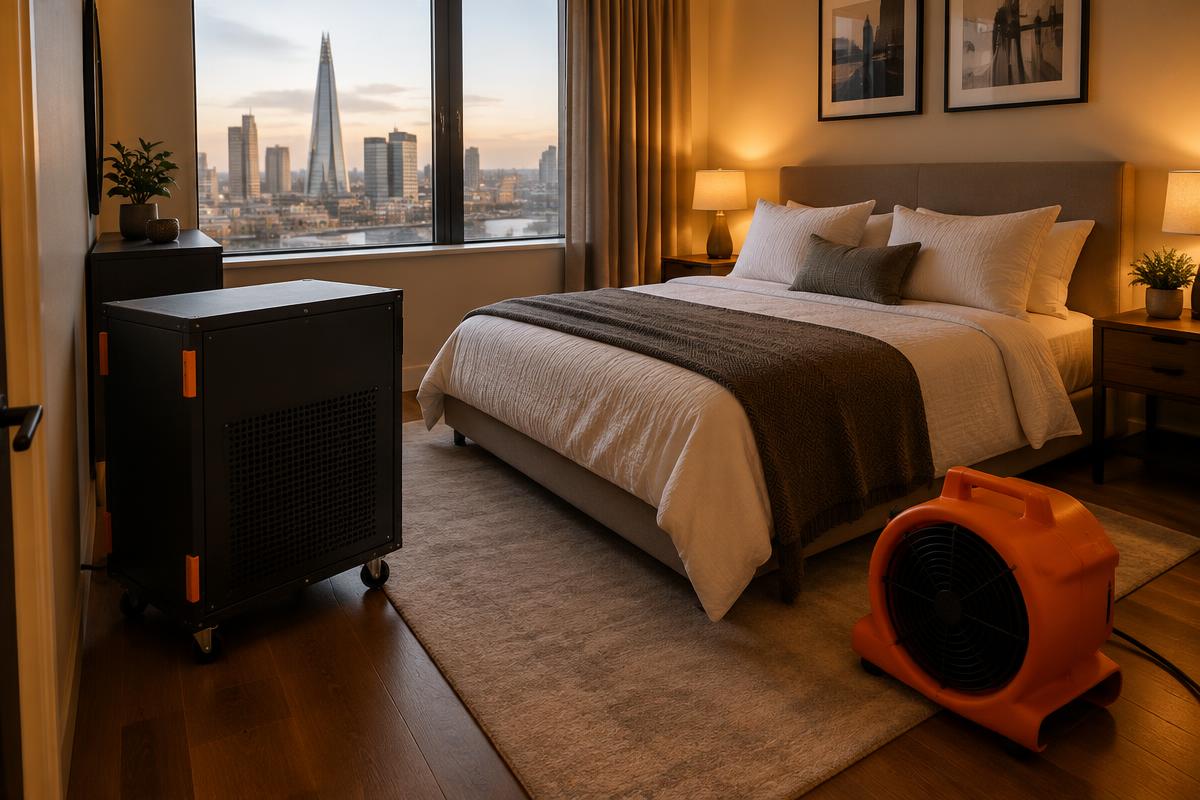
Professional heat treatment uses controlled industrial heat of 60–65 degrees C across the whole treatment area. The aim is to expose bed bugs and their eggs to lethal heat, including those concealed in suitable treatment locations. This is different from turning up central heating or treating only the visible surface of a mattress.
The heating period usually lasts 3–6 hours. That is not the same as the total time required on site or the complete period a room must remain unavailable. Preparation checks, equipment placement, controlled heating, cooling and handover all need to be considered when planning around guests and housekeeping.
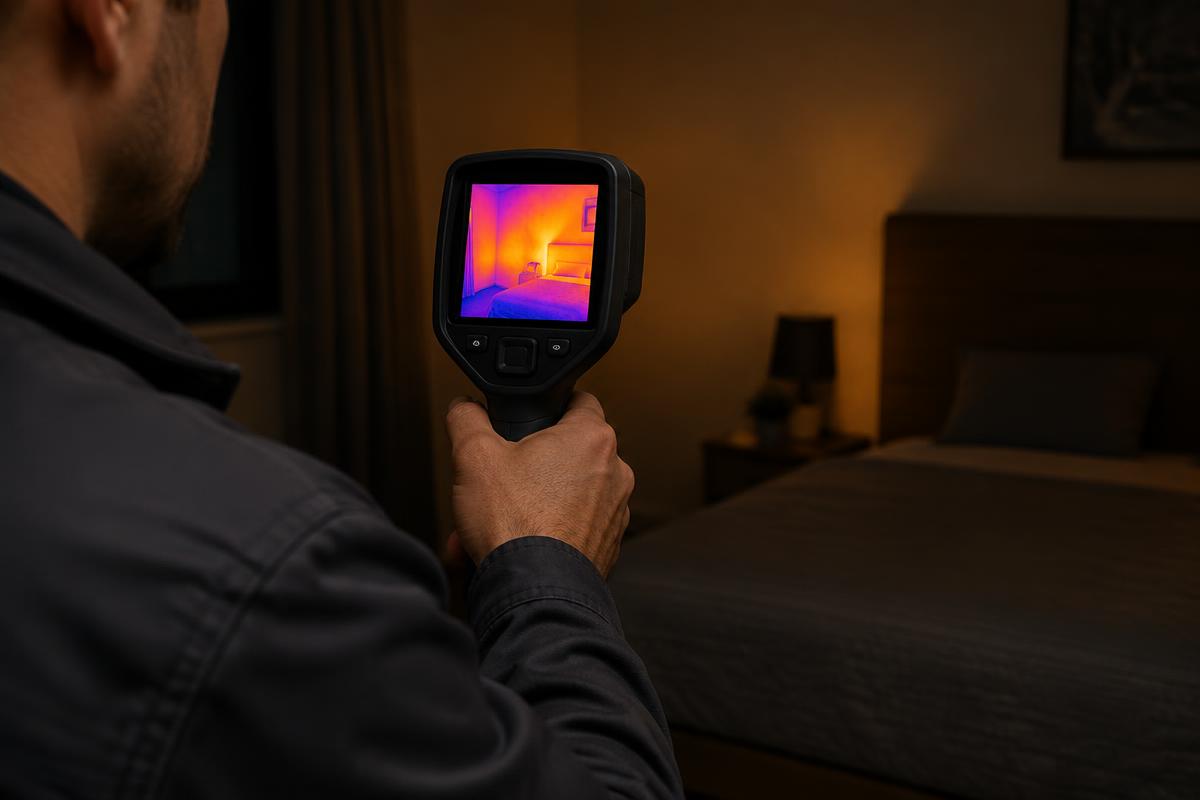
Monitoring uses active live thermal imaging cameras only. These provide live thermal views during treatment and help the team assess heat distribution across the treatment area. Images must be interpreted alongside the room layout, materials and access limitations; they do not make concealed spaces or obstructed areas irrelevant to treatment planning.
Heat is the primary treatment, with no harmful chemicals used as the primary method. It must still be planned and delivered professionally, because high temperatures affect people, animals and some possessions. The treatment team should explain the agreed scope, preparation requirements and any limitations before work begins.
Choosing the right treatment area
In a hotel, the room where signs are reported is the starting point rather than automatic proof of the full extent of activity. The assessment may need to consider adjoining rooms, nearby resting areas and the movement of belongings. Treatment recommendations should follow the evidence and layout, not a standard assumption that every property needs the same approach.
For a self-contained holiday let, bedrooms are important, but sofa beds and other regularly used sleeping spaces also matter. Tell the team about occasional sleeping arrangements, including pull-out beds that are folded away between bookings. A room described as a lounge may still contain the principal resting place associated with reported activity.
Building features can affect how a treatment is planned. Connected rooms, extensive fitted furniture, cluttered storage and difficult access around beds should be discussed in advance. Heat needs an appropriately prepared treatment area, and the agreed scope should be clear about which spaces and contents are included.
Moving a suspect bed into a corridor or storing its contents in an untreated room can complicate the situation. Equally, replacing a mattress alone may leave insects elsewhere in the room. Ask for advice before moving or discarding items, and make any necessary movement part of the agreed preparation plan.
Planning travel and equipment access across Norfolk
Norfolk's wide geography makes accurate location information important. Supply the full postcode, property name or number and clear directions where the entrance is difficult to identify. Explain whether equipment access is through reception, a service entrance, an external staircase or another route, rather than assuming the postal address describes the practical arrival point.
Parking and loading arrangements can influence equipment handling, especially at coastal accommodation with restricted frontage or rural properties set back from the road. Confirm where the vehicle can stop and how far equipment must be carried. Include steps, narrow gates, uneven paths, lifts and any restrictions on using communal areas.
Power arrangements must be confirmed before the visit. Give the team the information they request and flag known limitations, shared supplies or restrictions imposed by the building manager. Do not assume that a holiday cottage's usual domestic arrangements automatically meet treatment requirements; the provider needs to establish what is suitable.
An available access window is equally important. For an isolated holiday let, identify who will unlock the property, who can authorise decisions and how the team will gain access to every agreed space. Schedule enough flexibility for the full process rather than fitting attendance tightly between a departing guest and the next arrival.
- Provide the full postcode and an accurate property description.
- Confirm parking permission and the equipment loading route.
- State the distance from the vehicle to the treatment area.
- Describe stairs, lifts, narrow entrances and shared access.
- Confirm power arrangements with the treatment team.
- Agree key collection, access hours and an on-site contact.
Preparing bedrooms, contents and housekeeping teams
Follow the preparation instructions supplied for your property rather than a generic online checklist. The team needs to understand the room contents and identify items that require removal or special handling. Tell them about heat-sensitive belongings, medicines, aerosols, batteries and valuable or delicate objects, so suitable instructions can be given.
Do not remove potentially affected possessions into clean rooms simply to make the treatment area look tidy. Where items must leave, ask how to contain and manage them without transferring insects. Guest belongings need particular care: staff should not improvise treatment, laundering or disposal without appropriate advice and the owner's agreement.
Laundry handling should be coordinated with the treatment plan. Avoid carrying loose sheets and towels through corridors or mixing suspect linen with clean stock. Seek instructions on containment and suitable washing or drying processes for the fabrics involved. Any outside laundry provider should receive the information necessary to handle the material appropriately.
Brief housekeeping, maintenance and reception staff together where possible. Everyone should understand which rooms are unavailable, what may be moved and who can answer questions. Good preparation is not simply a matter of cleaning thoroughly; it is about keeping the planned treatment area organised while avoiding accidental movement of bed bugs.
- Obtain and follow the property's treatment preparation instructions.
- Flag heat-sensitive contents before deciding what to remove.
- Agree a containment plan for items leaving affected rooms.
- Keep suspect laundry separate from clean linen supplies.
- Ensure people and animals are outside the treatment area.
- Brief staff on room restrictions and the named decision-maker.
What to expect during the treatment visit
Before heating begins, the team needs access to the agreed treatment area and an opportunity to check preparation. Changes should be raised immediately, such as a room remaining occupied, unexpected furniture being present or a planned power supply being unavailable. These issues may affect how the work can proceed safely and effectively.
Equipment is positioned to support the planned distribution of controlled heat. The treatment area must remain restricted while work is under way, and staff should not enter to retrieve luggage or replenish supplies. Arrange essential access beforehand so routine hospitality tasks do not interrupt the process or create avoidable exposure to high temperatures.
During heating, active live thermal imaging cameras are used to monitor the treatment. Room construction, contents and the movement of heat all require professional attention. The usual heating period of 3–6 hours is a planning guide, not a promise that every property will follow an identical timetable.
The team should explain the next steps when heating finishes, including cooling, access restrictions and handover. Avoid telling guests that the room will be ready at a particular hour before those steps are confirmed. The appropriate point for staff entry or reoccupation should come from the treatment provider.
Managing bookings and guest communication
Accommodation businesses often need to make booking decisions before all the treatment details are settled. Build those decisions around confirmed information, including the rooms affected and the anticipated access requirements. Do not equate a short gap in the booking calendar with sufficient time for assessment, preparation, treatment and return to use.
Explain the situation to affected guests in calm, factual language. Acknowledge the concern, describe what is being investigated and explain the immediate arrangements you can genuinely provide. Avoid attributing the introduction to a particular guest without evidence, or claiming that an uninspected room is definitely unaffected.
If alternative accommodation or a room move is needed, consider belongings as part of the plan. A well-intentioned move can transfer insects if affected luggage is handled without advice. Ask the treatment team what precautions are appropriate, while respecting guests' privacy and making practical arrangements as clearly as possible.
Keep internal records of reported signs, advice received, treatment scope and any follow-up observations. For holiday lets with remote owners, share the relevant information with the local property manager and cleaning team. Consistent records help avoid conflicting instructions and make it easier to respond if a concern is raised after reopening.
Reopening rooms and reducing future introductions
Reopening should follow the treatment team's clearance and handover instructions, not a guess based on how the room feels. Complete any recommended checks and housekeeping steps before guests return. Make sure staff know whether any contents remain outside the room and how those items must be managed before being brought back.
Heat treatment addresses bed bugs within the agreed treatment scope, but it does not create an ongoing barrier against insects arriving later. Hotels and holiday lets continue to receive luggage and belongings from many locations. A sensible prevention plan therefore combines prompt reporting, careful room checks and clear procedures for suspect items.
Build visual checks into routine housekeeping without suggesting that staff can replace a professional inspection. Mattress seams, bed-frame joints and nearby upholstered furniture are useful places to watch for signs. Staff should know how to record a concern and escalate it before moving linen or preparing the room for another guest.
If new signs appear, contact the provider rather than immediately applying shop-bought products or moving furniture. Preserve useful evidence where possible and note the dates and locations of observations. That information can help the team assess whether further investigation is needed and how any guarantee conditions apply.
Arranging professional heat treatment in Norfolk
Bed Bug Heat Solutions UK brings over 40 years of hands-on pest-control experience to its work. The company is fully insured and RSPH Level 2 certificated, with coverage throughout England and Wales. Its heat-treatment approach uses controlled industrial heat across the whole agreed treatment area, supported by active live thermal imaging cameras.
A six-month guarantee is available on qualifying treatments. Ask which treatments qualify, what conditions apply and what you should do if signs are reported within that period. A guarantee should be understood alongside the agreed scope and follow-up instructions, rather than treated as a promise that bed bugs can never be introduced again.
When making an enquiry about a Norfolk hotel or holiday property, provide the postcode, number and type of rooms, suspected locations and any evidence available. Include booking constraints and practical access details. Photographs and a simple layout can support the discussion, although the team may still need further information before confirming the plan.
The aim is a workable response that protects guests, supports staff and addresses the identified problem without unnecessary disruption. Accurate information and careful preparation make that response easier to organise. Contact Bed Bug Heat Solutions UK to discuss the property, treatment suitability, preparation requirements and availability before making firm arrangements for the next guests.
Useful next steps
Frequently asked questions
Six-month guarantee
Qualifying treatments are covered for six months. Send your details for a free assessment.
More from the blog
How Long Does Bed Bug Heat Treatment Take?
Read the full guide: How Long Does Bed Bug Heat Treatment Take?