Norfolk
Bed Bug Heat Treatment in Norfolk: Understanding the Six-Month Guarantee
Learn what to check about the six-month guarantee on qualifying Norfolk bed bug heat treatments, from written terms to reporting suspected activity.
28 October 20269 min read

40 years
In the trade
Four decades of hands-on bed bug experience
Fully insured
Every treatment
Comprehensive liability cover on all work
RSPH Level 2
Certificated
Royal Society for Public Health qualified
Key points
- Qualifying heat treatments include a six-month guarantee.
- Confirm eligibility, covered areas and written conditions before booking.
- Preparation and access need planning for Norfolk properties.
- Report suspected activity promptly rather than assuming treatment failure.
What the six-month guarantee means for Norfolk customers
A guarantee matters when you are arranging bed bug treatment, but its value depends on understanding what it actually covers. Bed Bug Heat Solutions UK offers a six-month guarantee on qualifying treatments. For a Norfolk homeowner, tenant or accommodation manager, the important first step is confirming whether the proposed treatment qualifies and obtaining the applicable terms.
The phrase six-month guarantee should not be read as an unconditional promise covering every future bed bug problem. The treatment area, property circumstances and written conditions all need to be clear. Before accepting a quotation, ask what the guarantee covers, what exclusions apply and what action the company provides if a valid concern arises.
Norfolk properties range from city flats and terraced houses to coastal accommodation and isolated rural homes. These differences affect practical planning, although a postcode alone does not explain guarantee eligibility. Accurate information about the property and the suspected infestation helps the company define an appropriate treatment scope and explain the relevant conditions.
This guide sets out the questions worth asking before treatment and the information worth keeping afterwards. It does not replace the terms supplied for your booking. Where a detail such as a reporting deadline or the remedy for a covered recurrence is not stated, ask for written clarification rather than relying on an assumption.
Confirm eligibility and written cover before booking
Start by asking whether your particular quotation includes the six-month guarantee. The offer applies to qualifying treatments, so it is important not to assume that every service or proposed arrangement has identical cover. Give a full account of affected rooms, recent signs, previous treatment attempts and any areas that cannot be accessed.
Ask for the guarantee period to be clearly recorded, including its start and end dates. Six months sounds straightforward, but you should not have to infer the start date from an enquiry, payment or attendance date. Keep the written confirmation with your quotation and treatment paperwork so the relevant information remains easy to find.
The covered area also needs to be understandable. If the property includes several bedrooms, a separate annexe or accommodation above a business, establish exactly which spaces form part of the agreed treatment. A guarantee for a defined treatment area should not be assumed to extend automatically to every building or room at the address.
Finally, ask what happens if a concern falls within the guarantee. Do not assume that the wording automatically means a refund, an unrestricted return visit or a particular follow-up treatment. The written terms should explain the applicable process and remedy, including whether any circumstances could lead to an additional charge.
- Confirm that the quoted treatment qualifies for the guarantee.
- Request the guarantee start and end dates in writing.
- Identify the rooms and areas included in the agreed scope.
- Read the conditions and exclusions before accepting the booking.
- Ask how suspected activity must be reported.
- Clarify the remedy provided for a valid guarantee claim.
How the heat treatment relates to the guarantee
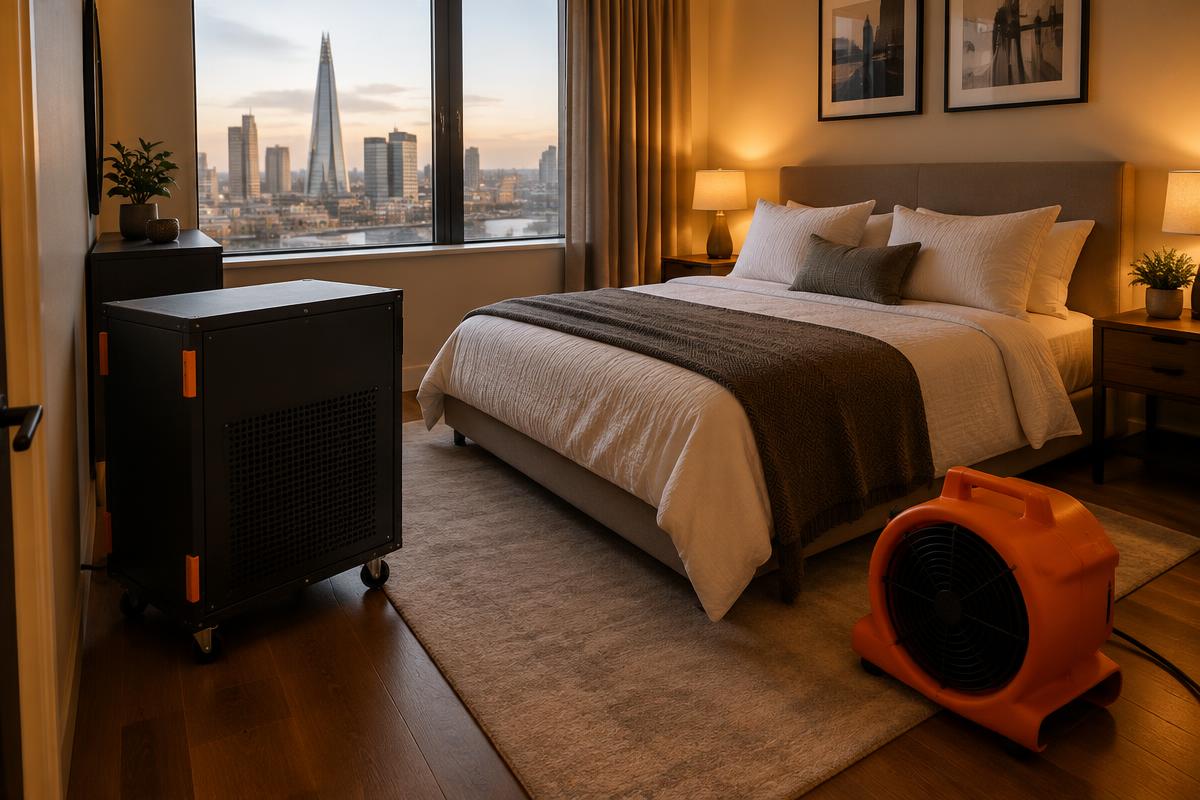
Bed Bug Heat Solutions UK uses controlled industrial heat of 60–65 degrees C across the whole treatment area. The heating period is usually three to six hours. These figures describe the treatment approach, rather than a promise that every property visit will have the same duration or require the same arrangements.
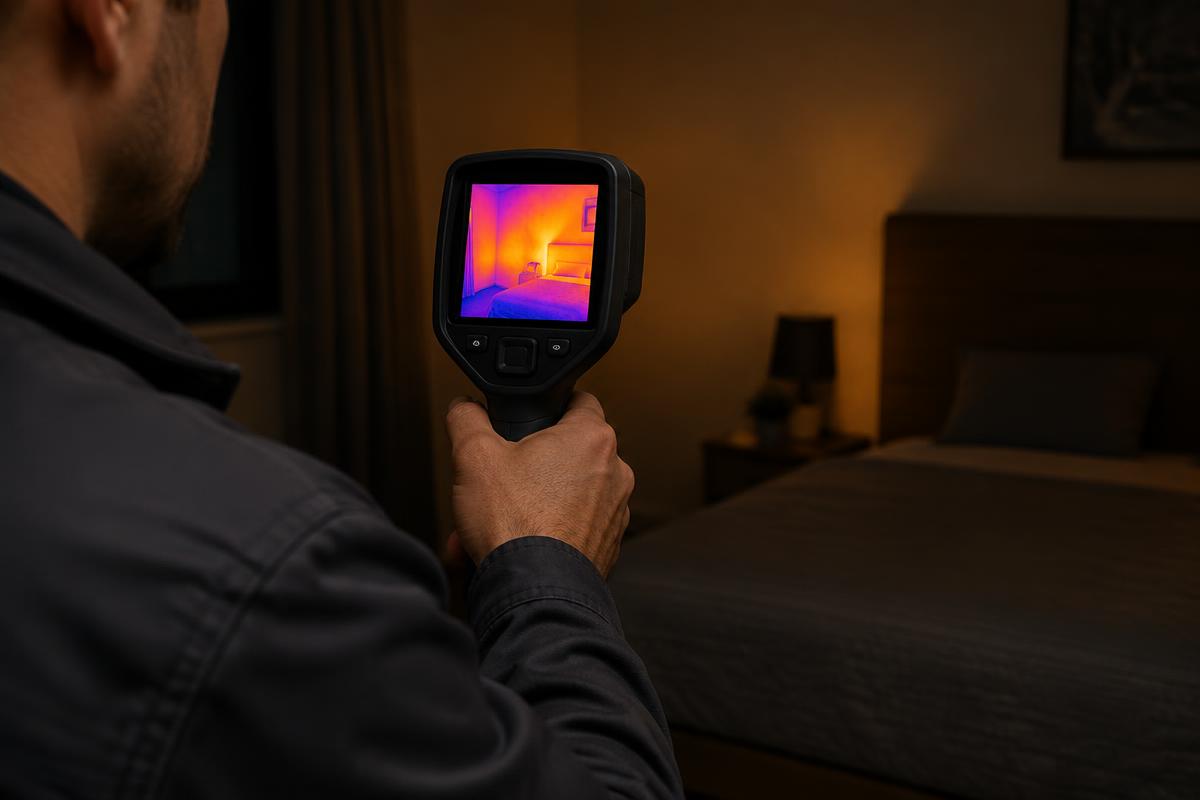
Monitoring uses active live thermal imaging cameras only. This allows the team to observe thermal conditions during the treatment. The work needs to be planned around the agreed area, its layout and its contents, rather than treating the temperature figure alone as a substitute for a professional treatment plan.
The primary treatment does not use harmful chemicals. Heat treatment is intended to address bed bugs within the agreed treatment area, but it does not create a lasting barrier against bed bugs being brought into a property later. That distinction is important when discussing what a six-month guarantee does and does not cover.
Bed Bug Heat Solutions UK serves England and Wales and brings over 40 years of hands-on pest-control experience. The company is fully insured and RSPH Level 2 certificated. These credentials provide useful background when choosing a provider, but they should sit alongside a clear quotation and written guarantee terms, not replace them.
Agree the treatment area and disclose access limitations
A clear treatment scope starts with an accurate description of the property. Explain where signs have been found and where people sleep or rest regularly. Mention spare bedrooms, sofa beds and rooms used only occasionally. This helps the company consider the property as it is actually used rather than relying solely on a bedroom count.
Tell the team about locked rooms, inaccessible storage and any part of the building controlled by someone else. In rented or shared premises, permission may be needed before treatment can cover certain areas. Raising these issues early gives everyone time to establish what can be treated and how any limitation affects the proposed guarantee.
For flats or adjoining accommodation, mention known concerns in neighbouring units or shared areas. You do not need to diagnose the source yourself. The useful information is what has been observed, where it was seen and whether building management is involved. Do not assume that treating one unit includes responsibility for untreated neighbouring premises.
If the scope changes before the visit, ask whether the quotation and guarantee need updating. Adding a room, withholding access or moving belongings into a separate building can alter the circumstances originally described. Written confirmation of the final agreed area reduces the risk of a later disagreement about which spaces were included.
Plan travel and equipment access across Norfolk
Norfolk's wide geography makes accurate booking information particularly useful. A city property, coastal holiday let and rural cottage can present very different access arrangements. Supply the full postcode, a clear address and reliable directions where needed. Explain any entrance that is difficult to identify or any route unsuitable for bringing equipment to the property.
Parking and loading distance should be confirmed before the visit, especially at isolated properties or holiday accommodation. Mention restricted parking, narrow approaches, stairs and long paths between the vehicle access point and the building. These details allow equipment requirements and practical arrangements to be considered before the team arrives.
Confirm power arrangements rather than assuming that every property has suitable access to the required supply. Explain if the building is vacant, if utilities have been disconnected or if access to electrical facilities depends on a caretaker. The team can then clarify what arrangements are needed for the proposed treatment.
An agreed access window is equally important. The usual three-to-six-hour heating period is not the same as the total time needed for every visit, which also involves other practical stages. For holiday properties, discuss guest changeovers and key collection in advance, and ask how any access restriction could affect treatment delivery and qualification for the guarantee.
- Provide the full postcode and accurate property directions.
- Confirm parking and the distance for loading equipment.
- Describe stairs, narrow entrances and restricted routes.
- Discuss power arrangements before the appointment.
- Agree who will provide keys and property access.
- Allow an access window based on the team's instructions.
Follow the preparation instructions for your property
Preparation should follow the instructions supplied for your booking, not a generic online checklist. Different contents and layouts can need different arrangements. Ask the company to explain anything unclear before the visit, particularly where instructions concern belongings that may be heat-sensitive or items that must remain available for treatment.
Avoid moving potentially affected bedding, furniture or luggage into untreated rooms simply to clear space. Such movement can complicate the treatment plan and may spread bed bugs beyond the agreed area. If items need to be moved or removed, ask how they should be handled and whether this changes the scope of the work.
Tell the team about sprays, powders or other products already used, including where and when they were applied. Do not add further treatments without discussing them first. An accurate account of previous action helps the company understand the circumstances and give preparation advice based on what is actually present in the property.
Ask which preparation requirements are conditions of the guarantee and how any difficulty should be reported. Do not assume that a minor misunderstanding automatically removes all cover, or that preparation requirements are optional. If you cannot complete a requested step, explain the problem early and obtain guidance rather than leaving it undisclosed.
Keep clear records after treatment
Keep your quotation, treatment paperwork, guarantee terms and any written aftercare instructions together. These records should make it easier to establish what was agreed and what happened on the treatment date. If you notice an error in the address, room description or guarantee dates, ask for it to be corrected promptly.
Follow the team's instructions about re-entry and the handling of belongings after treatment. Do not decide that a property is ready for occupation simply because the usual heating period has elapsed. The heating stage and the point at which occupants may return are separate matters, and the guidance for your visit should take precedence.
If items were excluded or removed, clarify how they can be brought back safely. Returning potentially affected possessions without an agreed handling plan can complicate the picture if activity is later reported. Ask for specific advice about luggage, stored bedding or other belongings whose treatment status is uncertain.
For a managed property, make sure the person responsible for reporting concerns can access the relevant paperwork. A landlord, letting agent, housekeeper and guest may each hold different information. Naming a main contact and keeping dated observations in one place helps avoid delays and inconsistent accounts if the guarantee needs to be discussed.
Report suspected activity without jumping to conclusions
If you suspect bed bugs after treatment, contact the company promptly using its official contact channels and follow the reporting instructions in your guarantee. Explain what you have noticed and when it started. Do not assume that waiting until the end of the six-month period is acceptable; check any notification requirements in the written terms.
Skin marks alone do not reliably confirm that bed bugs remain present. Reactions can vary, and other causes may produce similar marks. A clear photograph of a suspected insect, together with its location and the date it was found, can provide more useful information than a conclusion based only on bites.
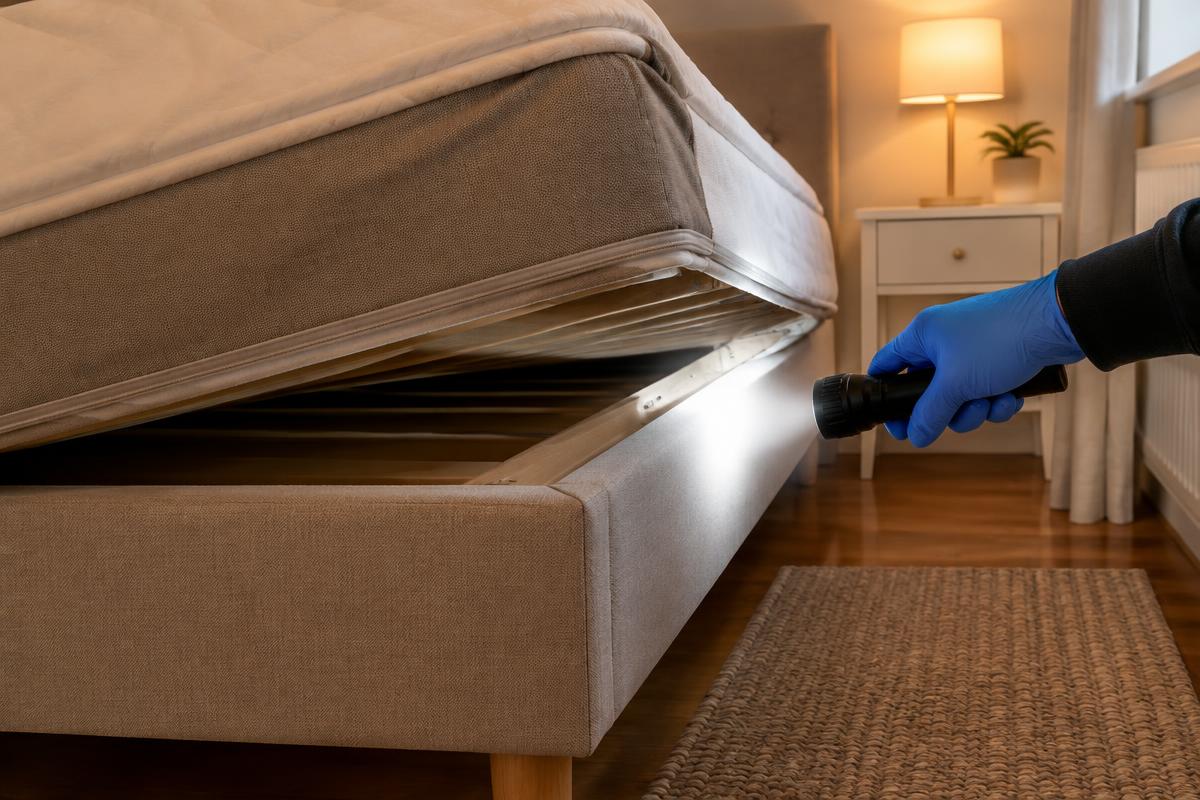
Where practical, keep a suspected insect in a secure, sealed container for identification. Avoid disturbing furniture or moving belongings through the property while trying to investigate. Ask the company what evidence it needs and whether any immediate steps are recommended before you clean the area or attempt another treatment.
Reporting a concern starts a discussion; it does not by itself establish either treatment failure or exclusion from cover. The company may need further information to assess what has happened against the agreed terms. Ask what the assessment involves, what action you should take meanwhile and whether any proposed work would carry a charge.
- Record when and where the suspected activity was noticed.
- Take clear photographs if this can be done safely.
- Retain a suspected insect securely if practical.
- Find your treatment date and guarantee paperwork.
- Report recent changes involving furniture, luggage or occupancy.
- Ask for guidance before applying further products.
Understand recurrence and possible reintroduction
One important guarantee question is how the terms distinguish continuing activity from a new introduction. Bed bugs can be carried into a property on belongings after treatment. This means a later sighting does not automatically reveal whether insects remained within the original treatment area or arrived afterwards.
Equally, a new guest or a recent journey does not by itself prove reintroduction. The circumstances need consideration rather than an automatic assumption. Ask how the company assesses these situations and what information it uses. The applicable guarantee wording should explain how any relevant exclusions are handled.
This distinction deserves particular attention in Norfolk holiday accommodation, where occupants and luggage may change frequently. Heat treatment does not prevent a future arrival from bringing bed bugs into a room. Property managers should ask specifically how the guarantee applies to ongoing guest use and keep straightforward records of reported signs and relevant dates.
For rural homes or properties with several outbuildings, discuss belongings stored outside the treated area before returning them indoors. The issue is not whether a property is urban, coastal or isolated, but whether potentially affected items or spaces were included. A shared understanding of those boundaries helps make any later assessment more informed.
Make the guarantee part of an informed booking decision
A useful guarantee is one you understand before treatment begins. Compare the proposed scope, preparation requirements, reporting process and available remedy rather than relying on the headline duration alone. If an important point is missing from the quotation or terms, ask for an answer in writing before making your booking decision.
For Norfolk customers, practical planning and guarantee clarity should happen together. Accurate room details, access information and power arrangements help define what the company is being asked to deliver. They also give you an opportunity to resolve limitations before those limitations affect the treatment or create uncertainty over the agreed cover.
Remember that the six-month guarantee applies to qualifying treatments, while the precise conditions belong in the documentation for your booking. This article cannot establish whether a future claim would be accepted. Nor should the guarantee be interpreted as a promise of a particular attendance time, unlimited visits or protection from every new infestation.
When contacting Bed Bug Heat Solutions UK about a Norfolk property, provide the postcode, property layout, observed signs and any access restrictions. Ask whether the proposed treatment qualifies for the six-month guarantee and request the full terms. That approach gives you a clear basis for proceeding and a practical reference if questions arise afterwards.
Useful next steps
Frequently asked questions
Six-month guarantee
Qualifying treatments are covered for six months. Send your details for a free assessment.
More from the blog
How Long Does Bed Bug Heat Treatment Take?
Read the full guide: How Long Does Bed Bug Heat Treatment Take?