Norfolk
Preparing Your Property for Bed Bug Heat Treatment in Norfolk
A practical guide to preparing Norfolk homes and holiday accommodation for professional bed bug heat treatment, from laundry to access arrangements.
7 November 20269 min read
40 years
In the trade
Four decades of hands-on bed bug experience
Fully insured
Every treatment
Comprehensive liability cover on all work
RSPH Level 2
Certificated
Royal Society for Public Health qualified
Key points
- Follow the preparation instructions provided for your property.
- Avoid moving potentially infested belongings between rooms.
- Confirm parking, power and access arrangements before the visit.
- Agree how sensitive belongings, pets and laundry will be managed.
1. Start with a preparation plan for your Norfolk property
Preparing correctly for bed bug heat treatment means making the property ready without spreading the infestation or creating unnecessary work. Before emptying cupboards, washing every item or moving furniture, ask for the preparation instructions that apply to your treatment. The right plan depends on the rooms involved, their contents and how the building is used.
Norfolk properties present different practical circumstances. A city flat may involve shared entrances and stairs, while coastal accommodation may have a narrow changeover window. A rural home may sit well away from the road. These details affect how equipment reaches the treatment area and how the visit should be organised.
Bed Bug Heat Solutions UK uses controlled industrial heat of 60–65°C across the whole treatment area. The heating period is usually three to six hours, but that is not a promise about the total visit or when you can return. Preparation, equipment setup, checks and cooling also need to be considered.
Tell the team early if you cannot complete a preparation task, have limited mobility or need help arranging access. It is better to agree a manageable approach than to rush on the morning of treatment. Keep the written instructions available so everyone helping prepares the property in the same way.
2. Provide accurate property, room and access information
Start with the full address and accurate postcode, then explain anything that could make the entrance difficult to find. Norfolk's wide geography makes clear travel information particularly useful. If the property has a separate cottage, an unmarked driveway or several buildings sharing an address, identify exactly which building requires treatment.
Describe the rooms that may be affected and how they connect. Include bedrooms, living rooms used for sleeping, adjoining storage spaces and any areas where you have found signs of bed bugs. Report what you have actually observed rather than assuming that every bite or mark confirms an infestation in a particular room.
Explain the access route from the parking location to the treatment area. Stairs, restricted lifts, long corridors, steep paths and narrow doorways can all matter when planning equipment movement. For isolated properties and holiday accommodation, confirm parking and loading distance in advance rather than relying on an apparently nearby space being available.
Power arrangements and the available access window also need to be discussed before the visit. Do not assume that a particular socket, extension lead or temporary supply will be suitable. Provide the requested information and allow the treatment team to decide what arrangements are appropriate for the property and equipment.
- Supply the full address, postcode and clear entrance directions.
- Describe affected rooms, floors and adjoining spaces.
- Confirm where equipment can be unloaded and vehicles parked.
- Explain loading distances, stairs and other access restrictions.
- Discuss power arrangements with the treatment team.
- Agree the access window and who will provide entry.
3. Avoid spreading bed bugs while you prepare
One of the most important preparation rules is to avoid carrying potentially infested belongings into unaffected areas. Moving a bedside cabinet into another bedroom or taking loose bedding to a relative's home may spread bed bugs. Leave items in their usual locations unless the treatment instructions tell you to move them.
There is usually no reason to start by throwing away a bed, mattress or sofa. Decisions about retaining or disposing of furniture should follow an assessment, not panic. If an item does need to leave the property, ask how it should be contained and moved without exposing shared corridors or other rooms.
Do not start sleeping in a different room simply as a preparation step without discussing it with the team. Changing sleeping arrangements and moving bedding can complicate the picture of where activity is occurring. If you have already moved rooms or stayed elsewhere, explain when this happened and what belongings went with you.
Tell the team about any sprays, powders or other pest-control products already used, including where and when they were applied. Avoid adding further products unless specifically advised. Bed Bug Heat Solutions UK uses heat without harmful chemicals as the primary treatment, and an accurate treatment history helps the team plan the work.
4. Prepare bedding, clothing and laundry in the right order
Laundry can become a source of confusion when preparing for treatment. Some people strip every bed immediately, while others take all their clothing away from the property. Neither approach should be automatic. Ask which textiles should stay for treatment, which need laundering and how they should be arranged before the team arrives.
When laundering is advised, contain potentially infested textiles before carrying them through the property. Take them directly to the washing area rather than sorting them on a hallway floor. Follow the fabric care labels and the treatment team's instructions about a suitable washing or drying process; an ordinary cool wash should not be assumed sufficient.
Keep items that have completed the agreed laundry process separate from untreated belongings. Use clean bags or containers and label them clearly so there is no uncertainty later. If laundry must leave the property, discuss containment and transport first, including how you will prevent exposure in a vehicle or shared laundry facility.
Avoid filling the treatment area with tightly packed bundles of bedding or clothing without guidance. Dense piles can make preparation and heat circulation more difficult. Equally, do not assume that every bag should remain sealed during heat treatment. Ask how contained belongings should be presented so their handling fits the treatment plan.
5. Identify belongings that need individual advice
Controlled treatment heat requires a careful review of belongings that may be affected by elevated temperatures. Tell the team about medicines, aerosols, pressurised containers, flammable products, candles and other potentially sensitive contents. Mention valuable or unusual items too. A general online guide cannot determine whether every object in your property can safely remain.
Electronics, batteries, artwork, musical instruments and delicate furnishings deserve specific discussion rather than a blanket assumption. Their materials, condition and manufacturer guidance may differ. Do not place questionable items inside a cupboard and assume this protects them from treatment heat. Give the team enough information to advise on suitable arrangements.
An instruction to remove a heat-sensitive item does not automatically mean it is safe to carry elsewhere without precautions. Objects kept near beds or upholstered furniture may need an agreed containment or alternative management plan. This is particularly important when considering taking bags, devices or personal belongings into another household.
Prepare a short inventory of items you are unsure about and raise questions before treatment day. Include essential medicines that must remain accessible while you are out. Where specialist storage requirements apply, seek advice from the relevant pharmacist or manufacturer as well as discussing safe preparation with the treatment team.
- List medicines and any temperature-sensitive medical supplies.
- Identify aerosols, pressurised containers and flammable products.
- Flag electronics, batteries and unusual electrical equipment.
- Mention artwork, instruments, valuables and delicate furnishings.
- Ask how removed belongings should be contained and managed.
- Agree where essential personal items will be kept during treatment.
6. Create access without unnecessary clearing or dismantling
The team needs safe access to the treatment area and enough room to position equipment appropriately. Clear agreed routes through entrances, hallways and affected rooms, but avoid relocating clutter into unaffected spaces. If the property contains substantial stored belongings, explain this beforehand so the preparation instructions reflect the actual conditions.
Do not dismantle beds, remove fitted furniture or pull heavy wardrobes away from walls unless instructed. Unnecessary dismantling can create hazards and make the area harder to manage. Tell the team about damaged furniture, unstable shelving or fittings that need careful handling, particularly where equipment must pass through a restricted space.
Discuss under-bed storage, packed wardrobes and crowded cupboards with the team. These areas may need particular preparation, but the correct arrangement should be specified rather than guessed. The aim is not simply to make the room look tidy; it is to present its contents in a way that supports the planned heat treatment.
Report building defects or unusual features that may affect the work, including damaged electrical fittings or spaces open to adjoining areas. Do not cover ventilation openings, seal gaps, disconnect appliances or alter electrical equipment yourself as part of preparation unless directed. Leave treatment-related decisions about the building and equipment to the professionals.
7. Arrange for occupants, pets and essential belongings
Plan for people and pets to remain outside the treatment area throughout the work and until the team confirms that re-entry is appropriate. Arrange somewhere suitable to spend the time, with enough flexibility for setup and cooling. The usual three-to-six-hour heating period should not be used as a fixed collection or return time.
Tell the team about all animals and their accommodation, including aquariums, vivariums and any equipment that cannot easily be moved. These need an agreed plan before the visit. Mention houseplants as well. Do not assume that leaving a pet or sensitive enclosure in a neighbouring room will be acceptable.
Prepare the small number of personal items you will need while away, following advice on avoiding the transfer of bed bugs. Consider essential medicines, keys, suitable clothing and necessary care supplies. Taking several untreated bags out at the last minute can undermine otherwise careful preparation, so agree what to take beforehand.
Where children, older residents or people with health or mobility needs live at the property, make practical arrangements early. The team should know about access needs and any difficulties leaving or returning. In shared buildings, coordinate necessary access with the responsible person without leaving communal doors unsecured or obstructing escape routes.
8. Plan carefully for Norfolk holiday and rural properties
Holiday accommodation needs a clear handover plan, especially when the owner, cleaner and booking manager are different people. Nominate one person to coordinate instructions and confirm who can authorise access. Make sure nobody removes bedding, replaces furniture or delivers fresh linen contrary to the agreed preparation plan while the property is being readied.
Do not fit treatment into a normal guest changeover window without discussing the available time. Equipment setup, the heating period and cooling all affect when the accommodation can be used again. Avoid promising arriving guests a return time before the treatment team has confirmed that the property is ready for re-entry.
For an isolated rural home or cottage, check the practical route to the door. A long gravel drive, locked gate, low entrance or distant parking area may affect equipment handling. Describe these features honestly, and mention seasonal access concerns where relevant, rather than assuming that reaching the postcode means reaching the treatment entrance.
Confirm how the team will obtain keys, whom to contact if access arrangements change and what power arrangements have been agreed. If you will not attend in person, provide a clear handover through the agreed channel. Someone responsible should remain available to answer property questions without relying on a departing guest.
- Nominate one person to coordinate the treatment visit.
- Give cleaners and managers the same preparation instructions.
- Confirm keys, gates and the exact treatment entrance.
- Check parking, loading distance and the route to the property.
- Agree power arrangements and the available access window.
- Keep guest arrivals separate from unconfirmed re-entry plans.
9. Understand what happens on treatment day
Before treatment begins, point out anything that differs from the information previously supplied. This might include an additional room with suspected activity, belongings that could not be prepared or a new access restriction. A clear handover gives the team an opportunity to review the plan rather than discovering important changes after setup.
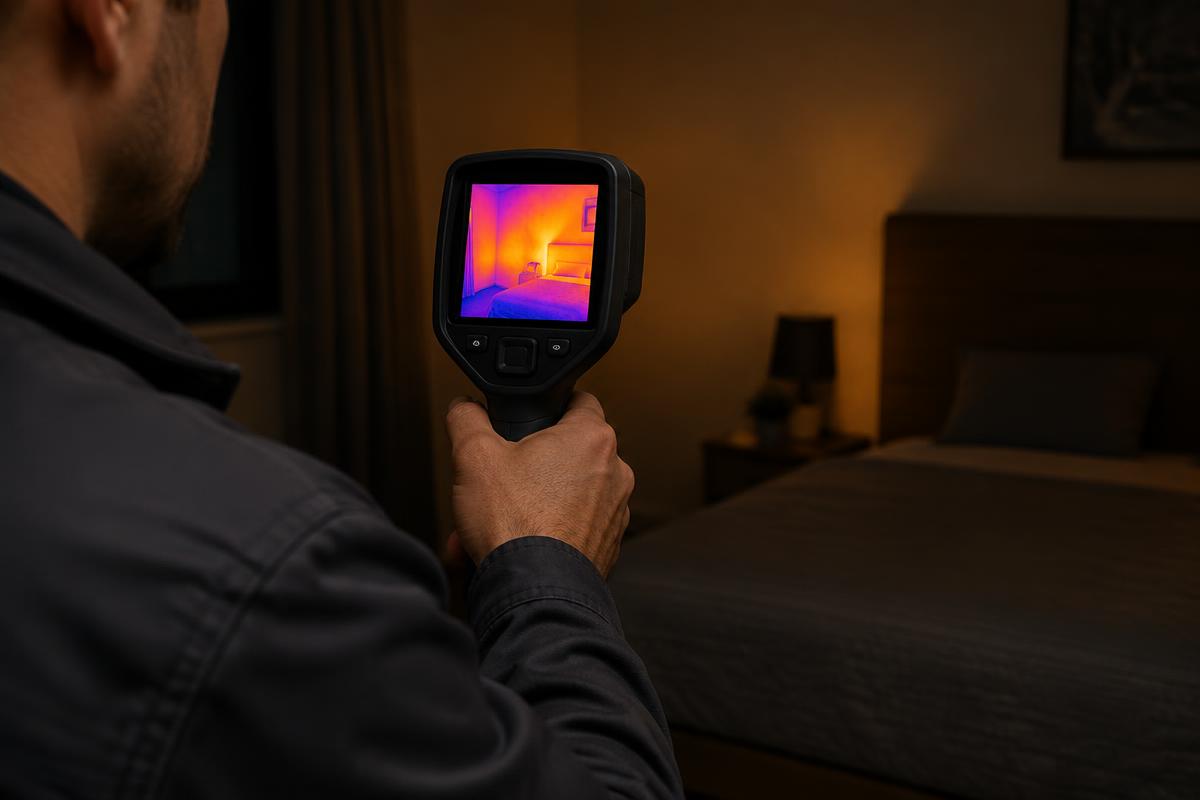
Bed Bug Heat Solutions UK applies controlled industrial heat of 60–65°C across the whole treatment area. Monitoring uses active live thermal imaging cameras only. The treatment team manages the heating process and equipment placement; occupants should not attempt to adjust equipment, change room arrangements or enter the treatment area while work is underway.
The heating period is usually three to six hours, with the property's layout and contents forming part of the planning. This is different from the overall time needed for the visit. Ask what practical arrangements you should make for the day, while allowing for the team's assessment and instructions rather than expecting an exact timetable.
Remain reachable through the agreed contact method and wait for confirmation before returning. If an essential item has been left inside, contact the team instead of entering to retrieve it. The same applies to cleaners, maintenance workers and other visitors who might otherwise arrive during a routine property appointment.
10. Follow the aftercare plan and clarify guarantee terms
Once re-entry is authorised, follow the aftercare instructions before unpacking stored belongings or bringing removed items back. Items kept outside the treatment area may still need the agreed laundry, inspection or management process. Returning untreated belongings without considering their history can introduce a problem that careful preparation was intended to avoid.
Ask what cleaning is appropriate and how to report anything that concerns you after treatment. Skin reactions alone do not reliably establish whether bed bugs remain, so describe any physical signs and when you noticed them. If you find a suspected insect, ask how to provide a clear photograph or sample safely.
Bed Bug Heat Solutions UK offers a six-month guarantee on qualifying treatments. Confirm whether your proposed treatment qualifies and request the applicable terms before booking. Ask how preparation requirements, aftercare and any suspected reintroduction are addressed, rather than assuming that every property and every later concern will be covered in the same way.
The company serves England and Wales, bringing over 40 years of hands-on pest-control experience, full insurance and RSPH Level 2 certification. For a Norfolk property, the most useful first step is to share accurate room and access details and request a tailored preparation plan. Careful coordination helps the visit proceed safely and efficiently.
Useful next steps
Frequently asked questions
Six-month guarantee
Qualifying treatments are covered for six months. Send your details for a free assessment.
More from the blog
How Long Does Bed Bug Heat Treatment Take?
Read the full guide: How Long Does Bed Bug Heat Treatment Take?