Northamptonshire
Bed Bug Heat Treatment in Northamptonshire for Hotels, Guest Rooms and Holiday Lets
A practical guide to managing bed bugs in Northamptonshire visitor accommodation, from assessing connected rooms to preparing for professional heat treatment.
12 October 20269 min read
40 years
In the trade
Four decades of hands-on bed bug experience
Fully insured
Every treatment
Comprehensive liability cover on all work
RSPH Level 2
Certificated
Royal Society for Public Health qualified
Key points
- Assess connected rooms and recent guest moves before agreeing the treatment area.
- Controlled industrial heat reaches 60-65 degrees C across the whole treatment area.
- Monitoring uses active live thermal imaging cameras only.
- Qualifying treatments include a six-month guarantee.
Bed bug treatment for Northamptonshire visitor accommodation
A suspected bed bug problem in a hotel, guest room or holiday let needs a measured response. Guests need clear information, staff need practical instructions, and the affected accommodation needs proper assessment. Moving belongings or reopening a room without a plan can make an already disruptive situation harder to manage.
Northamptonshire accommodation varies from individual holiday properties and rooms above businesses to hotels and serviced apartments. Modern apartments, family housing, logistics accommodation and shared rentals can each present different access and occupancy considerations. The layout and use of a property matter more than its description when planning treatment.
Bed bugs can arrive with luggage, clothing or other belongings, including in accommodation that is cleaned carefully. Their presence is not, by itself, evidence of poor housekeeping. For operators, the useful questions are where activity has been reported, what evidence exists and whether people or possessions have moved between rooms.
Bed Bug Heat Solutions UK provides professional heat treatment across England and Wales, including Northamptonshire. Our approach uses controlled industrial heat rather than harmful chemicals as the primary treatment. For accommodation businesses, planning starts with understanding the suspected infestation and the practical demands of taking the agreed treatment area out of use.
Recognising a concern before changing room arrangements
A guest reporting bites deserves a prompt and respectful response, but skin marks alone cannot confirm bed bugs. Other insects and skin conditions can cause similar reactions. More useful evidence may include live insects, shed skins, eggs or dark spotting around mattress seams, bed frames and nearby furniture.
Ask the guest where and when they noticed the problem, then record the room number and relevant dates. Photographs of suspected insects or marks can support an initial discussion. Avoid making definite claims about the cause until the evidence has been assessed, and keep personal information within appropriate business procedures.
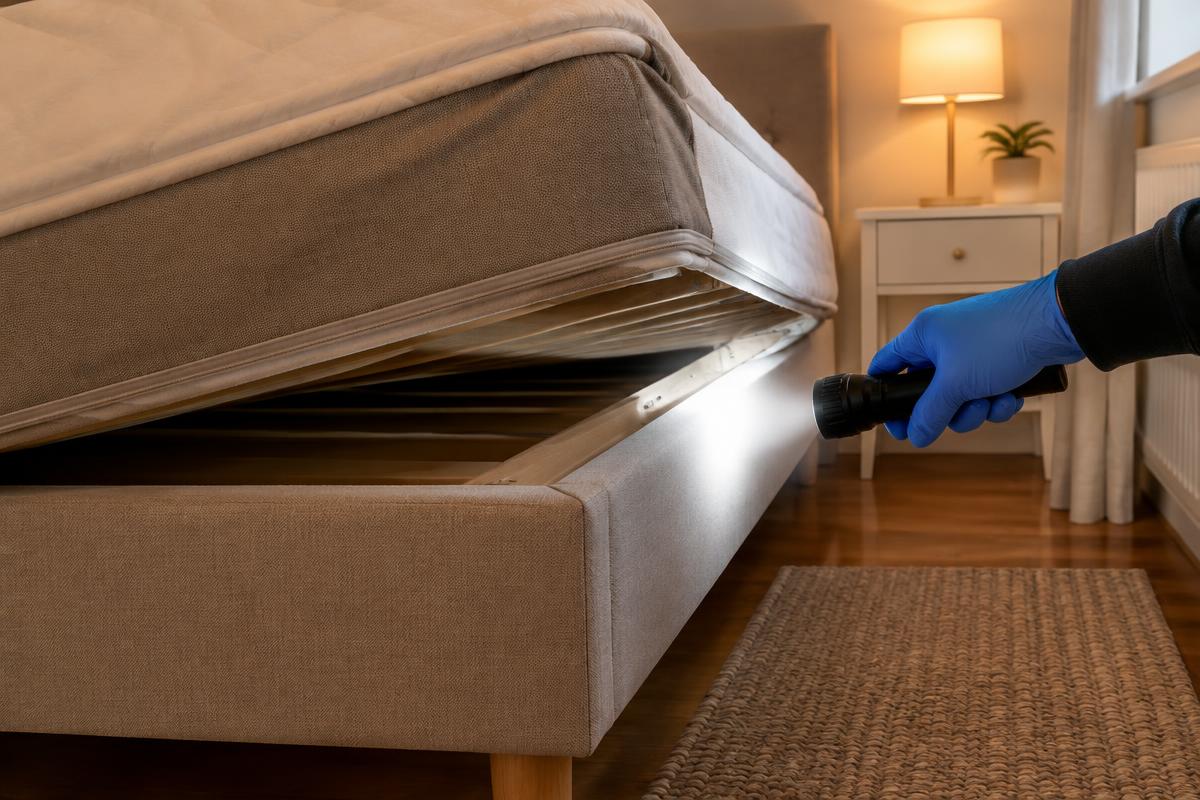
Housekeeping staff can check visible seams, joints and accessible areas around the bed without carrying bedding or furniture through the building. A visual check can reveal useful evidence, but an apparently clear mattress does not rule out a problem. Bed bugs may shelter in bed structures, upholstery and other nearby gaps.
If a room change has already happened, explain which bedrooms were involved and whether luggage, bedding or portable furniture went with the guest. This does not automatically mean every room needs treatment. It does give the assessor important information about which additional spaces may need inspection or discussion.
Information to gather for an accommodation assessment
A useful enquiry describes both the suspected activity and the building. Provide approximate room sizes, floor levels and the number of bedrooms involved. Include sitting areas or adjoining rooms where guests rest, particularly in holiday lets where occupants may also use sofa beds or move between sleeping spaces.
Access details help us assess equipment requirements and the practical route into the property. Mention stairs, lifts, restricted entrances, parking arrangements and any distance between unloading access and the affected rooms. Older guest accommodation and upper-floor apartments may need different planning from a ground-floor holiday cottage.
Occupancy information is equally important. Explain which rooms remain occupied, whether the property shares corridors or entrances, and what bookings are approaching. Do not assume that an empty bedroom can be treated independently of every adjoining space. The proposed boundary needs to reflect the evidence and the building layout.
A concise record can prevent important details being lost between reception, housekeeping and an off-site owner. Gather the information before making major room changes where possible, but do not delay reporting a concern simply because some measurements are unavailable. Clear photographs and a basic floor plan can also help the discussion.
- Approximate sizes and floor levels of affected rooms
- Dates, locations and photographs of suspected activity
- Details of recent moves between bedrooms
- Locations of sofa beds and adjoining sitting areas
- Stair, lift, entrance and unloading access
- Current occupancy and upcoming booking constraints
How controlled heat treatment is planned and monitored
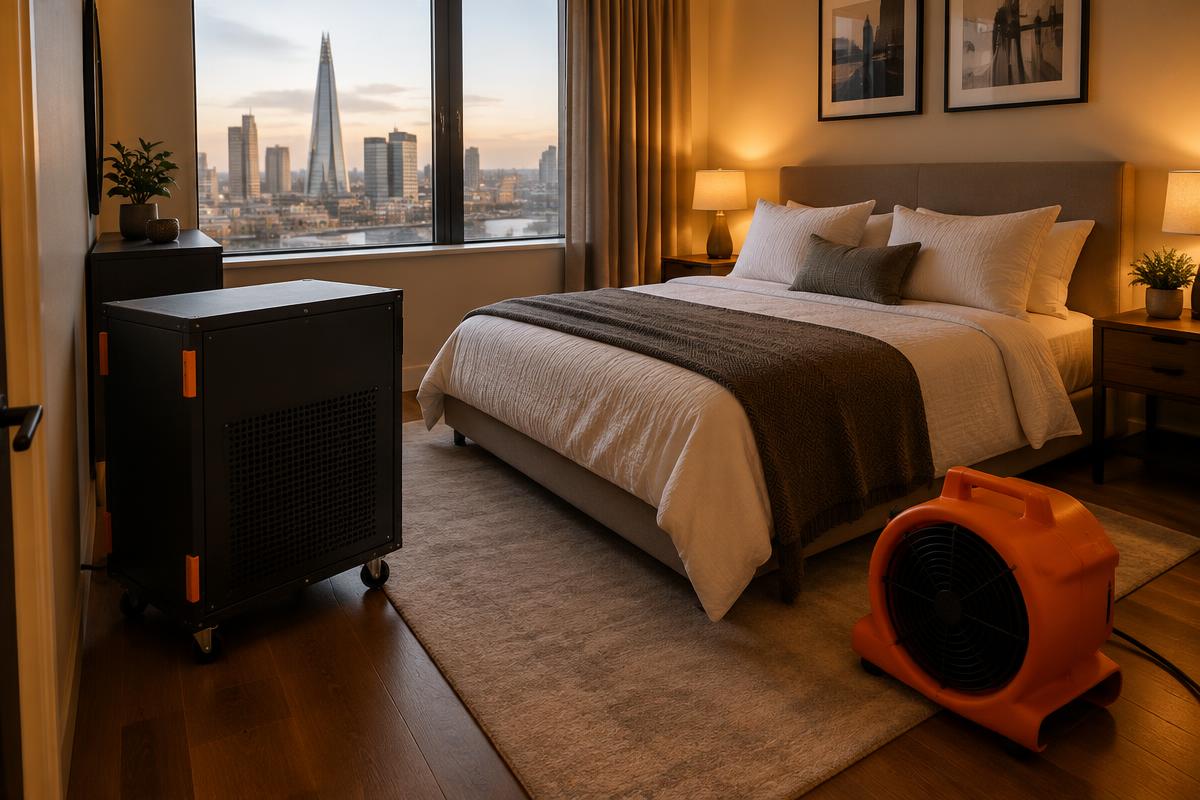
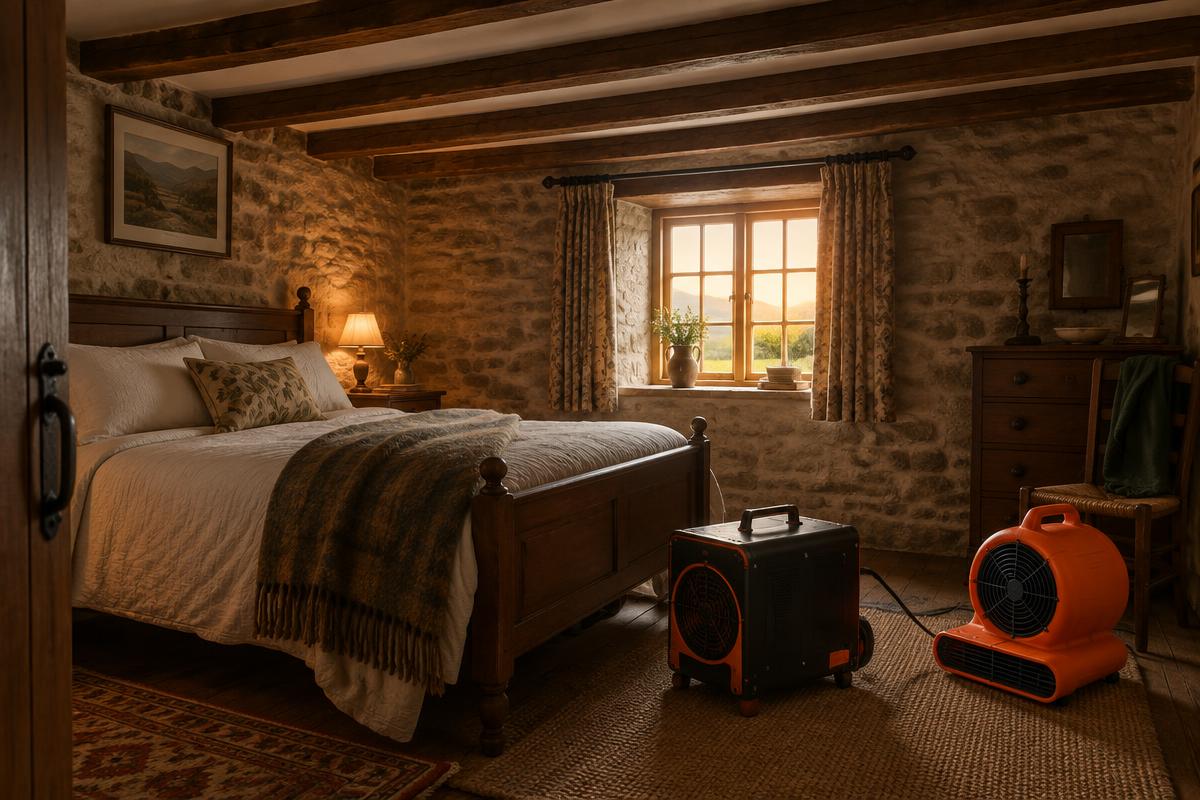
Professional heat treatment uses specialist equipment to create controlled industrial heat of 60-65 degrees C across the whole treatment area. The objective is to expose bed bugs and their eggs to a properly managed heat process. This is different from turning up central heating or using a domestic heater.
The heating period is usually three to six hours. That is not a promise that the entire visit or room closure will fit within that window. Equipment setup, preparation checks, treatment requirements, cooling and handover all need consideration when deciding how the work will fit around guest accommodation.
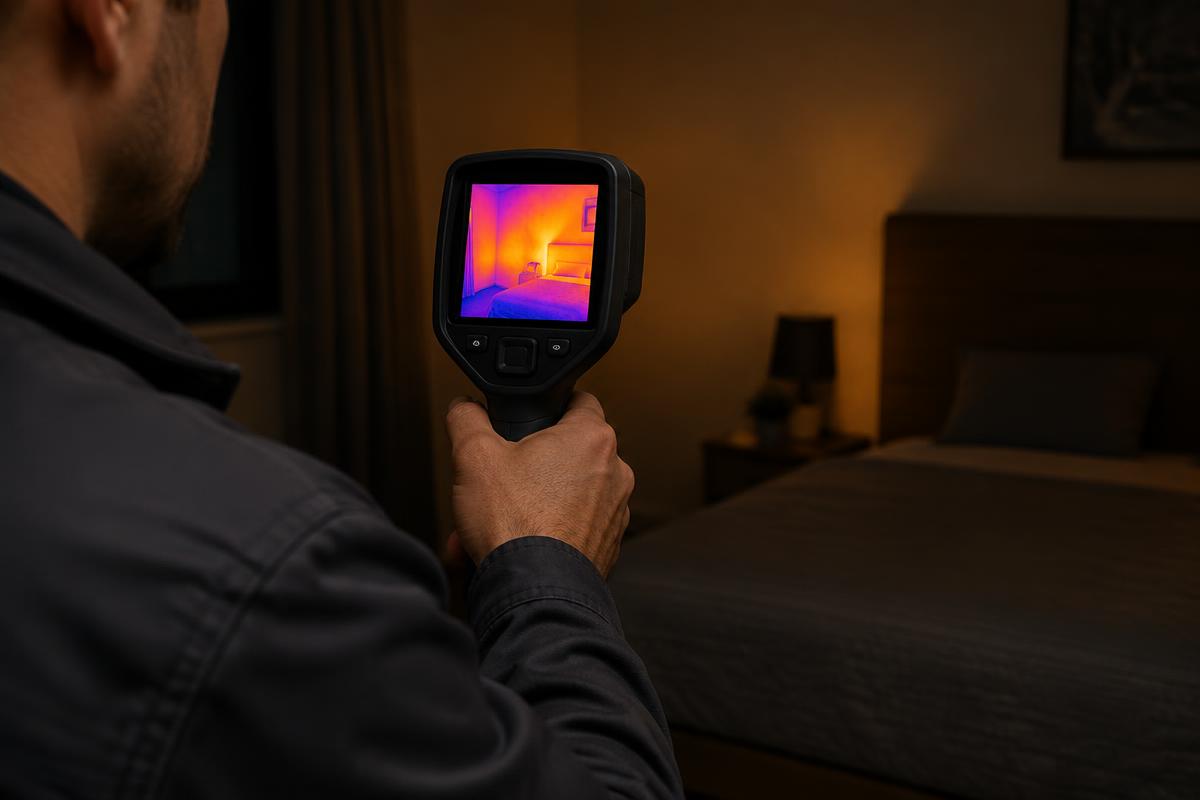
Monitoring uses active live thermal imaging cameras only. These allow the treatment team to observe surface heat patterns during the work and identify areas needing attention. Thermal imaging does not see through furniture or walls, which is one reason access, preparation and professional management of the whole area remain important.
Treatment planning must account for the room contents, layout and agreed boundaries rather than treating a single headline temperature as the complete process. Guests, staff and pets must remain outside the designated treatment area during the work. Re-entry should follow the team's instructions after treatment and the required cooling arrangements.
Setting the right treatment area in hotels and guest houses
For a hotel, the first reported bedroom is the starting point for assessment, not necessarily the final treatment boundary. The team needs to understand activity in nearby rooms, connecting doors, shared arrangements and recent guest moves. Those details help determine whether additional spaces need inspection, treatment or further discussion.
There is no sound basis for automatically treating an entire hotel after one unconfirmed report. Equally, limiting work to one bed without examining the wider circumstances may overlook relevant activity. A proportionate plan considers evidence, the physical layout and the movement of people and belongings through the accommodation.
Guest houses can have particularly close links between bedrooms, shared lounges and owners' living spaces. Staff may also store spare bedding or cleaning equipment nearby. Explain how these areas are used and whether anything has been moved from the affected room into them since the concern was first raised.
Once the scope is agreed, make sure everyone managing the property understands which spaces are included and which are not. A written room reference or simple marked plan can reduce confusion. Keep changes in use or new reports visible to the treatment team rather than assuming the original plan still covers them.
Preparing guest rooms without spreading belongings
Preparation should follow property-specific instructions from the treatment team. Different furnishings, storage arrangements and building features can affect what needs to be moved, opened or protected. Avoid using a generic internet checklist as permission to empty an affected room into a corridor, laundry room or neighbouring guest bedroom.
Bedding and clothing need a controlled handling plan. Where items must be moved, contain them before transport and follow advice about appropriate laundry or other treatment. Carrying loose linen through shared areas creates avoidable opportunities for bed bugs to move, while placing clean items beside untreated belongings can undermine careful handling.
Tell the team about potentially heat-sensitive belongings, medicines, aerosols, electronics and any unusual materials or fittings. Do not decide that all questionable items should simply be removed untreated. The preparation plan needs to address both their suitability for heat exposure and the possibility that they could harbour bed bugs.
Hotel housekeeping teams and holiday-let cleaners should receive the same agreed instructions. Nominate someone to confirm that preparation is complete and raise anything that could not be done. This helps avoid a situation where one person prepares the room carefully while another unknowingly returns stored bedding or moves furniture elsewhere.
- Follow the preparation instructions issued for the property
- Avoid moving loose bedding through shared areas
- Agree how laundry and personal belongings will be handled
- Flag heat-sensitive items before treatment
- Keep agreed equipment routes and access points clear
- Tell all relevant cleaners and housekeeping staff the plan
Planning around hotel occupancy and holiday-let changeovers
Commercial accommodation needs a realistic closure plan, not just an estimate of heating time. Consider when guests will leave, when preparation can be completed and who will provide access. Allow for setup, cooling and handover before deciding whether the next booking can proceed as originally arranged.
In hotels, reception and housekeeping need a shared understanding of room availability. Mark the agreed spaces out of use through your normal booking procedures, and prevent unplanned access during treatment. If guests need alternative accommodation, discuss belongings and room moves so that the response does not create further uncertainty.
Holiday lets often have a narrow gap between departures and arrivals, particularly where cleaning is managed by an external contractor. Do not assume a standard changeover window is sufficient for professional treatment. An owner, manager or authorised representative should be available to resolve access questions and approve any necessary operational changes.
Guest communication can be factual and discreet without minimising the concern. Explain that a pest issue is being assessed or addressed and provide practical arrangements relevant to the booking. Avoid offering assurances about neighbouring rooms or reopening times that have not been supported by the assessment and treatment handover.
Access and shared spaces in Northamptonshire properties
The county's varied accommodation includes modern apartments used for short stays, family properties let to visitors and rooms serving people working away from home. Some share entrances, stairs or service areas with other occupiers. These arrangements should be explained early so equipment access and treatment boundaries can be considered properly.
Floor level matters because equipment has to reach the treatment area safely and without unnecessary disruption. Provide details of lift availability, stair configuration and any restrictions imposed by a building manager. Room dimensions also help us understand the scale of the work rather than relying on bedroom count alone.
Shared rentals and longer-stay accommodation can involve frequent bedroom changes or personal belongings stored in communal spaces. Record those movements as accurately as possible. A suitcase moved into a lounge or bedding placed in a spare room may be relevant even if no one has reported seeing bed bugs there.
Where access involves a landlord, managing agent or another business, confirm who can authorise entry and coordinate the work. The treatment team also needs to know about applicable site procedures and building arrangements. Clarifying responsibilities in advance helps keep the agreed plan practical without making assumptions about areas outside your control.
Handover, follow-up and the six-month guarantee
After treatment, follow the team's instructions about cooling, re-entry and returning the accommodation to use. Do not allow housekeeping or guests into the designated area before clearance. Ask any outstanding questions at handover, particularly about belongings that were excluded, laundry arrangements and the spaces covered by the work.
Qualifying treatments include a six-month guarantee. Eligibility, scope and conditions should be confirmed for your proposed treatment rather than assumed from a general description. This is especially relevant where a building has separately occupied rooms, treatment exclusions or ongoing movement of guests and belongings between different areas.
Continue ordinary housekeeping observation after reopening and give staff a clear route for reporting suspected activity. Keep dates, room numbers and any photographs together so that a concern can be assessed in context. New skin marks alone do not establish treatment failure, just as an absence of complaints does not replace sensible observation.
No treatment can stop a future guest from bringing bed bugs into a property. The practical response is to maintain good reporting and handling procedures, not to promise that accommodation can never be affected again. Contact the treatment team if concerns arise and avoid moving contents or applying additional products without discussing the situation.
- Wait for clearance before allowing re-entry
- Record the treated rooms and any agreed exclusions
- Confirm guarantee eligibility and conditions
- Complete the agreed handling of excluded belongings
- Keep a dated record of any further evidence
- Report new concerns before moving room contents
Arranging professional treatment for your accommodation
Bed Bug Heat Solutions UK brings over 40 years of hands-on pest-control experience to work across England and Wales. We are fully insured and RSPH Level 2 certificated. For Northamptonshire accommodation operators, that experience supports a practical discussion about the infestation, the property and the requirements of managing occupied premises.
Our primary treatment uses controlled industrial heat, not harmful chemicals. The agreed treatment area is heated to 60-65 degrees C, with a heating period usually lasting three to six hours. Monitoring uses active live thermal imaging cameras only, alongside professional management of equipment, room access and treatment preparation.
When making an enquiry, describe the accommodation type, suspected evidence and rooms involved. Provide room sizes, floor levels and details of any recent moves between bedrooms. Explain access limitations and upcoming occupancy so we can assess equipment needs and whether additional spaces require discussion before a plan is agreed.
A clear assessment is the best starting point for protecting guests and managing disruption. Rather than guessing at the required scope or promising a reopening time too early, establish what the property needs. You can then organise preparation, guest arrangements and staff responsibilities around a treatment plan suited to the accommodation.
Useful next steps
Frequently asked questions
Six-month guarantee
Qualifying treatments are covered for six months. Send your details for a free assessment.
More from the blog
How Long Does Bed Bug Heat Treatment Take?
Read the full guide: How Long Does Bed Bug Heat Treatment Take?