Northamptonshire
Bed Bug Heat Treatment in Northamptonshire: Why DIY Usually Fails
Why DIY bed bug treatments often fail in Northamptonshire homes, and how a planned professional approach can address hidden activity.
20 October 20269 min read

40 years
In the trade
Four decades of hands-on bed bug experience
Fully insured
Every treatment
Comprehensive liability cover on all work
RSPH Level 2
Certificated
Royal Society for Public Health qualified
Key points
- Treating visible bed bugs rarely reaches every hiding place.
- Moving bedrooms or furniture can spread the problem.
- Whole-area heat treatment needs careful preparation and monitoring.
- Access, occupancy and room history help shape the treatment plan.
Why DIY bed bug control so often falls short
Finding a suspected bed bug naturally prompts an immediate response. You may wash the bedding, vacuum the mattress and buy a spray, hoping to stop the problem before it grows. These actions can remove some insects, but they do not necessarily deal with the infestation. The main difficulty is that the bed bugs you can see may represent only part of the activity within a room.
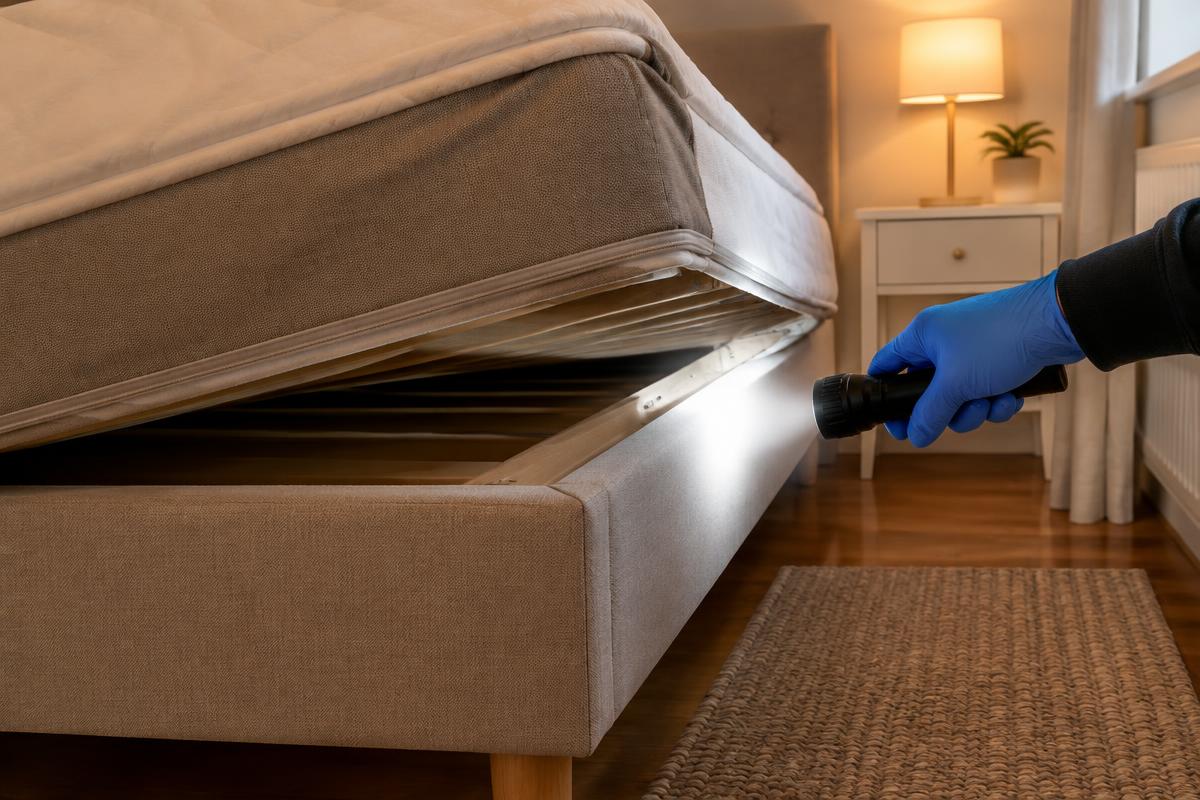
Bed bugs spend much of their time concealed in narrow spaces, often close to where people sleep or rest. Mattress seams, bed joints, headboards and nearby furniture can all provide shelter. Depending on the property and the extent of activity, hiding places may also extend beyond the bed itself. A DIY approach usually concentrates on accessible surfaces rather than the full range of possible harbourages.
Across Northamptonshire, the practical challenges vary between modern apartments, family housing, logistics accommodation and shared rentals. A treatment that appears manageable in one bedroom may become complicated when several people occupy adjoining rooms or regularly change sleeping spaces. Successful control depends on understanding where activity may be present, selecting an appropriate treatment and preparing the agreed area properly, rather than simply repeating products whenever another insect appears.
The problem with treating bites rather than confirming activity
Skin marks are often the first reason someone suspects bed bugs, but bites alone cannot confirm the cause. People react differently, and similar marks can have other explanations. Starting repeated DIY treatments without checking the evidence can waste time and money. It can also make the situation harder to assess if furniture has been moved, bedding discarded or several products applied before anyone examines the room.
Useful signs include live insects, shed skins and small dark spotting around sleeping areas. None should be interpreted carelessly, particularly when marks are old or the insect is unclear. A clear photograph or a safely contained specimen can help a professional assess what you have found. There is no need to dismantle the whole room or carry suspect items through the property to collect evidence.
A short record of where and when signs appeared is often more useful than a long list of products tried. Note whether anyone has recently moved bedrooms, brought in second-hand furniture or returned with luggage. These details do not prove how bed bugs arrived, and they are not grounds for blame. They help establish which spaces need attention and reduce the risk of planning around an incomplete picture.
- Photograph suspected insects clearly where possible.
- Record the rooms and furniture where signs were found.
- Note when activity was first noticed.
- List any sprays, powders or other treatments already used.
- Describe recent changes in sleeping arrangements.
- Avoid moving suspect items into unaffected rooms.
Why shop-bought sprays may not solve the whole infestation
A shop-bought insecticide may kill bed bugs that receive a sufficient exposure, but that is not the same as eliminating an infestation. Hidden insects may remain untouched behind furniture joints or in other inaccessible spaces. Eggs can also escape effective treatment. When those gaps remain, a temporary reduction in sightings may be followed by renewed activity, leaving the impression that the bed bugs have suddenly returned.
Some bed bug populations have resistance to certain insecticides, which can further reduce the effectiveness of particular products. However, resistance is not the only reason a spray fails. Incomplete coverage, an unsuitable product or incorrect use can also be responsible. Applying more product does not automatically improve the outcome and may increase exposure risks for people and pets without reaching the insects that were missed.
Always follow the product label, including restrictions on where it can be applied, and never mix products or use outdoor pesticides indoors. Do not spray bedding or other contact surfaces unless the label specifically permits that use. If you have already treated the property, tell the professional team what you used and where. That information helps them plan safely and understand the conditions they will encounter.
Why washing, vacuuming and home steamers have limits
Laundering suitable fabrics can form part of a control plan, provided the process is appropriate for the items and they are handled without spreading insects. However, clean bedding does not mean a bed frame, bedside cabinet or surrounding room is clear. Returning treated fabrics to an affected space without a wider plan can allow them to become exposed again, particularly when storage and handling are not controlled.
Vacuuming can remove some visible insects and debris, but suction will not reliably reach every sheltered insect or attached egg. Emptying or handling the vacuum carelessly can also undo some of the benefit. Steam can kill bed bugs where adequate heat reaches them, yet results depend on equipment, technique and the material being treated. A brief pass over a surface should not be mistaken for treating everything beneath it.
The important distinction is between reducing activity and eliminating the infestation. These methods may have a useful supporting role, but relying on them alone can lead to a cycle of cleaning, temporary reassurance and further sightings. Professional advice helps identify which actions are worthwhile before treatment and which may add work, damage belongings or move the problem elsewhere without improving the likelihood of control.
How moving bedrooms and furniture can spread activity
Sleeping in another room can feel like the most sensible response when your bed seems affected. Unfortunately, changing sleeping locations may encourage activity in additional areas, and moving bedding or belongings can carry insects with you. A sofa used as a temporary bed may then need assessment alongside the original bedroom. Seek advice before changing arrangements, particularly if several people share the property.
Throwing out a mattress is another common reaction that may not resolve the problem. Bed bugs can remain in the bed frame, headboard or surrounding furniture, ready to use a replacement bed. Carrying an uncontained mattress along a hallway or down communal stairs can also create opportunities for spread. Disposal should be planned where necessary, rather than treated as an automatic first step.
This matters in Northamptonshire shared rentals and accommodation with changing occupants, where room use may shift without a clear record. Tell the treatment team about recent moves between bedrooms, furniture swaps and nights spent sleeping in living areas. Accurate information allows discussion of additional spaces before the treatment scope is agreed, rather than discovering later that a relevant room was left outside the plan.
Why improvised heating is not professional heat treatment
Turning up the central heating or using portable domestic heaters is not an effective substitute for a professional bed bug heat treatment. Air near a heater may feel very hot while sheltered areas remain much cooler. Bed frames, furniture and room contents affect how heat moves through a space. A warm room therefore does not establish that hidden insects and eggs have received an effective exposure.
Improvised heating also presents safety risks, including fire, overloaded electrical circuits and damage to belongings. Ovens, open flames and makeshift heating arrangements should never be used to heat a room for pest control. Trying to retain heat by blocking ventilation or altering appliances can introduce further hazards. The challenge is not simply producing heat, but delivering it in a controlled way within a properly assessed treatment area.
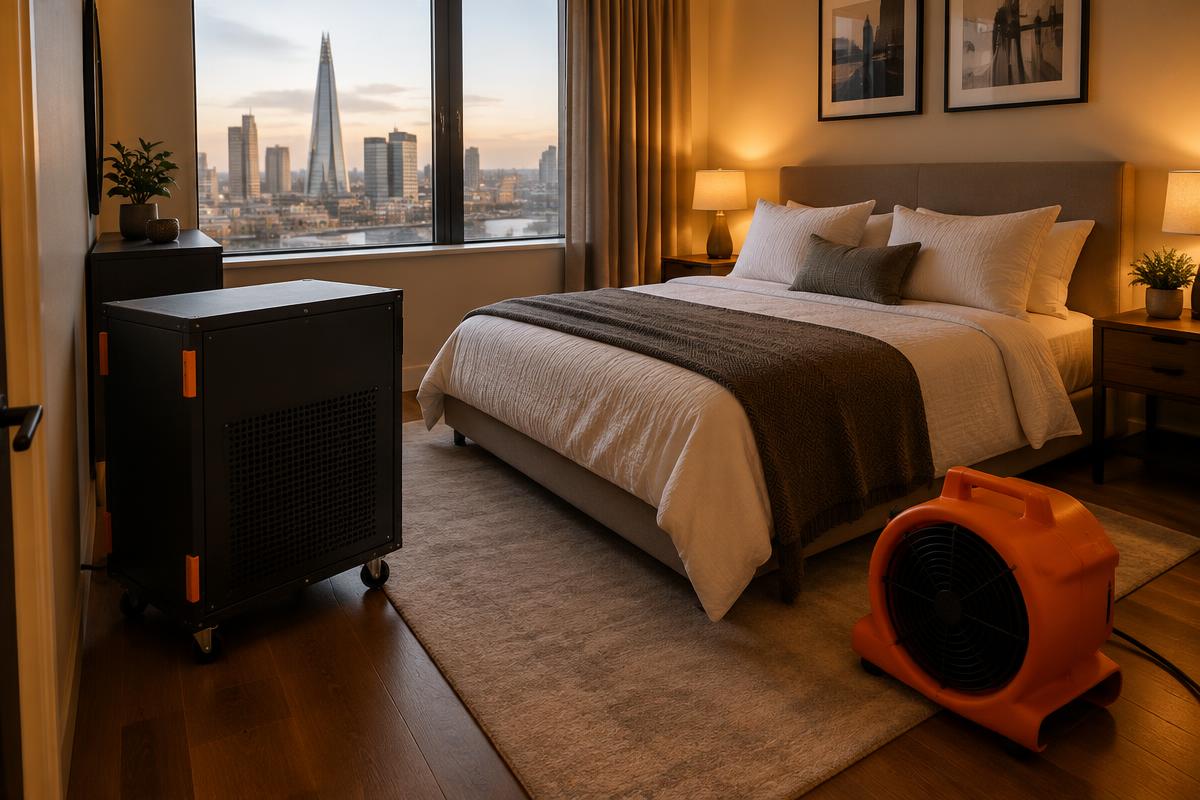
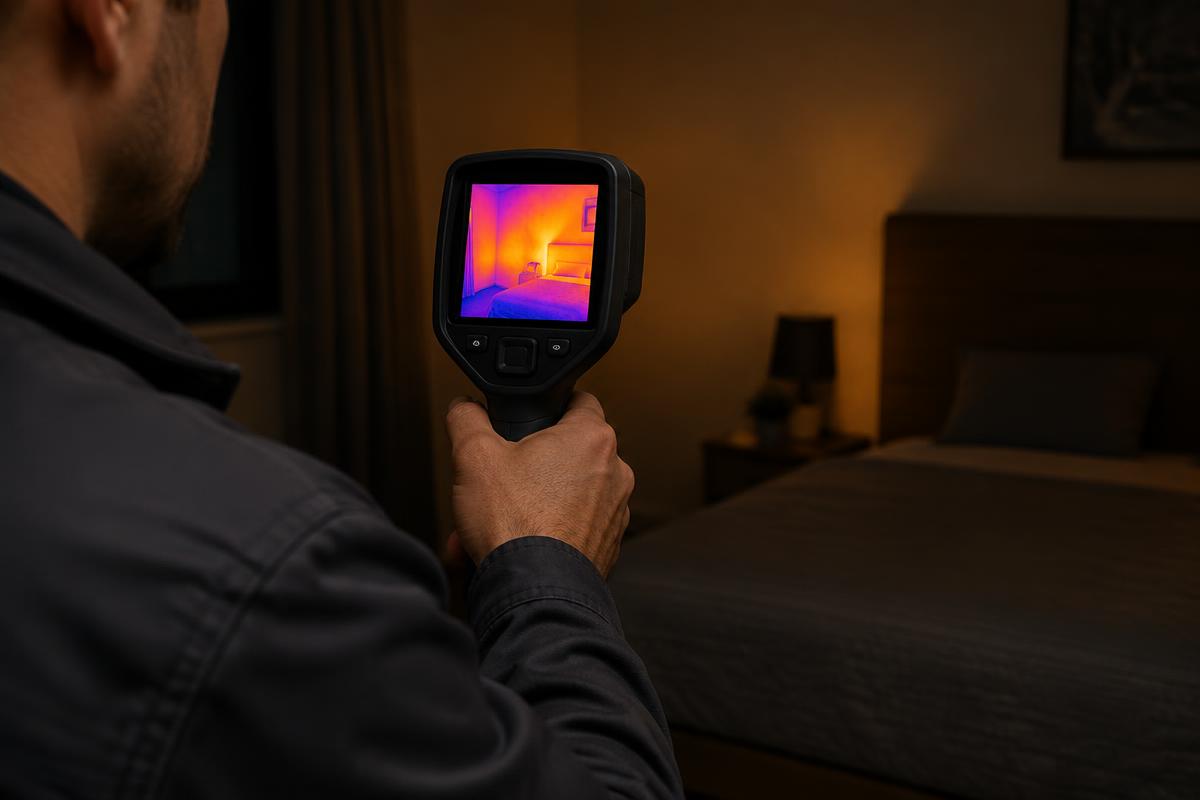
Bed Bug Heat Solutions UK uses controlled industrial heat of 60–65 degrees C across the whole treatment area. The heating period is usually 3–6 hours, although the overall visit includes other work and should not be confused with heating time alone. Monitoring uses active live thermal imaging cameras only. Careful preparation, equipment positioning and management of heat distribution distinguish this process from attempts to warm a room with household equipment.
Planning treatment for different Northamptonshire properties
Northamptonshire's growing towns include properties with very different layouts and access arrangements. A modern apartment may involve shared entrances, lifts and building-management requirements, while a family house may have several bedrooms and substantial furniture. Logistics accommodation and shared rentals can have more complex occupancy patterns. These differences affect planning, even when the visible signs initially appear to be limited to a single bed.
When requesting an assessment, provide room sizes, floor levels and details of any recent moves between bedrooms. Explain whether access involves stairs, a lift, restricted parking or a long route from the entrance. This helps us assess equipment requirements and whether additional spaces need discussion. It also gives a more useful starting point than describing the property simply as a one-bedroom flat or a three-bedroom house.
In shared or rented accommodation, identify who can authorise access and coordinate preparation. A tenant, landlord, managing agent or accommodation manager may need to be involved, depending on the circumstances. Do not assume every adjoining property needs treatment, but do not ignore activity reported beyond your own room either. The appropriate scope should follow the available evidence and property assessment, with any access limitations made clear before work is arranged.
- Provide approximate dimensions for each relevant room.
- State the floor level and available stair or lift access.
- Explain parking and equipment access restrictions.
- Describe recent moves between bedrooms or sleeping areas.
- Identify rooms with sightings or other suspected signs.
- Explain shared access and current occupancy arrangements.
- Confirm who will coordinate preparation and authorise access.
Preparation matters as much as choosing the treatment
Even professional treatment needs cooperation from the people using the property. Crowded rooms, tightly packed storage and items moved outside the agreed area can complicate the process. Preparation should follow instructions specific to the treatment, not a generic online checklist. Ask before emptying wardrobes, dismantling furniture or moving bags into other rooms, because well-intended actions can alter the treatment conditions or spread activity.
Heat-sensitive belongings require particular attention. Tell the team about medicines, aerosols, batteries, delicate materials and any items whose storage or care instructions restrict heat exposure. People, pets and plants must be managed according to the preparation and safety instructions. Do not simply remove every questionable item into an untreated bedroom; discuss how it should be checked, contained or handled so that the treatment plan remains coherent.
Good preparation also includes practical arrangements for access and absence from the treatment area. Let the team know about mobility needs, building rules or other constraints early enough for them to be discussed. Return should follow the team's instructions rather than an assumed finish time. The usual heating period is a guide to one part of the process, not a promise that the property will be ready for reoccupation at a particular hour.
- Follow the preparation instructions supplied for your property.
- Raise concerns about heat-sensitive belongings before treatment.
- Discuss safe arrangements for people, pets and plants.
- Avoid transferring untreated belongings to other rooms.
- Keep agreed access routes available for the treatment team.
- Confirm how and when re-entry instructions will be provided.
Why reassurance after treatment needs evidence and aftercare
One reason DIY attempts continue for so long is that success is judged too quickly. A few quiet nights can seem conclusive, while a later skin mark can trigger another round of spraying. Neither observation alone gives a complete picture. Bed bug activity should be assessed using the overall evidence, including identifiable insects and where they are found, rather than relying entirely on how someone's skin reacts.
After professional treatment, follow the aftercare guidance and report suspected ongoing activity with clear details. Avoid applying additional products without discussing them first, because unnecessary treatment can complicate assessment and create avoidable exposure. Keep photographs and note the location of anything concerning. Maintaining a consistent record makes it easier to distinguish a new finding from old marks or material that was already present.
Bed Bug Heat Solutions UK offers a six-month guarantee on qualifying treatments. Eligibility and the applicable terms should be confirmed when the treatment is arranged, including any preparation and aftercare requirements. A guarantee does not mean a property cannot encounter bed bugs again through newly introduced belongings or travel. It provides a defined framework for support, rather than replacing sensible precautions or an accurate understanding of the agreed treatment scope.
Choosing a professional approach instead of repeating DIY
If bed bug signs continue after repeated cleaning or product use, the next useful step is usually reassessment rather than another version of the same attempt. Consider what has actually been reached, which rooms have been used for sleeping and whether belongings have moved. A professional approach brings those details together into a plan, reducing the risk that treatment focuses on the most obvious bed while overlooking relevant areas.
Bed Bug Heat Solutions UK serves England and Wales, including Northamptonshire, with over 40 years of hands-on pest-control experience. We are fully insured and RSPH Level 2 certificated. Our primary treatment uses controlled industrial heat rather than harmful chemicals. We explain preparation requirements and assess the proposed treatment area so that customers understand what is involved before making arrangements.
When you enquire, describe the evidence you have found, the rooms involved and any DIY treatments already attempted. Include room sizes, floor levels, access details and recent changes in sleeping arrangements. These practical facts help us discuss an appropriate next step without guessing at the scope. The aim is not to blame earlier attempts, but to replace incomplete treatment with a carefully planned response to the activity in your property.
Useful next steps
Frequently asked questions
Six-month guarantee
Qualifying treatments are covered for six months. Send your details for a free assessment.
More from the blog
How Long Does Bed Bug Heat Treatment Take?
Read the full guide: How Long Does Bed Bug Heat Treatment Take?