Northamptonshire
Bed Bug Heat Treatment in Northamptonshire: What to Expect on Treatment Day
A practical guide to preparing for bed bug heat treatment in Northamptonshire, with clear advice on access, the heating period, returning home and aftercare.
20 November 20269 min read
40 years
In the trade
Four decades of hands-on bed bug experience
Fully insured
Every treatment
Comprehensive liability cover on all work
RSPH Level 2
Certificated
Royal Society for Public Health qualified
Key points
- Share room sizes, floor levels and recent bedroom moves before treatment.
- Allow for preparation, heating, cooling and a safe return.
- Active live thermal imaging cameras support treatment monitoring.
- Ask about aftercare and the six-month guarantee on qualifying treatments.
1. Treatment day starts with a clear plan
Knowing what will happen on treatment day makes it easier to prepare your home and organise time away. Bed bug heat treatment involves more than bringing heaters into a bedroom. The team needs to confirm the agreed treatment area, assess access, check preparation and explain how the property will be managed while work takes place.
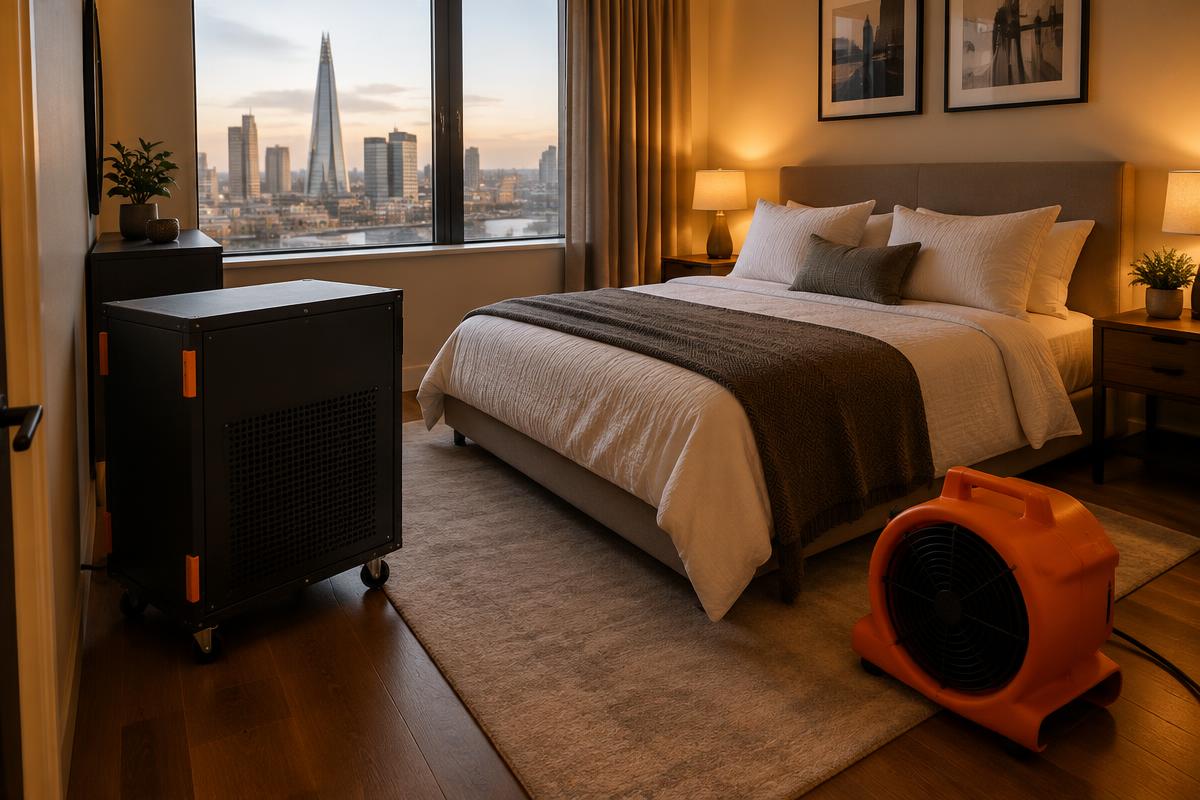
Bed Bug Heat Solutions UK uses controlled industrial heat of 60–65°C across the whole treatment area. The heating period is usually three to six hours, but this is not a promise about the total appointment length. Equipment setup, final preparation, checks and cooling also need to be allowed for when planning your day.
In Northamptonshire, treatment arrangements can differ between modern apartments, family houses, logistics accommodation and shared rentals. A room in an occupied shared property presents different practical questions from an entire family home. The plan should reflect the layout, the people using the building and the spaces that have been agreed for treatment.
Before the visit, make sure you understand which rooms are included, what you must prepare and who will authorise access. Ask questions early rather than making assumptions on the morning. Clear communication helps prevent avoidable interruptions and gives everyone involved a realistic understanding of the work ahead.
2. Share property details before the team arrives
Room sizes and floor levels help the team assess equipment requirements and the practicalities of bringing equipment into the property. Give approximate dimensions if exact measurements are unavailable. Explain whether the affected rooms are upstairs, in a loft conversion or reached through narrow corridors, and mention any restrictions on using lifts or communal entrances.
Access information matters in Northamptonshire apartments and growing residential developments, where parking may be allocated and entry may depend on a resident or building manager. Tell the team about entry codes, loading restrictions and the route from the unloading point to your door. Do not assume that equipment can be left in a shared hallway.
Give details of any recent moves between bedrooms, including changes to sleeping arrangements after bites or sightings began. Moving to another room does not reliably contain bed bugs, and belongings can carry them between spaces. This information helps the team decide whether additional rooms or connected areas need discussion before treatment begins.
In logistics accommodation or shared rentals, explain which rooms are occupied and whether residents have exchanged bedding, bags or furniture. There is no need to guess where the infestation started. A straightforward account of room use and recent movements is more useful for planning than trying to identify one particular source.
- Approximate room sizes and the number of rooms requiring assessment.
- Floor levels, stairs, lift availability and narrow access points.
- Parking, unloading arrangements and communal entry requirements.
- Recent moves between bedrooms or changes to sleeping arrangements.
- Movement of bedding, luggage or furniture between rooms.
- Details of residents, pets and shared spaces.
3. Prepare belongings without spreading the problem
Follow the preparation instructions supplied for your treatment rather than using a general online checklist as a substitute. What needs to remain in place, be opened up or be removed depends on the property and its contents. If an instruction is unclear, check before moving items out of the agreed treatment area.
Avoid carrying loose bedding, clothing or bags into unaffected rooms simply to make the bedroom look tidy. That can move bed bugs with the belongings. Where items need to be transported, ask how they should be contained and handled. Do not take potentially infested possessions to another household while waiting for treatment.
Tell the team about medicines, aerosols, batteries, delicate electronics and anything with a stated storage-temperature limit. Heat-sensitive materials and valuable or irreplaceable belongings also need discussion. The aim is not to remove everything, but to identify items that require specific handling without creating an untreated route back into the property.
Do not dispose of mattresses or dismantle furniture unless advised. Equally, do not add last-minute sprays, powders or other pest-control products without telling the team. Share details of anything already applied, including the product name if available. Accurate information helps the team assess preparation and manage the treatment area appropriately.
- Read the supplied preparation instructions before treatment day.
- Ask before moving belongings into other rooms.
- Identify medicines and items with storage-temperature limits.
- Flag aerosols, batteries and delicate or valuable belongings.
- Explain which pest-control products have already been used.
- Check before discarding mattresses or dismantling furniture.
4. Arrange time away for residents and pets
Plan for residents and pets to remain outside the treatment area while work is underway and until the team confirms that return is safe. Do not base your arrangements solely on the usual three-to-six-hour heating period. The time needed before and after heating can vary, so leave flexibility in your plans.
Children, older residents and anyone with health or mobility needs may require additional arrangements. Consider how they will leave the property, where they can wait comfortably and how they will return. Explain relevant access needs in advance so that the team can discuss the practical implications rather than discovering them during equipment setup.
Pets need their own plan, including animals kept in tanks, cages or specialist enclosures. Ask for guidance before moving them or their equipment. Do not assume that placing an animal in another room will be suitable, especially when that room is within the agreed treatment area or needed for access.
Take only the essentials you need for your time away, following the advice provided about clothing and bags. Bringing untreated luggage to a friend's home, workplace or temporary accommodation can create another problem. In shared housing, ensure every affected resident understands the same departure and return arrangements rather than relying on messages being passed informally.
5. Expect an arrival check and a review of the rooms
On arrival, the team will need access to the agreed spaces and an opportunity to review the property before heating begins. This is the time to mention any new sightings, changed sleeping arrangements or preparation difficulties. Information that seems minor, such as a suitcase recently moved into a spare room, can be relevant.
The review helps establish whether the planned treatment area still matches the circumstances described during booking. Bed bugs can hide around beds, furniture and nearby gaps, so the discussion should not be limited to the place where bites were first noticed. Additional spaces may need assessment, but that does not mean every room automatically requires treatment.
The team will also need to consider equipment positioning, usable routes through the property and the practical requirements of the setup. Keep agreed access routes clear and explain any building restrictions. In apartments, communal areas must remain managed appropriately, and any necessary arrangements with a landlord or building manager should already be understood.
If the scope needs to change, ask for a clear explanation before additional work is agreed. You should understand what is being treated and any limitations that affect the plan. A careful arrival review is part of responsible preparation, not a reason to make assumptions about a guaranteed finish time.
6. Understand how the controlled heating period works
Once preparation and setup are complete, industrial heating equipment is used to establish controlled heat of 60–65°C across the whole treatment area. The aim is to treat the agreed space thoroughly, including places where bed bugs may be concealed. This is a professional process, not something to reproduce with household heaters.
The heating period is usually three to six hours. Room layout, the amount and type of contents, and the way heat moves through the space can influence the work. A compact room filled with stored possessions may present different challenges from a larger, more open bedroom, so floor area alone does not describe the job.
Effective treatment requires attention to the whole agreed area rather than a brief burst of hot air around the bed. Furniture, dense belongings and sheltered spaces affect heat distribution. The team manages the process and may need to adjust the arrangement of equipment or accessible contents as part of that work.
No harmful chemicals are used as the primary treatment. However, that does not mean the treatment area is suitable for occupancy while heating is underway. High heat and working equipment require controlled access. Do not enter to retrieve an item or alter doors and windows unless the team has specifically authorised it.
7. Monitoring uses active live thermal imaging cameras
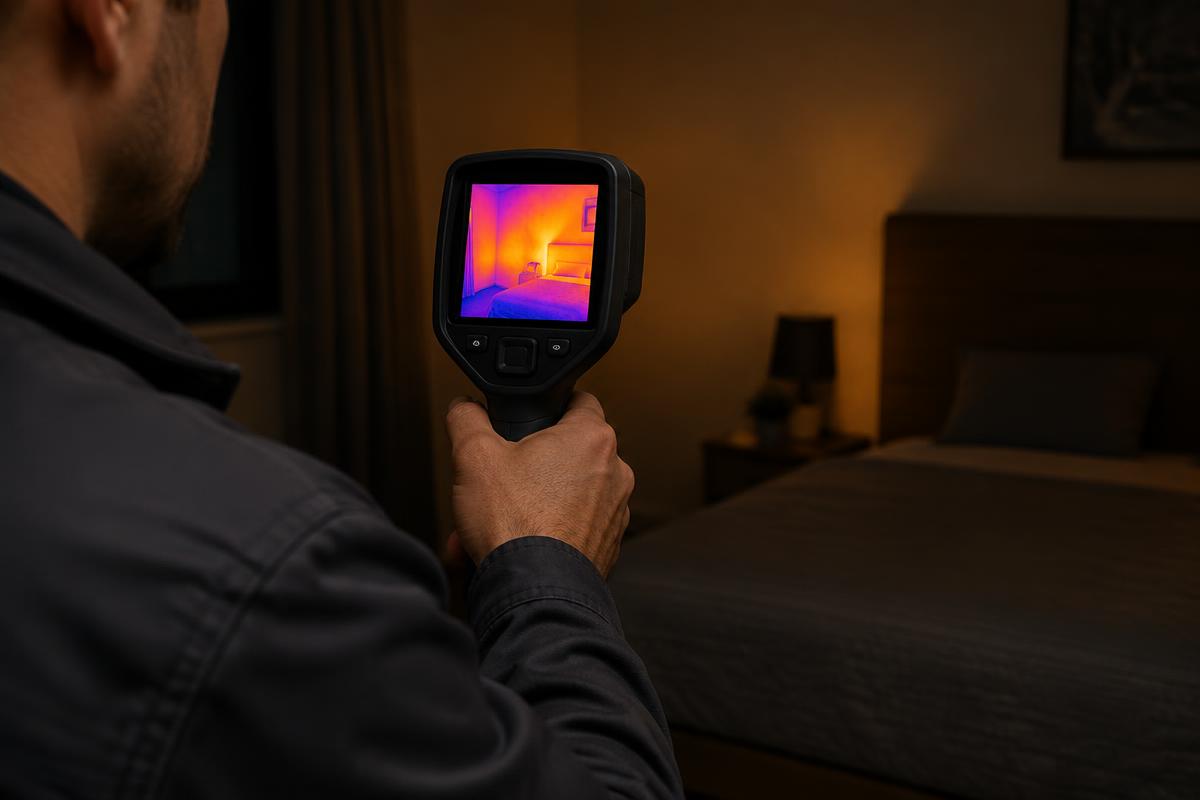
Treatment monitoring uses active live thermal imaging cameras only. These provide live thermal views of visible surfaces within the treatment area, helping the team assess heat distribution as the work progresses. Monitoring is part of the managed process, rather than a single check made when the equipment is first switched on.
Thermal imaging helps identify differences in surface temperatures that may need closer attention. It does not see through walls or reveal the inside of every object. Interpreting the images therefore requires an understanding of the room, its contents and the limits of what is visible from a particular position.
For householders, the practical point is that treatment is actively overseen rather than simply left to run for a set number of hours. The usual heating period provides a planning guide, but the process still needs professional attention. Avoid treating the elapsed time alone as evidence that the work must be finished.
You can ask the team to explain the monitoring approach before you leave. There is no need to remain nearby to watch the process, and access restrictions still apply while it is underway. Agree how you will stay contactable if the team needs to discuss a property issue or clarify information.
8. Returning home and receiving the handover
Wait for explicit confirmation that you can return to the treatment area. Heating finishing and a room being ready for normal occupancy are not necessarily the same moment. Cooling and final checks form part of the day's arrangements, and you should follow the team's directions rather than deciding that the space feels comfortable enough.
At handover, ask what was treated, whether anything affected the agreed scope and what you need to do next. If there were preparation limitations or items that needed separate handling, make sure those points are clear. A useful handover should leave you with practical instructions rather than uncertainty about unfinished tasks.
Follow the advice given about ventilation, cleaning and returning belongings to their usual places. Do not bring untreated possessions back into the property without considering how they were handled during your absence. Items removed before treatment can matter just as much as the furniture and bedding that remained within the heated area.
Before the team leaves, confirm how to raise a concern and where to find the aftercare and guarantee terms. If you rent, decide who will pass relevant information to the landlord or managing agent. In a shared property, each resident needs the instructions that apply to their room and belongings.
- Wait for confirmation before entering the treatment area.
- Check which rooms and spaces were treated.
- Ask about any limitations or separately handled items.
- Follow the supplied ventilation and cleaning advice.
- Confirm how removed belongings should be returned.
- Keep the aftercare guidance and applicable guarantee terms.
9. Aftercare, observations and the treatment guarantee
Aftercare begins with following the instructions supplied for your property. Avoid immediately changing bedrooms or moving belongings between homes if you are worried about a mark or sensation. Instead, record what you have noticed and contact the company for advice. Unplanned movements can make it harder to understand and manage any continuing concern.
Skin reactions alone cannot confirm whether bed bugs remain active. Reactions vary, and marks may have other causes. If you find a suspected insect, a clear photograph and a note of where and when it was found can help the discussion. Do not conclude that treatment has failed solely because a skin mark appears.
Bed Bug Heat Solutions UK offers a six-month guarantee on qualifying treatments. Eligibility and the applicable terms should be explained for your booking, rather than assumed to cover every situation. Ask what responsibilities apply to preparation and aftercare, how concerns should be reported and how a possible new introduction would be considered.
Heat treatment does not create a permanent barrier against bed bugs arriving again on luggage, furniture or other belongings. Continue to take sensible care with items brought into the property, particularly after travel or a move. In shared accommodation, coordinated reporting and clear communication remain important even after the treatment day is complete.
10. Planning your Northamptonshire treatment with confidence
A well-organised treatment day depends on accurate information and realistic expectations. For a Northamptonshire family house, that may mean explaining how bedrooms have been used and arranging care for children and pets. For a modern apartment, access permissions, floor levels and the route for equipment may need particular attention before the visit.
Shared rentals and logistics accommodation require coordination between the people who occupy, manage and authorise work in the building. Be clear about who can approve access to each space and who will communicate with residents. Treating one room should not be assumed to resolve concerns elsewhere without discussing the wider circumstances.
Bed Bug Heat Solutions UK serves England and Wales, including Northamptonshire, with over 40 years of hands-on pest-control experience. The company is fully insured and RSPH Level 2 certificated. Its primary treatment uses controlled industrial heat, with active live thermal imaging cameras only for monitoring throughout the treatment process.
When making an enquiry, provide room sizes, floor levels, access details and any recent moves between bedrooms. Ask for the preparation requirements, the proposed treatment scope and the guarantee terms that apply. That gives you a sound basis for planning the day, arranging time away and understanding what happens when you return.
Useful next steps
Frequently asked questions
Six-month guarantee
Qualifying treatments are covered for six months. Send your details for a free assessment.
More from the blog
How Long Does Bed Bug Heat Treatment Take?
Read the full guide: How Long Does Bed Bug Heat Treatment Take?