Oxfordshire
Bed Bug Heat Treatment in Oxfordshire: What to Expect on Treatment Day
A practical guide to bed bug heat treatment day in Oxfordshire, covering preparation, equipment access, the heating period and returning to your property.
2 October 20269 min read
40 years
In the trade
Four decades of hands-on bed bug experience
Fully insured
Every treatment
Comprehensive liability cover on all work
RSPH Level 2
Certificated
Royal Society for Public Health qualified
Key points
- Preparation and access arrangements are agreed before treatment day.
- Controlled industrial heat treats the whole agreed area at 60–65°C.
- The heating period usually lasts 3–6 hours, with active live thermal imaging cameras used for monitoring.
- Qualifying treatments include a six-month guarantee.
1. Understanding the plan for your Oxfordshire property
Treatment day should begin with a clear plan rather than a list of surprises. Before visiting, Bed Bug Heat Solutions UK considers the affected rooms, the layout of the property and how it is occupied. These details help establish the treatment area and the practical arrangements needed to carry out the work.
Oxfordshire enquiries commonly involve city flats, student lets, hotels and larger country properties. Each presents different questions. A flat may require access through shared corridors, while a country property may have a more complicated layout. The plan should reflect those differences rather than assume every building can be approached in the same way.
You will be asked about signs of bed bugs, where people sleep and whether belongings have moved between rooms or addresses. Explain what you have noticed without feeling you need to identify every hiding place. Previous treatments and any recently applied pest-control products are also useful information to share.
Make sure the agreed scope is understood before the visit. Whole-treatment-area heat means the full area included in the treatment plan, not automatically every space within a building. Where rooms, adjoining accommodation or shared spaces raise concerns, discuss them beforehand so the boundaries of the work are clear.
2. Coordinating arrival, parking and building access
Industrial heat-treatment equipment needs a workable route into the property. In Oxford and other Oxfordshire towns, the nearest parking space may not provide straightforward unloading access. Tell us about permit-only streets, loading restrictions and any distance between the available unloading point and the entrance before treatment day.
College accommodation and managed buildings can involve arrangements beyond simply collecting a key. There may be reception procedures, security checks, restricted entrances or requirements to notify a building manager. Establish who can authorise access and who will be available to resolve questions when equipment arrives at the property.
Fixed appointment windows also matter. If access is only possible during particular hours, or a caretaker needs to open a service entrance, explain this when planning the visit. Equipment arrival can then be coordinated properly, without relying on assumptions about access that may not hold on the day.
Mention stairs, lifts, narrow corridors and any obstacles along the route. These details are particularly relevant in upper-floor flats and older buildings with awkward entrances. Keep the agreed route available, but do not move potentially affected furniture into communal areas simply to create more space for equipment.
- Explain any permit-only parking or unloading restrictions.
- Confirm the entrance and route that the team should use.
- Arrange college, reception or managed-building permissions.
- Tell us about stairs, lift access and narrow passageways.
- Provide details of any fixed appointment windows.
- Identify the person responsible for keys and access.
3. Preparing rooms and belongings without spreading bed bugs
Preparation should follow the instructions issued for your treatment, not a generic online checklist. The team will explain what needs attention and which belongings require discussion. If an instruction is unclear, ask before making changes, particularly where an item might be damaged by heat or could carry bed bugs elsewhere.
Moving belongings is one of the most important issues to consider. Taking bedding, bags or furniture from an affected bedroom to an untreated room can complicate control. Avoid taking items to another household or storage location unless their handling has been agreed as part of the treatment plan.
Flag medicines, aerosols, pressurised containers, wax items, delicate artwork and other potentially heat-sensitive possessions in advance. This is not an exhaustive removal list, and not every item needs the same action. The right approach depends on the item, its location and whether removing it could also move bed bugs.
Do not assume that emptying every cupboard, stripping every room or throwing away the bed will improve treatment. Unnecessary disturbance can create extra work and spread affected belongings. Keep essential access clear and complete the specific preparation requested, leaving any uncertain decisions for a conversation with the team.
- Read the preparation instructions before treatment day.
- Ask about items that may be sensitive to heat.
- Avoid transferring belongings between affected and unaffected rooms.
- Do not leave potentially affected items in shared corridors.
- Agree how any belongings leaving the property will be handled.
- Tell the team if you cannot complete a preparation task.
4. Planning for residents, guests and pets
People and pets must remain outside the treatment area while heat treatment is carried out and until the team confirms that re-entry is permitted. Arrange somewhere suitable to spend the relevant period. Include children, anyone who needs additional support and animals whose care may require more planning.
Choose essential items for your time away carefully. Medication, keys and other necessities need to be accessible, but taking an unchecked bag from an affected bedroom can undermine sensible containment. Ask how to manage what you need to take, rather than packing a large selection of belongings at the last minute.
In student lets and shared homes, everyone needs the same instructions. One resident moving bedding into another room or returning during treatment can disrupt the agreed arrangements. Nominate a contact who can communicate with other occupants and make sure preparation and temporary absence have been understood across the household.
Hotels and other occupied accommodation need a coordinated approach to guest movements, housekeeping and access to the treatment area. Discuss these arrangements before the visit. The plan should keep untreated rooms and shared spaces in mind, particularly when linen, luggage or cleaning equipment normally moves between different parts of the building.
5. What happens when the treatment team arrives
On arrival, the team reviews the practical arrangements and checks the agreed treatment area. This is the opportunity to flag anything that has changed since the booking discussion. New sightings, a room that is no longer accessible or belongings moved during preparation can all be relevant to the work.
A walkthrough helps confirm whether the property is ready and whether any remaining concerns need attention before heating begins. Be available to answer questions about rooms and possessions. If preparation is incomplete, explain this openly so the team can assess what is needed rather than discover an issue partway through.
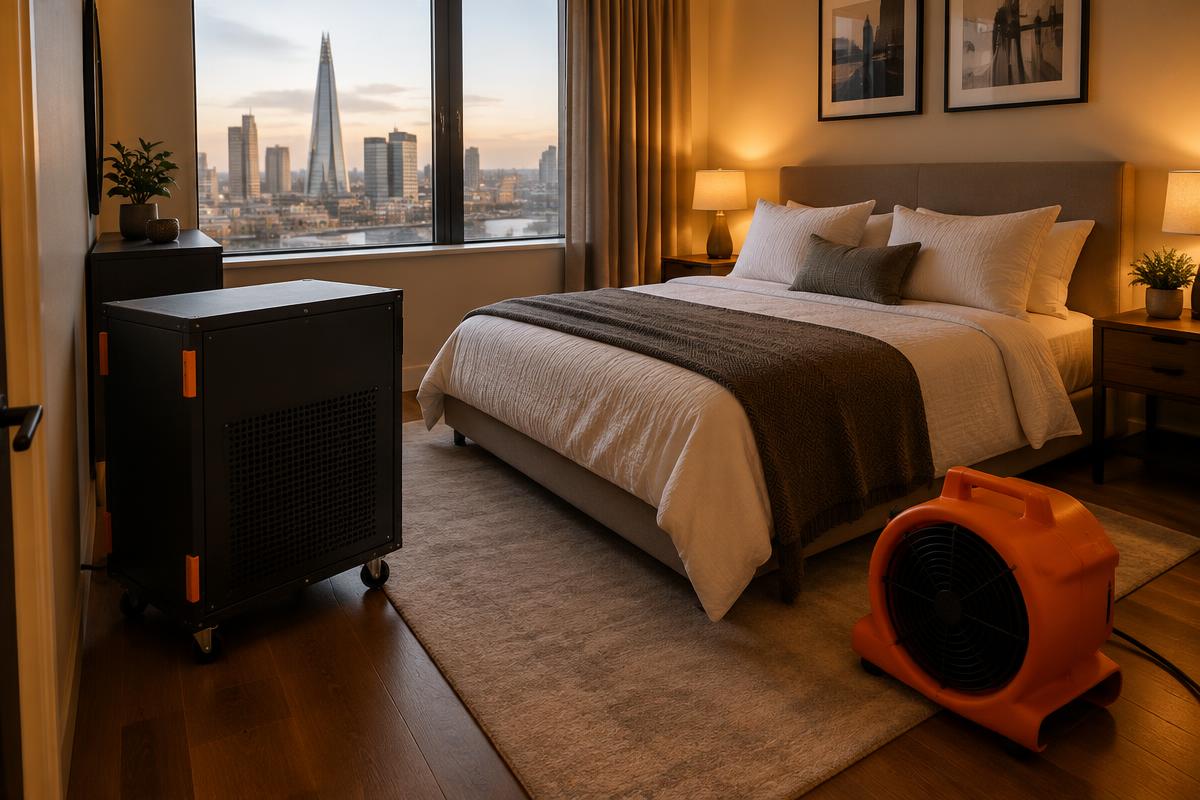
The team then positions equipment to suit the space and the treatment plan. Industrial heat treatment is not a matter of placing a domestic heater beside a bed. Equipment layout and air movement need to account for the rooms, furniture and access available across the whole agreed treatment area.
Before you leave, confirm how communication will work and how you will be told when return is permitted. The heating period usually lasts three to six hours, but setup, checks and cooling also need to be allowed for. Avoid treating that heating range as a guaranteed total appointment length.
6. How the controlled heating stage works
Bed Bug Heat Solutions UK uses controlled industrial heat of 60–65°C across the whole treatment area. The purpose is to expose bed bugs and their eggs to lethal heat within the agreed space. This is a professional process, with preparation and active management forming essential parts of the treatment.
The heating period usually takes three to six hours. Property layout, the contents of the treatment area and the conditions encountered all influence how the work is managed. Larger or more complicated spaces need careful planning, so a simple room count does not explain every difference between properties.
Furniture, stored possessions and the structure of a room affect how heat moves through a space. That is why preparation and equipment positioning matter. The team manages the process across the agreed area rather than concentrating only on the mattress or the particular spot where a bed bug was seen.
No harmful chemicals are used as the primary treatment. However, heat still requires clear safety precautions and professional control. Do not attempt to reproduce the process using domestic heaters, and do not enter the area to collect belongings or adjust equipment once treatment is under way.
7. Monitoring with active live thermal imaging cameras
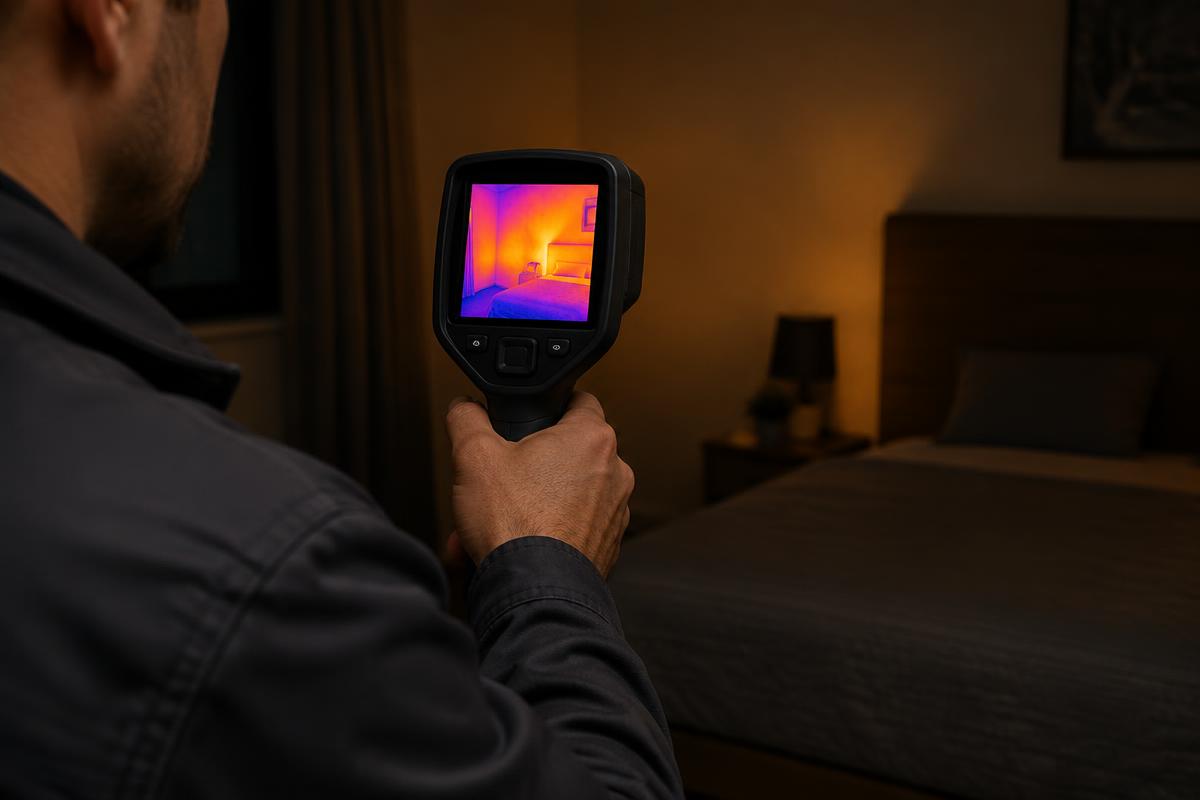
Monitoring during treatment uses active live thermal imaging cameras only. These provide a live view of surface heat patterns within the treatment area. The team uses that information as part of managing the heating process, checking how the space is responding as treatment progresses.
Thermal imaging is not a way to see bed bugs through furniture or walls. Its role here is to support heat management, not to produce an image of every insect or egg. Understanding that distinction helps explain why a camera view complements careful preparation rather than removing the need for it.
Different surfaces and room arrangements can produce different heat patterns. The team interprets the live images in the context of the property and adjusts the treatment process where needed. This is particularly relevant where furniture, room divisions or the layout make the space less straightforward to heat.
Residents do not need to remain inside to watch this stage. Keep the agreed contact method available in case a question needs your input, but let the team manage access and equipment. Any update about progress should be understood as information about the ongoing work, not permission to return.
8. Cooling down and returning safely
The end of the heating stage is not automatically the moment you can walk back into the property. Rooms and belongings can remain hot after active heating ends. The team will manage the transition out of treatment and explain when entry is permitted and whether any immediate precautions remain.
Wait for clear confirmation rather than relying on the clock or how the entrance feels. A hallway outside the treatment area may not reflect conditions inside treated rooms. Keep other residents, guests and pets informed so that nobody returns independently before the property has been released for re-entry.
On your return, follow the instructions given about the room environment and handling possessions. If an object still feels unusually hot or something concerns you, avoid handling it and ask for advice. Do not make assumptions about ventilation, appliance use or rearranging rooms where specific guidance has been provided.
Use the handover to clarify what you should do that evening and over the following days. Ask about any belongings held outside the treatment area, cleaning arrangements and what signs to report. Clear aftercare is more useful than rushing to put everything back without considering where it has been.
- Wait for explicit confirmation that re-entry is permitted.
- Share the return instructions with all occupants.
- Follow any guidance about ventilation and handling belongings.
- Check the agreed arrangements before bringing removed items back.
- Ask about cleaning and restoring the rooms to normal use.
- Keep the aftercare and guarantee information accessible.
9. Aftercare, observations and the six-month guarantee
After treatment, the aim is to resume normal use while following the advice specific to your property. Avoid immediately introducing unchecked belongings from untreated rooms, vehicles or storage areas. Items that were outside the agreed treatment area need to be considered separately rather than assumed to have benefited from the heat.
If you notice something that concerns you, record where and when it happened. A clear photograph of a suspected insect can be useful if it is safe and practical to take one. Contact the team for guidance rather than applying additional products or moving your sleeping arrangements without discussion.
Skin marks alone do not reliably establish whether live bed bugs remain. Reactions can vary, and other causes may produce similar marks. Equally, a suspected live insect should not be dismissed. Report what you can observe and allow the team to advise on the appropriate next step.
Bed Bug Heat Solutions UK provides a six-month guarantee on qualifying treatments. Ask whether your planned treatment qualifies and read the applicable terms, including any preparation or aftercare responsibilities. A guarantee should be understood alongside the agreed scope, not treated as an unconditional promise covering every future introduction of bed bugs.
10. Arranging a well-prepared treatment day in Oxfordshire
The most useful first conversation covers both the bed bug concern and the practical realities of the address. Tell us the property type, affected rooms and occupancy arrangements. Include any previous treatment and explain whether belongings have already been moved elsewhere, even if you are unsure whether that detail matters.
For an Oxford flat, parking and communal access may need particular attention. A student let may require coordination between residents and a managing agent. Hotels need clear arrangements for guests and housekeeping, while larger country properties benefit from an accurate description of the layout and the spaces requiring assessment.
Bed Bug Heat Solutions UK serves England and Wales, including Oxfordshire. The company brings over 40 years of hands-on pest-control experience, is fully insured and holds RSPH Level 2 certification. Treatment planning combines that experience with the access, preparation and occupancy information provided for each individual property.
When making an enquiry, mention permit-only streets, college or managed-building access and any fixed appointment windows at the outset. Those details help equipment arrival and treatment-day arrangements run properly. With the scope agreed, preparation understood and return instructions clear, you can approach the day knowing what is expected.
Useful next steps
Frequently asked questions
Six-month guarantee
Qualifying treatments are covered for six months. Send your details for a free assessment.
More from the blog
How Long Does Bed Bug Heat Treatment Take?
Read the full guide: How Long Does Bed Bug Heat Treatment Take?