Suffolk
Bed Bug Heat Treatment in Suffolk: Why DIY Treatments Usually Fail
Discover why DIY bed bug treatments often fall short in Suffolk properties, and what a carefully assessed professional heat treatment involves.
30 September 20269 min read
40 years
In the trade
Four decades of hands-on bed bug experience
Fully insured
Every treatment
Comprehensive liability cover on all work
RSPH Level 2
Certificated
Royal Society for Public Health qualified
Key points
- DIY products often miss hidden bugs and eggs.
- Treating one bed can leave adjoining spaces unchecked.
- Professional heat requires planned coverage and active monitoring.
- Preparation and follow-up help reduce avoidable setbacks.
Why bed bugs are difficult to tackle yourself
Finding suspected bed bugs often prompts an immediate trip for a spray, a new mattress cover or a steam cleaner. That reaction is understandable, particularly when sleep is being disrupted. The problem is that removing the insects you can see is not the same as addressing the infestation throughout the affected area.
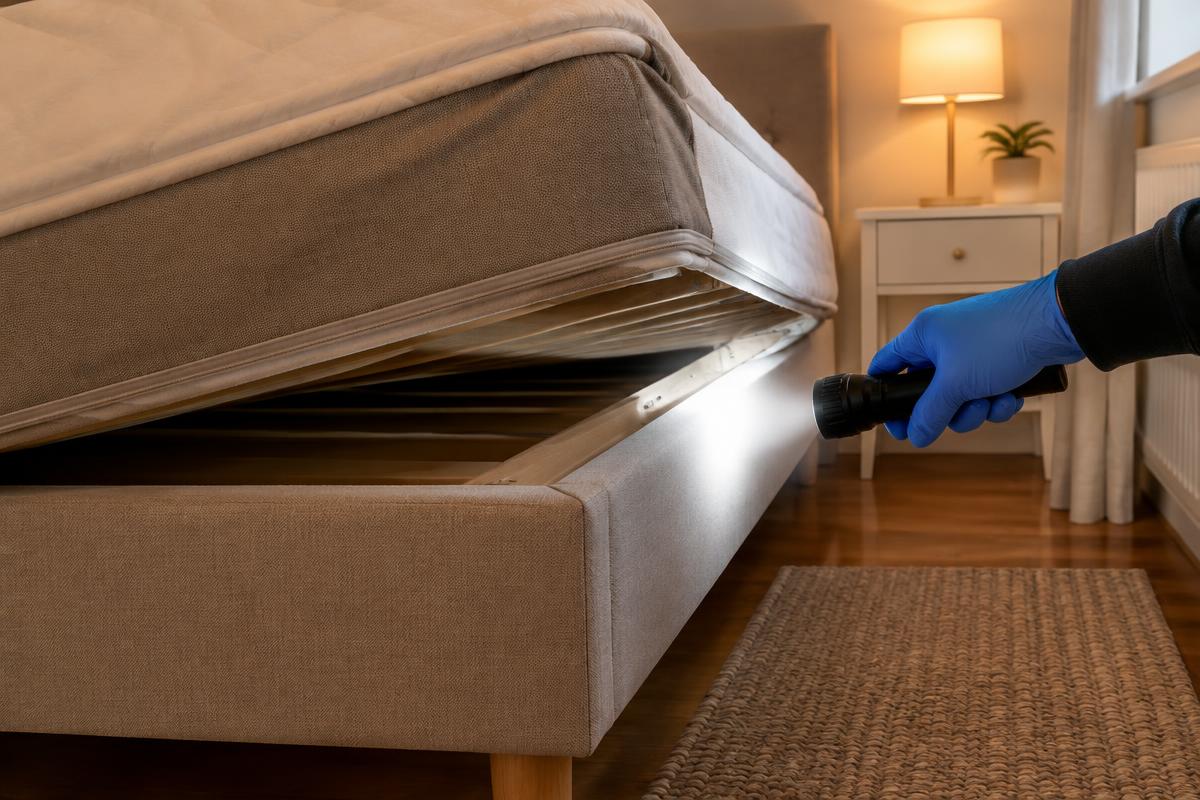
Bed bugs spend much of their time concealed in narrow spaces close to where people rest. Mattress seams are only one possible hiding place. Bed frames, upholstered furniture, skirting gaps and nearby belongings may also hold insects or eggs. A DIY approach can appear thorough while leaving important harbourages untouched.
Suffolk properties vary considerably, from compact urban homes to coastal holiday lets and larger rural houses. Each presents different questions about layout, room use and movement between sleeping areas. A treatment method chosen without understanding those details may focus effort in the wrong place or cover too little of the property.
DIY treatments usually fail because of gaps in identification, coverage, preparation or follow-through, rather than a lack of effort. Professional assessment brings these issues together. Before deciding how to treat a property, it is important to establish what evidence is present, where activity has been reported and which spaces need closer attention.
Guessing from bites can lead to the wrong treatment
Bites alone cannot reliably confirm bed bugs. Skin reactions differ between people, and other insects or skin conditions can produce similar marks. Treating a bedroom solely because someone wakes with itching may waste money and delay finding the actual cause. Equally, the absence of visible bites does not rule out activity.
Useful evidence can include a captured insect, shed skins, eggs or dark spotting around likely hiding places. However, household debris and marks on bedding are easily misread. Clear photographs and a securely contained specimen, where available, can support identification. Avoid crushing or discarding every suspected insect before seeking advice.
The history matters as much as a single photograph. Note when signs first appeared, which rooms are involved and whether furniture or luggage has recently entered the property. These details do not prove a source, but they help build a more useful picture than assumptions based on bites alone.
Repeatedly applying products without confirming the pest introduces another difficulty: later findings become harder to interpret. Dead insects, old marks and continuing skin irritation may tell different stories. A calm record of what was found and where provides a stronger starting point for assessment than a sequence of unplanned treatments.
- Photograph suspected insects and visible signs clearly.
- Record the room and exact location of each finding.
- Keep a suspected insect securely contained for identification.
- Note when activity was first noticed.
- Record any products already used and where they were applied.
Shop-bought sprays rarely reach every hiding place
A shop-bought spray may kill some bed bugs that receive an effective exposure, but that does not establish control across a room. Insects behind fittings or deep within furniture may avoid contact. Eggs can also be missed, allowing activity to continue after the visible adults have disappeared.
Some bed bug populations have resistance to certain insecticides, which can further reduce the usefulness of a product. Even without resistance, the correct product, application site and exposure all matter. Buying several different sprays does not automatically solve these problems, and mixing products can create avoidable risks.
Unplanned spraying may also disturb activity without resolving it. Bugs can remain in untreated spaces, while people understandably concentrate on the mattress or the most recent sighting. Applying more product to the same surface cannot compensate for failing to identify and address other relevant hiding places.
If a pesticide has already been used, tell the treatment provider its name, the application locations and when it was applied. Always follow the product label, and never use a product on bedding or furniture unless that use is permitted. Professional heat assessment should take previous treatments into account rather than ignore them.
Washing, vacuuming and replacing a mattress have limits
Laundering can be useful for suitable bedding and clothing when an appropriate process is followed. It does not, however, treat the room from which those items came. A freshly cleaned duvet returned to an affected bed frame remains in an environment where bed bugs may still be present.
Vacuuming can remove some accessible insects and debris, but it cannot reliably reach every crevice or remove every attached egg. Handling the collected material also requires care. These practical measures are best understood as supporting actions, not evidence that an infestation has been eliminated from the property.
Replacing the mattress is another common and costly response. Bed bugs are not restricted to mattresses, so a replacement can become affected if activity remains elsewhere. Moving an uncontained mattress through corridors or shared spaces may also spread insects. Ask for advice before deciding that disposal is necessary.
Protective encasements can make some inspections easier and may form part of a wider management plan, but they do not treat surrounding furniture. The same distinction applies to cleaning generally. A clean home can have bed bugs, and more intensive housekeeping alone cannot solve a pest problem hidden within its fixtures and contents.
Household heat is not the same as professional heat treatment
The idea that heat kills bed bugs is simple; delivering it effectively through a furnished treatment area is not. Household heaters may warm exposed air while leaving protected spaces inadequately heated. Dense contents, furniture construction and room layout affect how heat moves and how quickly concealed locations warm.
Portable heaters, hairdryers and other improvised heating methods should not be used to attempt a whole-room treatment. They can create fire, electrical and property-damage risks without achieving dependable control. A room feeling unusually hot is not proof that hidden bed bugs and eggs have received an effective treatment.
Steam has limitations too. Where suitable and correctly applied, it may help address accessible locations, but it is a localised method. Passing a steamer over visible seams does not establish that surrounding furniture, internal voids or adjoining spaces have been treated. Unsuitable surfaces may also suffer moisture or heat damage.
Bed Bug Heat Solutions UK uses controlled industrial heat of 60–65 degrees C across the whole treatment area. The heating period is usually 3–6 hours. This is a planned professional process, not a target for household equipment, and the heating period should not be mistaken for the total time needed for assessment, preparation and treatment arrangements.
Treating one bed can leave the wider problem untouched
DIY treatment often follows the latest sighting: a bug on one pillow leads to attention on that bed alone. Yet resting areas elsewhere may also need assessment. Sofas, spare bedrooms and rooms used at different times can be relevant, even where no one has reported a recent bite.
Moving to another bedroom is an understandable response to disturbed sleep, but it can complicate the picture. Bedding, bags and other possessions moved between rooms may carry insects with them. Seek advice before changing sleeping arrangements or transferring contents from a suspected affected room into an apparently unaffected one.
In flats, shared accommodation or other connected buildings, the assessment may need to consider adjoining spaces and involve the appropriate owner or manager. This does not mean every nearby room is infested. It means that the treatment boundary should be based on evidence and layout rather than convenience alone.
A professional whole-area approach still requires a clearly defined treatment area. The aim is not to heat an arbitrary room and assume everything beyond it is clear. Report all known findings at the outset, including occasional signs in less-used rooms, so that the proposed coverage can be assessed properly.
Why Suffolk homes and coastal lets need individual assessment
Compact urban properties can have closely arranged furniture and limited space for equipment. Larger rural homes may include substantial room volumes, multiple sleeping areas and varied contents. Coastal lets can have changing occupancy patterns. These differences influence assessment and planning, but none of them makes a property immune to bed bugs.
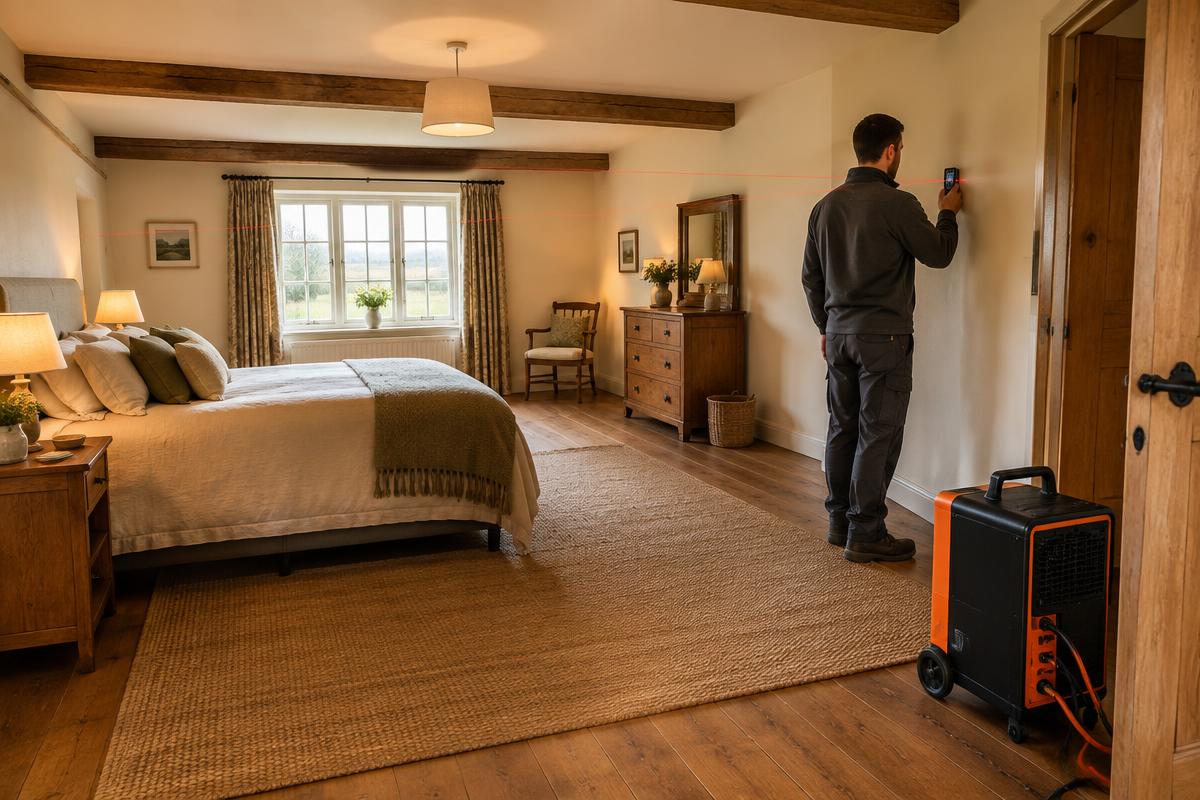
We assess room volumes, contents and access before choosing the equipment arrangement. Floor area alone does not describe the challenge: a sparsely furnished room and a densely packed bedroom can behave differently during heating. Access routes and the position of larger furnishings also affect how a treatment can be organised.
Where a Suffolk property is used for short stays, share the dates and rooms linked to reported activity. A clear occupancy timeline supports a more useful assessment of adjoining spaces. Reports should distinguish between a confirmed insect finding, other visible signs and an account of bites without supporting evidence.
For owners and managers, keeping the information together is more useful than treating each guest report as an isolated event. Include relevant cleaning observations, furniture movements and previous treatment attempts. Avoid assigning blame to a particular guest: bed bugs can be transported unknowingly, and speculation does not help establish an effective treatment plan.
- Provide the property layout and identify sleeping areas.
- Share the dates and rooms linked to reported activity.
- Distinguish confirmed findings from bite-only reports.
- Describe large furniture and densely stored contents.
- Explain access restrictions or shared entrances.
- List previous treatments and any recent furniture movements.
What controlled professional heat treatment involves
Professional heat treatment starts with understanding the property and agreeing the scope of work. This includes reviewing evidence, assessing relevant rooms and identifying contents that need particular care. A responsible provider explains the preparation requirements and limitations rather than presenting heat as a process that needs no planning.
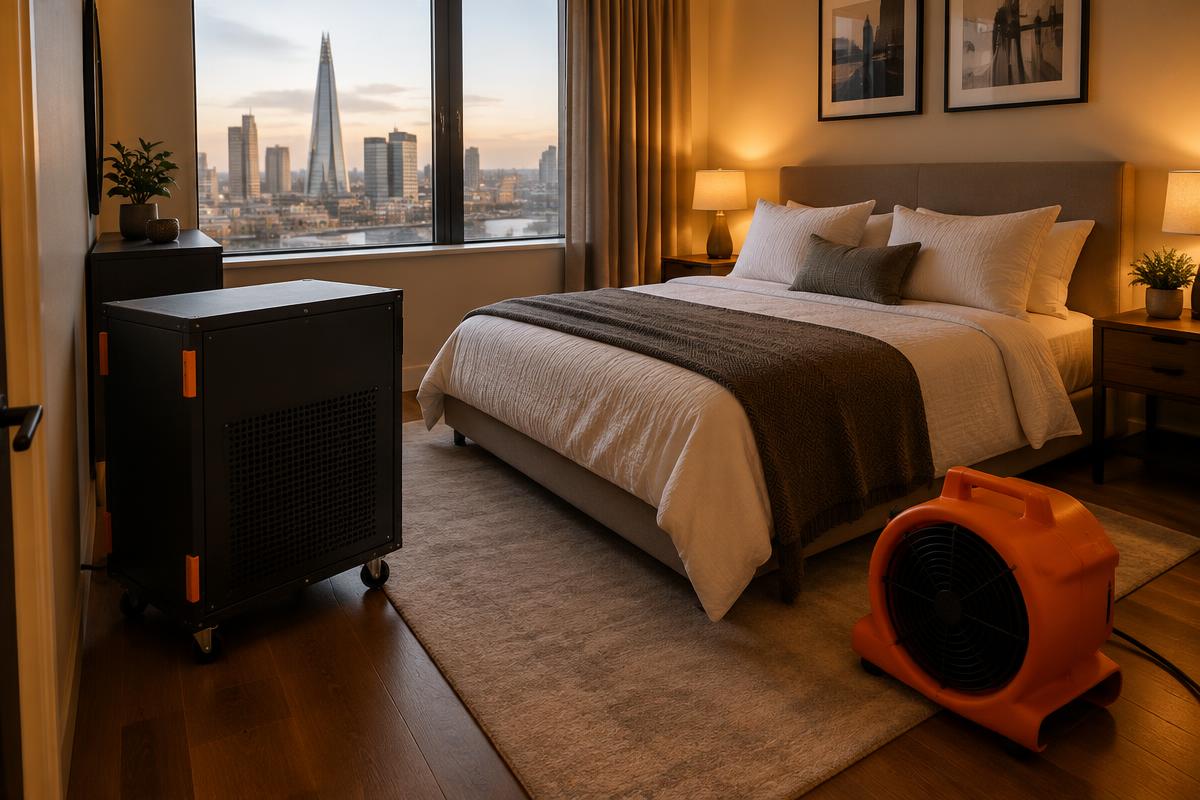
During treatment, we use controlled industrial heat of 60–65 degrees C across the whole treatment area, with a heating period usually lasting 3–6 hours. Equipment arrangement is selected for the assessed space. Effective treatment depends on managed heat distribution, not simply producing a high reading in one convenient location.
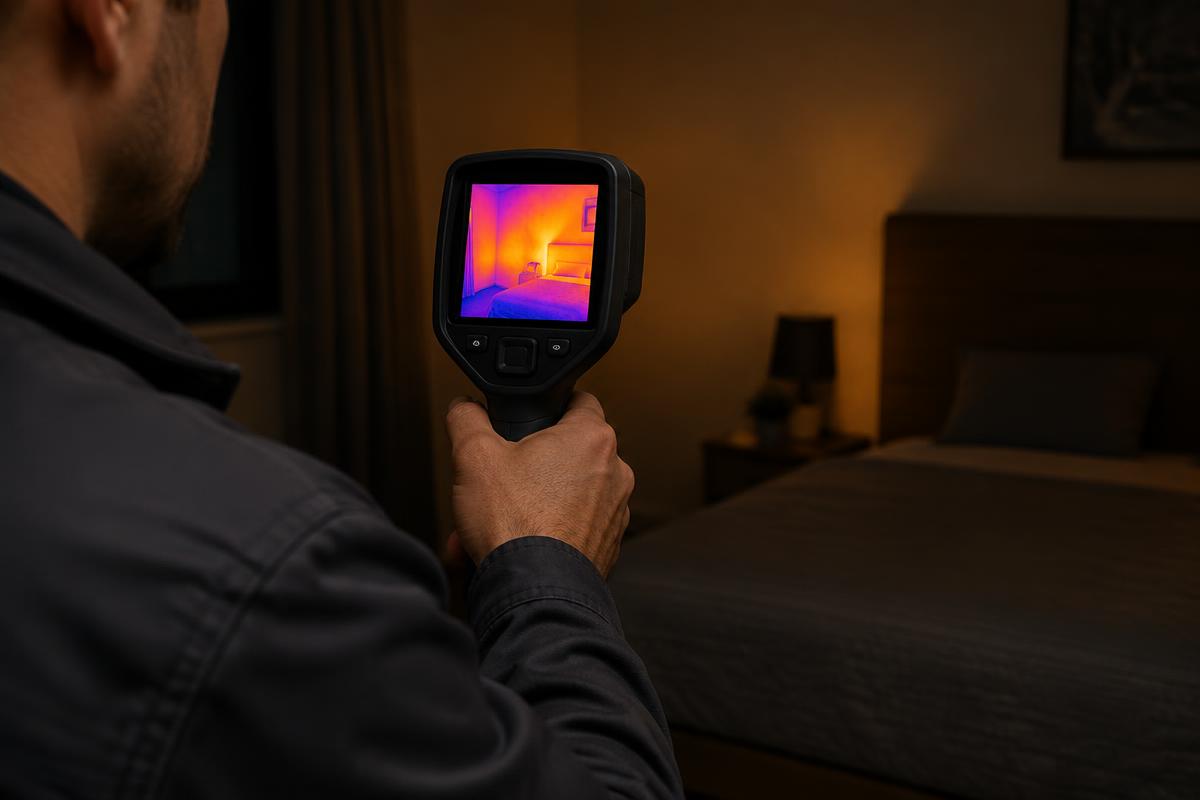
Monitoring uses active live thermal imaging cameras only. These allow the team to review visible surface heat patterns as the treatment progresses and assess areas needing attention. Thermal imaging does not see through furniture or walls, so interpreting what is visible requires practical knowledge of the room, its contents and heat movement.
Heat is our primary treatment, without harmful chemicals as the primary method. That does not mean the process is suitable for occupied rooms or that every possession can remain in place without assessment. People, pets and heat-sensitive contents require clear arrangements, and re-entry should follow the team's instructions.
Preparation mistakes can undermine otherwise useful action
Preparation is where well-intentioned DIY activity can create extra complications. Bagging everything and taking it to a relative's house may remove items from the treatment area while carrying bed bugs elsewhere. Moving contents into a car, shed or untreated room can similarly leave part of the problem outside the agreed scope.
Follow the property-specific instructions supplied by the treatment team rather than a general checklist found online. Some items may need removal or separate handling because they are heat-sensitive, pressurised or otherwise unsuitable. Those decisions must also account for the risk that an item could carry insects.
Tell the team about delicate possessions, medicines, electronics, specialist equipment and anything with particular storage requirements. Do not assume an item is safe merely because it has tolerated warm weather. Equally, avoid unnecessary disposal: suitable handling or a separate agreed approach may be more appropriate than throwing belongings away.
Good preparation keeps the treatment plan coherent. The team needs to know what remains, what has moved and where removed items will go. If instructions are unclear or difficult to carry out, ask before proceeding. Quietly changing the plan can leave untreated belongings ready to reintroduce bed bugs afterwards.
- Read the property-specific preparation instructions in full.
- Raise concerns about heat-sensitive or specialist possessions.
- Agree how removed items will be handled and stored.
- Avoid moving suspected affected contents into untreated rooms.
- Arrange for people and pets to remain outside the treatment area.
- Tell the team about any changes before treatment begins.
Choosing a clearer route to bed bug control in Suffolk
The practical alternative to repeated DIY attempts is an assessment that connects the evidence, property layout and treatment requirements. This helps explain why a particular scope is proposed and what the occupier or property manager needs to do. It also gives previous unsuccessful attempts a useful role as background information.
Bed Bug Heat Solutions UK serves Suffolk as part of our coverage across England and Wales. We bring over 40 years of hands-on pest-control experience, are fully insured and are RSPH Level 2 certificated. Those credentials support a professional approach, alongside clear instructions and a treatment plan suited to the property.
A six-month guarantee is available on qualifying treatments. Ask which conditions apply to your proposed work, what the guarantee covers and what to do if you find further evidence. A guarantee should not be interpreted as protection against every possible future introduction of bed bugs through luggage, furniture or other belongings.
After treatment, follow the agreed advice on re-entry, belongings and reporting further signs. Record new evidence rather than immediately starting another round of sprays. If you need bed bug heat treatment in Suffolk, share the affected rooms, any photographs and your treatment history so the next step is based on a useful assessment.
Useful next steps
Frequently asked questions
Six-month guarantee
Qualifying treatments are covered for six months. Send your details for a free assessment.
More from the blog
How Long Does Bed Bug Heat Treatment Take?
Read the full guide: How Long Does Bed Bug Heat Treatment Take?