Surrey
Bed Bug Heat Treatment in Surrey: What to Expect on Treatment Day
A practical guide to treatment day in Surrey, from preparing your home and arranging access to controlled heating, safe re-entry and aftercare.
26 September 202610 min read
40 years
In the trade
Four decades of hands-on bed bug experience
Fully insured
Every treatment
Comprehensive liability cover on all work
RSPH Level 2
Certificated
Royal Society for Public Health qualified
Key points
- Discuss access, parking and room layouts before attendance.
- Allow for preparation, heating, cooling and a safe handover.
- Active live thermal imaging cameras monitor the heating process.
- Follow preparation and aftercare instructions to limit reinfestation risks.
1. Understanding the purpose of treatment day
Bed bug heat treatment is a planned process, rather than simply bringing heaters into a bedroom. On treatment day, the aim is to establish a safe treatment area, deliver controlled industrial heat throughout that area and manage the property until it can be handed back. Knowing the sequence helps you prepare without unnecessary disruption.
Bed Bug Heat Solutions UK uses controlled industrial heat of 60–65 degrees C across the whole treatment area. The heating period usually lasts three to six hours. That is not a promise about the total time spent at your Surrey property, because checking access, preparing equipment, establishing the treatment zone and cooling also need consideration.
Heat is the primary treatment, rather than harmful chemicals. Bed bugs and their eggs can occupy concealed spaces around furniture and sleeping areas, so effective planning must account for the contents and layout of the agreed treatment area. The visit should not be viewed as a quick surface treatment of mattresses alone.
For households, the most useful expectation is that treatment day requires cooperation and a period away from the treatment area. You will need clear instructions about belongings, pets, access and return arrangements. Any uncertainty is best raised before attendance, especially if you need help moving items or arranging somewhere suitable to wait.
2. Planning access to your Surrey property
Surrey properties range from compact commuter flats to large detached homes, and each presents different practical considerations. A small flat reached by several staircases may require different equipment arrangements from a spacious ground-floor property. Floor area alone does not explain how equipment can be moved safely or how a treatment zone should be established.
Tell us beforehand about private roads, permit parking and any restrictions on stopping near the entrance. A long equipment route through a shared building or along a garden path can affect planning. Do not assume that a nearby parking space will be available or that shared access can be used without permission.
Basement rooms, large open-plan areas and unusual internal layouts also need to be discussed before attendance. Room volume and connections between spaces influence the equipment requirement and the boundaries of a safe treatment zone. Accurate information at the enquiry stage helps avoid misunderstandings about which areas are included in the planned work.
If you rent your home or live in a managed building, check who needs to approve access through communal areas. Let us know about locked gates, restricted lifts and building access arrangements. The aim is to plan a workable route without blocking escape routes or creating avoidable inconvenience for other residents.
- Explain where equipment can be unloaded safely.
- Flag private roads, permit parking and access restrictions.
- Describe staircases, lifts and long routes from the entrance.
- Identify basement rooms and large open-plan areas.
- Confirm any permissions needed for communal access.
- Provide details of gates, entry systems and building contacts.
3. Preparing belongings without spreading bed bugs
Preparation should follow the instructions provided for your particular treatment. Moving everything out of an affected room can carry bed bugs into previously unaffected spaces, so avoid clearing rooms on your own initiative. Ask which belongings should remain, which need separate handling and how any necessary movement should be managed before you start packing.
Heat-sensitive belongings need attention, but there is no useful universal instruction to remove all electronics or empty every cupboard. Different materials and products have different limitations. Discuss items such as medicines, aerosols, candles, valuable artwork and anything with specific storage requirements so that the team can advise on an appropriate preparation plan.
Do not automatically dispose of beds, mattresses or bedroom furniture before the visit. Carrying these items through the property may increase the risk of spreading the infestation, and replacement furniture does not resolve bed bugs elsewhere. If an item is damaged, unusually bulky or difficult to access, explain that before attendance.
Clothing and bedding should be handled according to the agreed instructions, including any directions about bagging, laundering or keeping items separate. Avoid returning prepared belongings to an untreated location without guidance. The purpose of preparation is to support the planned treatment while reducing opportunities for bed bugs to travel with household possessions.
- Read the property-specific preparation instructions in full.
- Ask about medicines and other heat-sensitive possessions.
- Avoid moving belongings between rooms without advice.
- Discuss bulky furniture rather than disposing of it automatically.
- Follow the agreed instructions for clothing and bedding.
- Tell the team about any preparation you cannot safely complete.
4. Arranging your household's day away
Plan for people and pets to remain outside the treatment area until the team confirms that re-entry is safe. Do not base your return solely on the usual three-to-six-hour heating period. Setting up and cooling are separate considerations, and arrangements for access to any other parts of the property must be agreed.
If someone in the household has limited mobility, depends on medical equipment or needs regular access to medicines, raise this during planning. These details can influence the practical arrangements for leaving and returning. Taking essential personal items with you should be organised in line with advice about avoiding the movement of bed bugs.
Pet arrangements deserve the same attention as arrangements for people. Tell the team about all animals at the property, including those kept in tanks, cages or specialist enclosures. Do not assume that leaving an animal in another room is suitable. Discuss how pets and their equipment will be managed before treatment day.
Choose somewhere practical to spend the day and stay contactable while work is under way. Keep essential keys and the agreed contact details accessible. If your circumstances change, such as a delayed departure or an unexpected visitor, let the team know rather than allowing anyone to enter the treatment area without permission.
5. What happens when the team arrives
Arrival is the point to confirm the agreed work and check that the property is ready. The team needs to understand the layout, access route and treatment boundaries before heating begins. This is also your opportunity to mention anything that has changed since booking, including new sightings or furniture moved between rooms.
A discussion about readiness is not just an administrative step. Items that have not been prepared as instructed, undisclosed rooms or restricted equipment access can affect how the work proceeds. Be straightforward about anything unfinished. It is better to address a preparation issue before equipment is positioned than to leave an important detail unmentioned.
Show the team any relevant access points and explain household features that may not be obvious on arrival. In Surrey homes, these might include a basement reached through a separate doorway, interconnected living spaces or a bedroom above a garage. Such details help clarify the physical limits of the planned treatment.
Before you leave, make sure you understand how the handover will be communicated and what you should do if you need to contact the team. Ask any remaining questions about belongings or return arrangements at this stage. Do not assume that an agreed heating duration automatically gives you a confirmed re-entry time.
6. Establishing the treatment zone and positioning equipment
The treatment zone is the area agreed for controlled heating, not simply whichever room appears to have the most obvious signs of bed bugs. Its boundaries need to reflect the treatment plan and the building layout. The team will consider how the equipment can be positioned and operated safely within those boundaries.
Furniture, room volume and internal connections can influence how heat moves through a property. A compact commuter flat and a detached home with a large open-plan ground floor will not necessarily need the same arrangement. This is why a clear description of your home matters more than a general estimate of its size.
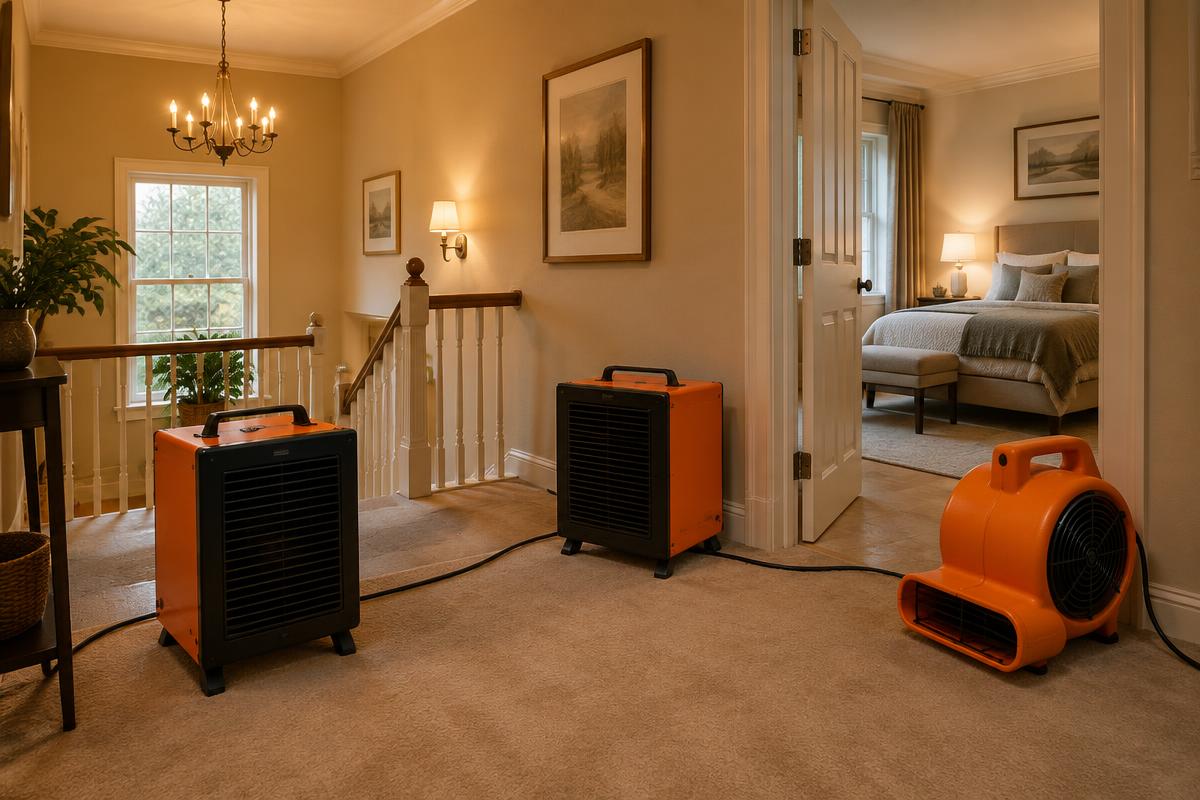
Staircases and long equipment routes also need careful management during setup. Equipment must be brought into place without creating unnecessary access hazards. Keep the agreed route clear and avoid scheduling deliveries or other contractors at the same time, particularly where a narrow hallway or shared entrance is needed for the work.
Once the area has been established, do not move equipment or change the arrangement of the treatment space yourself. Opening doors or entering to retrieve forgotten belongings can interfere with the planned process and introduce safety risks. If something essential has been left behind, contact the team and let them decide how to handle it.
7. Controlled heating and active live thermal imaging
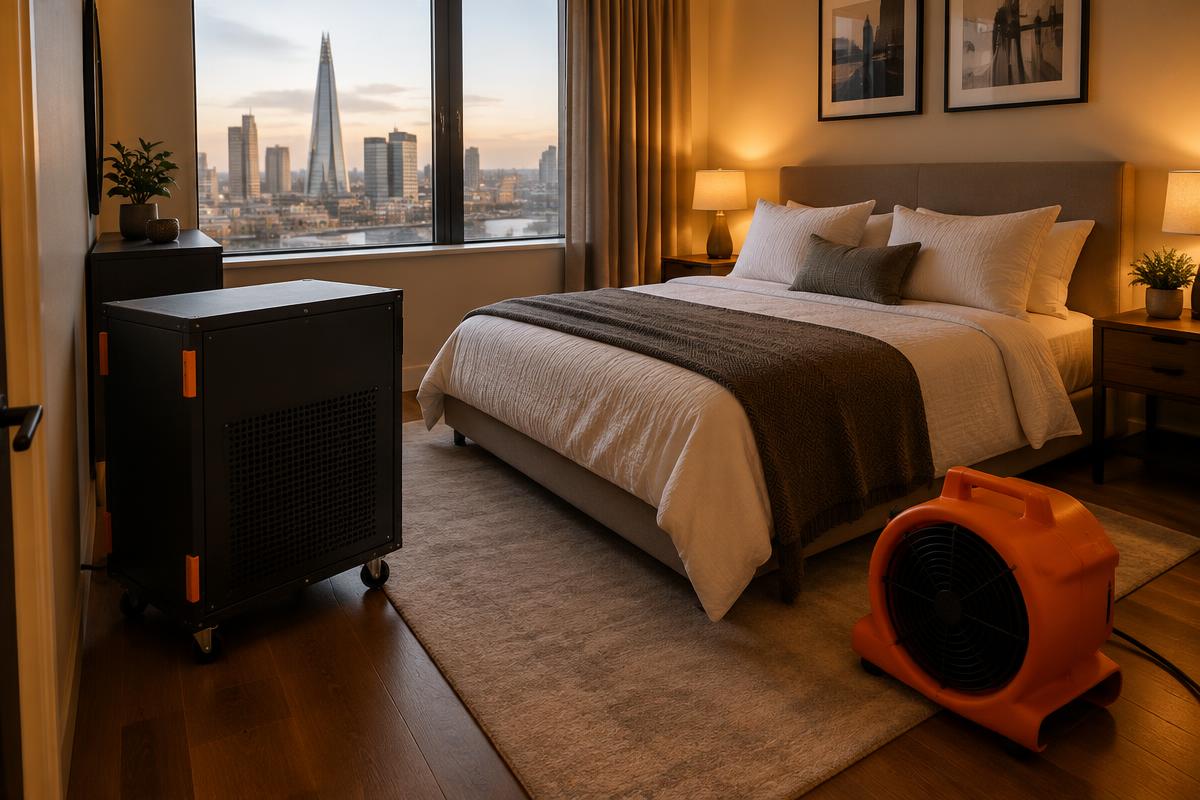
During treatment, controlled industrial heat is applied at 60–65 degrees C across the whole treatment area. The objective is a managed process throughout the agreed space, rather than a brief rise in warmth near a heater. Equipment placement and the way heat circulates are therefore important parts of the work.
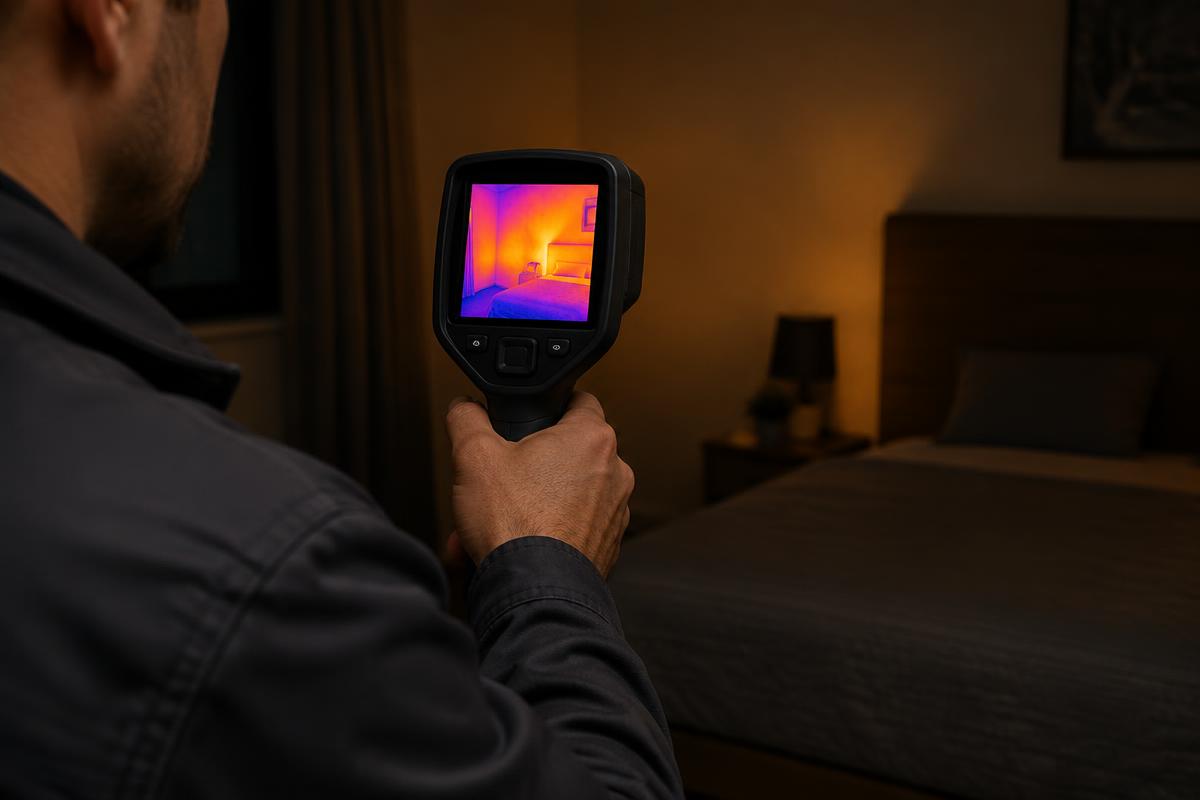
Monitoring uses active live thermal imaging cameras only. These cameras give the team a live view of surface heat patterns within the treatment area, helping them assess how heating is progressing. Their role is to support the management of the treatment, not to provide a visual count of bed bugs hidden within possessions.
The heating period usually lasts three to six hours, but it should not be treated as an exact appointment length. Property layout, room volume and the agreed scope all matter when planning the visit. The team should manage the process according to the treatment requirements rather than a household's preferred return time.
You do not need to remain nearby watching the process, and you should not enter the treatment area to check progress. Stay available through the agreed contact arrangement instead. Bed Bug Heat Solutions UK uses heat as the primary treatment without harmful chemicals, but industrial heating still requires controlled access and professional management.
8. Cooling, safe re-entry and the handover
When the heating stage is complete, the visit is not automatically finished. The property needs to be managed through cooling and equipment removal before the relevant areas can be handed back. Wait for explicit confirmation that you can return, rather than arriving at a time calculated from when the heaters started.
Surfaces and belongings may retain warmth after heating has stopped. Follow the team's instructions about touching, moving or using items after re-entry, particularly if children or pets are returning with you. Do not make your own judgement about access simply because an entrance or another part of the property feels comfortable.
The handover is the time to clarify what happens next. Ask about any remaining restrictions, how prepared belongings should be returned and whether there are particular aftercare steps for your property. If something is unclear, request an explanation before changing room arrangements or bringing separately stored possessions back into the treatment area.
It is also useful to confirm the route for reporting later concerns and the terms attached to your treatment. Bed Bug Heat Solutions UK offers a six-month guarantee on qualifying treatments. Eligibility and conditions should be understood as part of the agreement, rather than assumed to apply identically to every property or situation.
- Wait for confirmation before entering the treatment area.
- Follow guidance about warm surfaces and belongings.
- Check how to return separately stored possessions.
- Clarify any cleaning or room-use instructions.
- Confirm how to report suspected activity after treatment.
- Keep the applicable guarantee terms with your treatment information.
9. Following aftercare and watching for concerns
Aftercare is about following the agreed instructions and avoiding unnecessary opportunities for bed bugs to be brought back. Do not immediately unpack belongings that were kept outside the treatment area without checking their status. An item that was excluded from heating may need separate handling before it is returned to normal use.
Follow the guidance you receive about cleaning and laundering rather than adding extra measures based on general online advice. Do not apply insecticides or use household heating equipment in an attempt to reinforce the treatment without professional advice. Additional action taken without a clear reason may complicate assessment if you later report a concern.
Skin marks alone are not a reliable way to establish whether bed bugs are still present. Reactions can vary, and bites can have other causes. If you notice a suspected live insect or other concerning signs, record where and when you found them and contact the team for advice about the next step.
Keep your treatment information and aftercare instructions somewhere accessible. If you need to ask about the six-month guarantee on qualifying treatments, provide a clear account of what you have observed. A guarantee is not a reason to ignore preparation or aftercare, and it does not mean a property cannot encounter bed bugs again.
10. Booking with clear expectations in Surrey
A useful enquiry includes more than the number of bedrooms. Describe the property type, affected areas, recent signs of activity and any practical limitations. For a Surrey flat, shared access may be a key detail. For a large detached home, room volume, open-plan spaces and long routes from parking may need particular attention.
Explain any concerns about leaving the property, managing pets or preparing belongings before a date is arranged. Early discussion gives the team a clearer picture of what the work involves. It also helps you understand your responsibilities, the agreed treatment scope and the arrangements that need to be in place for attendance.
Bed Bug Heat Solutions UK serves England and Wales, including Surrey, with over 40 years of hands-on pest-control experience. The company is fully insured and RSPH Level 2 certificated. Its approach combines controlled industrial heat with active live thermal imaging cameras for monitoring, with no harmful chemicals as the primary treatment.
The most manageable treatment day starts with accurate information and clear instructions. Share the details of your home, complete the agreed preparation and allow time for setup, heating, cooling and handover. To discuss treatment in Surrey, contact Bed Bug Heat Solutions UK with your property details and ask what preparation your proposed treatment will require.
Useful next steps
Frequently asked questions
Six-month guarantee
Qualifying treatments are covered for six months. Send your details for a free assessment.
More from the blog
How Long Does Bed Bug Heat Treatment Take?
Read the full guide: How Long Does Bed Bug Heat Treatment Take?