Surrey
Bed Bug Heat Treatment in Surrey: Understanding the Six-Month Guarantee
Learn what to check about the six-month guarantee on qualifying Surrey bed bug heat treatments, from the agreed treatment area to reporting later concerns.
4 November 20269 min read

40 years
In the trade
Four decades of hands-on bed bug experience
Fully insured
Every treatment
Comprehensive liability cover on all work
RSPH Level 2
Certificated
Royal Society for Public Health qualified
Key points
- Qualifying heat treatments carry a six-month guarantee.
- Check the written scope and conditions before booking.
- Preparation and access help establish a safe treatment area.
- Report suspected activity rather than assuming bites confirm bed bugs.
What the six-month guarantee means for Surrey customers
A guarantee matters when you are arranging bed bug treatment, but its value depends on understanding what it covers. Bed Bug Heat Solutions UK offers a six-month guarantee on qualifying treatments. For customers in Surrey, the important first step is to establish whether the proposed treatment qualifies and what the written conditions say.
The phrase six-month guarantee should not be read as an unconditional promise covering every property, every treatment arrangement or every future introduction of bed bugs. Qualification and scope need to be clear before you book. Ask for an explanation that relates to your own home rather than relying on a general description.
This article explains the questions worth asking and the practical arrangements that help support treatment. It does not replace the guarantee terms supplied for your booking. In particular, the start date, reporting procedure, exclusions and any remedy should be confirmed in writing rather than inferred from the length of the guarantee.
Surrey homes vary considerably, from compact commuter flats to large detached properties. That variation can affect how a treatment area is planned and accessed. Giving an accurate description of your property helps the team discuss a suitable scope and explain how the guarantee applies to the work being proposed.
Confirm qualification and written terms before booking
Start with a direct question: does the treatment being recommended for this property include the six-month guarantee? The company offers the guarantee on qualifying treatments, so it is important not to assume that every possible service or restricted treatment arrangement carries identical cover. Ask for confirmation alongside the proposed treatment details.
Next, establish when the six-month period begins and how that date will be recorded. You should also understand who to contact if you suspect activity during that period. These are straightforward administrative points, but resolving them before treatment avoids uncertainty when you are already concerned about a possible recurrence.
Ask what happens after a concern is reported. A guarantee is not, by itself, a complete description of the assessment process or the action that may follow. Do not assume that it means an automatic refund, an unrestricted repeat treatment or that every later visit will be included without charge.
If any part of the wording is unclear, request a plain-language explanation before accepting the booking. This is especially useful where a landlord, tenant, managing agent or another household member is arranging access. Everyone involved should understand the same treatment scope and have access to the relevant written information.
- Confirm that the proposed treatment qualifies for the guarantee.
- Ask for the guarantee start date and end date.
- Check which areas of the property are included.
- Read the conditions and any exclusions.
- Ask how suspected activity should be reported.
- Clarify what assessment or remedial action the terms provide.
Understand the treatment behind the guarantee
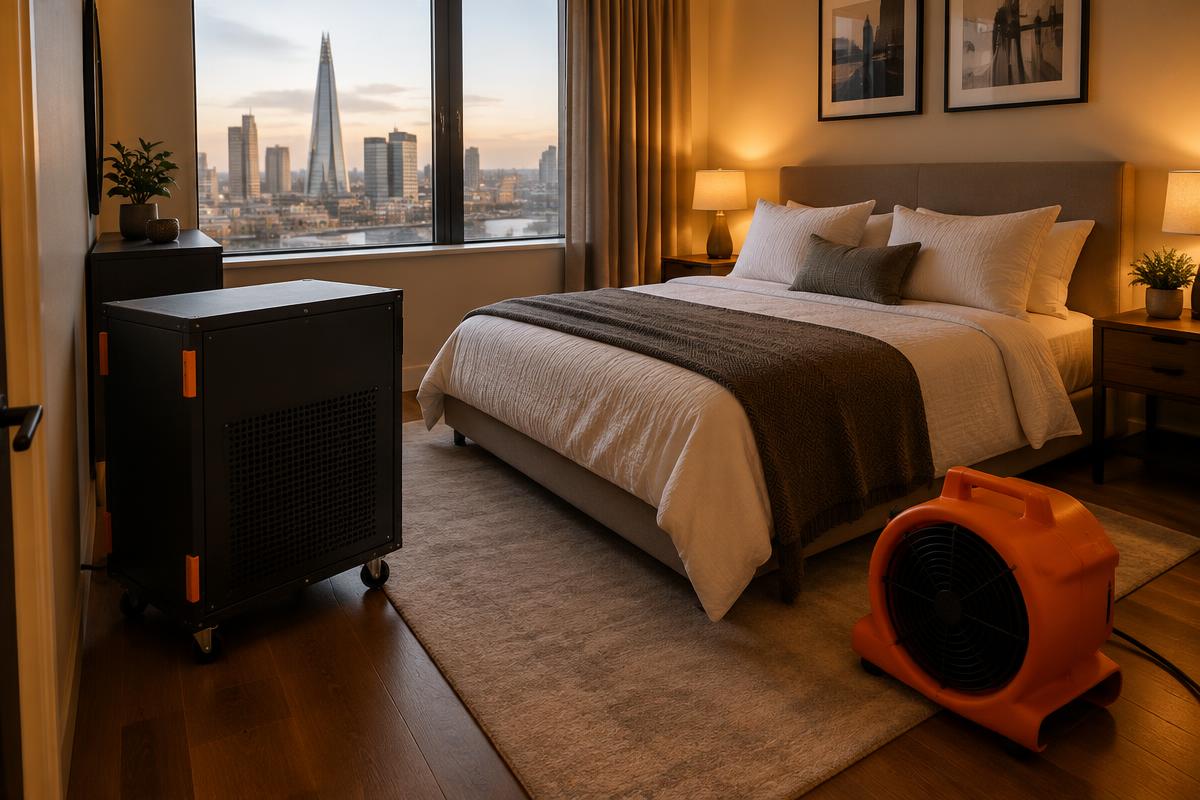
Bed Bug Heat Solutions UK uses controlled industrial heat of 60–65 degrees C across the whole treatment area. The heating period is usually three to six hours. Those figures describe the treatment approach, not an exact appointment duration or a promise that every property will require the same arrangements.
Heat treatment is intended to address bed bugs, including their eggs, within the agreed treatment area. Effective planning considers the spaces and contents being treated, rather than simply warming the air around a bed. Room volume, layout and access all matter when deciding how the equipment should be arranged.
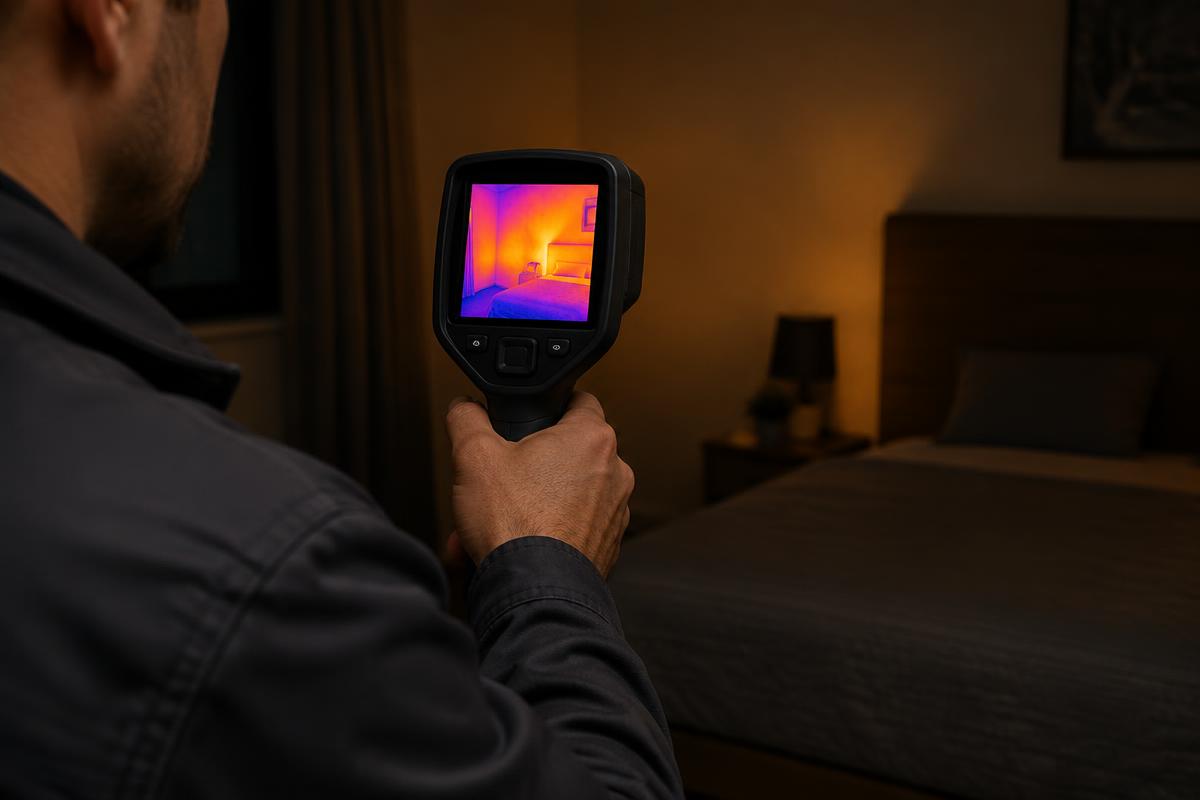
Monitoring uses active live thermal imaging cameras only. These allow the team to observe thermal patterns during treatment and support management of the heating process. The work requires controlled equipment use and professional judgement; the stated treatment temperature is not an instruction to attempt a similar process with domestic heaters.
No harmful chemicals are used as the primary treatment. However, heat treatment still requires safety planning, suitable preparation and clear instructions about leaving and returning to the treatment area. The guarantee should be considered alongside that professional process, rather than as a substitute for a properly planned and completed treatment.
Make the agreed treatment area clear
One of the most useful questions is also one of the simplest: exactly what is being treated? Controlled heat is applied across the whole treatment area, but the agreed treatment area needs to be defined. It should not be assumed to include every room, storage space or separate structure at an address.
Tell the team where you have noticed insects or other possible signs, including rooms that are not normally used for sleeping. Bed bugs can hide away from the most obvious location. A description based only on the first affected bed may leave out information that is relevant to planning the work.
For flats, explain whether there are shared corridors, adjoining properties or concerns raised by neighbours. Treatment inside one dwelling should not be assumed to cover communal spaces or another home. Any uncertainty about areas outside your control is worth discussing before the treatment scope and guarantee arrangements are agreed.
If you are considering treating only part of a property, ask how that choice affects the recommendation and guarantee qualification. Do not assume that a limited treatment has the same terms as a more comprehensive proposal. A clear written scope helps distinguish the work being undertaken from areas that remain outside it.
Plan for Surrey access and property layout
In Surrey, a compact flat and a large detached house may present very different practical requirements. Staircases, room volume, parking and long equipment routes can all affect how a safe treatment zone is established. Share these details early so the equipment requirement can be considered before attendance.
Private roads and permit parking deserve particular attention. Explain any restrictions on vehicle access or unloading, and whether permission needs to be arranged through a resident, landlord or managing agent. These details do not establish guarantee eligibility on their own, but they help avoid an access problem interfering with the agreed work.
Basement rooms and large open-plan areas should also be mentioned during the initial discussion. Include spaces used occasionally, such as a downstairs guest room or a converted living area. The team needs an accurate picture of the layout rather than just a bedroom count or the property's approximate size.
Where the equipment route is long or involves several flights of stairs, describe it clearly. If you do not know whether a feature matters, ask rather than leave it out. Good advance information supports safer planning and allows any implications for the proposed scope to be discussed before treatment day.
- Mention private roads and any vehicle access restrictions.
- Explain permit parking and unloading arrangements.
- Describe staircases and long equipment routes.
- Identify basement rooms and split-level spaces.
- Flag large open-plan areas and unusually high rooms.
- Tell the team about access controlled by a landlord or managing agent.
Follow the preparation instructions for your booking
Preparation should follow the instructions issued for your property and treatment. Generic advice found online may not match the planned process. Ask which belongings need particular attention, what should stay in place and what must be removed or handled differently. Avoid guessing about items that could be affected by heat.
Tell the team about medicines, aerosols, batteries, delicate possessions and other items you are unsure about. These are matters for specific preparation advice, not a reason to start moving everything out indiscriminately. Pets and any other living occupants also need arrangements consistent with the safety instructions supplied for the booking.
Moving potentially infested belongings into an untreated room, a vehicle or another home can create additional problems. Before relocating bedding, luggage or furniture, ask how it should be handled. The aim is to prepare safely without accidentally taking bed bugs beyond the treatment area or returning untreated belongings afterwards.
Preparation may be relevant to the guarantee conditions, so ask which requirements affect qualification or cover. If an instruction is difficult to follow, explain the problem before treatment rather than quietly leaving it unresolved. The team can then discuss the situation and clarify whether the planned arrangements need to change.
Know what to clarify on treatment day and afterwards
Before work begins, raise any changes since booking. These might include signs in another room, recently moved furniture or access that is no longer available. New information can affect the planned work. It is better to address it directly than to assume the original scope automatically covers a changed situation.
The usual three-to-six-hour heating period should not be treated as a fixed return time. Equipment setup, safety arrangements and the process of making the area ready for re-entry are separate considerations. Follow the team's instructions and do not enter the treatment area until you have been told it is safe.
After treatment, ask for a clear explanation of the aftercare instructions and retain the paperwork supplied. Check that you understand the treated area, the relevant dates and how to raise a concern. If the written information differs from what you understood when booking, seek clarification promptly.
Avoid adding household insecticides or carrying out other pest treatments without discussing them first. Such action may complicate the assessment of later signs and may be relevant to the written conditions. The safest approach is to follow the agreed aftercare process and ask before making changes that could affect it.
Report suspected activity during the six months
If you notice something worrying after treatment, report it through the contact route provided with your booking. Explain what you found, where it was and when it occurred. A factual description is more useful than concluding immediately that the treatment has failed or that the guarantee must automatically provide a particular remedy.
Skin marks alone do not reliably identify bed bugs. Reactions vary, and other causes can produce similar symptoms. Equally, an insect or mark found after treatment needs to be considered in context. Distinguishing live activity from old evidence is part of understanding what may be happening in the property.
Where practical, take a clear photograph of a suspected insect or other sign. If an insect can be safely contained without moving affected belongings around the home, that may help with identification. Ask the team what information they need rather than delaying contact while trying to collect perfect evidence.
The written guarantee terms should explain how a reported concern is assessed and what action may be available. The six-month period does not establish a particular attendance time. Ask what the next steps will be, follow any interim advice and keep a record of the communication for reference.
- Record the date and location of the suspected activity.
- Describe what you saw rather than relying only on skin marks.
- Take clear photographs where practical.
- Keep your booking details and guarantee paperwork available.
- Mention any belongings moved into or out of the treated area.
- Follow the reporting process in your written terms.
Distinguish ongoing activity from a new introduction
A successfully treated property can still be exposed to bed bugs again. They can be carried in belongings such as luggage or used furniture. Heat treatment addresses the agreed area at the time of the work; it does not create a lasting barrier that prevents insects entering the home in future.
That distinction is important when reading a guarantee. Ask how the terms address suspected ongoing activity and possible new introductions, without assuming either is automatically covered or excluded. Establishing what has happened may require discussion of the signs, their timing and changes within the household since treatment.
If concerns arise, mention recent travel, incoming furniture, stored items brought back indoors or reports from an adjoining property. These details are not proof of a particular cause. They simply provide useful context and help avoid an assessment based on incomplete information or assumptions about the original treatment.
Continue with proportionate precautions after treatment, especially when bringing second-hand items into the home or unpacking after travel. Ask for practical advice suited to your circumstances. There is no need to interpret every itch as a recurrence, but a credible sign of live bed bugs is worth reporting promptly.
Book with a clear understanding of your cover
The most useful guarantee is one you understand before you need it. For a Surrey booking, confirm qualification, treatment scope, dates, preparation duties and the reporting process. Ask specifically what the written terms provide if a concern is accepted under the guarantee, rather than relying on assumptions about follow-up work.
Bed Bug Heat Solutions UK serves England and Wales, including Surrey, with over 40 years of hands-on pest-control experience. The company is fully insured and RSPH Level 2 certificated. These credentials provide background when choosing a professional service, while the written booking details explain the arrangements for your particular property.
When making an enquiry, describe both the suspected infestation and the practical features of the home. Include parking restrictions, private access roads, staircases, basement rooms and large open-plan spaces where relevant. Accurate information helps the team consider equipment requirements and discuss a realistic treatment plan before attendance.
The six-month guarantee on qualifying treatments should give you a clear route for raising concerns within the agreed terms. Request those terms, read them alongside the preparation and aftercare guidance, and ask about anything uncertain. That approach keeps expectations clear from the initial enquiry through to the end of the guarantee period.
Useful next steps
Frequently asked questions
Six-month guarantee
Qualifying treatments are covered for six months. Send your details for a free assessment.
More from the blog
How Long Does Bed Bug Heat Treatment Take?
Read the full guide: How Long Does Bed Bug Heat Treatment Take?