Sussex
Bed Bug Heat Treatment in Sussex: What to Expect on Treatment Day
A practical guide to bed bug heat treatment day in Sussex, covering preparation, access, the heating process and what happens before you return.
9 October 20269 min read
40 years
In the trade
Four decades of hands-on bed bug experience
Fully insured
Every treatment
Comprehensive liability cover on all work
RSPH Level 2
Certificated
Royal Society for Public Health qualified
Key points
- Treatment planning depends on your property, access and infestation history.
- Controlled industrial heat reaches 60–65°C across the whole treatment area.
- The heating period usually lasts 3–6 hours, with additional time for setup and cooling.
- Qualifying treatments include a six-month guarantee.
1. How your Sussex property shapes the treatment plan
Knowing what will happen on treatment day can make a stressful situation more manageable. Bed bug heat treatment involves more than bringing heaters into a bedroom. The team needs a clear picture of the affected spaces, suitable equipment access and an agreed plan for people, pets and belongings before heating begins.
Across Sussex, coastal guest accommodation, city apartments, student housing and rural homes present different practical demands. A flat with communal stairs may need different loading arrangements from a detached house along a narrow lane. We assess each property from the details provided rather than assume one arrangement suits every address.
Your initial information helps establish the proposed treatment area and identify questions that need resolving. Describe where bugs or other signs have been found, which rooms people sleep in and whether furniture or bedding has been moved. Photographs can provide useful context, although they do not replace the checks needed on site.
Bed Bug Heat Solutions UK serves England and Wales, including Sussex. Our service is backed by over 40 years of hands-on pest-control experience, full insurance and RSPH Level 2 certification. On the day, the emphasis is on controlled treatment, clear communication and practical decisions suited to the property.
2. Confirming the room history before the visit
A useful treatment history starts with where the problem was first noticed and what has happened since. Tell us about visible insects, spotting around beds and any professional identification already obtained. Skin marks alone cannot confirm bed bugs, so it is important to distinguish suspected activity from evidence that has been checked.
For short-stay accommodation, include the affected room history and any moves to neighbouring rooms. Explain whether guests changed bedrooms, whether spare bedding was introduced and whether furniture was transferred elsewhere. These details help the team understand possible routes of spread without automatically assuming that every adjoining room is affected.
In student housing or a shared Sussex flat, information from more than one occupant may be needed. Bedrooms can have separate occupants while sharing hallways, lounges and laundry arrangements. Tell the team who can authorise access and whether there are locked rooms, so the agreed treatment does not depend on last-minute permissions.
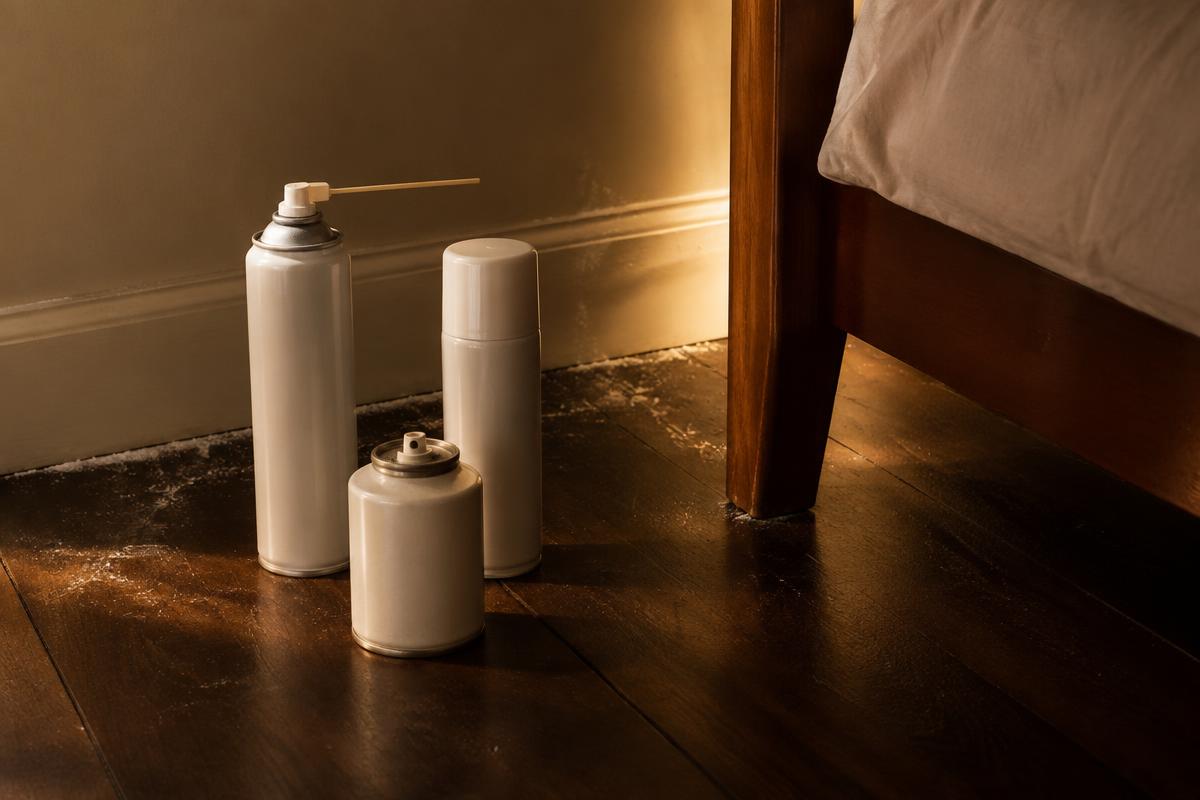
Previous attempts to control the problem also matter. Let us know about sprays, powders, rented equipment or items that have already been discarded. Do not apply additional products shortly before treatment unless specifically advised. Accurate information allows the team to consider what is present and give preparation instructions that fit your circumstances.
3. Preparing belongings without spreading the problem
Preparation should follow the instructions provided for your booking. It is not a general instruction to empty the property or move everything into another bedroom. Unplanned movement can carry bed bugs beyond the intended treatment area, while unnecessary disposal can add expense without addressing insects hidden elsewhere in the room.
Before the visit, identify belongings that may be unsuitable for the planned heat exposure. Medicines, aerosols, batteries, delicate artwork and other heat-sensitive possessions need specific discussion. Do not assume that putting an item in a cupboard protects it from heat, or that taking it out untreated is automatically a safe solution.
Ask how clothing, bedding and stored items should be presented. Tightly packed drawers, overfilled storage areas and piles of possessions can affect access and treatment planning. The team will explain what needs changing; avoid inventing your own preparation routine based on general advice intended for a different treatment method.
If belongings must leave the treatment area, agree how they will be checked, contained or otherwise managed first. The aim is to protect sensitive items without allowing untreated possessions to bring bed bugs back afterwards. Tell us early if mobility difficulties, limited storage or caring responsibilities make the requested preparation hard to complete.
- Read the preparation instructions issued for your booking.
- Identify medicines and potentially heat-sensitive belongings.
- Ask before removing bedding, furniture or stored possessions.
- Keep access routes clear as instructed.
- Report preparation difficulties before the treatment visit.
- Confirm arrangements for any items excluded from heating.
4. Arranging parking, loading and building access
Professional heat treatment requires equipment to be brought into the property and positioned safely. In Sussex coastal streets, parking restrictions, steps and narrow entrances can affect that process. Describe the route from the likely unloading point to the treatment rooms, including stairs, communal doors and any limits on vehicle access.
For rural properties, explain equipment loading and parking access in practical terms. Mention narrow lanes, low entrances, gates, steep drives, loose surfaces and the distance between parking and the house. A nearby space on a map is not necessarily a suitable unloading point, particularly if equipment must cross uneven ground.
City apartments may require arrangements with a managing agent or building staff. If there is a lift, tell us about access restrictions and booking requirements rather than assuming it will be available. Any use of shared areas must respect building rules and keep escape routes available to other occupants.
Someone with authority to provide access should be available as agreed. In guest accommodation, make sure relevant staff understand which rooms are included and which routes need to remain clear. Confirm the practical details before treatment day so equipment setup is not interrupted by missing keys or unresolved parking arrangements.
- Describe the parking and unloading location.
- Report steps, narrow doors, gates and uneven paths.
- Confirm access to lifts and communal entrances where relevant.
- Arrange keys or authorised access for all agreed rooms.
- Keep shared escape routes clear.
- Explain any rural vehicle or driveway restrictions.
5. Arrival checks and agreement on the treatment area
When the team arrives, the first stage is to review the property and confirm the agreed work. This is the time to point out new sightings, changes in sleeping arrangements or anything you could not prepare. A change since booking may affect the plan, so it is better raised before equipment is positioned.
The team will check the spaces included in the treatment and discuss any relevant limitations. A bedroom-only enquiry, for example, should not be taken as proof that activity is confined to that bedroom. The proposed treatment area needs to reflect the available evidence and the practical circumstances of the property.
Heat-sensitive materials, excluded belongings and access to furniture or storage areas also need attention before heating starts. Tell the team about unusual finishes, recently installed fittings or manufacturer restrictions you know about. Do not assume that a specialist will know the history or temperature tolerance of every possession on sight.
Before you leave, make sure you understand how contact will work during the visit and how permission to return will be given. Ask any remaining questions about preparation or aftercare at this stage. The aim is a shared understanding of the plan, not a rushed departure while important details remain unclear.
6. Leaving the treatment area safely
People and pets must remain outside the treatment area while heating is under way. Plan somewhere suitable to spend the time rather than expecting to wait in an adjoining space without approval. The team will explain the required boundaries for your property and whether the whole premises needs to be vacated.
Think through everyday needs before the equipment is set up. You may need medication, work materials, children's supplies or pet essentials while you are away. Discuss how necessary items can be taken out without spreading bed bugs, and avoid collecting unassessed bags or clothing from the affected room at the last moment.
Pet arrangements need to include more than dogs and cats. Tell us in advance about aquariums, reptiles, birds and other animals, as well as any equipment they depend on. Do not assume that an enclosure or a separate corner of the room makes it suitable for an animal to remain during treatment.
In accommodation businesses and shared buildings, clear communication helps prevent accidental entry. Staff, residents and contractors who might approach the area should understand the restrictions. Do not return to fetch something, adjust equipment or open a window during treatment; contact the team and follow their instructions if an unexpected need arises.
7. What happens during the heating period
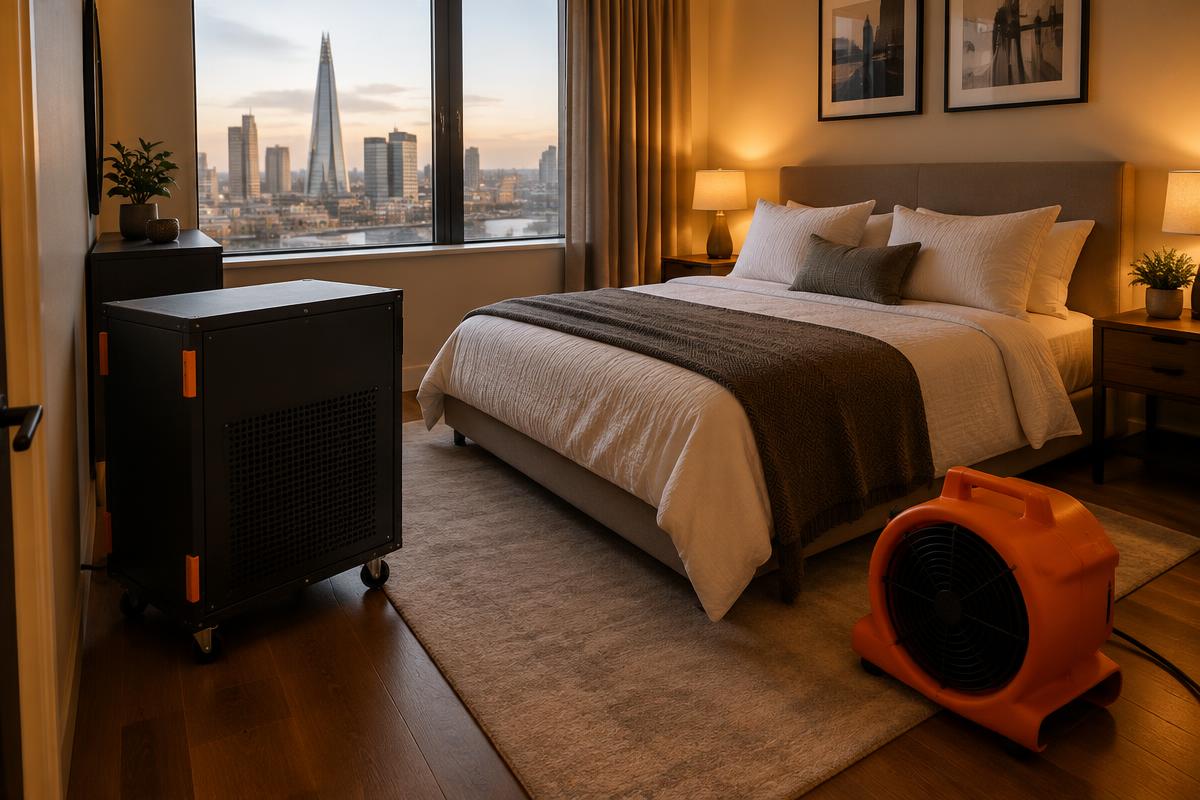
Our primary treatment uses controlled industrial heat of 60–65°C across the whole treatment area, with no harmful chemicals as the primary treatment. The purpose is to address bed bugs and their eggs within the agreed space. This is a professional process requiring preparation, appropriate equipment and active supervision.
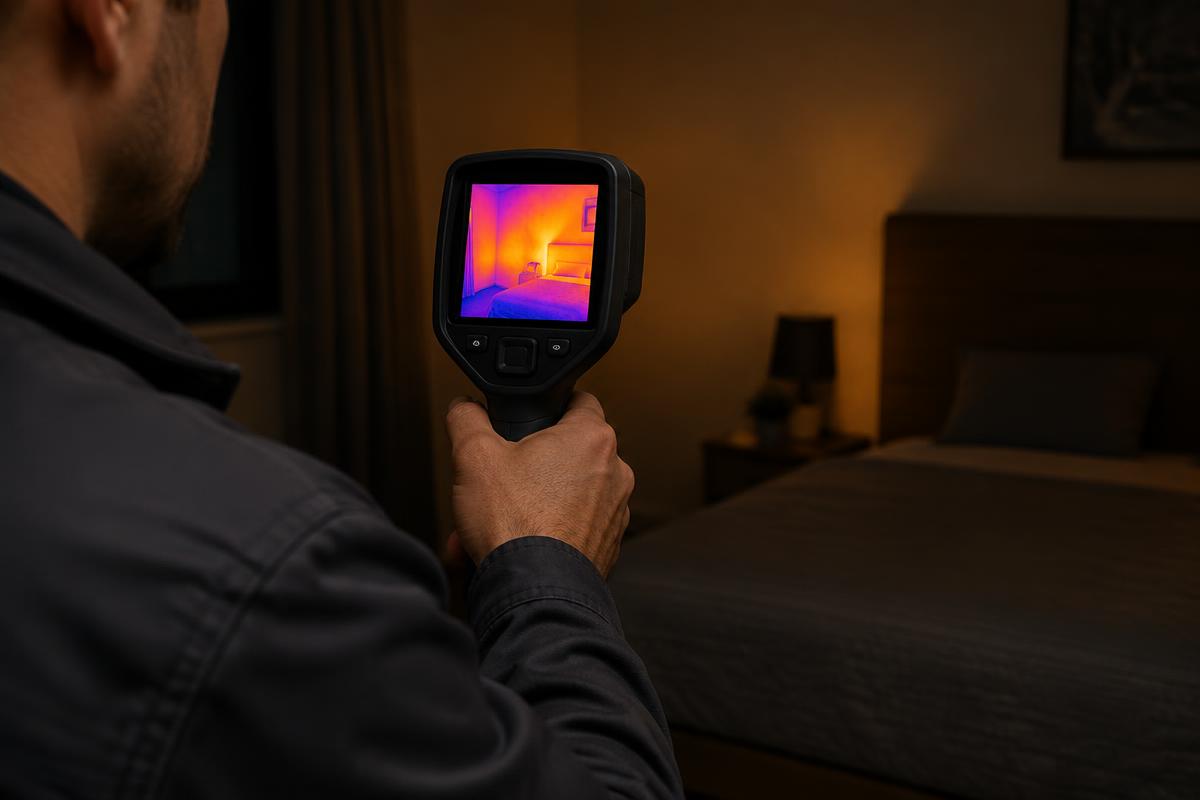
Monitoring uses active live thermal imaging cameras only. These allow the team to view surface heat patterns as treatment progresses and identify areas that need attention. Thermal images do not see through furniture or walls, so interpreting them requires an understanding of the room, its contents and the limitations of the view.
Equipment placement and heat movement are managed as part of the process. Beds, furniture, stored belongings and the layout of the room all influence how the treatment is delivered. The team may need to make adjustments during heating rather than simply switch on equipment and leave it untouched until the end.
The heating period usually lasts 3–6 hours. That is not the same as the total appointment length or the time you will be away from the property. Arrival checks, unloading, setup, completion work and cooling also take time, so keep the day flexible and follow the arrangements agreed for your visit.
8. Why the timetable can vary between properties
Two Sussex properties with the same number of bedrooms may still need different treatment-day arrangements. Room layout, the amount and position of belongings, building construction and equipment access can all affect the work. A simple room count does not provide enough information to promise a precise completion time.
Coastal guest accommodation may involve reception staff, housekeeping schedules and neighbouring occupied rooms. Student housing may depend on access permissions from several residents. These are coordination issues as well as treatment considerations, and they should be discussed before the visit rather than left for the team to resolve on arrival.
For rural homes, a longer loading route or restricted parking can add practical work before heating even begins. Where there are outbuildings or separately used rooms, explain whether any affected possessions have been stored there. Their presence does not automatically include them in the treatment, so the scope needs to be clear.
Avoid arranging a guest check-in, furniture delivery or essential appointment around an assumed finishing time. We can discuss the likely sequence from the information available, but safe completion and re-entry take priority over a diary deadline. If your circumstances impose a firm restriction, raise it while the visit is being planned.
9. Completion, cooling and returning indoors
The end of the heating period does not mean you should immediately walk back into the room. The team must complete the relevant checks and manage the transition from treatment conditions. Wait for clear permission to re-enter rather than using the time elapsed or the appearance of packed equipment as your guide.
Cooling arrangements depend on the property and the work carried out. Do not open doors or windows during treatment in an attempt to speed up your return. Once re-entry has been authorised, follow the instructions given about ventilation, handling warm belongings and restoring the rooms to their normal use.
The handover is an opportunity to confirm what was treated, what was excluded and what you should do next. Ask how to manage any belongings kept outside the heated area before bringing them back. Reintroducing an untreated item without an agreed plan can undermine otherwise careful preparation and treatment.
If you run guest accommodation, do not equate permission to enter with an automatic instruction to release the room for a new booking. Confirm the relevant aftercare and complete your own operational checks. In any property, keep the treatment information available so everyone using the space follows the same guidance.
- Wait for explicit permission before re-entering.
- Follow the ventilation and cooling instructions provided.
- Confirm the rooms and belongings included in treatment.
- Check how excluded items should be managed.
- Share aftercare guidance with relevant occupants or staff.
- Keep the treatment and guarantee information accessible.
10. Aftercare and the six-month guarantee
After treatment, follow the cleaning and room-use instructions supplied for your property. Do not add sprays or powders as an extra precaution unless advised. Additional products can complicate assessment of later concerns, and an improvised follow-up routine is not a substitute for the aftercare plan agreed with the team.
If you notice something concerning, record what you saw and where it was found. A clear photograph or a safely contained specimen can help with identification. Skin reactions alone are not reliable proof of continuing activity, so report the details rather than assuming either that treatment has failed or that every mark is unrelated.
Qualifying treatments include a six-month guarantee. Ask for the applicable terms before booking and retain them with your treatment record. Eligibility, scope and any customer responsibilities need to be understood; the guarantee should not be interpreted as an unconditional promise covering every room, excluded possession or later introduction of bed bugs.
The most useful next step is to provide accurate information about your Sussex property, its access and the history of the affected rooms. Bed Bug Heat Solutions UK can then assess the details and explain the proposed arrangements. Good planning makes treatment day clearer, from the first equipment delivery through to safe re-entry and aftercare.
Useful next steps
Frequently asked questions
Six-month guarantee
Qualifying treatments are covered for six months. Send your details for a free assessment.
More from the blog
How Long Does Bed Bug Heat Treatment Take?
Read the full guide: How Long Does Bed Bug Heat Treatment Take?