Wales
Bed Bug Heat Treatment in Wales: Why DIY Treatments Usually Fail
DIY bed bug treatments often miss hidden activity, allowing an infestation to continue despite repeated cleaning, spraying and washing.
6 October 20269 min read
40 years
In the trade
Four decades of hands-on bed bug experience
Fully insured
Every treatment
Comprehensive liability cover on all work
RSPH Level 2
Certificated
Royal Society for Public Health qualified
Key points
- DIY treatment often misses hidden bed bugs and eggs.
- Room heating is not the same as controlled professional treatment.
- Welsh property access and travel requirements need advance assessment.
- Qualifying professional treatments include a six-month guarantee.
Why a DIY approach can leave the real problem untouched
Finding possible bed bugs at home can prompt an understandable rush to act. People wash bedding, vacuum the mattress and buy a treatment from a shop, hoping to stop the problem before it grows. These actions may remove some insects, but they rarely address every place where bed bugs can shelter.
The difficulty is not simply choosing a stronger product or cleaning more thoroughly. Bed bugs spend much of their time concealed in small gaps close to places where people rest. Visible insects may represent only part of the activity, while eggs and hidden bugs remain beyond the reach of surface treatment.
A temporary reduction in sightings can therefore be misleading. After cleaning or spraying, a room may seem quieter without the underlying infestation having been resolved. Repeating the same limited treatment can become a cycle of short-lived improvement, renewed concern and further spending on products that do not reach the remaining harbourages.
For households and accommodation operators in Wales, a better starting point is to establish what is present and how widely it may have spread. Professional assessment helps distinguish useful supporting measures from a treatment plan capable of addressing the affected area. It also reduces the temptation to try increasingly disruptive or unsafe DIY methods.
Hidden harbourages and uncertain identification undermine treatment
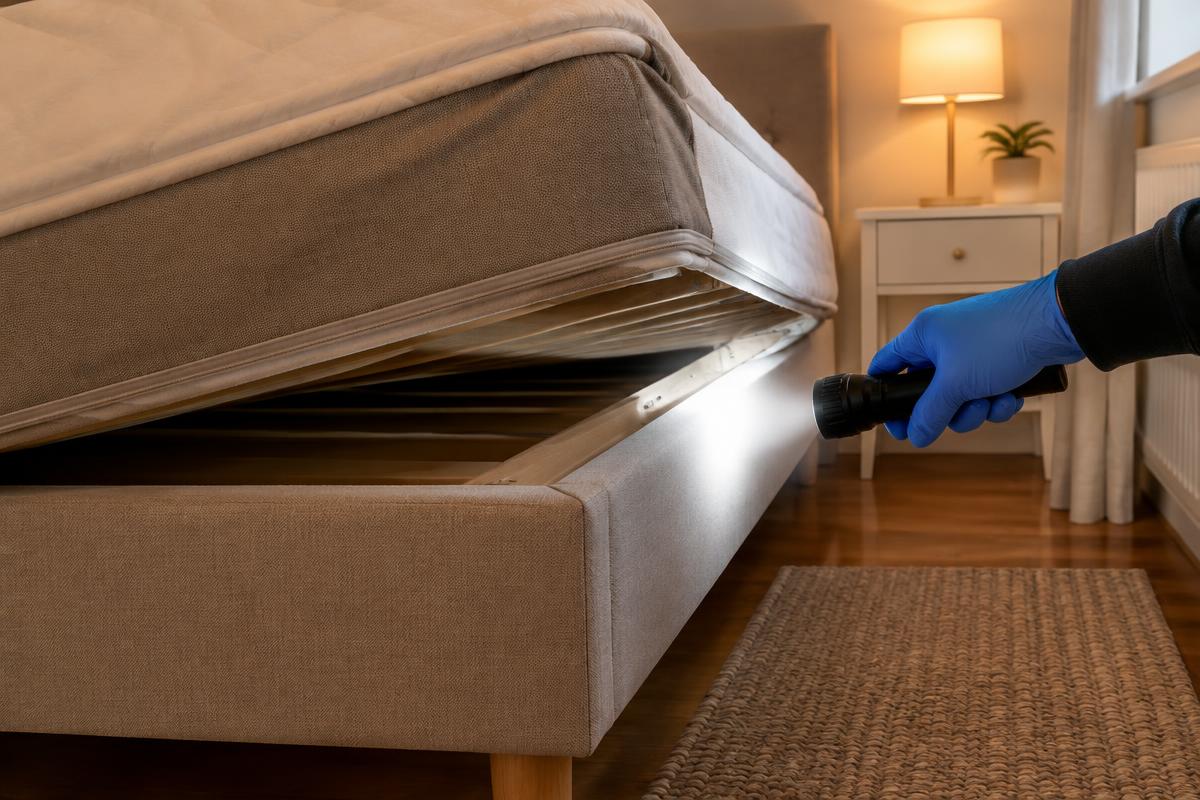
Despite their name, bed bugs are not restricted to mattresses. They can occupy bed-frame joints, upholstered furniture, skirting gaps and other sheltered spaces near sleeping or resting areas. Treating only the top of a mattress leaves many potential hiding places untouched, even when the bedding has been washed carefully.
Eggs create another challenge because they are small and can be attached within protected crevices. Removing the insects you can see does not establish that every life stage has been addressed. A treatment needs to account for concealed activity rather than relying on a visual check of the most accessible surfaces.
Identification is equally important. Skin reactions alone cannot confirm bed bugs, and different people can react differently to bites. Marks on bedding, shed skins and suspected insects can help guide an inspection, but other causes must remain possible until the evidence has been assessed. Treating the wrong pest wastes time and money.
Before disturbing furniture or applying products, record what you have found. Clear photographs and a description of the locations can make the initial discussion more useful. Avoid moving suspect items into other rooms to inspect them, as this can carry insects away from the original area and complicate the assessment.
- Photograph suspected insects and relevant marks where you find them.
- Record which rooms and furniture show possible activity.
- Note when the signs were first noticed.
- Keep a record of any products already applied.
- Avoid carrying untreated furniture between rooms.
- Ask for identification advice rather than relying on bites alone.
Shop-bought sprays rarely solve a whole-room problem
A domestic spray may affect bed bugs that receive sufficient exposure, but that is not the same as treating an infestation. In practice, it can be difficult to reach every harbourage or apply a product appropriately across all affected areas. Bugs sheltered behind joints or inside furniture may avoid meaningful contact.
Some bed bug populations also show resistance to certain insecticides, which can reduce the effectiveness of products containing those active ingredients. This does not mean every insecticide is ineffective. It means that choosing and applying a product without a clear assessment can produce disappointing results, even when the user follows the label.
Repeated applications can create additional problems. Using more than the label permits, treating unsuitable surfaces or combining products can expose occupants and pets to avoidable risks. Products should never be mixed or used in ways their instructions do not allow. Strong odour is not evidence that a treatment is working.
Tell the professional team about all previous treatments, including sprays, powders and any products applied by another contractor. That history can affect planning and safety decisions. Bed Bug Heat Solutions UK uses controlled heat rather than harmful chemicals as the primary treatment, with the proposed treatment area and preparation requirements discussed beforehand.
Washing, vacuuming and home steam have limited reach
Laundry can be a useful part of managing affected bedding and clothing when suitable heat processes are used in accordance with care instructions and professional advice. However, treating washable fabrics does not treat the bed frame, nearby furniture or room structure. Clean bedding can become exposed again if hidden activity remains.
Vacuuming can remove some accessible insects and debris, but it cannot be relied upon to extract every bug or attached egg from narrow gaps. The vacuum contents also need careful handling. Without appropriate containment and disposal advice, an otherwise sensible cleaning step can move suspect material around the property.
Domestic steam has similar limitations. Results depend on suitable equipment, contact, application technique and whether the relevant surface can be treated safely. Passing steam quickly over a mattress does not demonstrate that heat has reached insects concealed elsewhere. Steam can also damage finishes, introduce moisture and cause burns if handled carelessly.
These measures are best understood as supporting actions rather than proof of eradication. Ask which tasks will help before starting an intensive cleaning programme. Excessive disturbance can make inspection harder, while moving laundry through the house without containment can spread the problem beyond the room you originally intended to treat.
Why household heaters are not a substitute for professional heat
Heating a room with domestic appliances is not equivalent to a controlled bed bug heat treatment. Turning up the central heating or adding portable heaters does not establish that suitable conditions have reached the entire treatment area. Furniture, contents, layout and the building itself all influence how heat moves and where cooler areas remain.
The temperature people feel on entering a room tells them little about concealed harbourages. A room can feel uncomfortably hot while parts of the contents remain less exposed. Simply leaving household heaters running longer does not resolve this uncertainty, and an improvised arrangement may create serious electrical, fire or heat-damage risks.
Do not use ovens, barbecues, fuel-burning equipment or improvised heater combinations to attempt a whole-room treatment. Nor should you override appliance safety features or overload sockets. The potential consequences extend far beyond ineffective pest control, particularly where equipment is left unattended or positioned close to bedding and furniture.
Professional heat treatment requires commercial equipment, property-specific planning and active oversight. The aim is controlled delivery across the agreed treatment area, not just a high reading or a hot atmosphere near a heater. This distinction is a central reason that DIY heating attempts can fail despite considerable effort and discomfort.
How professional heat treatment addresses the coverage problem
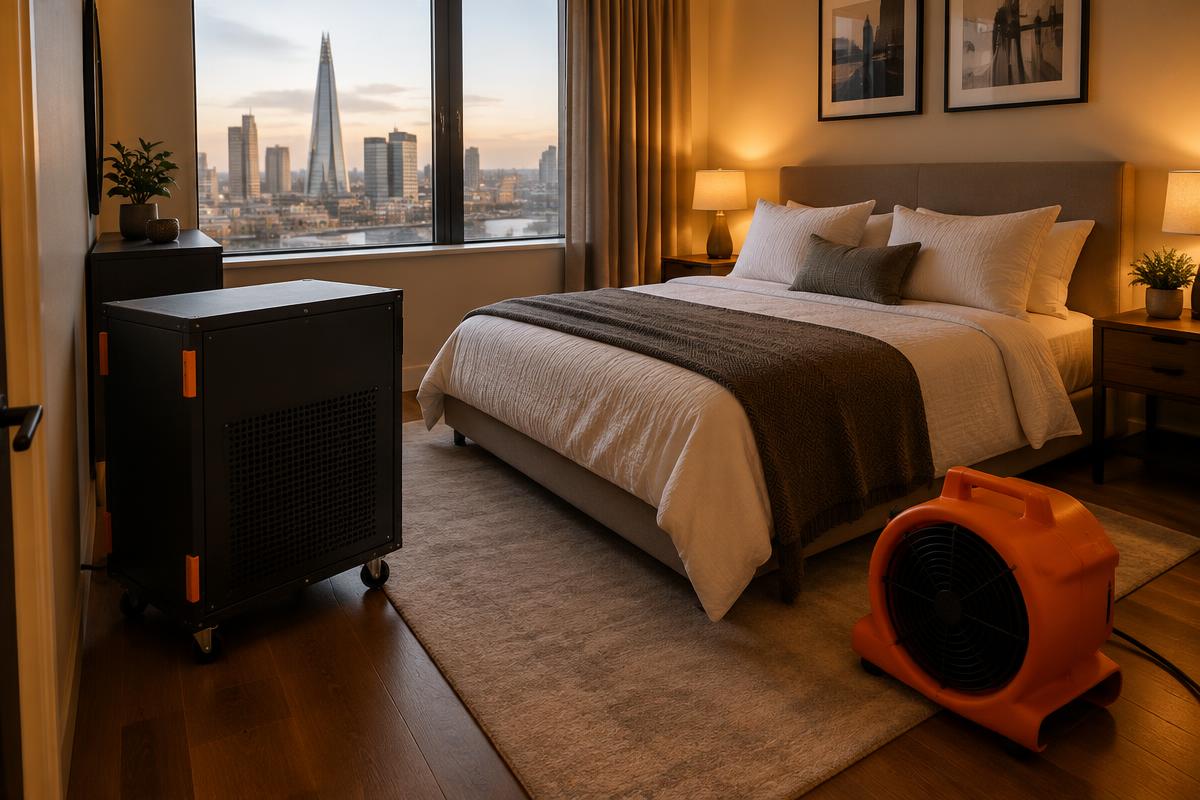
Bed Bug Heat Solutions UK uses controlled industrial heat of 60–65 degrees C across the whole treatment area. The heating period is usually three to six hours. This is not a promise that every visit takes the same time, because preparation, equipment setup, treatment requirements and the return arrangements also need consideration.
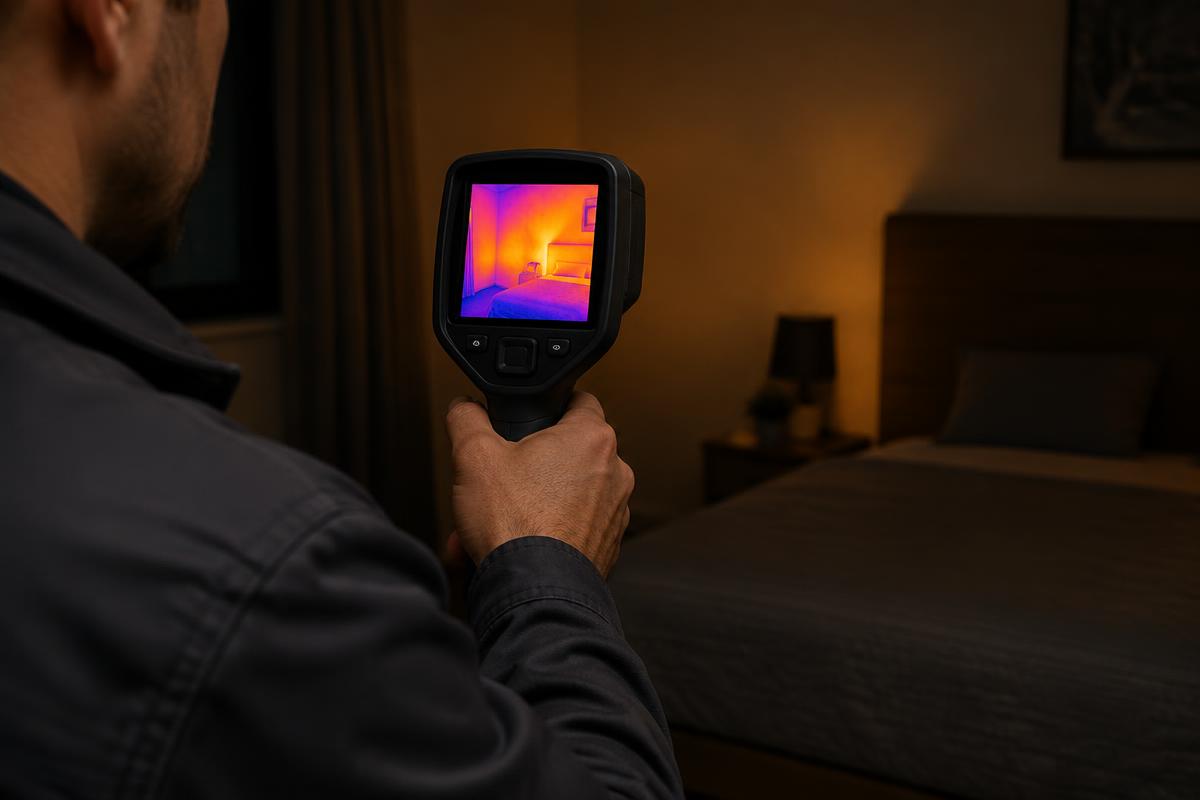
Monitoring uses active live thermal imaging cameras only. These help the team assess visible surface heat patterns during treatment and identify areas requiring attention. Thermal imaging does not see through furniture or walls, so it is used alongside treatment planning and an understanding of the property layout, contents and potential harbourages.
The objective is to address hidden bed bugs and their eggs within the agreed treatment area through a controlled process. Heat delivery must be considered across that area rather than concentrated on the bed alone. Appropriate preparation and access to relevant spaces help the team manage the practical obstacles that commonly defeat DIY treatment.
No harmful chemicals are used as the primary treatment. However, heat still requires clear safety instructions, including arrangements for occupants, pets and heat-sensitive belongings. The team draws on over 40 years of hands-on pest-control experience, is fully insured and holds RSPH Level 2 certification. These credentials support a professional process, not an exemption from careful planning.
Planning a treatment visit anywhere in Wales
Welsh properties present a wide range of practical treatment settings, from city flats and valley terraces to coastal accommodation and rural homes. The pest may be the same, but the arrangements for bringing in commercial equipment can differ considerably. A useful assessment therefore needs more than the name of the nearest town.
Bed Bug Heat Solutions UK covers England and Wales. Before a visit is offered, travel distance, access and property size must be considered together. A remote property with straightforward loading may present different practical requirements from a centrally located flat with several flights of stairs and no nearby place to unload.
Send the complete postcode and describe any narrow approach, remote location or limited loading arrangements. These details are especially important when moving commercial equipment. Mention stairs, restricted entrances and parking limitations early, rather than assuming they can be resolved on arrival. Clear information helps the team assess whether suitable arrangements can be made.
Accommodation providers should also explain how rooms are used and whether other areas could be affected. A guest bedroom, shared lounge or staff sleeping area may each require consideration depending on the evidence. For flats and managed buildings, raise any communal access restrictions or permissions that could influence treatment planning.
- Provide the complete postcode and property type.
- Describe the property size and rooms with suspected activity.
- Flag narrow lanes, steep approaches or remote locations.
- Explain parking, unloading and loading restrictions.
- Mention stairs, lifts and restricted doorways.
- Identify any building-management permissions or access arrangements.
Preparation matters more than simply clearing the room
Well-intentioned preparation can sometimes make a bed bug problem harder to manage. Emptying an affected room into a hallway or spare bedroom may carry bugs into previously unaffected spaces. Similarly, moving untreated bedding to another sleeping area can create new opportunities for spread. Get property-specific instructions before reorganising the home.
There is no universal instruction to remove every possession. Some items may need to remain within the treatment area, while others require protection or removal because they are heat-sensitive. The correct approach depends on the item and treatment plan. Guessing can either leave affected belongings untreated or expose unsuitable possessions to heat.
Discuss medicines, aerosols, batteries, delicate materials, artwork and other temperature-sensitive belongings with the team. Do not assume this is a complete list or make arrangements solely from general online guidance. Occupants, pets and plants also need appropriate arrangements, and the team should explain when and under what conditions return is permitted.
If you have already packed belongings into bags or containers, explain what is inside and where it came from. Packing is not itself a treatment, and enclosed contents can complicate heat access. Following the agreed instructions is more useful than trying to make the property look spotless before the team has assessed it.
- Request preparation instructions before moving suspect belongings.
- Disclose items already bagged, boxed or moved elsewhere.
- Discuss heat-sensitive possessions with the treatment team.
- Plan suitable arrangements for occupants, pets and plants.
- Keep agreed access routes available for equipment.
- Confirm instructions for returning to and using the treated area.
Aftercare and the limits of a treatment guarantee
A professional treatment should be followed by clear advice about what happens next. Understand which belongings can be returned, how to handle items excluded from treatment and what signs should be reported. Returning an untreated affected item to a treated room can undermine the result, even when the room itself has been addressed properly.
Bed Bug Heat Solutions UK offers a six-month guarantee on qualifying treatments. Qualification and the applicable terms should be confirmed before booking. A guarantee should not be interpreted as an unconditional promise covering every property, every treatment arrangement or every possible future introduction of bed bugs.
If you notice something concerning afterwards, record the location and obtain a clear photograph where possible. Contact the team for guidance rather than immediately applying another product. Bite-like marks alone cannot establish ongoing activity, and adding DIY treatments can make it harder to interpret the situation or decide on an appropriate next step.
Prevention also matters, particularly where luggage, guests or second-hand furniture regularly enter a property. Sensible checks and prompt reporting can help identify a new concern earlier, although no household routine removes every possibility of introduction. Bed bugs are not a sign of poor cleanliness, and there is no benefit in treating the issue as a personal failure.
Choosing a clearer route instead of repeating failed DIY attempts
The true cost of DIY treatment is not limited to the price of a spray. Repeated washing, replacement purchases, disrupted sleep and time spent moving belongings can add to the burden. Discarding a bed may be particularly frustrating if insects remain elsewhere in the room and the replacement becomes exposed to the same unresolved infestation.
Consider seeking professional advice when the identification is uncertain, signs keep returning or more than one room may be involved. You do not need to exhaust every retail product first. An early discussion can help prevent unnecessary disposal, unsafe heating attempts and changes to the property that make treatment more complicated.
When comparing treatment options, ask about the proposed coverage, preparation, safety arrangements, heating period and monitoring method. Confirm what the six-month guarantee means for your particular treatment. A clear explanation of scope is more useful than an assurance that every property can be treated identically, regardless of layout, access or the extent of activity.
For bed bug heat treatment in Wales, contact Bed Bug Heat Solutions UK with your complete postcode, property details, signs observed and any previous treatment history. Include access and loading information so travel distance and property size can be assessed together. The next step is a practical assessment, not another unsupported DIY experiment.
Useful next steps
Frequently asked questions
Six-month guarantee
Qualifying treatments are covered for six months. Send your details for a free assessment.
More from the blog
How Long Does Bed Bug Heat Treatment Take?
Read the full guide: How Long Does Bed Bug Heat Treatment Take?