Wales
Bed Bug Heat Treatment in Wales: How the Six-Month Guarantee Works
Learn what to clarify about the six-month guarantee on qualifying bed bug heat treatments in Wales, from preparation to reporting suspected activity.
14 October 20269 min read
40 years
In the trade
Four decades of hands-on bed bug experience
Fully insured
Every treatment
Comprehensive liability cover on all work
RSPH Level 2
Certificated
Royal Society for Public Health qualified
Key points
- The six-month guarantee applies to qualifying treatments.
- Ask for the scope, dates and conditions in writing.
- Report suspected activity with clear supporting details.
- Welsh visits depend on distance, access and property size.
What the six-month guarantee means
A bed bug treatment guarantee should help you understand what happens after the work is complete. Bed Bug Heat Solutions UK offers a six-month guarantee on qualifying treatments. For customers in Wales, the important point is to establish whether the proposed treatment qualifies and what the written guarantee covers before making a booking.
The phrase six-month guarantee describes a period of cover, but it does not explain every condition by itself. It should not be read as an automatic promise of unlimited visits, a refund or free treatment for every later sighting. Any entitlement to further assessment or treatment needs to be checked against the terms supplied.
This distinction matters because a concern after treatment can have more than one explanation. There may be evidence of continuing activity, an unrelated skin irritation or a new introduction of bed bugs. Those possibilities should be investigated rather than treated as interchangeable, particularly when deciding whether a concern falls within guarantee cover.
A calm, practical approach is to treat the guarantee as part of the treatment agreement, not as a separate advertising statement. Ask what is covered, what you are expected to do and how to raise a concern. The detailed conditions are not set out here, so this article explains what to clarify rather than adding new terms.
Confirm qualification before agreeing to treatment
The first question is whether the treatment proposed for your particular property qualifies for the six-month guarantee. Do not assume that every service, treatment arrangement or area of a building has identical cover. Ask for confirmation against the actual scope being offered, including the rooms or spaces included in the treatment.
Explain the extent of the suspected infestation as clearly as you can. Mention where bed bugs have been seen, which rooms are occupied and whether any treatment has already been attempted. These details help establish the situation that needs addressing, although they should not be taken as a substitute for professional assessment.
If you occupy a flat, a shared house or part of a larger accommodation building, explain that arrangement too. The area you control may be different from the area that needs consideration. Ask how the agreed treatment boundary relates to the guarantee, without assuming that neighbouring rooms or properties are covered.
Keep the written proposal and guarantee conditions together so you can refer to the same information later. If anything appears unclear, ask for an explanation before accepting the booking. In particular, establish the start and end dates rather than assuming when the six-month period begins.
- Confirm that your proposed treatment qualifies.
- Identify the rooms and areas included in the agreement.
- Ask for the guarantee start and end dates.
- Check any conditions and exclusions in writing.
- Ask what help is available if activity is reported.
- Keep the proposal and guarantee information together.
Understand what the heat treatment involves
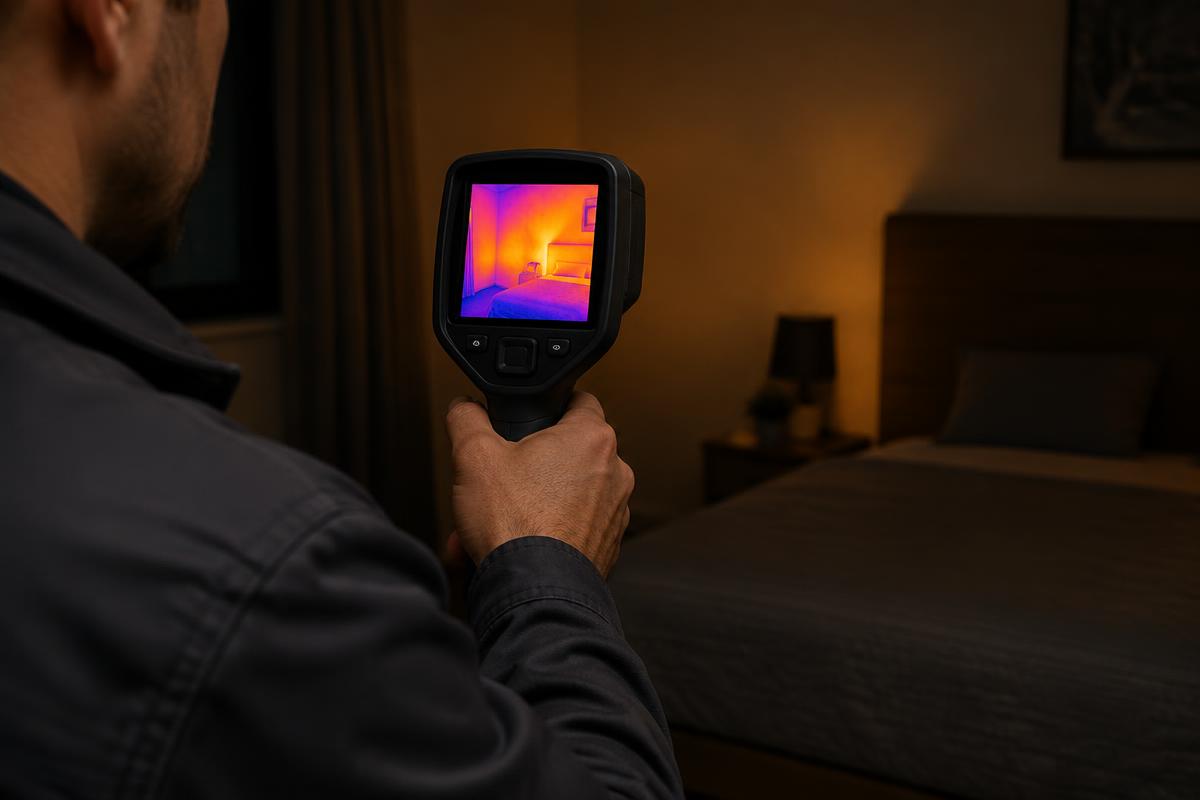
Bed Bug Heat Solutions UK uses controlled industrial heat of 60–65°C across the whole treatment area. The heating period is usually three to six hours. These are treatment facts, not a promise that every property visit will take exactly that long, because equipment handling, preparation and other practical work also need consideration.
Treatment monitoring uses active live thermal imaging cameras only. These cameras allow the team to observe thermal conditions during the work. Monitoring is part of delivering a controlled treatment, but it should not be confused with a guarantee that a property can never have bed bugs introduced again.
No harmful chemicals are used as the primary treatment. The heat-based approach still requires careful planning and clear instructions for the property. Customers should follow the advice provided about occupants, belongings and access, rather than assuming that a heat treatment requires no preparation or that all possessions can remain in place unchanged.
The company brings over 40 years of hands-on pest-control experience, is fully insured and holds RSPH Level 2 certification. These credentials provide useful background when choosing a provider. The guarantee is a separate part of the agreement, however, and its precise scope should still be explained in writing.
Plan a Welsh visit around the property and its access
Coverage in Wales includes cities, valleys, coastal accommodation and rural properties. A city address and a remote cottage may need different equipment-handling arrangements, even when both require bed bug treatment. Travel distance, access and property size must be considered together before a visit is offered.
Send the complete postcode when making an enquiry, rather than only the town or nearest landmark. Include the property type and a useful description of its size and layout. This allows the team to consider the journey alongside the practical demands of treating the agreed area, rather than assessing location in isolation.
Narrow access, a remote location or limited loading arrangements should be highlighted early. Commercial equipment needs to be moved into position safely, and the route from the unloading point to the property matters. Steps, shared entrances and restrictions on where a vehicle can stop are also useful details to mention.
Good access information supports a realistic treatment proposal, but it does not establish guarantee eligibility on its own. Ask separately whether the proposed work qualifies for cover. Avoid making travel, guest or work arrangements on the assumption of immediate attendance; a visit needs to be agreed after the relevant details have been considered.
- Send the complete property postcode.
- Describe the property size and layout.
- Mention narrow roads, gates or entrances.
- Flag remote locations and difficult approaches.
- Explain parking and loading restrictions.
- Identify steps or shared routes to the treatment area.
Preparation and your responsibilities under the agreement
Preparation helps the treatment team work with the property as agreed. Request the specific instructions for your booking and read them before making changes. General advice found online may not match the method or arrangements planned for your home, so it should not replace the instructions supplied by the treatment company.
Ask which preparation requirements, if any, are conditions of the guarantee. It would be misleading to invent a universal rule about what automatically invalidates cover. The useful approach is to identify the actual requirements, understand why they matter and raise any difficulty before treatment rather than leaving it unresolved.
If you cannot move an item, arrange access to a room or complete another requested task, tell the team. A mobility limitation, tenancy restriction or shared occupancy arrangement may affect what you can reasonably prepare. Discussing this early gives the company an opportunity to explain how it affects the proposed work and any associated cover.
Avoid moving potentially infested belongings between rooms or taking them to another property without advice. This can complicate the situation by moving bed bugs beyond the original area of concern. Ask how to handle clothing, bedding and other possessions, and keep a record of any specific guidance agreed for your circumstances.
What to confirm when treatment is complete
At completion, make sure you understand the instructions for returning to and using the property. Follow the team's guidance rather than estimating for yourself when the space is ready. The usual heating period of three to six hours does not, by itself, establish a return time for every treatment.
Check that the paperwork identifies the treatment area and the applicable guarantee information. If the scope changed from the original proposal, ask how that change is reflected in the agreement. This is particularly useful where some rooms were not included or where access arrangements affected the work that could be undertaken.
Ask what observations should be reported and how to contact the company about a concern. Knowing the reporting route in advance is more useful than trying to interpret unfamiliar signs on your own. Confirm whether the written terms specify any reporting requirements, and retain those instructions with the rest of your treatment information.
It can help to make a simple dated note of the situation after treatment, including any existing marks or signs you have already identified. This is not a substitute for professional assessment. It is a practical way to avoid confusing old evidence with something newly noticed during the guarantee period.
How to report suspected bed bug activity
If you suspect activity during the guarantee period, contact Bed Bug Heat Solutions UK using the contact details provided with your booking or on its official website. Describe what you have found rather than starting with a conclusion about treatment failure. A clear report gives the company a better basis for advising you.
Useful details include the date, the room, the exact location and whether you saw a moving insect or only a mark. A clear photograph can help with identification where one can be taken safely. Keep your treatment reference and property address available so the concern can be connected to the correct agreement.
Skin marks alone cannot reliably confirm a current bed bug infestation. Reactions can have different causes, and the timing of a mark does not necessarily establish when an exposure occurred. Report the concern, but distinguish between a suspected bite and direct evidence such as a clearly identified live bed bug.
Before using sprays, moving furniture to another room or disposing of belongings, ask for advice. Further action may make the situation harder to assess or spread the problem elsewhere. Reporting a concern should lead to clarification of the next steps; it should not be assumed to trigger an automatic repeat treatment under every agreement.
- Find your treatment reference and guarantee documents.
- Record when and where the concern arose.
- Describe exactly what you observed.
- Take a clear photograph if practical.
- Mention any changes since the treatment.
- Ask for advice before taking further treatment action.
Continuing activity and a new introduction are different
A guarantee needs to be considered alongside the circumstances of any later activity. Continuing activity associated with the original problem and a new introduction after treatment are different possibilities. The written terms should explain how relevant circumstances affect cover; neither the customer nor the provider should need to rely on assumptions about the wording.
Heat treatment addresses the agreed treatment area at the time the work is carried out. It does not create a permanent barrier around a building. Bed bugs can be brought into a property later with belongings, so a successful treatment and a subsequent introduction are not mutually exclusive events.
Welsh holiday accommodation, shared housing and frequently visited homes can involve many movements of people and luggage. That does not prove the source of any later infestation, and it should not be used to assign blame. It simply makes an accurate account of events useful when a concern is being assessed.
Tell the company about relevant changes, such as furniture arriving, belongings returning from storage or activity being noticed in an adjoining area. These details may assist an assessment, but they do not establish a cause by themselves. Ask how the evidence and the guarantee terms will be considered before drawing conclusions about cover.
Guarantee questions for landlords and accommodation operators
For landlords and accommodation operators, the person arranging treatment may not be the person living in or cleaning the property. Agree who will receive preparation instructions, retain the guarantee documents and report concerns. Clear communication reduces the chance that useful information is lost between an owner, agent, tenant or housekeeping team.
Define the treatment area carefully in buildings with multiple rooms or units. A guarantee relating to one agreed area should not be assumed to extend across an entire guesthouse, block of flats or holiday complex. Ask for the scope to be made clear in the proposal and retained with the property records.
Staff or occupants should know how to report suspected activity without moving items into other rooms. A simple internal reporting process can capture the date, location and any photograph before further action is taken. This supports a clearer account for the treatment company without asking untrained people to diagnose the problem themselves.
If occupancy, management or ownership may change during the six-month period, ask whether that affects the guarantee. Do not assume cover transfers automatically to another person or business. Equally, avoid promising guests or tenants a particular remedy until you have checked what the company's written agreement actually provides.
Make the guarantee part of an informed booking
The most useful guarantee is one you understand before the treatment takes place. For a Welsh property, begin with the complete postcode, property size, access details and a description of the suspected infestation. Those facts support planning, while a separate discussion should establish eligibility for the six-month guarantee.
Read the conditions for scope, dates, customer responsibilities, exclusions and the process for raising a concern. Ask what assessment or further work may be provided if a report falls within cover, and whether any circumstances could involve additional charges. These are questions to settle with the company, not benefits to assume from the guarantee headline.
Keep the agreed information accessible throughout the guarantee period and share relevant instructions with anyone responsible for the property. If you notice something concerning, make a factual record and seek advice. This approach is more useful than repeatedly checking skin marks or taking uncoordinated action that changes the situation before it can be assessed.
Bed Bug Heat Solutions UK serves England and Wales with controlled heat treatment and a six-month guarantee on qualifying treatments. To explore treatment for your Welsh property, provide the practical details needed for an informed assessment and request the applicable written terms. Clear expectations make both the booking and any later guarantee enquiry easier to manage.
Useful next steps
Frequently asked questions
Six-month guarantee
Qualifying treatments are covered for six months. Send your details for a free assessment.
More from the blog
How Long Does Bed Bug Heat Treatment Take?
Read the full guide: How Long Does Bed Bug Heat Treatment Take?