Hertfordshire
Bed Bug Heat Treatment For Large Family Homes In Hertfordshire
A practical guide to planning bed bug heat treatment in larger Hertfordshire homes, covering multiple bedrooms, household preparation and higher heat loads.
8 August 202610 min read
40 years
In the trade
Four decades of hands-on bed bug experience
Fully insured
Every treatment
Comprehensive liability cover on all work
RSPH Level 2
Certificated
Royal Society for Public Health qualified
Key points
- Multiple bedrooms and dense furnishings need coordinated treatment planning.
- Controlled industrial heat reaches 60–65 degrees C across the whole treatment area.
- The heating period is usually 3–6 hours, with timings confirmed on the day.
- Qualifying treatments include a six-month guarantee.
Why Larger Hertfordshire Homes Need a Coordinated Approach
A bed bug problem in a large family home is not simply a small-bedroom infestation spread over more floor space. Multiple sleeping areas, bulky furniture, stored bedding and regular movement between rooms create a more complicated treatment setting. Effective planning needs to account for how the household uses the property, rather than concentrating only on the room where bites were first noticed.
Hertfordshire homes vary considerably, from older detached houses with several extensions to newer properties with loft bedrooms and open-plan living areas. These differences matter because layout, construction and contents influence how heat moves through a building. A useful assessment considers the whole proposed treatment area, including connecting spaces and rooms used only occasionally.
Families may respond to suspected bed bugs by changing bedrooms, moving children into another room or sleeping downstairs. These understandable decisions can make the situation harder to assess, especially when bedding and personal belongings move with people. Before reorganising sleeping arrangements, ask for advice and explain where everyone has recently been sleeping.
Bed Bug Heat Solutions UK plans treatment around the property and the evidence available. The aim is to establish a suitable treatment scope, prepare rooms properly and coordinate access across the household. For larger homes, that preparation is an important part of delivering controlled heat, not merely a tidying exercise before equipment arrives.
Assessing Multiple Bedrooms and Shared Family Spaces
Start by making a clear room-by-room record of suspected activity. Note where insects, dark spotting, shed skins or eggs have been found, and where unexplained bites have occurred. Bites alone cannot confirm bed bugs, so photographs or a safely contained specimen can be more useful than a description of skin marks.
Include guest bedrooms, nurseries, teenagers’ rooms and any study containing a sofa bed. A room does not have to be used every night to be relevant, particularly if overnight visitors stay there or family members rotate between beds. Record recent changes in room use so the assessment reflects current and previous sleeping arrangements.
Shared spaces also deserve attention when someone regularly rests or sleeps there. Upholstered sofas, reclining chairs and blankets used during overnight stays may be relevant to the treatment plan. This does not mean every item in the house is infested, but it helps avoid assuming that bed bugs are restricted to mattresses.
Describe the connections between rooms as well as the rooms themselves. Landings, dressing areas, adjoining bathrooms and staircases can affect the practical setup, while an attached annexe may require separate consideration. The treatment scope should follow professional assessment rather than a simple bedroom count or an assumption that closed doors provide reliable isolation.
- List every bedroom and identify who currently sleeps there.
- Mark rooms where insects or other physical signs have been found.
- Include sofa beds and chairs used for overnight sleeping.
- Explain any recent movement of bedding or furniture.
- Identify loft rooms, annexes and connecting dressing areas.
- Keep clear photographs of suspected insects for assessment.
Understanding Higher Heat Loads in a Family House
Heat load describes the amount of heating needed to bring the treatment area and its contents to the required conditions. In a larger home, the challenge is not just the volume of air. Substantial furniture, densely packed storage and the building’s materials absorb heat, while heat can also be lost through the structure.
A bedroom with a large upholstered bed, filled wardrobes and deep drawers presents different conditions from a lightly furnished guest room. Thick mattresses, stacked blankets and crowded storage spaces can slow heat movement into sheltered places. Bed bugs hide in small gaps and protected areas, making room preparation and equipment positioning particularly important.
Ceiling height, glazing, external walls and changes in floor level also influence treatment planning. A converted loft may behave differently from a ground-floor bedroom in an extension, even when the two rooms have similar floor areas. These factors need to be considered together rather than reduced to a single rule about property size.
Higher heat loads do not justify an automatic promise of a particular completion time. Bed Bug Heat Solutions UK uses controlled industrial heat of 60–65 degrees C across the whole treatment area, with a heating period usually lasting 3–6 hours. Timings are confirmed on the day, taking the actual property and treatment setup into account.
How Controlled Heat and Live Thermal Imaging Work Together
Professional heat treatment targets bed bugs through controlled exposure to lethal heat, including eggs when they receive sufficient exposure. The process is different from warming a room with domestic heaters or directing a hairdryer at furniture. Industrial equipment, a suitable treatment layout and careful preparation are needed to address the wider treatment area.
Bed Bug Heat Solutions UK uses controlled industrial heat of 60–65 degrees C across the whole treatment area. No harmful chemicals are used as the primary treatment. That approach still requires a professional safety plan, including instructions about occupancy, sensitive belongings and when the household may return.
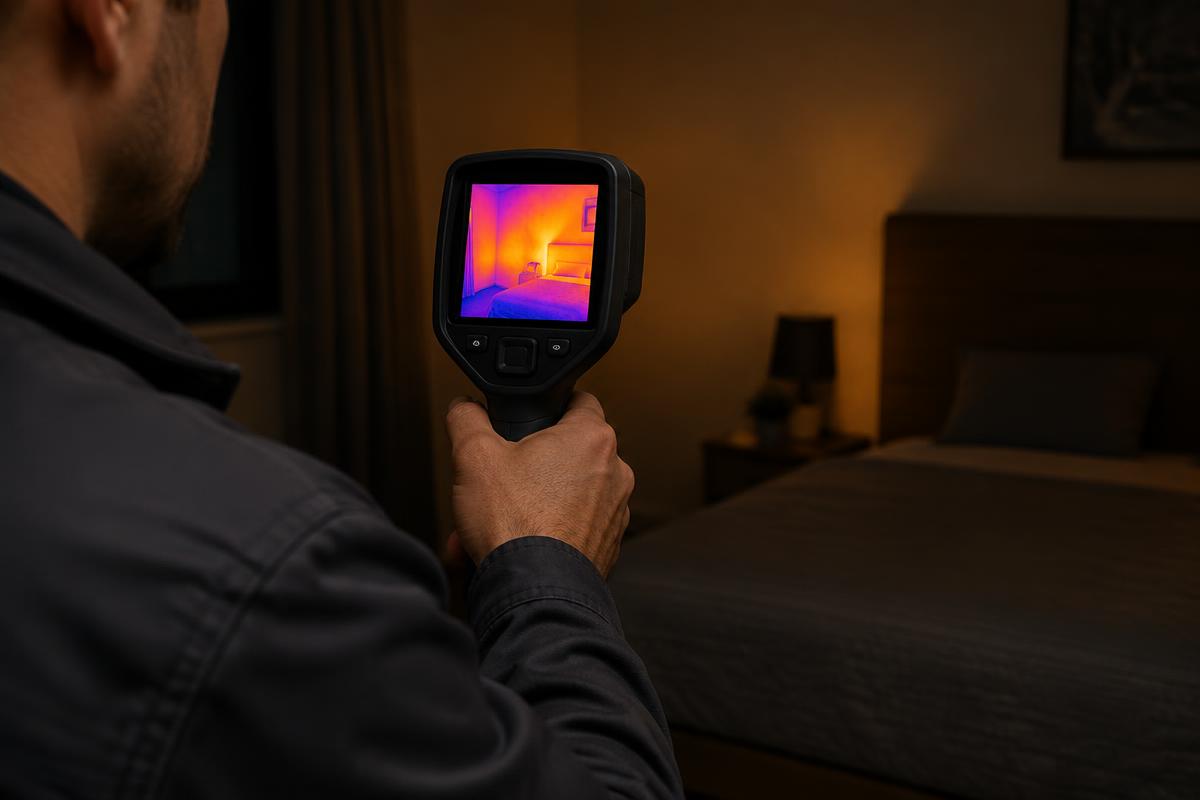
Monitoring is carried out using active live thermal imaging cameras only. Live thermal imaging allows the team to observe visible surface heat patterns and identify areas requiring attention as treatment progresses. It does not see through solid furniture or walls, so access, positioning and the arrangement of belongings remain essential parts of the process.
In a multi-bedroom home, differences between rooms need to be managed throughout treatment. The team uses live thermal imaging alongside the agreed setup to guide adjustments to heat distribution. Families should avoid changing furniture positions or opening external doors once treatment is underway, unless specifically instructed by the treatment team.
Preparing Bedrooms, Storage and Bulky Furniture
Preparation should make the agreed treatment area accessible without scattering potentially infested belongings through the house. Follow the company’s instructions before emptying cupboards, dismantling beds or packing clothing. Doing more than requested can be counterproductive if it creates piles of mixed items or moves bed bugs into previously unaffected spaces.
Large family bedrooms often contain storage beds, full wardrobes, toy boxes and drawers packed with spare linen. Explain these features during the assessment so the team can advise how each should be arranged. Do not assume that tightly packed bags, sealed containers or deep stacks of bedding can remain unchanged during treatment.
Provide clear routes around beds and between major pieces of furniture where instructed. This helps the team position equipment and manage heat distribution without unnecessary handling on the day. Heavy wardrobes and large bed frames should not be moved unsafely by household members; discuss any access difficulty before the appointment.
Avoid taking bedding, cushions or soft toys into the garage, car or an untreated bedroom simply to clear space. If items need to be removed, agree a containment and treatment plan first. Preparation works best when the household understands which belongings stay, which require separate handling and where any approved removed items will be kept.
- Read the preparation instructions before starting room clearance.
- Tell the team about storage beds and heavily filled wardrobes.
- Create the access routes requested around furniture.
- Keep belongings in their original rooms unless advised otherwise.
- Ask before dismantling beds or moving heavy furniture.
- Flag cupboards or rooms that cannot be opened easily.
Managing Children’s Belongings, Pets and Sensitive Items
A family home contains many possessions that need individual consideration before high-temperature treatment. Medicines, aerosols, candles, cosmetics, batteries, musical instruments and delicate artwork may require removal or another agreed precaution. Obtain the specific preparation guidance rather than relying on a general assumption that all household objects tolerate the same conditions.
Children’s bedrooms can be especially time-consuming because they combine sleeping furniture with toys, craft materials and electronic devices. Sort out questions about sensitive items early, but avoid moving everything into another part of the house. Where a potentially infested item cannot remain in the treatment area, ask how it should be contained and managed.
People and pets must remain outside the treatment area during the process and follow the team’s instructions about leaving and returning. Mention fish tanks, reptiles, small mammals and any specialist animal accommodation when requesting an assessment. Moving these safely can involve more planning than arranging temporary care for a dog or cat.
Prepare a small set of essentials for the period away from home, using the handling guidance provided. Families may need medication, suitable clothing, school equipment and children’s comfort items, but belongings should not be transferred casually from affected rooms. Discuss mobility needs or other circumstances that could make leaving and returning more difficult.
- Declare medicines and any items with specific storage requirements.
- Ask about aerosols, batteries and heat-sensitive materials.
- Identify valuable artwork and musical instruments in advance.
- Arrange suitable temporary accommodation for all pets.
- Plan essential belongings using the agreed handling instructions.
- Explain mobility, childcare or other practical access needs.
Planning Access and the Treatment Day
Access can be a significant practical issue at a larger Hertfordshire property. Tell the team about narrow driveways, restricted parking, steps to the entrance and long routes from the unloading point. Inside the house, narrow staircases, tight landings and loft access may influence how equipment is brought into the treatment area.
Be ready to discuss the property’s electrical arrangements and any known defects or restrictions. The team will determine the equipment requirements and suitable setup; householders should not improvise temporary connections or assume that a particular supply arrangement will be suitable. Early information helps identify questions that need resolving before treatment begins.
The heating period is usually 3–6 hours, but that is not the same as the total time needed for the visit or absence from home. Setup, checks and the return arrangements also require time. Timings are confirmed on the day, so avoid planning a tightly scheduled school pickup or another appointment around an assumed finishing time.
Choose one adult as the main household contact so instructions do not become confused between several family members. That person should know which rooms are included, what has been removed and whether any preparation remains incomplete. Access and availability are agreed through the booking process rather than based on a promise of same-day attendance.
- Explain parking and equipment unloading restrictions.
- Describe stairs, narrow doorways and loft access.
- Flag known electrical issues before the appointment.
- Nominate one household contact for treatment-day decisions.
- Allow flexibility beyond the expected heating period.
- Keep children and pets away until return is authorised.
Deciding Between Selected Rooms and a Wider Treatment Area
A common question in a large home is whether only the visibly affected bedroom needs treatment. The answer depends on the evidence, the household’s movements and the relationship between rooms. Treating fewer rooms is not automatically appropriate simply because the first signs appeared around one bed.
Bed bugs can be carried on belongings, and household routines may connect rooms that appear separate on a floor plan. Children sharing bedding, visitors using different bedrooms or an adult moving to the sofa can all be relevant. Explain these patterns honestly so the proposed treatment scope reflects the actual situation.
Equally, having several bedrooms does not mean every room should be described as infested without evidence. Professional assessment should distinguish between confirmed signs, plausible exposure and spaces with no identified activity. The team can then explain the recommended treatment area and any limitations associated with leaving adjoining rooms outside it.
Discuss annexes, rooms above garages and connected accommodation as part of the same conversation. If the treatment plan needs to be phased or access is restricted, the handling of belongings and the boundaries between treated and untreated spaces require particular care. Do not assume that a closed bedroom door prevents movement or makes separate treatment straightforward.
Returning Home and Reducing the Risk of Reintroduction
Return only when the treatment team has confirmed that it is appropriate to do so. Rooms and belongings may still feel warm, and any instructions about ventilation, handling or resetting the home should be followed. Resist the temptation to enter early to collect an item or begin putting bedrooms back in order.
Ask how to manage bedding and any belongings that received separate handling. Items removed before treatment should not simply be brought back without checking the agreed plan. In a large household, keeping track of which bags or containers came from which rooms helps prevent uncertainty when normal routines resume.
Continue to look for identifiable evidence rather than judging the outcome solely from skin symptoms. Reactions to bites can vary, and skin irritation has many possible causes. If a suspected insect or fresh signs appear, take clear photographs where possible and contact the company for advice rather than immediately applying household insecticides.
Longer-term precautions should focus on common routes of reintroduction, including travel belongings and second-hand furniture. Inspect items before bringing them into bedrooms and seek advice if anything looks suspicious. Bed bugs are not a sign of poor cleanliness, so the goal is sensible awareness rather than an exhausting programme of constant cleaning.
Requesting a Hertfordshire Assessment and Understanding the Guarantee
A useful quote request gives more than the number of bedrooms. Include the property layout, the rooms with suspected activity, relevant sleeping arrangements and any bulky or densely stored contents. Mention whether the home has a loft conversion, extension or annexe, as these details help explain the likely treatment requirements.
Costs depend on the assessed scope and practical demands of the job rather than a fixed price for every large house. Access, preparation needs and the proposed treatment area all form part of that discussion. Ask what the quote includes and clarify any responsibilities for the household before confirming the booking.
Bed Bug Heat Solutions UK offers a six-month guarantee on qualifying treatments. Ask whether the proposed treatment qualifies and request the applicable terms, including what to do if further activity is suspected. A guarantee should be understood alongside the agreed treatment scope and aftercare instructions, not treated as an unconditional promise covering every future situation.
The company serves England and Wales, including Hertfordshire, with over 40 years of hands-on pest-control experience. It is fully insured and RSPH Level 2 certificated. Use the quote request form or contact page to describe the property and arrange the next steps for a treatment plan suited to a larger family home.
Useful next steps
Frequently asked questions
Six-month guarantee
Qualifying treatments are covered for six months. Send your details for a free assessment.
More from the blog
How Long Does Bed Bug Heat Treatment Take?
Read the full guide: How Long Does Bed Bug Heat Treatment Take?