Cambridgeshire
Student Accommodation And Bed Bugs: Cambridgeshire
A practical guide to recognising, reporting and treating bed bugs in Cambridgeshire student halls, shared houses and university-managed accommodation.
18 August 20269 min read
40 years
In the trade
Four decades of hands-on bed bug experience
Fully insured
Every treatment
Comprehensive liability cover on all work
RSPH Level 2
Certificated
Royal Society for Public Health qualified
Key points
- Report suspected bed bugs promptly and keep belongings within the affected room.
- Coordinate inspections and treatment through the accommodation manager or landlord.
- Professional heat treatment requires careful preparation and access planning.
- Qualifying treatments include a six-month guarantee.
Why bed bugs need a coordinated response in Cambridgeshire student accommodation
Student accommodation brings together people, luggage and furniture from many different places. In Cambridgeshire, that includes college rooms in Cambridge, purpose-built student blocks, shared houses in surrounding towns and privately managed university lets. Bed bugs can arrive in any of these settings, including rooms that are cleaned regularly and managed carefully.
Bed bugs usually spread by travelling with belongings rather than through poor hygiene. Suitcases, rucksacks, bedding and second-hand furniture can provide hiding places. Term-time moves, overnight visits and journeys home create opportunities for accidental introduction, although identifying exactly where an infestation began is often impossible and should not delay action.
The challenge in student housing is that a bedroom rarely operates in isolation. Residents may share landings, storage cupboards and laundry facilities, while maintenance staff and cleaners work across several rooms. An effective response therefore needs clear instructions about access, belongings and communication, rather than leaving each student to organise a separate solution.
A calm, factual approach protects both residents and the accommodation itself. Reporting a concern should not become an exercise in blame or embarrassment. Early professional assessment can help establish whether bed bugs are present, identify the areas requiring attention and reduce the chance of belongings being moved around unnecessarily.
Recognising signs in a student bedroom
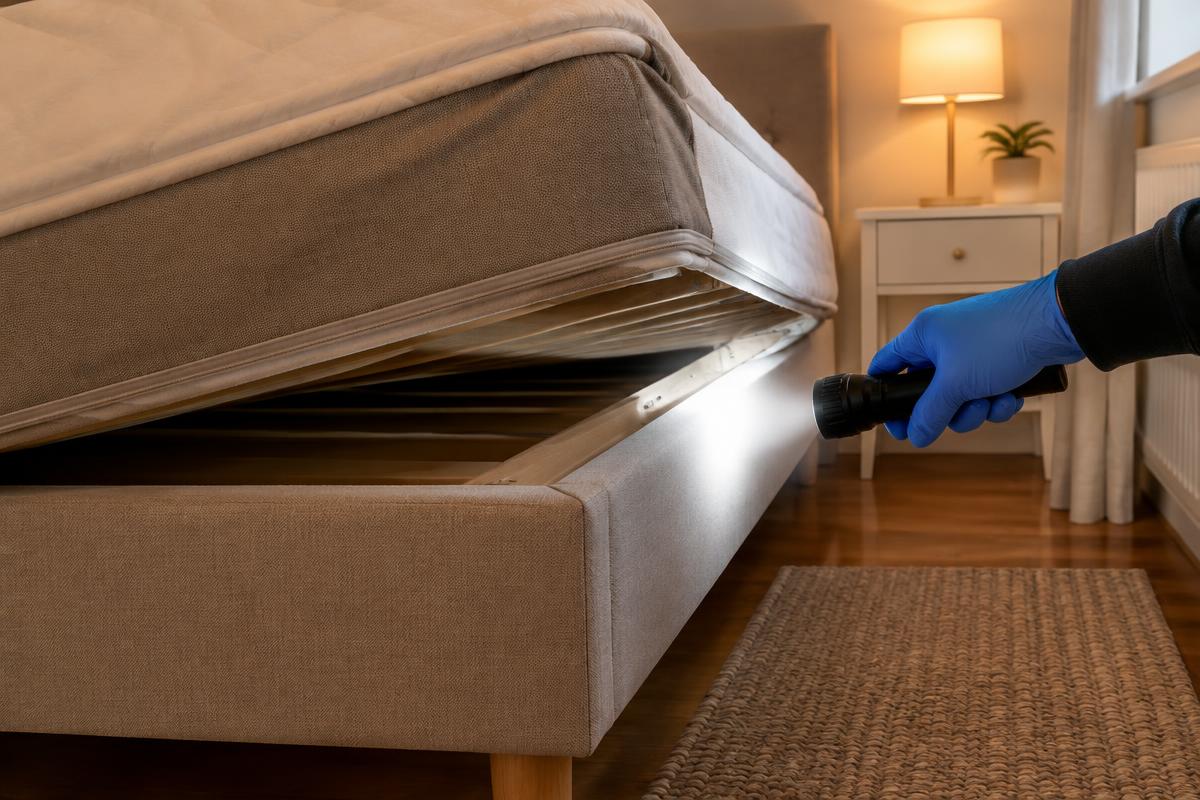
Bed bugs tend to hide close to places where people sleep or rest for extended periods. In a student room, useful inspection points include mattress seams, bed-frame joints, the back of a headboard and nearby upholstered furniture. A desk chair or bedside cabinet may also deserve attention, depending on its position and construction.
Possible signs include live insects, pale shed skins, small whitish eggs and dark spotting around hiding places. Small blood marks on bedding can also prompt an inspection, but none of these marks should be interpreted without context. Adult bed bugs are small, flattened insects, and younger stages can be much harder to notice.
Skin reactions alone cannot confirm an infestation. Some people develop itchy marks, while others show little or no visible reaction, and several unrelated conditions can look similar. A photograph of an insect or a safely contained specimen is more useful for identification than trying to diagnose the problem from a pattern of bites.
Students should record what they found, where they found it and when it first became noticeable. Clear photographs can support the initial report, but avoid taking furniture apart or shifting it into a corridor. If nothing is immediately visible, persistent concerns still justify asking the accommodation provider to arrange a suitable inspection.
- Look along accessible mattress seams and bed-frame joints without moving items between rooms.
- Photograph suspected insects and marks clearly, including a size reference where practical.
- Keep a brief record of dates, room locations and any recent changes in signs.
- Retain a suspected insect in a sealed container if it can be collected safely.
- Report the findings rather than relying on bites alone for identification.
Who to tell in halls, college rooms and private university lets
In university-managed halls or college accommodation, the first report should normally go through the stated accommodation or maintenance reporting route. Include the room number, relevant photographs and a concise description of the concern. Ask who will coordinate the inspection and whether there are immediate instructions about laundry, cleaning or access.
In a privately rented student house, notify the landlord or managing agent in writing and retain a copy. Housemates should know that a concern has been reported, particularly if they have noticed similar signs. However, avoid deciding that every itchy mark proves wider spread before the property has been assessed.
Responsibility for arranging and paying for treatment can depend on the tenancy, the circumstances and applicable housing duties. It should not be assumed that the student who reports the issue caused it or must automatically pay. Where responsibility is disputed, a university housing adviser, students’ union advice service or Citizens Advice can help explain the available options.
One named coordinator makes the practical process easier. That person can gather reports, arrange authorised room access, circulate preparation instructions and confirm the proposed scope of work. In larger buildings, accommodation staff should also consider residents who are away, have limited English or need information in an accessible format.
Limiting spread while an inspection is arranged
A common reaction is to leave the affected bedroom and take bedding to another room. That can move bed bugs with the belongings and complicate the eventual treatment. Avoid switching sleeping locations without professional advice, and tell the accommodation manager if distress, health needs or another concern makes remaining in the room difficult.
Keep items within the room unless there is a clear plan for handling them. Laundry that needs to leave should be bagged securely before it crosses shared areas. Bags should not be opened on communal benches or laundry-room floors, and cleaned items should be kept separate from anything that has not yet been dealt with.
Avoid applying household insecticides, insect foggers or improvised heating methods while awaiting advice. Uncoordinated products may create exposure risks and interfere with the treatment plan. Portable heaters, hairdryers and similar equipment are not substitutes for a controlled professional process and can present serious fire or electrical hazards.
Do not put a suspected infested mattress in a shared hallway or offer unwanted furniture to another student. Disposal is not automatically necessary, and moving bulky items can spread the problem. If disposal is advised, agree a contained removal route and arrangements that prevent someone else taking the item for reuse.
- Keep bedding, bags and furniture out of unaffected bedrooms.
- Seal laundry before carrying it through shared corridors.
- Ask for fabric-specific laundry advice and follow appliance instructions.
- Avoid sprays, foggers and do-it-yourself heating attempts.
- Do not donate or sell belongings suspected of carrying bed bugs.
- Tell the coordinator promptly if another room develops possible signs.
Assessing the right treatment area in a shared building
The treatment area should follow an assessment of the infestation, not simply the boundaries of an individual tenancy. A single student bedroom may be the main focus, but nearby rooms and relevant shared spaces can also require inspection. Bed bugs can move through suitable gaps and can be carried between rooms on belongings.
In halls, useful background includes reports from neighbouring rooms, recent room changes and any movement of furniture by residents or staff. Rooms beside, above or below the reported location may warrant consideration. This does not mean an entire accommodation block automatically needs treatment; it means the scope should be justified rather than assumed.
In shared houses, the assessment should consider where residents sleep and spend long periods resting. A lounge sofa used for overnight stays may be relevant even when the first report concerns an upstairs bedroom. Storage areas can matter too if luggage or bedding from an affected room has been placed there.
Cambridgeshire student housing varies from older converted properties to modern blocks with tightly managed access. Building layout, room contents and operational restrictions all influence planning. The provider should explain which areas are included, which require inspection only and what residents must do if further evidence appears outside the agreed treatment area.
How controlled professional heat treatment works
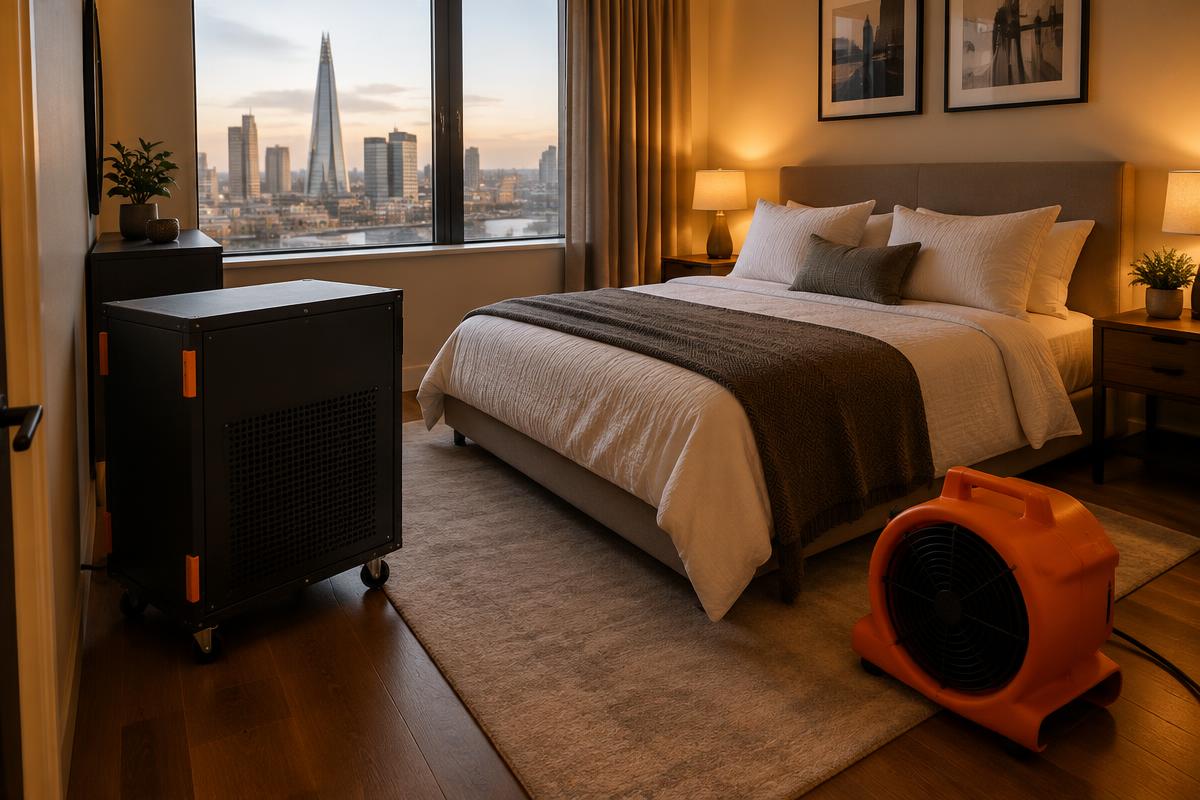
Bed Bug Heat Solutions UK uses controlled industrial heat of 60–65°C across the whole treatment area. The purpose is to treat the agreed space comprehensively rather than warming only the visible bed or spraying individual hiding places. Heat can target bed bugs and their eggs when the required exposure reaches the places where they are concealed.
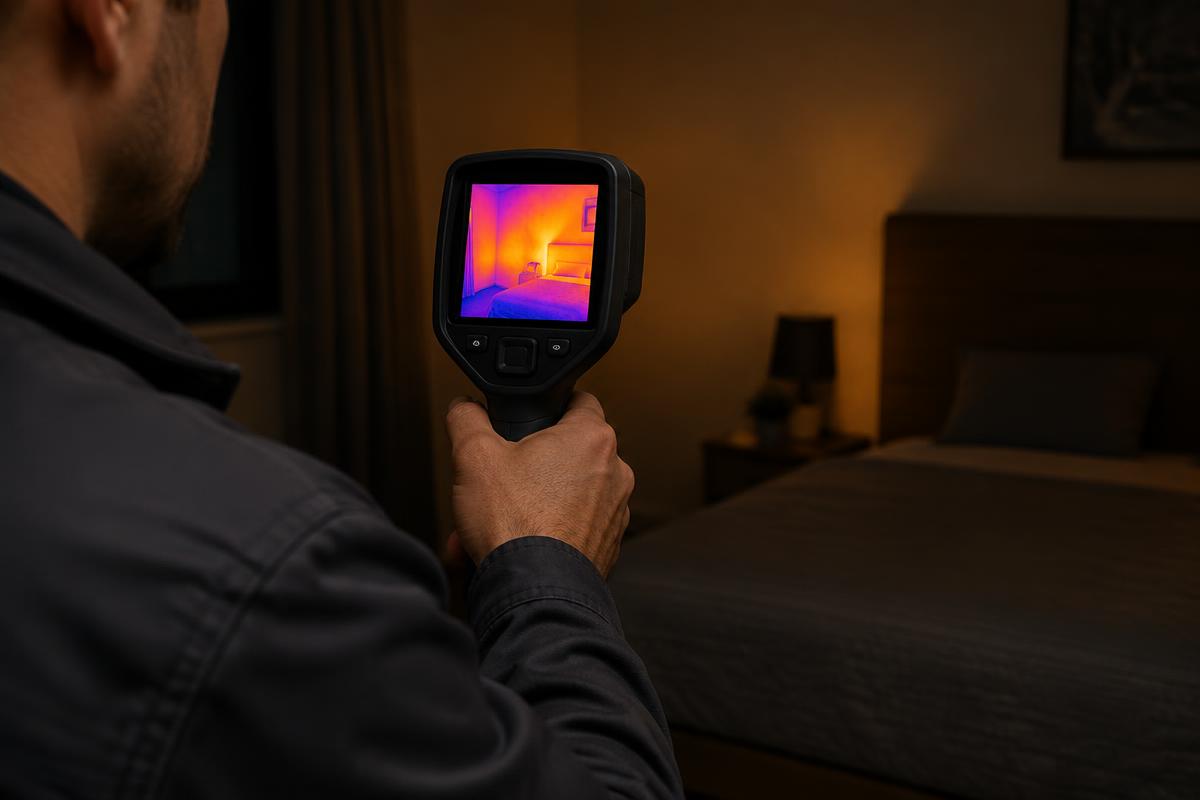
Monitoring is carried out using active live thermal imaging cameras only. Live thermal imaging allows technicians to observe visible surface heat patterns and identify areas needing attention as the process develops. It does not see through furniture or walls, so careful assessment, preparation and management of the treatment area remain essential.
The heating period is usually 3–6 hours, with timings confirmed on the day. This is not a promise that the entire visit, including setup and the arrangements for safe re-entry, will fit within that window. Students and accommodation staff should make plans around the instructions given for the particular property.
No harmful chemicals are used as the primary treatment. That does not mean residents can remain inside while industrial heating is underway or that every personal possession can be left in place without review. Professional control, suitable preparation and clear exclusion arrangements are important parts of delivering the treatment safely.
Preparing student rooms without scattering belongings
Preparation should begin with the provider’s written instructions, not a general internet checklist applied without checking. The team needs to understand how much furniture and stored material is present, whether beds have enclosed bases and whether access is obstructed. Photographs can help explain a crowded room before detailed preparation arrangements are agreed.
Students often keep a large share of their possessions in one small space. Stacked storage boxes, tightly packed wardrobes and luggage beneath beds can affect access and heat movement. Do not automatically empty these items into a communal area; ask how they should be arranged within the agreed treatment plan.
Tell the provider about medicines, aerosols, batteries, valuable objects and anything with specific storage-temperature limits. Heat-sensitive items need individual instructions about whether they should remain, be protected or be removed in a controlled way. Removing an untreated item without considering possible bed bugs can create a route for reintroduction later.
Essential study equipment also needs advance discussion, particularly if a resident depends on it for coursework or accessibility. Ask about laptops, specialist devices and documents rather than assuming all electronics must leave or can safely stay. Pack only the agreed essentials for the treatment period, following advice on keeping those belongings separate.
- Obtain and share the preparation instructions before anyone starts moving items.
- Identify medicines and belongings with manufacturer storage-temperature limits.
- Declare batteries, aerosols and other items requiring specific handling advice.
- Explain access problems caused by storage, fitted furniture or locked cupboards.
- Agree how essential study and accessibility equipment will be handled.
- Check that every affected resident understands what must stay and what may leave.
Planning treatment day around halls and house routines
A workable treatment day depends on more than an available bedroom. The accommodation coordinator needs to arrange entry, keys, any required permissions and a suitable equipment route. In managed blocks, reception staff and relevant building personnel should understand where work is taking place without sharing unnecessary personal information about residents.
Fire safety arrangements require particular care in halls and converted houses. Residents must not cover, disconnect or alter alarms themselves. Any building-system considerations associated with the work should be handled through authorised accommodation staff and the treatment provider, while escape routes and shared circulation areas remain properly managed.
Everyone excluded from the treatment area needs somewhere suitable to go, including anyone who studies from home or works nights. Pets must also be accounted for where they are present. If temporary accommodation is needed, arrange it with the provider or landlord and seek guidance on what can be taken without transferring the problem.
Re-entry should happen only when the treatment team confirms that it is safe. Avoid scheduling an exam departure, a house move or an essential appointment on the assumption of a precise finish time. The heating period is usually 3–6 hours, but actual timings are confirmed on the day and practical arrangements can vary.
After treatment: follow-up, belongings and the guarantee
Aftercare should explain when rooms can be used, how belongings should be handled and what evidence residents should report. Ask before bringing back anything removed during preparation, especially luggage, bedding or stored clothing. Treating a room cannot prevent an untreated item from carrying bed bugs back into it later.
Existing skin reactions may take time to settle, and new-looking marks are not by themselves proof that treatment has failed. Conversely, a live insect should not be dismissed without identification. Keep a dated record of any observations and send clear evidence to the accommodation coordinator and treatment provider for advice.
Bed Bug Heat Solutions UK offers a six-month guarantee on qualifying treatments. Qualification and the applicable terms should be confirmed for the booking, rather than assumed to cover every room, item or future introduction. In a shared building, it is particularly useful to have the treated area and any excluded areas recorded clearly.
Student turnover makes continuity important after the visit. Landlords and accommodation teams should retain the treatment and aftercare information so that a staff change or end-of-term move does not break communication. Residents should be told how to report further concerns discreetly, without needing to share personal details in a large group chat.
- Wait for permission before re-entering the treatment area.
- Follow the written aftercare instructions for cleaning and replacing belongings.
- Check before returning items removed ahead of treatment.
- Record and report any suspected live insects with photographs where possible.
- Keep the booking details, treatment scope and guarantee terms accessible.
Reducing future introductions and arranging help in Cambridgeshire
No student property can be made completely immune to bed bugs, but sensible routines can reduce avoidable risks. Check second-hand bed frames and upholstered furniture carefully before accepting them, and avoid collecting discarded mattresses. After travel, inspect luggage and unpack thoughtfully, particularly if there were concerns about the place where you stayed.
Accommodation managers can support prevention through clear reporting instructions given at move-in and repeated before major room changes. Cleaning and maintenance teams should know how to flag suspected evidence without transporting it between rooms. A straightforward process is more useful than warnings that make residents afraid to report a possible problem.
Bed Bug Heat Solutions UK serves England and Wales, including Cambridgeshire. The company brings over 40 years of hands-on pest-control experience, is fully insured and holds RSPH Level 2 certification. Advice and treatment planning should reflect the actual property, whether it is a college room, a shared student house or a university-managed let.
To discuss a suspected infestation, use the quote request form or contact page. Include the property location, accommodation type, number of rooms involved, evidence found and the details of the person authorised to coordinate access. The next steps, preparation requirements, availability and treatment scope can then be discussed without relying on assumed prices or attendance times.
Useful next steps
Frequently asked questions
Six-month guarantee
Qualifying treatments are covered for six months. Send your details for a free assessment.
More from the blog
How Long Does Bed Bug Heat Treatment Take?
Read the full guide: How Long Does Bed Bug Heat Treatment Take?