Hampshire
Travelling And Bed Bugs: How They Arrive In Your Home
From holiday suitcases to second-hand sofas, discover how bed bugs reach Hampshire homes and what you can do to reduce the risk.
3 August 20269 min read
40 years
In the trade
Four decades of hands-on bed bug experience
Fully insured
Every treatment
Comprehensive liability cover on all work
RSPH Level 2
Certificated
Royal Society for Public Health qualified
Key points
- Bed bugs can hitchhike in luggage, clothing and used furniture.
- Inspect sleeping areas and keep luggage away from beds.
- Check second-hand furniture before bringing it indoors.
- Contain suspected items and seek advice before moving belongings.
Why travelling can bring bed bugs back to Hampshire
A holiday, work trip or overnight visit can provide an opportunity for bed bugs to reach a Hampshire home. They do not need to travel on your skin. Instead, they can hide in the seams of a suitcase, a folded garment or another belonging that is later carried indoors.
This can happen after a stay in accommodation of any price or standard. Bed bugs feed on blood rather than dirt, so a tidy room is not proof that they are absent. Their flat bodies allow them to conceal themselves in narrow spaces around beds and nearby furniture between feeds.
For households in Southampton, Portsmouth, Winchester, Basingstoke and across rural Hampshire, the relevant issue is the journey belongings have taken, not the postcode. International holidays, UK weekends away and visits to friends can all involve sleeping spaces used by other people. None automatically means an infestation will follow.
The aim is to reduce avoidable opportunities for hitchhiking without making travel stressful. A brief arrival inspection, sensible luggage placement and a planned unpacking routine can help. Understanding what to look for also makes it easier to respond calmly if something suspicious appears after returning home.
How bed bugs hide in luggage and personal belongings
Bed bugs cannot fly or jump, but they can crawl into accessible bags placed close to an infested resting area. An open suitcase on a bed or upholstered chair offers folds and sheltered edges. Zips, fabric piping, internal pockets and the lining around handles can provide places where an insect is difficult to notice.
Clothing is another possible vehicle, particularly when it is left near an affected bed or mixed with belongings that have been exposed. Bed bugs do not normally live on people like lice. Finding one in a garment does not mean it has been feeding continuously on the person wearing it.
The same principle applies to backpacks, laptop bags, overnight holdalls and children's soft travel items. Anything with seams, folds or sheltered compartments deserves attention if there is evidence of bed bugs nearby. There is no need to assume every object is contaminated simply because it was taken on a trip.
A hard-shell suitcase may have fewer external fabric hiding places than a soft bag, but it is not bed bug proof. Its zip, wheels and interior still need checking. Protective luggage covers and closed bags can reduce access in some circumstances, although neither should replace inspection and careful handling.
What to check when you arrive at holiday accommodation
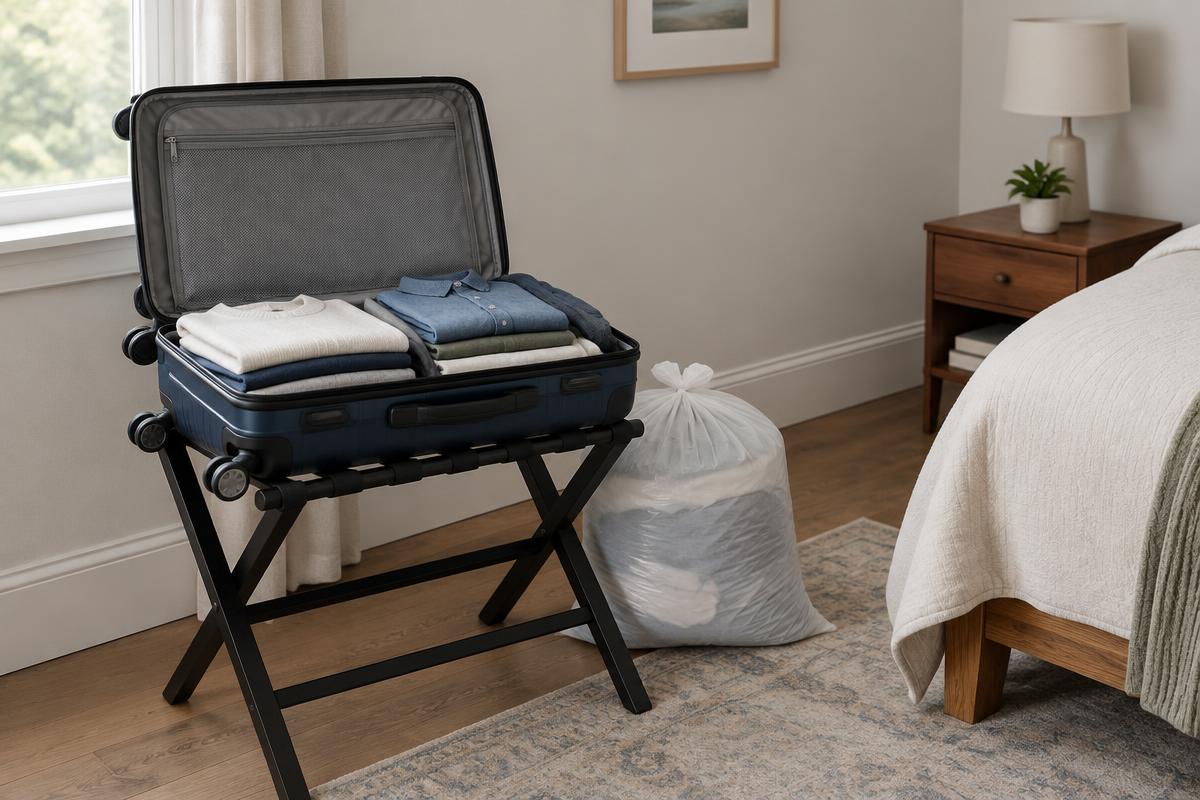
Before unpacking, leave bags closed on a clear, hard surface away from the bed and upholstered furniture. A clean luggage rack can be useful once its joints and straps have been inspected. Avoid placing belongings in the bath or anywhere damp, and keep access routes and bathroom facilities clear.
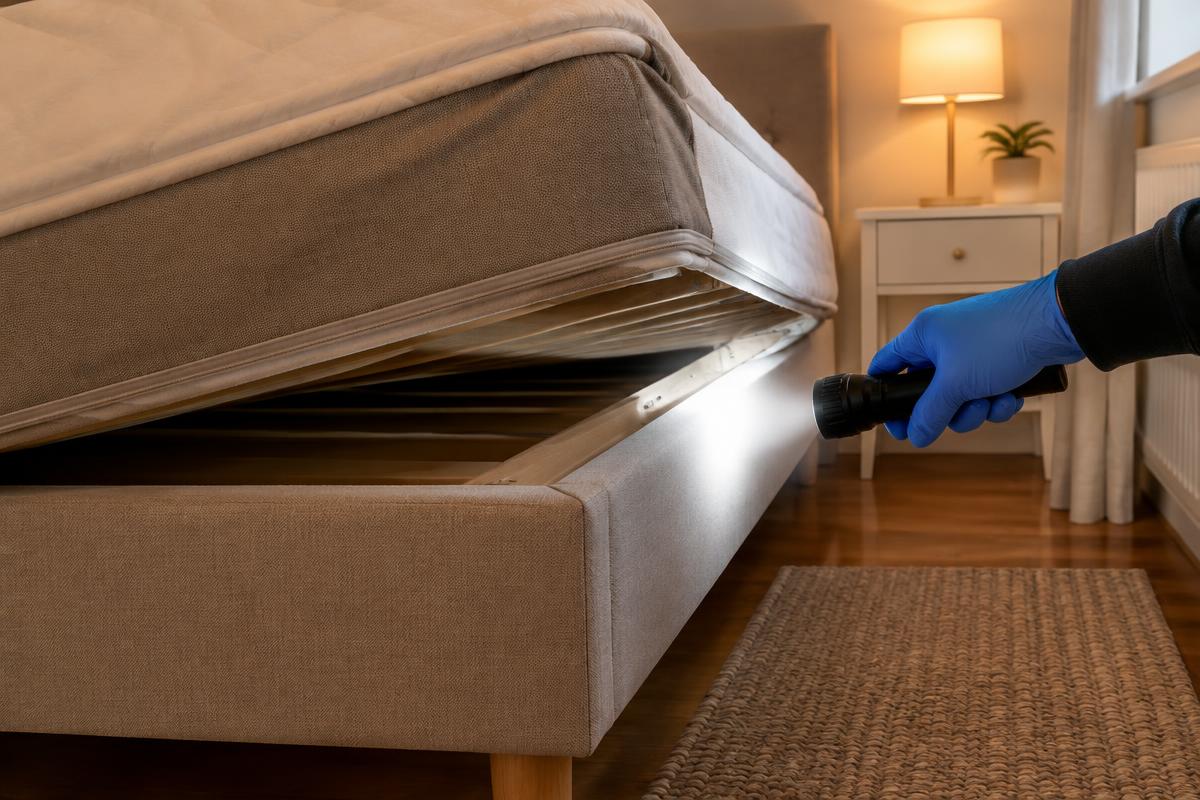
Use a torch to examine accessible mattress piping, labels and the edges around the head of the bed. Look at visible bed-frame joints and the back of the headboard only where this can be done safely. Do not dismantle hotel furniture, remove fixed fittings or reach into electrical equipment.
Possible signs include live insects, pale shed skins, small whitish eggs and dark spotting concentrated around hiding places. Adult bed bugs are broadly oval and brownish, while younger stages can be much smaller and paler. A single mark on bedding is not enough to establish what caused it.
If you find convincing evidence, photograph it and tell the accommodation provider before unpacking further. Ask for an alternative room away from the suspected problem, and inspect that room as well. Keep your belongings contained while arrangements are made rather than transferring loose clothing between rooms or along corridors.
- Keep luggage closed until the sleeping area has been checked.
- Inspect mattress seams and accessible bed-frame joints with a torch.
- Check a luggage rack before setting your suitcase on it.
- Look for a combination of insects, skins, eggs and dark spotting.
- Photograph suspicious evidence without disturbing the whole room.
- Report concerns promptly and inspect any replacement room.
Simple habits that reduce exposure during your stay
Once the room has been checked, keep luggage off the bed and away from upholstered seating where practical. Close bags after removing what you need, rather than leaving compartments open throughout the stay. These habits reduce opportunities for insects to enter belongings, but they cannot guarantee that exposure will not occur.
Store worn clothing in a separate, closable bag rather than in a heap beside the bed. Packing cubes can help organise belongings, although ordinary fabric versions are not necessarily sealed against insects. The most useful arrangement is one that lets you separate and handle suspect items without repeatedly sorting them around the room.
Take particular care when sharing accommodation or moving between several stops on a Hampshire family holiday or business trip. A bag transferred from one sleeping area to another can move a problem onward. If concerns arise at one location, contain the relevant belongings before continuing the journey.
Do not spray travel bags or sleeping areas with household insecticides as a routine precaution. Products may be unsuitable for skin-contact surfaces, and improvised applications can create unnecessary exposure without resolving hidden activity. Keeping belongings organised and reporting physical evidence are more useful than relying on scent-based deterrents or unverified travel remedies.
A careful unpacking routine when you get home
Returning home is a useful point to inspect luggage before it reaches bedrooms. Choose a clear area with an easy-to-clean floor, good lighting and enough space to work. Do not place the suitcase on a bed or sofa, particularly if you noticed suspicious signs during your stay.
Remove clothing in manageable groups and inspect the bag's seams, pockets, zip folds and lining. If exposure is suspected, keep washable items in closed bags until they can go directly into the laundry. Avoid shaking clothing around the room, which can dislodge insects and make their whereabouts harder to establish.
For suitable fabrics, a 60°C wash and an appropriate hot tumble-drying cycle can help address bed bugs in laundry. Follow garment labels and appliance instructions, and avoid overloading. A cool wash alone should not be treated as reliable control, while delicate items need professional advice rather than an improvised heat treatment.
Vacuuming visible debris and accessible suitcase crevices can support inspection, but it does not guarantee that all insects or eggs have been removed. Seal vacuum waste and place it in an outside bin promptly; empty bagless machines carefully according to their instructions. If live bugs are found, stop moving belongings and seek guidance.
- Unpack away from beds, sofas and carpeted storage areas where possible.
- Inspect suitcase seams, pockets, handles and zip folds.
- Keep suspected laundry contained until it enters the machine.
- Use fabric-safe washing and drying settings suited to the items.
- Dispose of vacuum contents in a sealed bag outside.
- Ask for advice before treating delicate or non-washable belongings.
Why second-hand furniture needs a separate inspection
Travel is not the only way bed bugs enter a property. A used bed frame, mattress, sofa or bedside cabinet can carry insects or eggs concealed in its structure. Furniture may look clean and well maintained while still containing narrow hiding places that are not visible in a sales photograph.
Before collecting an item from a Hampshire seller, ask about its history, where it has been stored and whether any pest problems are known. Honest answers are helpful, but they cannot replace a physical inspection. The seller may be unaware of an early infestation, especially if the furniture has not recently been used.
Examine joints, screw recesses, upholstery seams and the underside wherever access is safe and permission is given. Drawers can be checked along their runners and undersides. With upholstered pieces, pay attention to piping and accessible folds; a quick look at the main seating surface is unlikely to reveal everything.
If there are suspicious insects, shed skins or clustered dark spots, do not bring the item home while you decide what to do. Painting a frame, wiping surfaces or leaving furniture in a garage does not reliably eliminate bed bugs. An attached garage or shed should not be treated as a guaranteed containment or treatment space.
- Ask about the furniture's history before arranging collection.
- Inspect the actual item rather than relying on photographs.
- Check joints, drawer runners, seams and accessible undersides.
- Take a torch and allow enough time for a proper examination.
- Decline items with unexplained signs of insect activity.
- Avoid accepting discarded mattresses or upholstered furniture of unknown history.
Recognising the signs after a trip or furniture purchase
An infestation is not always obvious immediately after an item arrives. A small number of insects can be difficult to find, and people vary in their reactions to bites. Some notice itchy marks, some react later, and others show little or no visible reaction even when bed bugs are present.
Bites alone cannot confirm bed bugs because other insects and skin conditions can produce similar marks. The pattern or position of a rash is not a dependable identification method. Look for physical evidence near the sleeping area, such as insects, shed skins or repeated dark spotting in seams and joints.
If you find a suspected insect, take a clear close-up photograph with something nearby to show its size. Where practical, secure the specimen in a small sealed container without handling it directly. Identification is much easier from an intact insect than from a blurred photograph of a mark on skin.
Write down when signs were first noticed, which rooms are involved and whether there has been recent travel or a furniture delivery. This information helps guide an assessment without proving the source. Avoid blaming a particular hotel, visitor or seller unless there is sound evidence connecting them to the problem.
What to do if you suspect bed bugs in your Hampshire home
Start by limiting unnecessary movement of belongings from the affected room. Carrying loose bedding to another bedroom or shifting a sofa downstairs can spread insects into new hiding places. Contain items that need moving, and ask for professional preparation advice before emptying cupboards or dismantling furniture throughout the property.
Moving to a different bedroom is not a reliable solution and may encourage activity around another sleeping area. Sleeping elsewhere in the home should not become the main control strategy. If you cannot use the room comfortably, discuss the situation with a professional so that containment and treatment planning can be considered together.
Avoid throwing out a mattress immediately. Disposal may be unnecessary, and carrying an uncovered item through the property can spread insects. If an item genuinely needs removal, agree how it should be wrapped and labelled, and follow local disposal arrangements so that someone else does not unknowingly take it home.
Tenants should notify their landlord or managing agent promptly, particularly in flats or shared accommodation where assessment beyond one room may be needed. Responsibility for arranging or paying for treatment depends on the circumstances and tenancy arrangements. Keep dated photographs and written communications, and obtain housing advice if responsibility is disputed.
- Photograph evidence and record where it was found.
- Keep suspected belongings contained rather than moving them freely.
- Seek identification before buying multiple treatment products.
- Avoid foggers, improvised room heating and repeated random spraying.
- Tell the landlord or managing agent if the property is rented.
- Use the quote request form or contact page to discuss professional help.
How professional heat treatment addresses an established infestation
When bed bugs have become established, prevention habits alone will not remove the infestation. Professional treatment needs to consider the affected rooms, the belongings within them and the preparation required. Treating only the suitcase may miss insects that have already moved into a bed frame, nearby furniture or another concealed space.
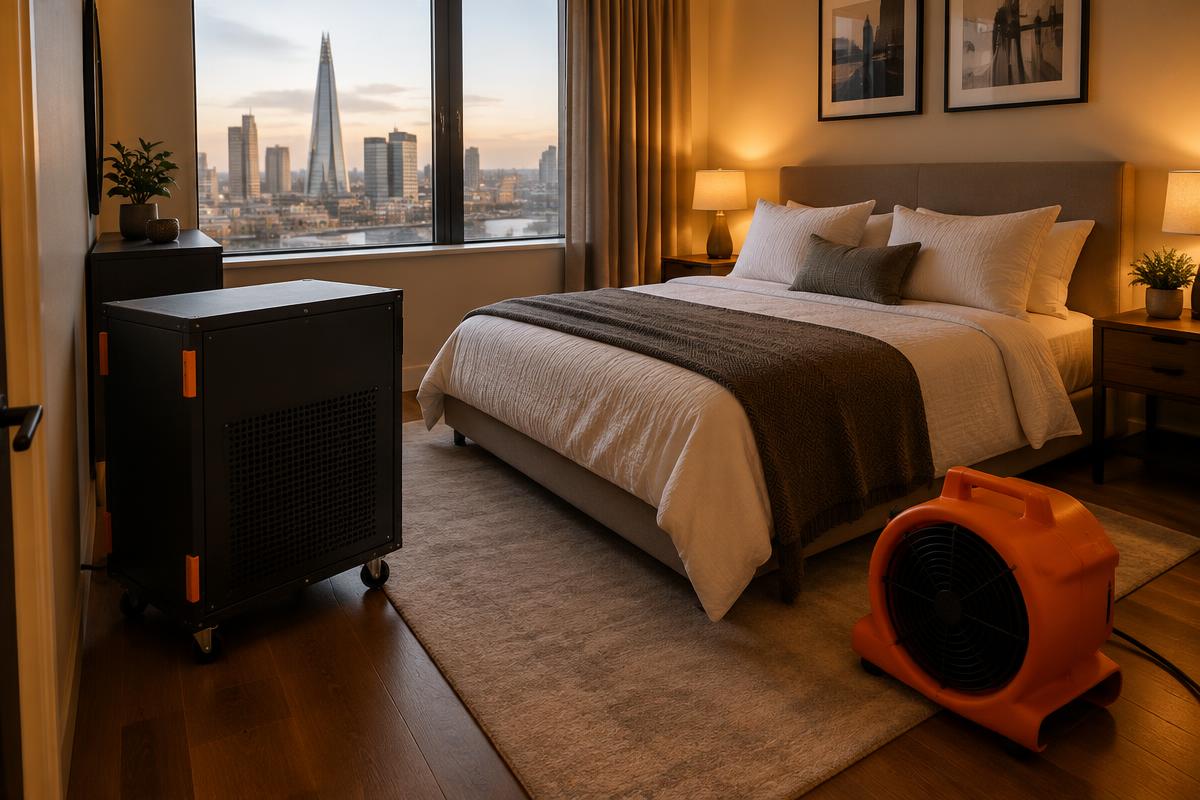
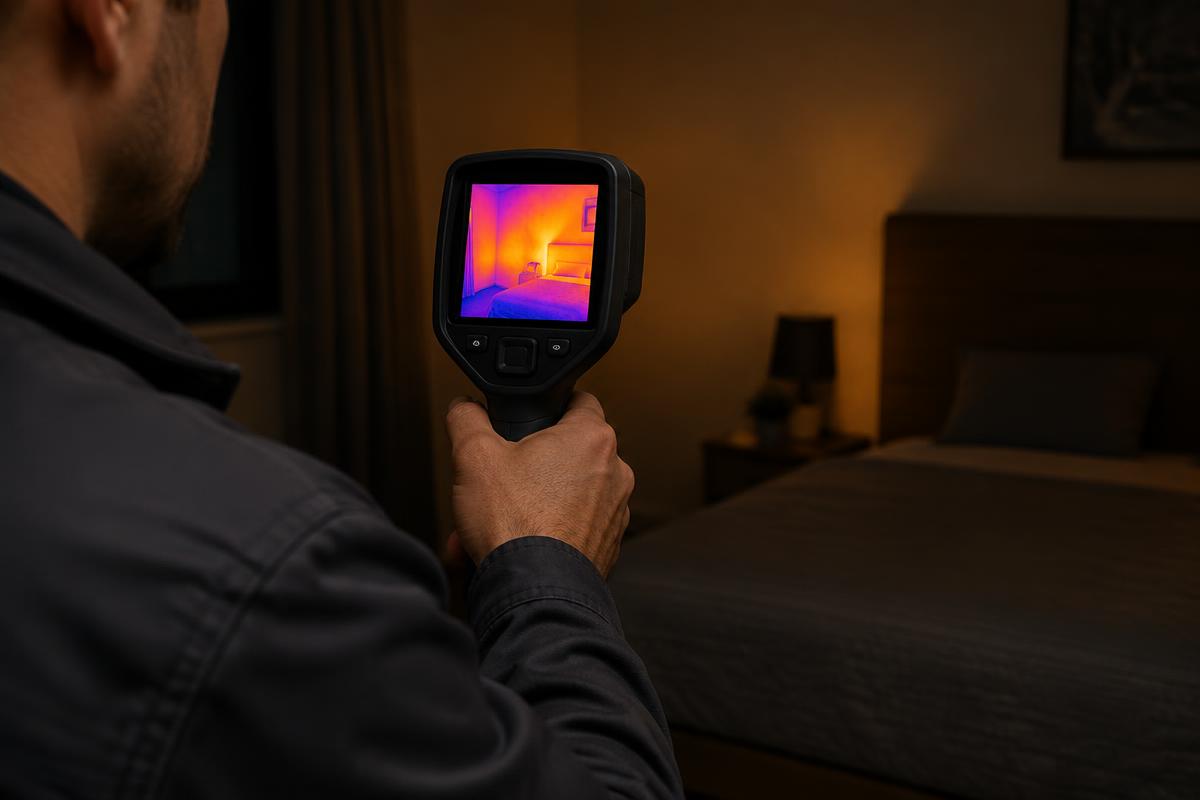
Bed Bug Heat Solutions UK uses controlled industrial heat of 60–65°C across the whole treatment area, with no harmful chemicals used as the primary treatment. Monitoring is carried out using active live thermal imaging cameras only. This live thermal imaging helps the team observe heat distribution as treatment progresses.
The heating period is usually 3–6 hours, with timings confirmed on the day. That heating period should not be confused with an exact arrival-to-departure duration, as preparation, equipment arrangements and safe re-entry also need consideration. Instructions for people, pets and heat-sensitive belongings are provided as part of planning.
The company serves England and Wales, including Hampshire, with over 40 years of hands-on pest-control experience. It is fully insured and RSPH Level 2 certificated. A six-month guarantee is available on qualifying treatments; ask about eligibility, the applicable conditions and the agreed treatment scope when requesting a quote.
Building a realistic prevention routine for future journeys
The most effective routine is one that a household can repeat without major disruption. Keep a small torch with travel essentials, inspect accommodation before unpacking and decide where luggage will be checked on return. A few consistent habits are more manageable than treating every ordinary journey as a likely infestation.
For families, make sure everyone understands the same basic rules about bags and worn clothing. Children do not need alarming warnings, but they can learn to keep soft toys and backpacks off unfamiliar beds until checks are complete. Guests can be welcomed normally without assumptions about cleanliness or personal circumstances.
Apply the same consistency to second-hand purchases. Inspect before collection, resist pressure to accept an item without checking it and think about how it will be transported. Finding a bargain is less useful if an uncertain furniture history leads to avoidable disruption after the item reaches your home.
If there are already warning signs, early assessment is more useful than repeated cleaning without a clear plan. Hampshire residents can use the Bed Bug Heat Solutions UK quote request form or contact page to explain what they have found. Include the property location, affected rooms, recent travel and any clear photographs to help guide the discussion.
Useful next steps
Frequently asked questions
Six-month guarantee
Qualifying treatments are covered for six months. Send your details for a free assessment.
More from the blog
How Long Does Bed Bug Heat Treatment Take?
Read the full guide: How Long Does Bed Bug Heat Treatment Take?