Surrey
Why Bed Bugs Come Back After DIY Treatment: A Surrey Perspective
Recurring bed bugs often mean a DIY treatment missed hidden insects or eggs, rather than a new infestation arriving in your Surrey home.
13 August 20269 min read
40 years
In the trade
Four decades of hands-on bed bug experience
Fully insured
Every treatment
Comprehensive liability cover on all work
RSPH Level 2
Certificated
Royal Society for Public Health qualified
Key points
- DIY sprays can miss eggs and insects hidden deep inside furniture.
- Foggers rarely provide reliable coverage of bed bug hiding places.
- Moving rooms or belongings can spread an existing infestation.
- Professional assessment helps distinguish survival from reintroduction.
Why bed bugs seem to disappear and then return
Finding bed bugs again after spending a weekend spraying, washing and cleaning is frustrating. In many Surrey homes, however, the insects have not truly gone away and come back. A surviving population has remained out of sight, sometimes with eggs that were never reached by the original treatment.
Bed bugs spend much of their time concealed close to where people sleep or rest. Treating the visible insects on a mattress can reduce immediate activity without addressing those inside a bed frame, behind a headboard or beneath upholstery. A quieter few nights can therefore give a misleading impression of success.
Skin reactions make the picture harder to interpret. People react differently to bites, and marks may appear after a delay or have an unrelated cause. Counting fresh-looking marks alone cannot reliably establish whether treatment worked, when a bite happened or which room contains an infestation.
The useful question is not simply why bed bugs returned, but what evidence shows they were eliminated in the first place. A careful inspection, a record of findings and a review of exactly what was treated provide a stronger starting point than another round of the same product.
The hiding places that routine DIY treatment misses
A bed bug infestation is rarely limited to the sleeping surface. Mattress seams are an obvious inspection point, but bed-frame joints, recessed screw holes, slats and headboard fixings can offer better protection. Divan bases add fabric folds, internal spaces and drawer runners that are difficult to inspect without suitable access.
Nearby furniture also matters. A bedside cabinet may contain insects beneath a drawer, around a joint or along its rear edge. Upholstered chairs and sofas deserve attention when someone regularly naps there. Treating the bed while overlooking these resting places can leave a source of continuing activity untouched.
Eggs are particularly easy to overlook because they are small and attached to surfaces. An inspection made under poor lighting may miss them among pale fabric, dust or narrow seams. Even thorough cleaning cannot be assumed to remove every egg from inaccessible construction details within furniture.
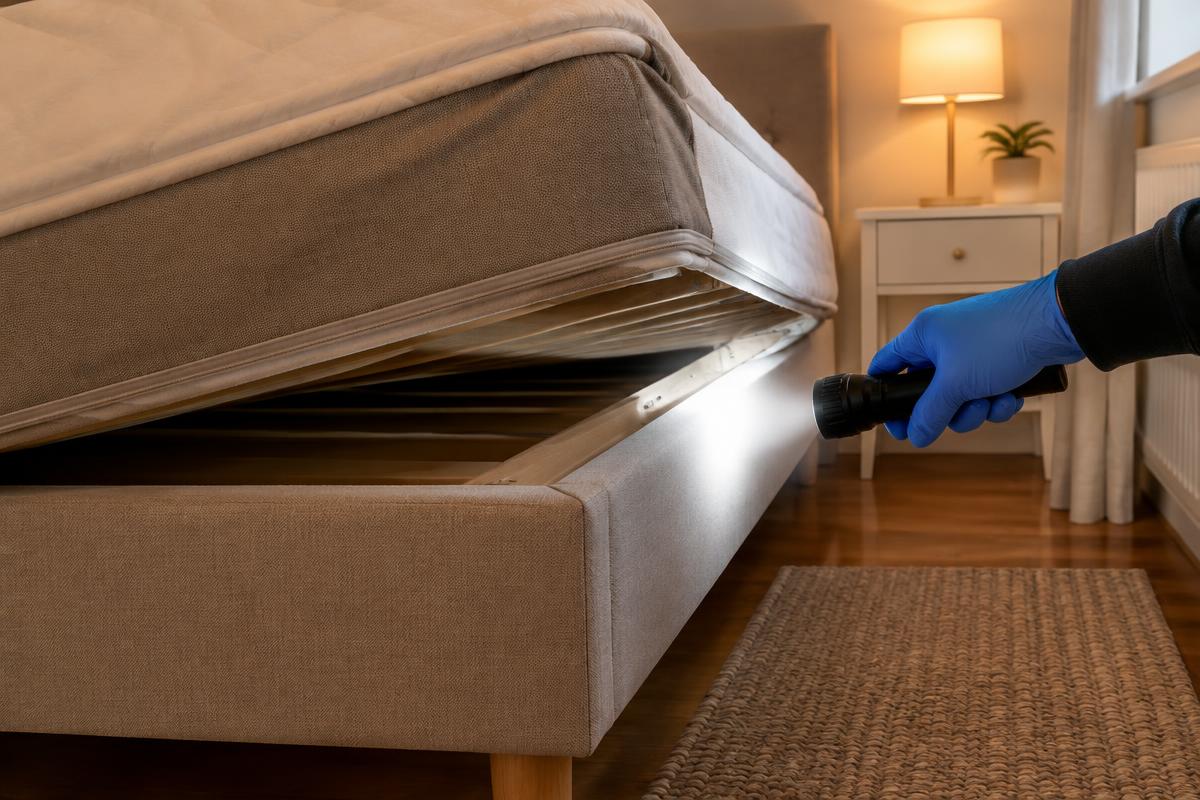
For a practical inspection, work methodically around the sleeping area rather than pulling everything apart at once. Use a torch, photograph suspicious findings and avoid transferring loose bedding or furniture into another room. Do not remove electrical fittings yourself; suspected activity around sockets should be raised with the treatment provider.
- Check mattress piping, labels and accessible seams.
- Inspect bed-frame joints and headboard attachment points.
- Examine accessible divan folds and drawer edges.
- Look behind and beneath nearby bedside furniture.
- Include sofas or chairs used for sleeping.
- Record findings before cleaning away the evidence.
Why shop-bought bed bug sprays often fall short
A spray can only perform within the limits of its formulation, application instructions and coverage. Some products depend on direct contact with an insect, while others are intended to leave a residue on approved surfaces. Neither approach automatically reaches bed bugs sheltered inside enclosed furniture or deep cracks.
Resistance can also contribute to failure. Some bed bug populations are less susceptible to particular insecticides, so applying more of the same active ingredient may not resolve the problem. Changing the brand name does not necessarily change the chemistry, which is why a professional needs to know what has already been used.
Application mistakes create further gaps. A person may spray an exposed mattress surface but miss the frame, or clean away a permitted residual deposit before it has had its intended effect. Conversely, soaking furnishings or treating surfaces not listed on the label can create unnecessary exposure without improving control.
Never increase the concentration, mix products or apply a pesticide to bedding unless its label specifically permits that use. Keep containers or take clear photographs of their labels and note the dates and locations of application. This helps a treatment provider assess the situation and plan the next steps safely.
Why bed bug bombs and foggers leave important gaps
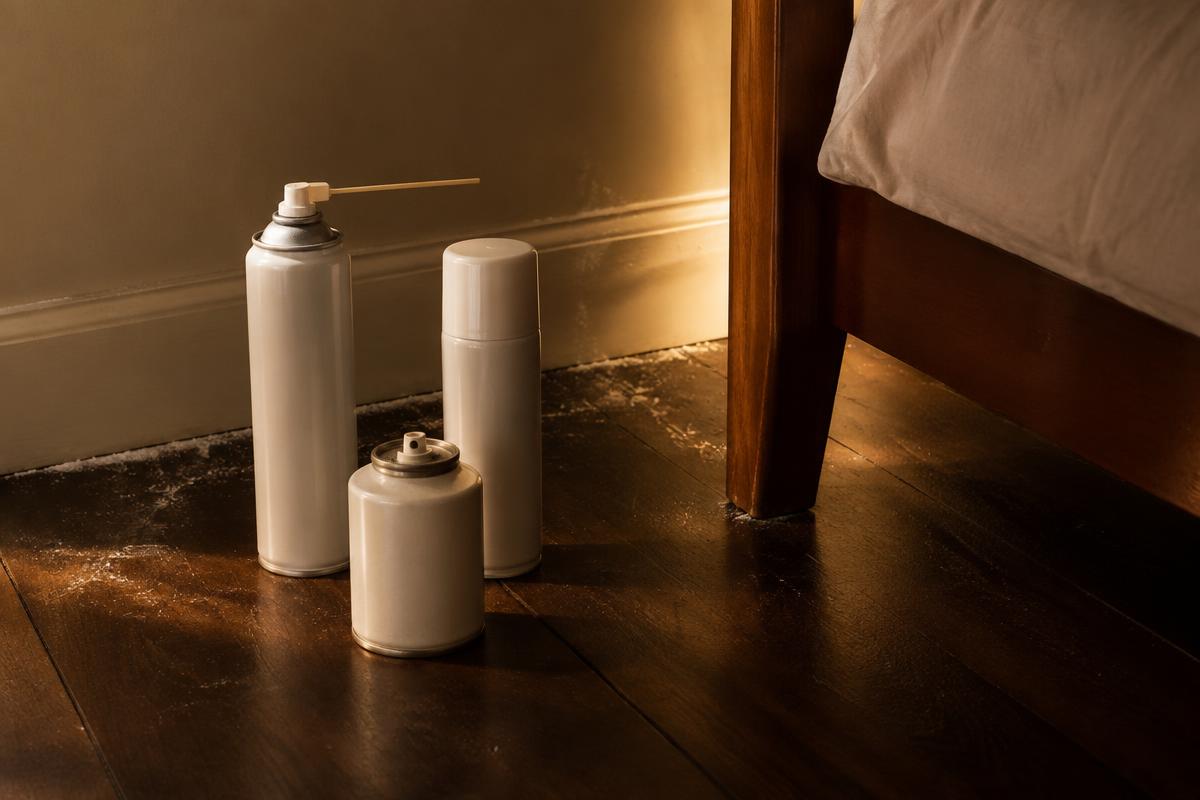
Bed bug bombs, usually sold as total-release foggers, can sound attractive because they appear to treat an entire room with little effort. The central problem is that filling open space with an insecticidal mist is not the same as delivering an effective treatment into every protected bed bug hiding place.
Droplets may settle on exposed surfaces while failing to penetrate seams, enclosed furniture and narrow crevices adequately. Those sheltered spaces are precisely where bed bugs and their eggs are often found. A room can smell strongly of a product without the infestation receiving a complete or effective treatment.
Some insecticidal treatments may also disturb insects and encourage movement into other hiding places. This does not mean every fogger inevitably spreads an infestation, but it is another reason not to interpret a sudden absence of visible insects as proof of elimination. Repeated use can complicate an already unclear situation.
Foggers carry safety requirements that must not be improvised, including restrictions concerning ignition sources, occupancy and ventilation. Using extra units or combining them with other treatments can be dangerous. If a fogger has already been used, tell the professional which product was involved and follow its re-entry instructions rather than relying on whether the smell has faded.
Eggs, missed follow-up and the false finish line
A common DIY pattern is to treat once, notice less activity and stop checking. That approach overlooks the possibility of surviving eggs and insects in untreated places. Eggs that escape treatment can hatch later, leaving newly emerged bed bugs with access to the same sleeping occupant and nearby shelter.
The timing of development varies with conditions, so a universal calendar rule is not a dependable measure of success. A few quiet nights, a short holiday or a week without noticeable skin reactions cannot confirm eradication. Bed bugs can remain concealed between feeds, and not everyone develops obvious bite marks.
Washing bedding is useful housekeeping during an infestation, but it does not treat the structure of the bed or the surrounding room. Similarly, vacuuming can remove accessible insects and debris without reaching everything. These measures should support an appropriate control plan rather than become the sole evidence that the problem is over.
Follow-up should focus on identifiable signs and the provider's instructions. Record where live insects are found, retain photographs and note any changes in sleeping arrangements. Existing dark marks may remain after successful treatment, so their presence alone is less informative than documented new activity in an area that has already been assessed.
Everyday actions that can spread an unresolved infestation
When a bed feels unsafe, moving to the spare room or sofa is an understandable response. Unfortunately, changing sleeping locations can broaden the area requiring inspection, especially if bedding and other belongings move too. Discuss sleeping arrangements with a professional rather than repeatedly relocating in an attempt to escape the problem.
Carrying an uncovered duvet through the house or putting suspect clothing in a communal laundry basket creates avoidable opportunities for transfer. Bag suitable items where they are found before transporting them. Keep processed items separate from untreated belongings, using clean sealed bags or containers until the treatment provider advises otherwise.
Laundry care needs to suit both the infestation plan and the fabric. Use the hottest suitable wash and, where the care label allows, an appropriate hot tumble-drying cycle, with programme advice from the provider. Overloading appliances or assuming that a brief warm cycle is sufficient can undermine the effort.
Discarding a mattress is not automatically necessary and rarely resolves activity elsewhere in the room. Dragging unwrapped furniture along a hallway may distribute insects and expose other people to infested items. If disposal is advised, arrange containment and appropriate collection, and do not sell or donate potentially infested furniture.
- Avoid moving loose bedding between bedrooms.
- Bag suspect laundry before carrying it through the property.
- Separate processed items from untreated belongings.
- Check fabric care labels before washing or tumble drying.
- Seek advice before moving furniture into storage.
- Contain any infested furniture scheduled for disposal.
A Surrey perspective on flats, family homes and travel
The basic biology of bed bugs is the same in Surrey as elsewhere, but the property and household routine affect an investigation. A flat in Woking, a shared house in Guildford and a family home in a village may each present different access arrangements, furniture layouts and opportunities for belongings to move.
In blocks of flats or subdivided buildings, activity in an adjoining property may need consideration, particularly when infestations persist despite a properly managed treatment. That is a reason for coordinated assessment, not proof that a neighbour is responsible. Where appropriate, contact the landlord or managing agent with factual records rather than assumptions.
Travel and second-hand furniture can provide routes for bed bugs to enter a home. Suitcases stored beside a bed and an upholstered item brought indoors shortly before the first signs are worth mentioning during assessment. A journey or purchase is a possible lead, however, not enough evidence to establish the source.
Bed bugs are not a reliable indicator of poor cleanliness, and blame rarely helps solve the problem. For Surrey households balancing commuting, school routines or tenancy arrangements, the practical priority is a workable plan. That means clear access, contained belongings and communication with anyone whose room or property may need assessment.
How professional heat treatment addresses DIY coverage gaps
Professional heat treatment takes a different approach from spot-treating the insects that happen to be visible. Bed Bug Heat Solutions UK uses controlled industrial heat of 60–65 degrees C across the whole treatment area. The aim is to address bed bugs and their eggs throughout that area, including hiding places missed by surface applications.
The heating period is usually 3–6 hours, with timings confirmed on the day. That period should not be confused with the complete appointment, because assessment, preparation checks, equipment arrangements and safe re-entry all require attention. Room layout, furniture and the agreed scope influence how the work is organised.
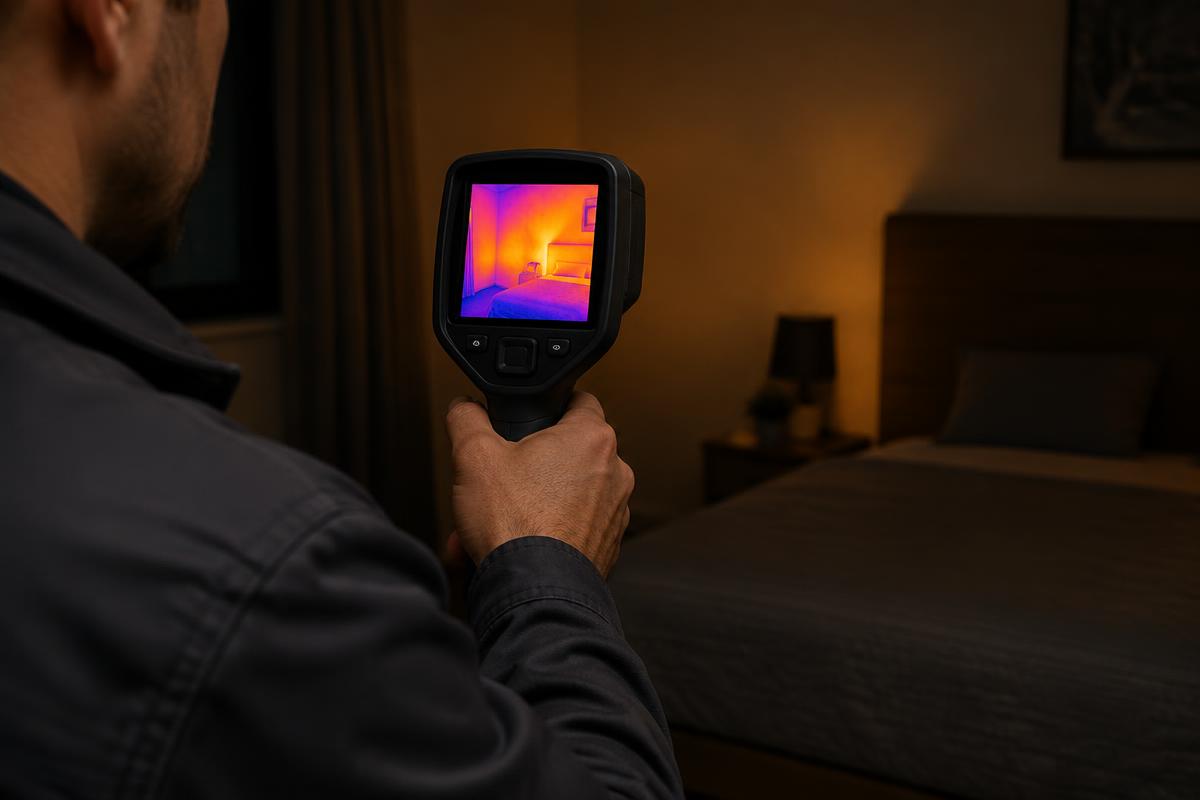
Monitoring is carried out using active live thermal imaging cameras only. Live thermal imaging allows the team to view surface heat patterns during treatment and identify areas needing attention. Appropriate preparation and professional judgement remain important because a visible surface image is not a direct view into every enclosed space.
No harmful chemicals are used as the primary treatment. Professional heat is not equivalent to turning up domestic heating, using a hairdryer or bringing unsuitable heaters into a bedroom. Improvised heating can create fire risks, damage belongings and leave refuges where insects survive, without achieving controlled treatment of the whole area.
Preparing for treatment after unsuccessful DIY attempts
Start with a full account of what has already happened, even if several different remedies have been tried. Product names, application dates, rooms treated and any use of dusts or foggers are relevant. This information helps the provider understand potential exposure concerns and why the apparent pattern of activity may have changed.
Preparation instructions should come from the treatment provider rather than a generic internet checklist. Heat-sensitive items may need removal or special handling, but carrying potentially infested possessions out without a plan can undermine treatment. Ask specifically about medicines, aerosols, batteries, electronics, delicate items and anything with manufacturer temperature restrictions.
Access matters as much as tidiness. The team needs to understand which rooms are affected and reach the agreed treatment area safely. Avoid a last-minute clear-out that distributes possessions around the property; describe heavy clutter or restricted access in advance so that realistic arrangements can be discussed.
Plan for people and animals to remain outside the treatment area as instructed, and do not return until the team confirms that it is safe. Explain any mobility needs, tenancy access restrictions or pet-care difficulties beforehand. A clear preparation plan makes treatment more manageable without relying on promises about exact finishing times.
- Provide photographs and a dated record of confirmed activity.
- List all sprays, foggers and other remedies already used.
- Ask for item-specific advice about heat-sensitive belongings.
- Explain any clutter, heavy furniture or access limitations.
- Arrange suitable care for pets during the visit.
- Confirm departure and re-entry instructions with the team.
Choosing the next step and reducing the chance of recurrence
If activity continues after repeated DIY attempts, another product purchase may only delay a proper assessment. The next step is to confirm the pest, establish the likely extent of the infestation and decide on an appropriate treatment scope. Include every room where people sleep or regularly rest in that discussion.
Bed Bug Heat Solutions UK serves Surrey and the wider England and Wales area. Its credentials include over 40 years of hands-on pest-control experience, full insurance and RSPH Level 2 certification. A six-month guarantee is available on qualifying treatments; ask for the eligibility requirements and written terms before booking.
After treatment, follow the agreed aftercare instructions and report identifiable evidence rather than relying solely on skin symptoms. Keep untreated or newly acquired furniture out of cleared rooms until any concerns have been assessed. A subsequent introduction remains possible, so even a successful treatment does not make a property permanently immune.
Use the quote request form or contact page to explain the property type, affected rooms and previous DIY treatments. Include photographs where possible and mention any related activity in shared accommodation. This gives the team a useful basis for discussing assessment, preparation and suitable treatment without guessing from bites alone.
Useful next steps
Frequently asked questions
Six-month guarantee
Qualifying treatments are covered for six months. Send your details for a free assessment.
More from the blog
How Long Does Bed Bug Heat Treatment Take?
Read the full guide: How Long Does Bed Bug Heat Treatment Take?